

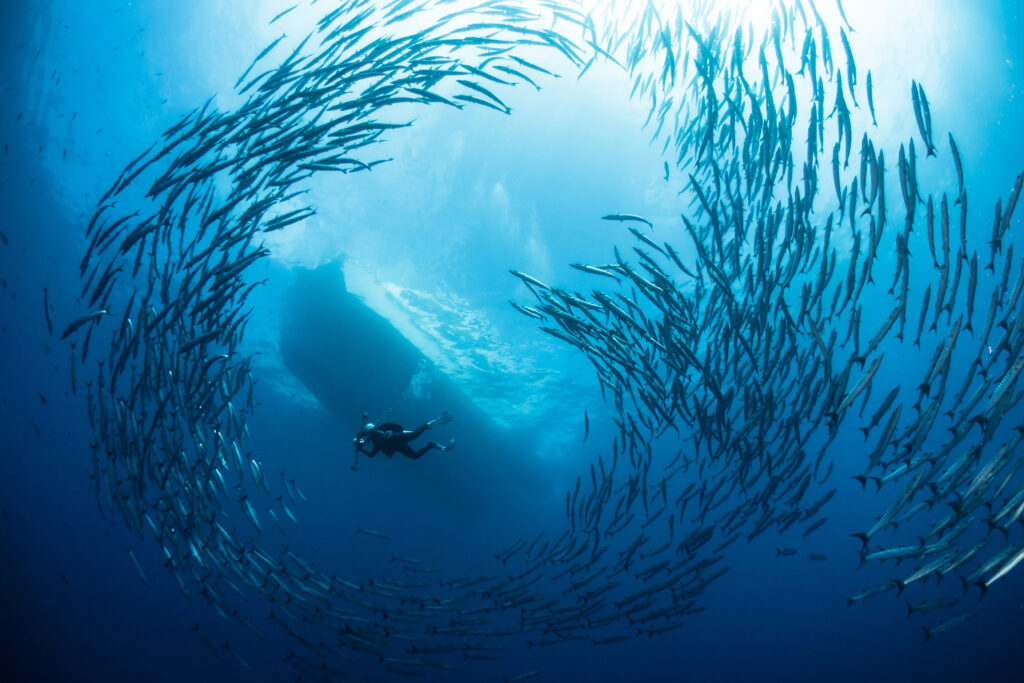
Four dives a day. Incredible marine life. New dive sites to explore. And an entire week dedicated to being underwater.
Sounds like a scuba diver’s dream, right?For many of us, it absolutely is!
One of the biggest appeals of liveaboard diving is the opportunity to spend several hours underwater every day, exploring remote dive sites and experiencing incredible marine life. And while some land-based dive vacations offer a similar schedule, liveaboards are especially known for their multiple daily dives.
But here’s something divers don’t always consider when booking these adventures: Completing four dives in a single day is one thing. Doing it day after day is another.
Repetitive scuba diving can be incredibly rewarding, but it also comes with physical and mental demands that are easy to underestimate. From managing nitrogen exposure and physical fatigue to staying mentally sharp, a little preparation can make all the difference.
So, before you sign up for every available dive, let’s talk about what it really takes to enjoy four dives a day.
Four Dives a Day: It’s a Marathon, Not a Sprint
If you’ve ever completed four dives in one day, you probably know how satisfying—and exhausting—it can be.
Now imagine repeating that schedule for five, six, or even ten consecutive days!
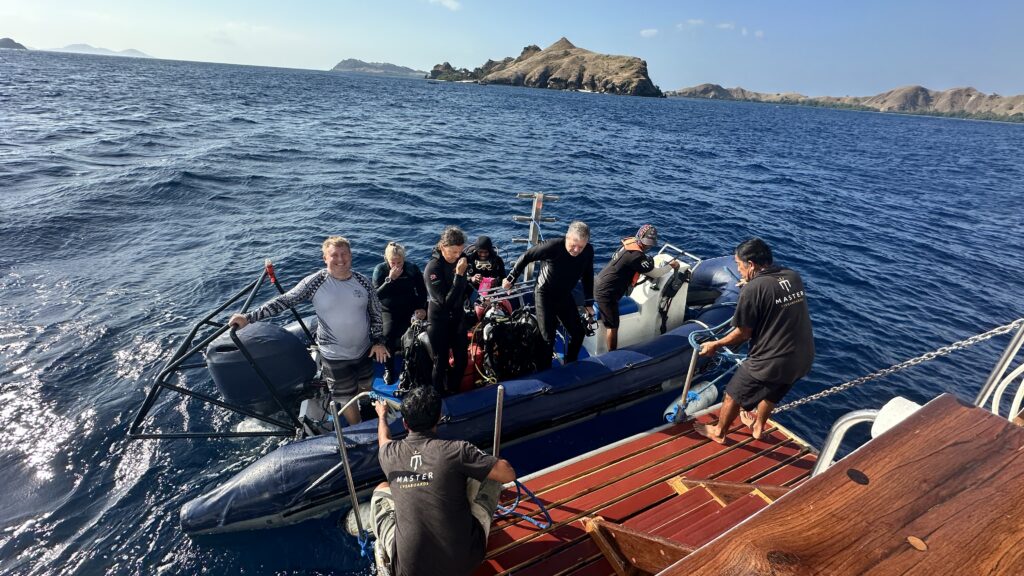
While the diving itself might feel relaxing, there’s a lot more physical activity involved than you might realize. Between gearing up, climbing boat ladders, managing entries and exits, and occasionally dealing with strong currents or rough surface conditions, the effort adds up.
Then there are the early mornings, night dives, and limited downtime between dives. Even experienced divers can start feeling the effects after several days
If you’re new to liveaboards, understanding the daily schedule is an important part of preparing for your trip. Check out our Liveaboard Diving Guide for more tips on what to expect, how to prepare, and what life aboard a dive boat is really like.
And not all dive destinations are equally demanding. Four relatively shallow dives on calm Caribbean reefs can be a very different experience from diving in the strong currents of Komodo or encountering challenging ocean conditions around Socorro. Water temperature, currents, surface conditions, and the physical demands of each dive can make a big difference in how you feel after several days underwater.
What Happens to Your Body During Repetitive Diving?
When you’re completing multiple dives a day, it’s important to understand what’s happening inside your body—even when you’re feeling great underwater!
Every time you scuba dive while breathing compressed air or Nitrox, your body absorbs nitrogen under pressure. As you ascend and spend time at the surface, that nitrogen gradually leaves your tissues. However, some residual nitrogen may remain when you begin your next dive.
This is why repetitive dive planning is so important, especially on liveaboards where you may be completing three or four dives a day for an entire week.
Your dive computer tracks your recent dive profiles and adjusts your no-decompression limits accordingly. Depending on your depths, bottom times, and surface intervals, those limits may become shorter throughout the day.
A few things to keep in mind:
- Surface intervals matter. Time between dives allows your body to eliminate some of the absorbed nitrogen.
- Dive profiles matter. Depth, duration, and previous dives influence your nitrogen exposure and decompression risk.
- Pay attention to your dive computer. Monitor your no-decompression limits, ascent rate, and gas settings throughout every dive.
- Be conservative. Just because your computer says you have more bottom time available doesn’t necessarily mean you need to use it all.
And remember, staying within your dive computer’s no-decompression limits doesn’t completely eliminate the risk of decompression sickness (DCS). Factors such as exertion, thermal stress, and individual susceptibility can also play a role.
Physical Fatigue: Are You Prepared for the Pace?
You don’t need to be an elite athlete to enjoy liveaboard diving, but a reasonable level of physical fitness and comfort in the water can make a big difference when you’re completing four dives a day.
Think about a typical day on a liveaboard. You wake up early, gear up, complete your first dive, climb back aboard, and repeat the process several more times.
Add a little current, surface chop, or a challenging boat ladder, and suddenly your relaxing dive vacation becomes a pretty good workout!
Cold water can also take a toll. Even in tropical destinations, spending several hours underwater each day can leave you feeling chilled, especially if your wetsuit isn’t providing enough thermal protection.
Over several days, these physical demands can add up. You might notice you’re more tired than usual, your muscles are sore, or you’re finding it harder to recover between dives.
Our advice? Pay attention to how you feel throughout the trip, not just after your first dive. If you’re becoming unusually tired, struggling with equipment, or finding dives increasingly difficult, it may be time for a break.
Don’t Forget Your Dive Skills!
Being prepared for multiple dives a day isn’t just about physical fitness. It’s also about having the skills and confidence to manage yourself underwater.
One skill we strongly encourage divers to practice before a liveaboard trip is deploying a Delayed Surface Marker Buoy (DSMB).
In destinations with strong currents or drift diving, DSMBs can be an essential piece of safety equipment. They help boat crews locate divers during an ascent or at the surface.
Even if your dive guide typically deploys a DSMB for the group, you should know how to use your own in case you become separated.
And here’s the important part: Don’t wait until you’re drifting in a current to learn how to deploy one!
Practice in calm, controlled conditions until you’re comfortable managing your buoyancy, spool, and DSMB without becoming entangled or losing control of your ascent. If you’re unfamiliar with the skill, get instruction and practice with a qualified professional.
Other skills worth keeping sharp include controlled ascents, air management, neutral buoyancy, and safely entering and exiting the water.
The more comfortable you are with these skills, the less stressful your dives will feel—especially toward the end of a long dive day.

Mental Fatigue: The Risk Divers Sometimes Overlook
Physical exhaustion is usually pretty easy to recognize. You’re tired, your muscles are sore, and maybe that boat ladder is starting to look a little less appealing!
Mental fatigue, on the other hand, can be much harder to notice.
When you’re completing four dives a day, especially over a week or longer, it’s easy to fall into a routine. You’ve assembled your equipment countless times, listened to multiple dive briefings, and completed more buddy checks than you can count.
And that’s where complacency can creep in.
Maybe you rush through your equipment check because you’re excited about the next dive. Perhaps you’re not paying quite as much attention during the briefing. Or you’re so focused on getting that perfect underwater photo that you lose track of your surroundings.
Even experienced divers aren’t immune to these habits.
Fatigue can affect concentration, reaction time, and decision-making, particularly toward the end of a long dive day. And when you’re diving in currents, changing conditions, or unfamiliar environments, staying mentally sharp is especially important.
No matter how many dives you’ve logged, every dive deserves your full attention.
Take the time to complete your equipment and buddy checks, listen to the briefing, and make sure you’re mentally ready to get back in the water.
And if you’re struggling to focus or simply aren’t feeling sharp? There’s nothing wrong with sitting out a dive.
After all, you’re on vacation. Diving should be fun, not something you’re pushing yourself to get through!
Take Care of Your Body: Recovery Between Dives Matters
When you’re completing four dives a day, what you do between dives can be just as important as what you do underwater.
Between the sun, saltwater, early mornings, and repeated dives, even small issues can become big problems if you don’t take care of yourself.
Fortunately, a little prevention goes a long way!
Stay hydrated. Between diving, sweating, and spending hours on a boat in the tropical sun, it’s easy to fall behind on fluids. Drink water regularly throughout the day, even when you’re not particularly thirsty. Proper hydration supports your overall health, although it doesn’t eliminate the risk of decompression sickness (DCS).
Protect yourself from the sun. Spending hours on a dive boat means plenty of UV exposure, even when it’s cloudy. A bad sunburn can make wearing a wetsuit miserable! Wear a hat, seek shade, use UPF-rated clothing, and apply water-resistant, broad-spectrum sunscreen. Consider products with lower environmental impacts when possible.
Take care of your ears. Repeated water exposure can increase the risk of outer ear infections, and equalization problems can quickly put an end to your dive vacation. Gently dry your outer ears after diving, avoid cotton swabs, and never force equalization. If you’re prone to ear infections, ask a dive medicine professional about appropriate prevention before your trip. Don’t continue diving if you’re experiencing ear pain, drainage, or difficulty equalizing.
Eat enough. Multiple dives a day can use more energy than you realize. Enjoy those meals and snacks, and don’t skip lunch just because you’re excited about the next dive!
Prioritize sleep. Early morning dives and night dives can make for long days. Getting enough rest helps you stay alert and ready for another day underwater.
Stay warm. Even in tropical waters, repeated dives can leave you chilled. Make sure your wetsuit provides adequate thermal protection, and change into dry clothing between dives.
Enjoy your downtime. Not every moment needs to be an activity. Sometimes relaxing on the deck, reading a book, or taking a nap is exactly what your body needs.
Enjoy a drink, but save it for after diving! Alcohol and scuba diving don’t mix. Once you’ve had your first alcoholic drink, you’re done diving for the day.
There’s nothing wrong with enjoying a drink or two after an incredible day underwater! Just remember to stay hydrated and take it easy, especially if you’re diving again the next morning. Alcohol can affect your sleep, contribute to dehydration, and leave you feeling less than your best. Dehydration may also be a contributing factor in decompression sickness (DCS) risk.
And let’s be honest, waking up hungover when you’ve got another amazing day of diving ahead of you? Not worth it, in our opinion!
Want to learn more? Check out DAN’s Drinking and Diving: Is It Safe? for a closer look at the risks.
The bottom line? Taking care of yourself isn’t just about feeling good today. It’s about staying healthy, comfortable, and ready to enjoy the rest of your dive adventure.

Nitrox: A Valuable Tool for Repetitive Diving
If you’re planning a liveaboard adventure with three or four dives a day, Enriched Air (Nitrox) is one certification we highly recommend considering.
Nitrox contains a higher percentage of oxygen and a lower percentage of nitrogen than standard compressed air. For appropriate dive profiles, this means less nitrogen exposure and potentially longer no-decompression limits.
And when you’re completing multiple dives a day, that can be a real advantage!
However, Nitrox isn’t a shortcut around safe dive planning. You still need to monitor your dive computer, respect your no-decompression limits, and allow adequate surface intervals.
Nitrox also comes with its own considerations, including maximum operating depths and oxygen exposure limits. Always analyze your cylinder, confirm the oxygen percentage, and make sure your dive computer is set to the correct gas mixture.
You may have heard divers say they feel less tired when diving Nitrox. While some people report this, there isn’t strong scientific evidence that Nitrox reliably reduces post-dive fatigue.
Personally, we recommend Nitrox for its dive-planning benefits, not because it promises to give you more energy.
Our advice? If you’re considering a liveaboard trip and aren’t already Nitrox certified, it’s worth completing the course before you go. It’s a relatively straightforward certification that can be especially useful for repetitive diving.
Know When to Skip a Dive (Even When FOMO Is Real!)
Here’s something we always encourage divers to remember: Just because four dives are offered doesn’t mean you have to do all four.
We get it. You’ve traveled halfway around the world, you’re visiting incredible dive sites, and you don’t want to miss a single moment underwater.
And let’s be real: the FOMO can be very real on a liveaboard!
I’ve experienced it firsthand. I once decided to skip a dive because I needed a break. And wouldn’t you know it? The group saw a DUGONG!
Seriously?! Of all the dives to miss! Was I disappointed? Absolutely. But I needed that break, and it was still the right decision.
The reality is that diving shouldn’t become a competition to see who can log the most dives. Sometimes you’re tired, cold, uncomfortable, or simply not feeling up to another dive.
Recognizing when you need a break is a sign of good diving judgment, not weakness.
There will always be another dive opportunity. Your safety and well-being are more important than any single wildlife encounter.
One important distinction: If you’re experiencing unusual symptoms after diving—including unexplained weakness, dizziness, numbness, significant pain, or difficulty breathing—don’t assume you’re simply tired. Stop diving, administer emergency oxygen if available and you’re trained to do so, and seek urgent medical assessment for possible decompression illness.
And sometimes, the best dive decision is staying on the boat.

Are You Ready for Four Dives a Day? A Self-Assessment
So, how do you know if you’re ready for a liveaboard offering four dives a day?
There’s no magic number of logged dives that automatically makes someone prepared. Your recent diving experience, physical fitness, comfort level, and the conditions at your destination all play a role.
Before booking your next liveaboard adventure, ask yourself:
✓ Have I been diving recently, and do I feel comfortable underwater?
✓ Can I confidently manage my equipment, buoyancy, and air consumption?
✓ Am I physically comfortable with repeated entries, exits, and boat ladders?
✓ Do I understand how repetitive diving affects my no-decompression limits?
✓ Can I use my dive computer correctly and monitor my dive profiles?
✓ Can I deploy my own DSMB while maintaining buoyancy and controlling my ascent?
✓ Am I comfortable with the currents, water temperatures, and conditions expected at my destination?
✓ Can I equalize comfortably, and do I know when to stop diving if I develop ear problems?
✓ Can I recognize when fatigue is affecting my concentration or performance?
✓ Am I willing to skip a dive if I’m tired, uncomfortable, or simply not feeling up to it?
If you answered yes to most of these questions, that’s a good starting point!
If a few made you hesitate, don’t worry. It might simply mean you would benefit from a refresher, additional training, or a few more dives before tackling a more demanding itinerary.
And remember, being ready for four dives a day doesn’t necessarily mean you’re ready for every liveaboard destination. Four relaxed reef dives in the Caribbean can be a very different experience from diving in strong currents or cooler waters in more advanced destinations.
The goal isn’t to check every box perfectly. It’s to choose an adventure that matches your skills, experience, and comfort level.
The Bottom Line: Dive Smarter, Not Just More
Four dives a day can be an incredible experience!
There’s something special about spending an entire week immersed in the underwater world, exploring new dive sites, encountering amazing marine life, and sharing those experiences with fellow divers.
But the best liveaboard adventures aren’t necessarily the ones where you log the most dives. They’re the ones where you feel comfortable, confident, and prepared to enjoy every moment underwater.
Understand your limits. Take care of your body. Pay attention to fatigue. And don’t be afraid to sit out a dive when you need to.
Because great diving isn’t about how many dives you complete. It’s about making every dive count.
Planning Your Next Liveaboard Adventure?
At Global Adventures for Scuba Divers (GAS’D), we organize hosted small-group dive trips to some of the world’s most exciting underwater destinations. From relaxed reef diving to more adventurous, expedition-style itineraries, there’s something for different experience levels.
Ready to start planning? Explore our upcoming dive adventures and find a trip that matches your skills, interests, and comfort level.
Not sure which adventure is right for you? Reach out! We’re always happy to talk diving and help you find the right fit.
New to liveaboards? Check out our Liveaboard Diving Guide for more tips on what to expect and how to prepare for your first trip.
