

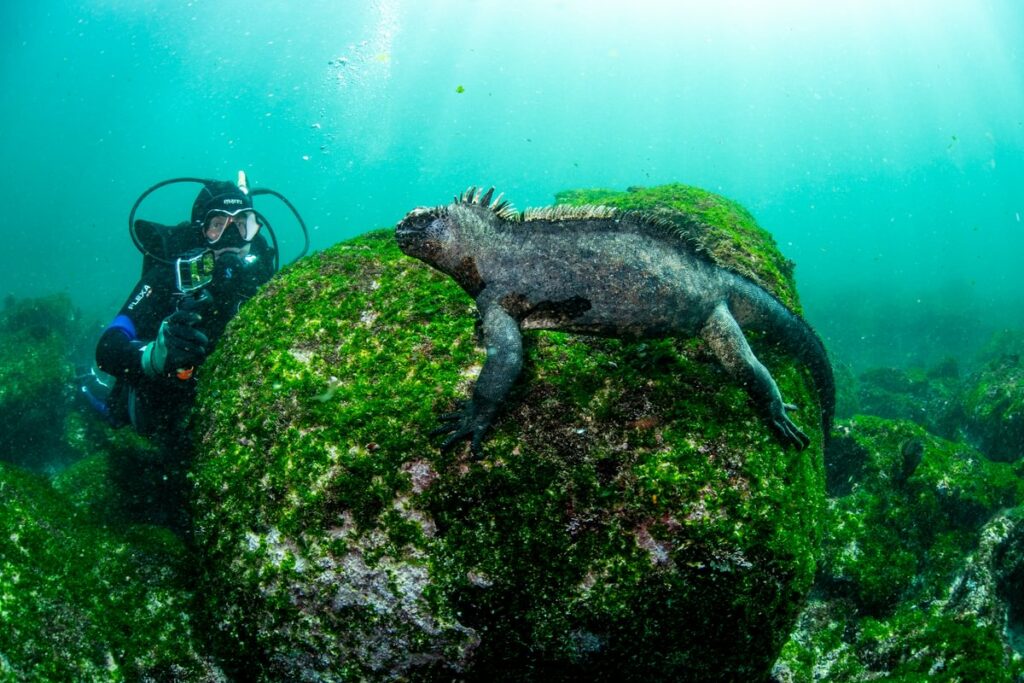
Discover the extraordinary underwater wildlife of the Galápagos Islands, from the remote waters of Wolf and Darwin to the unique species found throughout the archipelago.
Galápagos marine life is just as extraordinary beneath the surface. From enormous schools of hammerheads to the world’s only marine iguanas, these waters offer wildlife encounters unlike anywhere else.
But some of the Galápagos’ most remarkable encounters happen beneath the surface.
Imagine watching hundreds of scalloped hammerheads moving together through the blue, encountering an enormous whale shark or observing a marine iguana grazing on algae underwater. From playful sea lions to unusual ocean sunfish, the diversity of marine life makes every dive an adventure.
For scuba divers, the remote northern islands of Wolf and Darwin are particularly special. Accessible on dedicated liveaboard expeditions, these islands are famous for their shark populations and seasonal encounters with some of the ocean’s largest animals.
Yet the Galápagos offers much more than big-animal diving. Its unique ocean conditions support an incredible variety of species, from tropical marine life to animals typically associated with much colder environments.
Let’s explore the remarkable wildlife that makes the Galápagos one of the world’s most extraordinary diving destinations.

A Note for Divers
Many of the Galápagos’ most iconic wildlife encounters take place around the remote islands of Wolf and Darwin, which are accessible by liveaboard. These are advanced diving destinations where strong currents, cold water, thermoclines and challenging conditions can occur. Substantial diving experience is essential, and operators have specific certification and logged-dive requirements.
Why Is Galápagos Marine Life So Extraordinary?
The Galápagos Islands sit at the intersection of several ocean currents, creating a remarkable environment where tropical and cooler-water marine species coexist.
The cold, nutrient-rich Cromwell Current is particularly important. As it reaches the islands, deep water rises toward the surface, bringing nutrients that support plankton, fish and the larger predators that feed on them.
Other currents, including the Humboldt and Panama currents, also influence the islands’ marine environment.
These oceanographic conditions help support an extraordinary concentration of marine life, from tiny reef fish to enormous whale sharks.
The Galápagos Marine Reserve protects much of this ecosystem, providing an important refuge for sharks, rays, sea turtles and other migratory species.
For divers, the result is an incredible variety of underwater experiences. One dive might feature playful sea lions or colorful reef fish, while another brings you face-to-face with some of the ocean’s most impressive predators.
And nowhere is that more apparent than at Wolf and Darwin.
Scalloped Hammerheads: The Icons of Galápagos Diving
If there’s one animal that defines Galápagos diving, it’s the scalloped hammerhead shark.
The remote islands of Wolf and Darwin are famous for their large aggregations of hammerheads, sometimes numbering in the hundreds. Watching these distinctive silhouettes emerge from the blue is an experience that has made the Galápagos legendary among divers.

Why Do Hammerheads Gather Here?
Unlike many sharks that spend much of their time alone, scalloped hammerheads are known to form large schools during the day.
The waters surrounding Wolf and Darwin provide important habitats for these sharks, including productive feeding grounds and cleaning stations.
At cleaning stations, smaller fish remove parasites and dead tissue from the sharks’ bodies.
Divers may encounter hammerheads cruising along rocky walls, gathering near cleaning stations or forming enormous schools in open water.
Although hammerheads can be encountered throughout the year, their numbers and behavior vary with ocean conditions.
For underwater photographers, the combination of dramatic volcanic topography and schooling hammerheads creates some extraordinary opportunities.
These sharks can also be shy. Remaining calm, following your guide’s instructions and allowing them to approach naturally can make all the difference.
Whale Sharks: The Gentle Giants of Darwin Island
As the largest fish in the ocean, whale sharks can reach extraordinary sizes. Despite their enormous mouths, these gentle giants feed primarily on plankton and other small organisms.
Darwin Island is particularly famous for encounters with exceptionally large whale sharks, including mature females.
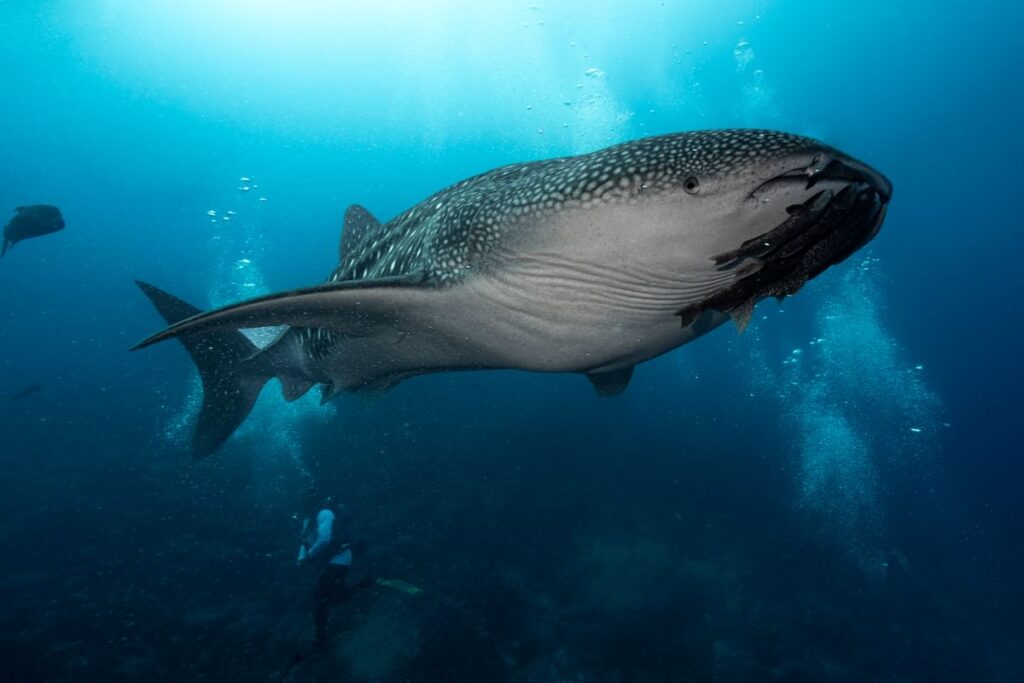
What Makes Darwin’s Whale Sharks So Special?
Researchers are particularly interested in the large females observed around Darwin, many of which appear to be pregnant.
Their movements and reproductive biology remain important areas of scientific research, and scientists are still working to understand the role these waters play in the whale sharks’ life cycle.
Whale shark encounters are generally more frequent during the cooler season, roughly June through November.
However, sightings are never guaranteed, and wildlife activity varies from year to year.
For divers fortunate enough to encounter one, watching an enormous whale shark emerge from the blue is an unforgettable experience.
Rays, Sea Turtles and Other Ocean Wanderers
Not every memorable Galápagos encounter involves sharks.
The archipelago also supports an impressive variety of rays, sea turtles and other marine animals.
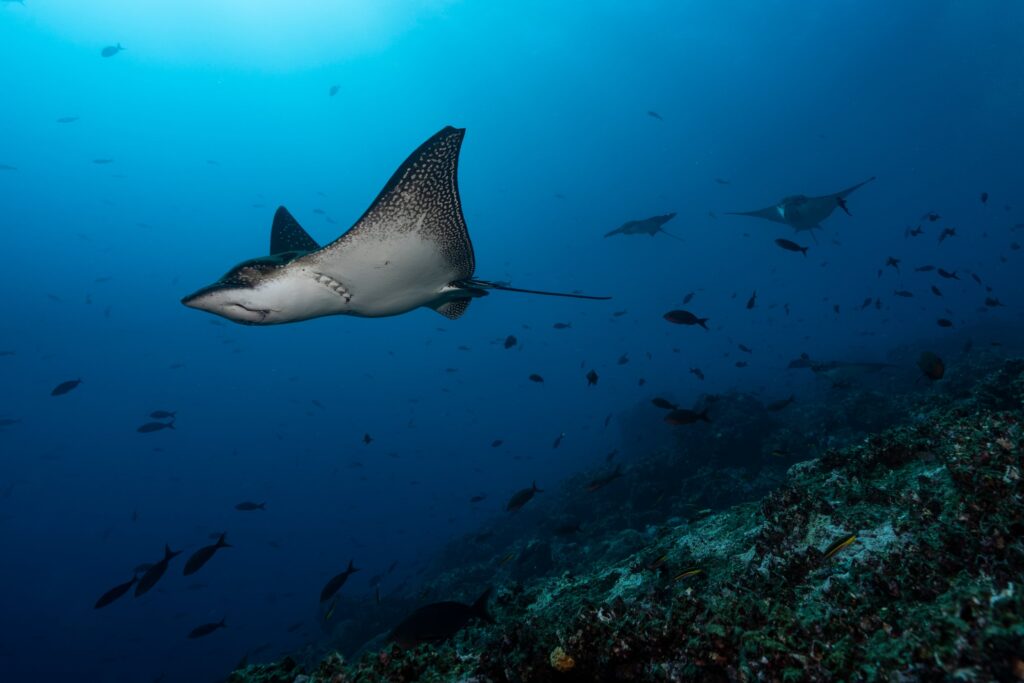
Spotted eagle rays are among the most beautiful. Their distinctive markings and graceful movements make them a favorite with underwater photographers.
Giant oceanic manta rays may also be encountered in Galápagos waters, although they aren’t a guaranteed feature of every itinerary.
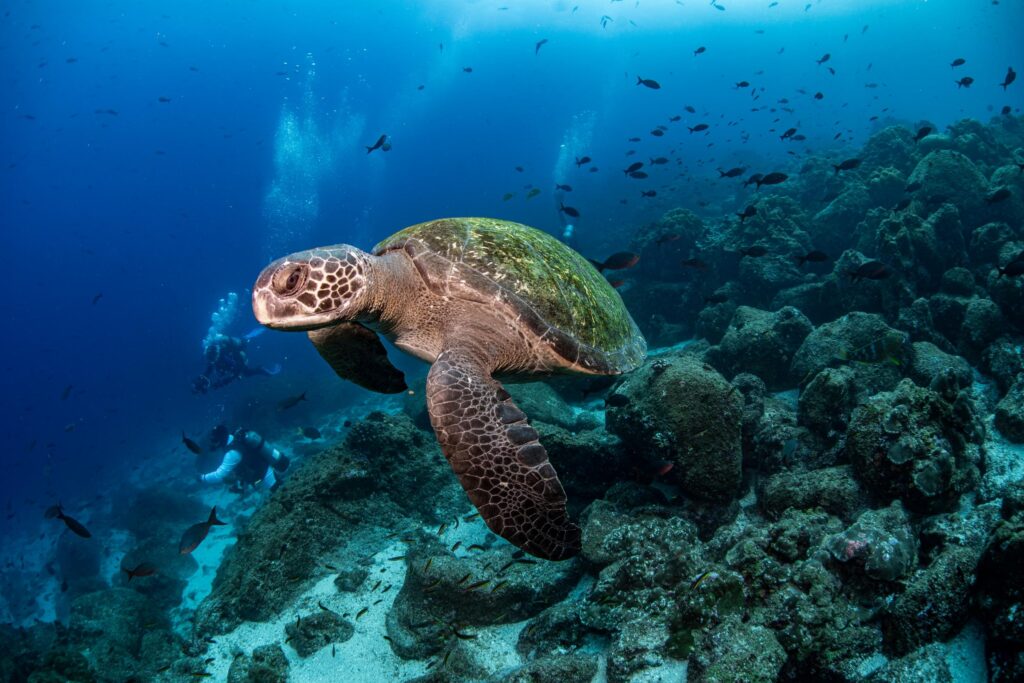
Green sea turtles are another familiar sight, often seen resting near reefs or swimming through the water.
The Galápagos provides important nesting and feeding habitats for green sea turtles, making the islands significant for their conservation.
These encounters add another dimension to the experience, especially when exploring the rocky reefs and underwater landscapes of the archipelago.
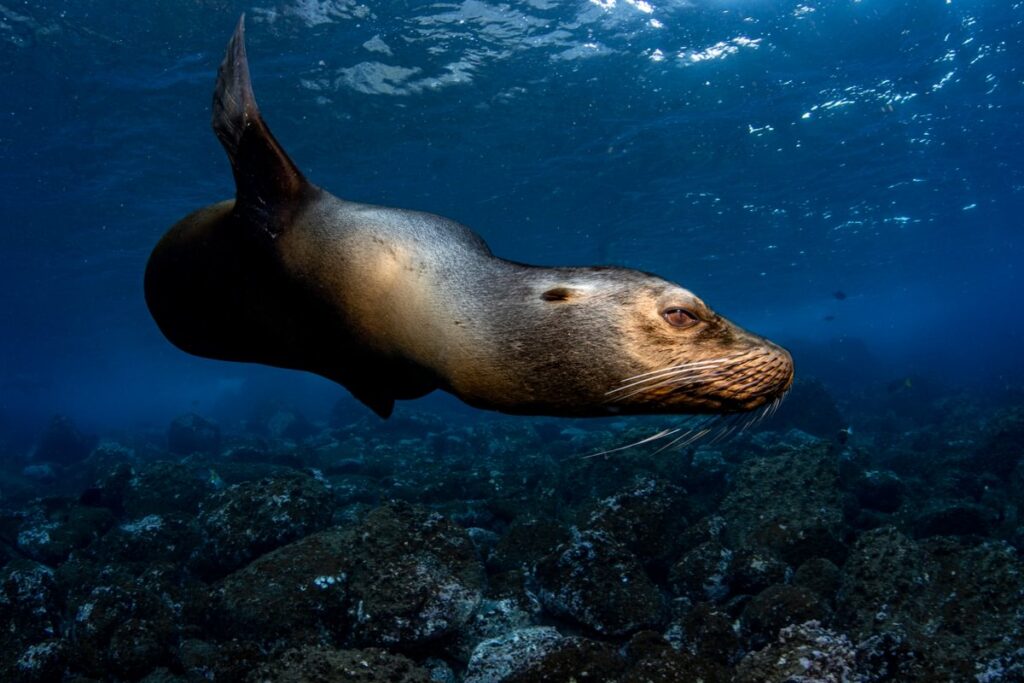
Galápagos Sea Lions: The Playful Locals
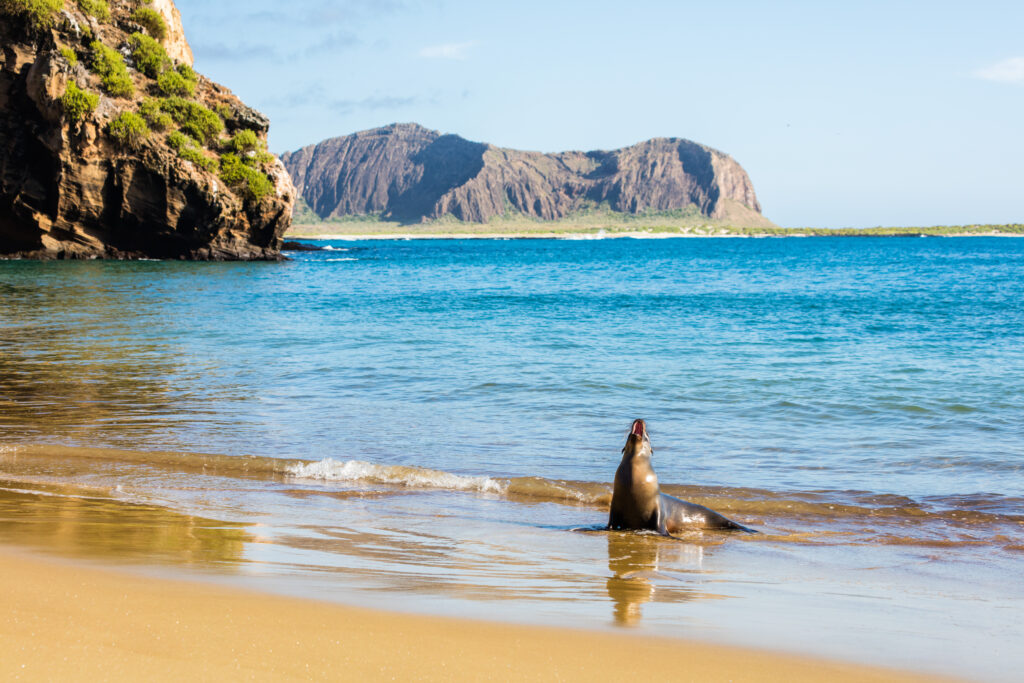
If sharks provide the drama, Galápagos sea lions bring the entertainment.
These curious marine mammals are famous for their playful behavior, often twisting and turning through the water with remarkable agility.
They may swim around divers, investigate unfamiliar objects or simply show off their underwater acrobatics.
Young sea lions can be particularly curious, although it’s important to let them control the interaction.
Despite their playful appearance, sea lions are wild animals. Divers should never chase, touch or attempt to feed them.
Sea lion encounters are more commonly associated with sites around the central islands, including areas visited by some liveaboard itineraries.
They’re a wonderful reminder that Galápagos diving offers much more than big sharks.
Marine Iguanas: The World’s Only Seagoing Lizards
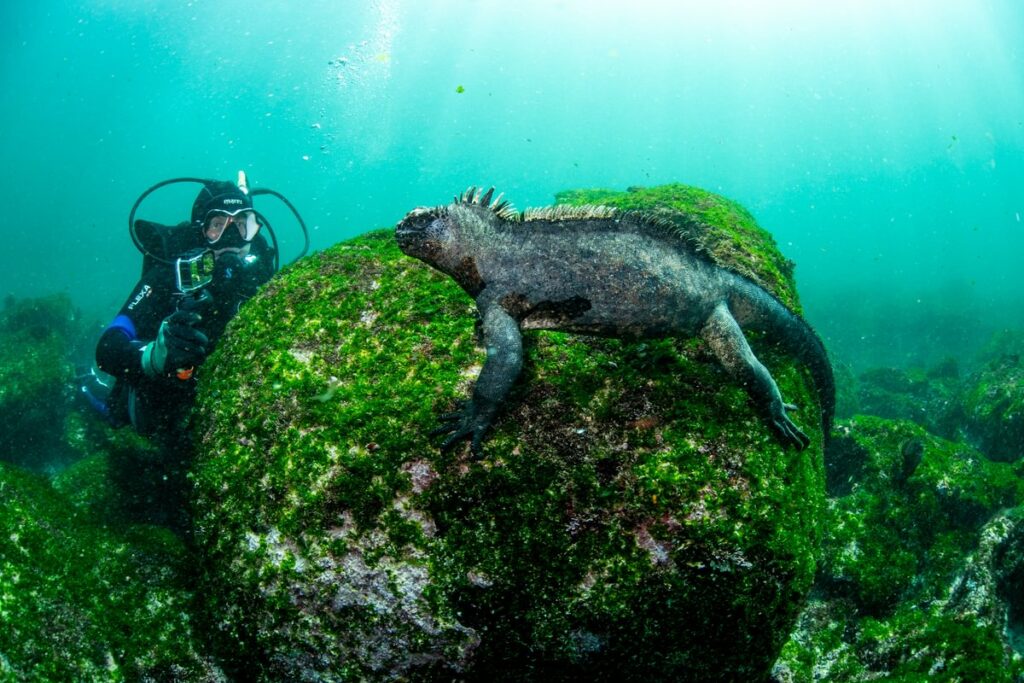
Of all the unusual animals found in the Galápagos, marine iguanas might be among the most fascinating.
Found only in the Galápagos Islands, these remarkable reptiles are the world’s only marine lizards.
Unlike their land-dwelling relatives, marine iguanas have adapted to feed on algae growing along rocky coastlines and underwater.
Their flattened tails help propel them through the water, while their strong claws allow them to grip volcanic rocks. They also possess specialized salt glands that help them eliminate excess salt absorbed while feeding.
Where Can You See Marine Iguanas Underwater?
Marine iguanas inhabit numerous islands throughout the archipelago, but underwater encounters are particularly associated with certain coastal areas, including Cabo Douglas on Fernandina Island.
Watching these prehistoric-looking animals swim and feed underwater is a uniquely Galápagos experience.
It’s also an excellent example of how the islands’ isolation has shaped the evolution of their wildlife.
For divers and photographers, marine iguanas offer a completely different experience from the big-animal encounters of Wolf and Darwin.
Galápagos Penguins: Penguins at the Equator?
Penguins probably aren’t the first animals that come to mind when imagining an island destination near the equator.
Yet the Galápagos is home to the Galápagos penguin, one of the smallest penguin species in the world and the only penguin species naturally found north of the equator.
Their survival in this tropical region is closely connected to the islands’ cooler, nutrient-rich waters.
Galápagos penguins are most strongly associated with the western islands, particularly Fernandina and Isabela, although they can also be found in other parts of the archipelago.
These small, agile birds are remarkable underwater swimmers, using their wings to propel themselves while hunting fish.
Encountering one underwater is a special experience, although sightings depend on the itinerary and conditions.
Their limited distribution and vulnerability to changing ocean conditions also make them an important species for conservation.
Honorable Mention: The Mola Mola
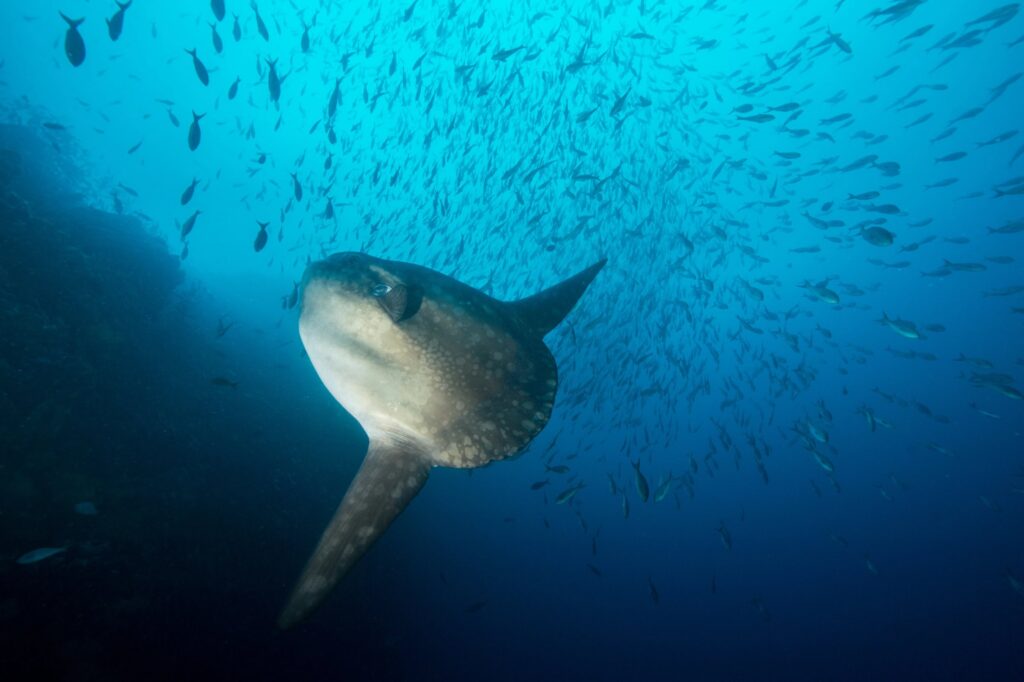
We couldn’t finish our underwater wildlife list without mentioning one of the ocean’s strangest-looking fish: the mola mola, or ocean sunfish.
With its flattened body, enormous fins and unusual swimming style, the ocean sunfish looks like something from another planet. Ocean sunfish can reach impressive sizes and are known to spend time in both deep and surface waters.
In the Galápagos, encounters are particularly associated with the cooler western waters, including the area around Punta Vicente Roca on Isabela Island.Although sightings are unpredictable, seeing one of these remarkable fish is a memorable addition to any Galápagos adventure.
Mola mola can also be sensitive to divers approaching too quickly. Giving them space from the beginning is particularly important if you hope to enjoy a longer encounter.
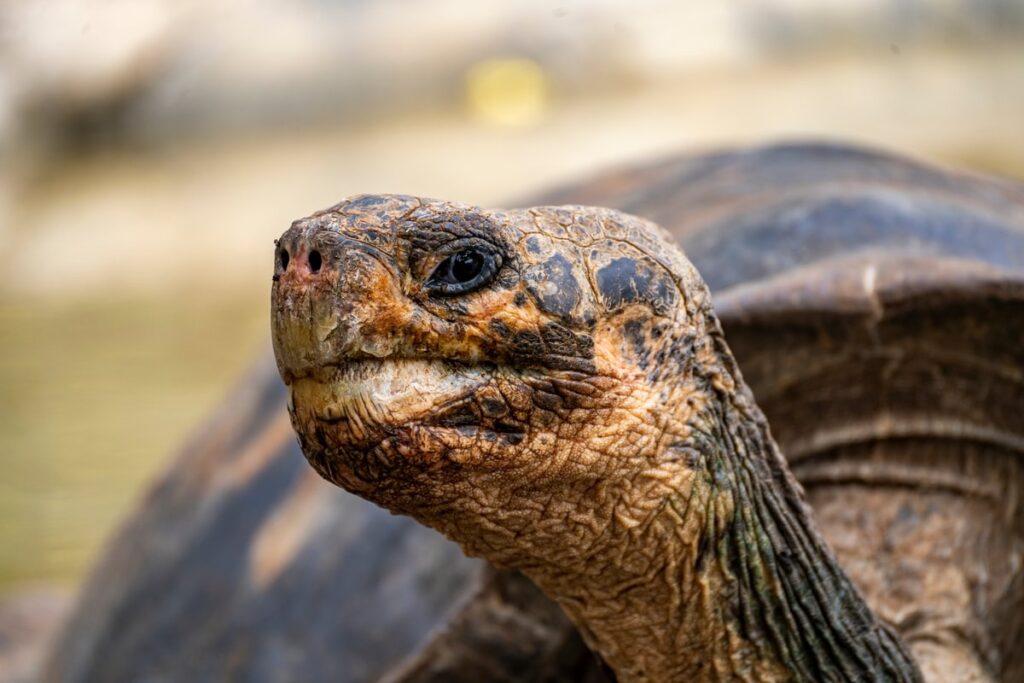
Topside Highlight: The Galápagos Giant Tortoise
These extraordinary reptiles are among the largest living tortoises and can live for well over a century.
Different populations have evolved distinctive shell shapes and other adaptations, reflecting the varied environments of the islands.
The highlands of Santa Cruz offer opportunities to observe giant tortoises in their natural habitat.
For travelers joining a liveaboard expedition, spending additional time exploring the islands before or after the diving is an excellent way to experience another side of the Galápagos.
From giant tortoises and marine iguanas to blue-footed boobies and Darwin’s finches, the islands offer an extraordinary introduction to the wildlife that helped shape our understanding of evolution.
Seasonal Wildlife: When Is the Best Time to Dive the Galápagos?
The Galápagos offers extraordinary diving throughout the year, but seasonal changes influence which animals you’re more likely to encounter.
The islands have two main seasons, each offering different wildlife opportunities and diving conditions.
Cooler Season: June–November
The cooler season brings productive, nutrient-rich waters that support an abundance of marine life.
It’s particularly well known for whale shark encounters around Darwin Island, including sightings of exceptionally large females.
However, these productive waters can also bring colder temperatures, thermoclines and reduced visibility.
Warmer Season: December–May
The warmer season generally brings higher water temperatures and often better visibility.
Schooling hammerheads, Galápagos sharks, sea turtles and other marine life can still provide spectacular encounters.
Whale sharks are less frequently observed around Darwin during this period, but that doesn’t mean the diving is any less exciting.
What About Hammerheads?
Scalloped hammerheads can be encountered throughout the year at Wolf and Darwin. Their numbers, behavior and distribution vary with ocean conditions.
The Galápagos is a wild marine environment, and no particular encounter is guaranteed.
Whether you’re hoping to see whale sharks, photograph schooling hammerheads or experience the incredible biodiversity of the islands, every season offers something special.
Responsible Wildlife Encounters: Patience Makes All the Difference
One of the most rewarding aspects of diving in the Galápagos is the opportunity to observe wildlife behaving naturally.
However, these encounters require patience, respect and an understanding that we’re visitors in the animals’ environment.
Hammerheads can be shy. Charging toward a school hoping to get the perfect photograph may cause the sharks to turn and disappear into the blue.
Mola mola can be equally sensitive to an aggressive approach. If divers don’t give them space from the beginning, an encounter might be over before it starts.
Your dive guides understand the local conditions and are familiar with the animals’ behavior. Trust their experience and follow their instructions.
The Best Wildlife Encounters Require Patience
-
Let the animals come to you. Never chase, crowd or block their path.
-
Listen to your guide. They understand how to position the group while minimizing disturbance.
-
Be patient. Stay calm, maintain your position and allow the wildlife to behave naturally.
-
Respect your fellow divers. Don’t push past the group, swim in front of someone or disturb an encounter just to get a photograph.
-
Know when to put the camera down. Sometimes the most memorable moments happen when you’re simply watching.
No photograph is worth stressing an animal or ruining someone else’s dive.
The best wildlife encounter isn’t necessarily the closest one. Give the animals the choice to approach, stay or swim away.
Protecting the Extraordinary Wildlife of the Galápagos
The Galápagos is one of the world’s most important marine conservation areas.
The Galápagos Marine Reserve protects a vast area surrounding the archipelago, while the Hermandad Marine Reserve extends protection into an important migratory corridor northeast of the islands.
Together, these protected areas help conserve critical habitats for sharks, rays, sea turtles and other marine species.
However, these ecosystems still face significant challenges, including illegal fishing, marine pollution, climate change and changing ocean conditions.
Responsible tourism can help support their protection.
For divers, that means following park regulations, maintaining good buoyancy, respecting wildlife and choosing operators that prioritize responsible diving practices.
Protecting these extraordinary ecosystems helps ensure future generations can experience the same underwater wonders.
Experience the Galápagos With GAS’D
From enormous schools of hammerheads at Wolf and Darwin to playful sea lions, marine iguanas and giant tortoises, the Galápagos offers a remarkable combination of underwater and topside wildlife.
For experienced divers, exploring the remote northern islands by liveaboard provides access to some of the archipelago’s most extraordinary marine life encounters.
It’s a destination that rewards curiosity, preparation and a genuine appreciation for the natural world.
At Global Adventures for Scuba Divers, we believe the best dive adventures combine extraordinary underwater experiences with opportunities to learn about the destinations we explore.
Our hosted Galápagos liveaboard adventure is designed for experienced divers who want to explore these remarkable waters while sharing the journey with a small group of fellow ocean enthusiasts.
Ready to explore the Galápagos? Discover our upcoming Galápagos liveaboard adventure and join us for an unforgettable journey to one of the world’s most extraordinary diving destinations.