


When you picture St. Lucia, chances are you imagine the iconic Pitons rising above turquoise Caribbean waters, lush tropical mountains, and beautiful beaches. But some of the island’s most spectacular scenery is actually hiding beneath the surface!
Scuba diving in St. Lucia offers an incredible combination of colorful coral reefs, dramatic underwater walls, fascinating marine life, and volcanic landscapes. From tiny seahorses and camouflaged frogfish to curious sea turtles and vibrant sponges, there’s always something interesting to discover.
And the adventure doesn’t end when you surface! With incredible scenery, delicious local cuisine, rich Caribbean culture, and plenty of activities for non-divers, St. Lucia is a destination that offers a little something for everyone.
We’ve had the opportunity to explore St. Lucia on multiple visits, most recently with our GAS’D group in October 2026, and it’s a destination that keeps calling us back.
Whether you’re planning your first Caribbean dive vacation or looking for your next underwater adventure, here’s everything you need to know about diving in St. Lucia!
What Makes Scuba Diving in St. Lucia Special?
St. Lucia is famous for its dramatic volcanic landscapes, and that incredible scenery doesn’t stop at the water’s edge!
Along the island’s southwestern coastline, steep underwater walls, sloping reefs, and fascinating volcanic formations create a diverse underwater playground. The same volcanic activity that shaped the iconic Pitons also helped create some of the island’s most memorable dive sites.
But what really stands out to us is the color!
St. Lucia’s reefs are decorated with vibrant orange, red, yellow, and purple sponges, beautiful sea fans, and a variety of hard corals. Add in schools of tropical fish, sea turtles, and fascinating little critters hiding among the reef, and there’s always something worth stopping to admire.
Unlike destinations known primarily for big-animal encounters, St. Lucia is a place where slowing down pays off. You might spend one dive admiring a dramatic underwater wall and the next searching for a tiny seahorse or a perfectly camouflaged frogfish.
Another reason we love St. Lucia is its accessibility for different types of divers. From relaxed reef dives and shore diving to deeper walls and wrecks, there’s plenty of variety for divers with different experience levels.
And with many popular dive sites located along the southwestern coast, it’s possible to enjoy fantastic diving without spending hours traveling by boat.
For us, that’s the magic of St. Lucia: beautiful underwater scenery, fascinating marine life, and the opportunity to appreciate both the big picture and the smallest details.

The Best Dive Sites in St. Lucia
Some of St. Lucia’s most spectacular diving is found along the southwestern coastline, particularly around Soufrière and the iconic Pitons. From dramatic walls and colorful reefs to a coral-covered shipwreck, there’s plenty of variety to keep divers entertained.
Here are a few of our favorite dive sites!
Anse Chastanet Reef: A House Reef Worth Exploring
Don’t underestimate a great house reef! Anse Chastanet Reef is one of our favorite places to dive in St. Lucia, and it’s conveniently accessible right from the beach.
This beautiful reef is home to colorful sponges, corals, schooling fish, sea turtles, stingrays, and an impressive variety of smaller marine creatures. It’s also a wonderful location for underwater photography, especially if you enjoy slowing down and searching for macro life.
One of the things we love most is the opportunity to explore at your own pace. Sometimes the most memorable discoveries happen when you’re not rushing to cover an entire dive site!
Superman’s Flight: Diving Beneath the Pitons
Located near the base of Petit Piton, Superman’s Flight is one of St. Lucia’s most recognizable dive sites.
Named for its connection to the filming of Superman II, this dramatic sloping wall features colorful sponges, coral formations, and beautiful underwater scenery.
Currents can sometimes make this an exciting drift dive, so it’s important to follow your guide and dive within your comfort level.
And the views of the Pitons from the boat? Absolutely spectacular!
Piton Wall: Dramatic Underwater Scenery
There’s something special about diving beneath St. Lucia’s famous volcanic peaks.
Piton Wall offers steep underwater terrain, colorful reef growth, and fascinating marine life along the island’s dramatic coastline.
It’s a wonderful site for appreciating the scale of St. Lucia’s underwater landscape. While macro enthusiasts can still find plenty to explore, don’t forget to look up and take in the scenery!

Marine Life in St. Lucia: Small Creatures, Big Discoveries!
St. Lucia might not be the first destination that comes to mind for big-animal encounters, but don’t let that fool you! The island’s reefs are home to an incredible variety of Caribbean marine life, from colorful tropical fish and graceful sea turtles to some wonderfully unusual little critters.
And if you love macro photography, you’re in for a treat!
Masters of Camouflage: Frogfish & Seahorses
Some of the most exciting discoveries in St. Lucia are also among the easiest to overlook.
Frogfish are masters of disguise, blending into sponges and reef structures so well that you can swim right past one without noticing. Seahorses are equally fascinating, often hiding among sea fans and other reef growth.
Both are wonderful reminders to slow down, pay attention to your dive guide, and take a closer look at the reef.
Turtles, Seahorses & Colorful Reef Fish
Of course, there’s plenty to see beyond the macro world!
Sea turtles are always a welcome sight, and St. Lucia’s reefs also provide opportunities to encounter southern stingrays, moray eels, lobsters, and schools of colorful tropical fish.
Angelfish, butterflyfish, parrotfish, and other familiar Caribbean reef species add movement and color to the underwater landscape.
And sometimes the most memorable encounter is simply watching a turtle cruise peacefully along the reef!


Night Diving: A Different World After Dark
If you have the opportunity to experience a night dive in St. Lucia, we’d highly recommend it!
As daylight fades, the reef takes on a completely different personality. Octopuses emerge to hunt, lobsters become more active, and creatures that remain hidden during the day begin exploring.
Night diving is also a wonderful opportunity to observe marine behavior you might otherwise miss.
Just remember to move slowly, use your dive light responsibly, and give wildlife plenty of space.
Don’t Forget the Reef Itself!
While it’s easy to focus on fish and other animals, some of St. Lucia’s most spectacular marine life is right in front of you.
Brightly colored sponges, branching sea fans, and hard corals create the beautiful underwater scenery that makes this destination so memorable.
These organisms also provide important habitat and shelter for countless reef creatures.
Our favorite tip for diving in St. Lucia? Slow down and look closely! You never know what fascinating little creature might be hiding in plain sight.


When Is the Best Time to Scuba Dive in St. Lucia?
One of the great things about St. Lucia is that scuba diving is possible year-round! With warm Caribbean waters, colorful reefs, and a variety of dive sites, there’s really no bad time to start dreaming about your next underwater adventure.
However, like many Caribbean destinations, St. Lucia has distinct wetter and drier seasons, and conditions can vary throughout the year.
December–May: The Drier Season
St. Lucia’s drier season generally runs from December through May, bringing less rainfall, lower humidity, and plenty of opportunities to enjoy both diving and topside adventures.
This is a popular time to visit, particularly for travelers hoping to combine scuba diving with hiking, sightseeing, and relaxing on the beach.
While conditions are often favorable, wind and occasional rough seas can still affect dive schedules.
June–November: Warmer Weather & Tropical Showers
June through November typically brings warmer, more humid weather and an increased chance of rain.
This period also overlaps with the Atlantic hurricane season, which runs from June 1 through November 30. Tropical storms can affect travel plans, so we always recommend purchasing appropriate travel insurance and remaining flexible.
But don’t automatically rule out these months!
During our October 2025 and 2026 GAS’D trips, we enjoyed calm seas, warm water, excellent visibility, and plenty of beautiful sunshine. We couldn’t have asked for much better conditions!
Of course, every year is different, and favorable weather during one visit doesn’t guarantee the same experience on another.
Water Temperature & Visibility
St. Lucia’s tropical waters generally remain comfortable for recreational diving throughout the year.
- Water temperature: Approximately 79–84°F (26–29°C), depending on the season.
- Visibility: Often around 40–100 feet (12–30 meters), although conditions can vary significantly.
- Exposure protection: A 3 mm wetsuit is usually sufficient for many divers, but those who get cold easily or plan several dives per day may prefer additional protection.
Visibility can be affected by rainfall, runoff, wind, and local sea conditions, so it’s always worth checking with your dive operator.
Our Recommendation
If your priority is generally drier weather and a combination of diving and island exploration, December through May is a great starting point.
But if your travel schedule takes you to St. Lucia during the wetter months, you can still enjoy some fantastic diving when conditions cooperate.
The best time to dive in St. Lucia ultimately depends on your travel preferences, comfort with seasonal weather, and the type of vacation you’re planning.

Is St. Lucia Good for Beginner Divers?
Absolutely! One of the reasons we love scuba diving in St. Lucia is the variety of dive sites available for different experience levels.
From relatively shallow coral reefs and relaxed shore dives to deeper walls, wrecks, and occasional drift diving, St. Lucia offers plenty of opportunities for both newer and experienced divers.
Great Opportunities for Newer Divers
St. Lucia can be a wonderful destination for newly certified Open Water divers looking to build confidence and gain experience.
Many reef dives offer opportunities to practice buoyancy, improve air consumption, and become more comfortable underwater while enjoying colorful corals and fascinating marine life.
The Anse Chastanet house reef is one of our favorite examples. With easy shore access and plenty of marine life to discover, it’s a fantastic place to spend time exploring at a relaxed pace when conditions are suitable.
Of course, every diver should choose sites appropriate for their training, experience, and comfort level.
More Adventure for Experienced Divers
For divers looking for something a little more challenging, St. Lucia also offers deeper walls, wreck diving, and sites where currents may be present.
Sites like Superman’s Flight can offer exciting drift-diving opportunities when conditions are right.
Good buoyancy control, depth awareness, gas management, and comfort with boat diving are especially important when exploring these environments.
A Great Place to Continue Your Dive Education
St. Lucia is also a beautiful destination to expand your scuba skills!
During our October 2026 GAS’D adventure, we celebrated the completion of a PADI Advanced Open Water certification, and it’s always exciting to see divers grow their confidence and abilities.
We encourage divers to consider continuing education, particularly Advanced Open Water and Enriched Air Nitrox, as they gain experience and explore new destinations.
But remember, certification is only part of the equation. Recent dive experience, comfort in the water, and good judgment are just as important as the certification card in your wallet.
Our Advice
Whether you’re newly certified or have hundreds of dives under your belt, St. Lucia offers opportunities to enjoy the underwater world at your own pace.
Be honest about your experience, communicate with your dive guide, and never feel pressured to participate in a dive that exceeds your comfort level.
After all, the goal is to enjoy the adventure and return to the surface with a smile!

Marine Conservation in St. Lucia: Protecting Paradise
St. Lucia’s colorful reefs are one of the island’s greatest treasures, but like coral reef ecosystems throughout the Caribbean, they face some serious challenges.
From rising ocean temperatures and coral disease to pollution and invasive species, protecting these fragile environments requires ongoing conservation efforts.
Fortunately, local organizations, dive operators, and conservation-minded divers are working to make a difference!
Coral Restoration: Helping Reefs Recover
One of the conservation initiatives we’ve enjoyed following during our visits to St. Lucia is Scuba St. Lucia’s coral restoration program.
The program includes efforts to grow threatened Caribbean coral species, including elkhorn and staghorn corals, in underwater nurseries before transplanting them onto suitable reef areas.
During our earlier visit, we saw coral fragments growing on underwater nursery structures. When we returned in 2026, it was exciting to see the progress, including corals that had been transplanted onto the reef!
Coral restoration takes time, and these projects require continued monitoring and care. While restoration alone cannot solve the larger threats facing coral reefs, it’s encouraging to see local efforts supporting reef recovery.
Invasive Lionfish: A Caribbean Conservation Challenge
Lionfish are undeniably beautiful, but in the Caribbean, they’re also a serious ecological concern.
Native to the Indo-Pacific, lionfish were introduced to the western Atlantic, where they’ve spread throughout much of the Caribbean. They reproduce quickly, consume native reef fish, and can disrupt the balance of local ecosystems.
Although some Caribbean predators occasionally eat lionfish, natural predation has not been sufficient to control invasive populations.
That’s why targeted removal programs have become an important conservation tool in many Caribbean destinations.
During our October 2026 GAS’D adventure, trained members of our group helped remove more than 50 invasive lionfish from St. Lucia’s reefs. Some even ended up on the dinner table!
It’s worth remembering that the lionfish themselves aren’t to blame. They’re simply surviving in an environment where humans introduced them. Responsible management focuses on reducing their ecological impact.
Lionfish removal should only be performed by properly trained and authorized individuals, following local regulations and safe handling procedures.
How Divers Can Help Protect St. Lucia’s Reefs
You don’t need to participate in a formal conservation project to make a positive difference.
Responsible diving habits help protect the underwater environments we all love:
- Practice good buoyancy control. Avoid touching, kicking, or accidentally damaging corals.
- Respect marine life. Observe wildlife without chasing, touching, feeding, or crowding animals for photographs.
- Choose responsible dive operators. Support businesses that follow good environmental practices and contribute to local conservation.
- Reduce waste. Bring reusable water bottles and minimize single-use plastics whenever possible.
- Support conservation efforts. Learn about local reef restoration, marine protected areas, and opportunities to contribute responsibly.
For us, marine conservation is an important part of responsible dive travel. We want future generations of divers to experience the same beautiful reefs and fascinating marine life that make destinations like St. Lucia so special.
The more we understand the underwater world, the better equipped we are to protect it.


Beyond the Diving: Adventures Above the Surface
As much as we love St. Lucia’s underwater world, there’s plenty to explore above the surface, too!
With lush rainforests, dramatic volcanic peaks, waterfalls, beautiful beaches, and rich Caribbean culture, St. Lucia offers something for just about everyone. It’s also a fantastic destination for divers traveling with non-diving friends or family members.

Explore the Iconic Pitons
You can’t talk about St. Lucia without mentioning the Pitons!
Gros Piton and Petit Piton are two dramatic volcanic peaks rising above the Caribbean Sea near Soufrière. They’re part of the UNESCO-listed Pitons Management Area and are easily among the island’s most recognizable landmarks.
For adventurous travelers, a guided hike up Gros Piton offers spectacular views, although it’s a challenging climb that requires reasonable fitness.
Prefer something more relaxing? A boat tour along the coastline provides beautiful views of the Pitons without the strenuous hike.

Chocolate, Cacao & Caribbean Flavors
Calling all chocolate lovers!
St. Lucia has a long history of cacao cultivation, and visitors can explore that tradition through plantation tours, chocolate-making experiences, and tastings.
During our 2026 GAS’D adventure, our group enjoyed a chocolate tasting at Anse Chastanet and Jade Mountain. Let’s just say nobody left hungry!
Beyond chocolate, St. Lucia’s cuisine features fresh seafood, tropical fruits, locally grown produce, and delicious Creole-inspired dishes.

Experience St. Lucia’s Culture
St. Lucia’s cultural heritage reflects a blend of African, French, and Caribbean influences, expressed through its language, music, food, and traditions.
Local markets, community celebrations, and cultural events offer wonderful opportunities to experience another side of the island.
If you’re visiting in October, you may have the chance to experience Creole Heritage Month, which celebrates St. Lucia’s cultural identity through music, cuisine, language, and traditional activities.
And don’t underestimate the value of simply meeting local people and learning more about their island!
Plenty of Fun for Non-Divers
One of the reasons we love St. Lucia for group travel is that non-divers don’t have to spend their vacation waiting for everyone else to finish diving.
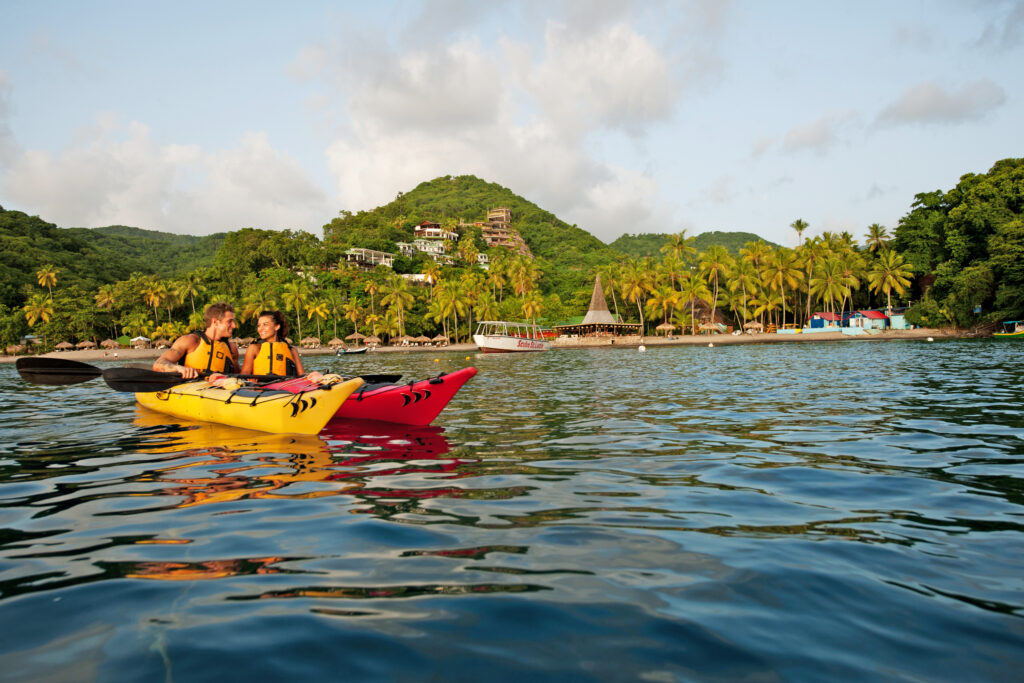
Depending on your interests, you can enjoy snorkeling, boat excursions, beaches, guided hikes, spa treatments, chocolate experiences, and sightseeing.
It’s a wonderful destination for couples and friends who want to travel together, even if not everyone scuba dives.
Our advice? Leave a little room in your itinerary for topside adventures. St. Lucia is far too beautiful to experience only underwater!
Where to Stay for a St. Lucia Dive Vacation
St. Lucia has beautiful accommodations throughout the island, but if scuba diving is your main priority, we recommend staying near Soufrière on the southwestern coast.
This area is home to some of St. Lucia’s most spectacular dive sites, including the colorful reefs and dramatic underwater walls surrounding the Pitons. Staying nearby means less time traveling to dive sites and more time enjoying everything the island has to offer!
Why We Love Anse Chastanet
We’ve enjoyed staying at Anse Chastanet, and it’s become one of our favorite places to base a St. Lucia dive adventure.
One of the biggest advantages is its location. Many of the area’s popular dive sites are just a short boat ride away, making it convenient to enjoy multiple dives without spending hours traveling back and forth.
And then there’s the house reef!
Having access to such a beautiful reef right from the beach is a huge bonus. Whether you’re interested in colorful coral formations, sea turtles, stingrays, or fascinating macro life, there’s plenty to explore without venturing far from the resort.
Above the water, Anse Chastanet offers lush tropical surroundings, beautiful views, spectacular sunsets, and delicious food featuring fresh, locally grown ingredients.
One thing to keep in mind: the resort is built into a steep hillside, so there are plenty of stairs! Shuttle transportation is available, but travelers with mobility concerns should consider the layout before booking.

Why Location Matters for Divers
When choosing accommodations for a dive vacation, we always recommend considering more than just the room or resort amenities.
Think about how far you’ll need to travel to the dive sites, whether shore diving is available, and how easily you can balance diving with relaxation and other activities.
For us, the Soufrière area offers a wonderful combination of convenient dive access, spectacular scenery, and a more relaxed Caribbean atmosphere.
It’s one of the reasons we keep coming back!
Getting to St. Lucia: Planning Your Dive Adventure
Ready to start planning your St. Lucia scuba diving vacation? Here are a few things worth knowing before you go!
Flying to St. Lucia
St. Lucia has two airports, but most international travelers arrive at Hewanorra International Airport (UVF), located near Vieux Fort on the southern end of the island.
For travelers staying near Soufrière, including Anse Chastanet, the journey from the airport typically takes around 60–90 minutes by road, depending on traffic and conditions.
St. Lucia’s winding mountain roads offer some beautiful scenery, but the drive can be a little adventurous! If you’re prone to motion sickness, it’s worth planning ahead.
Private transfers, resort transportation, and helicopter transfers may be available, depending on your arrangements.
During our 2026 GAS’D adventure, we even enjoyed a spectacular helicopter ride back to the airport, with unforgettable views of the Pitons and coastline!
Planning Your Diving
If scuba diving is the main focus of your vacation, we recommend choosing accommodations close to the dive sites and arranging your diving in advance.
A few things to consider:
- Dive certification and experience: Make sure your planned dives match your training and comfort level.
- Dive insurance: We require DAN dive accident coverage for our GAS’D trips and recommend appropriate travel insurance as well.
- Equipment: Check what’s included with your dive package and whether rental gear is available.
- Enriched Air Nitrox: If you’re certified, ask whether Nitrox is available and what additional fees may apply.
- Surface intervals: Plan adequate time between your final dive and any flight or significant altitude excursion.
We also recommend leaving some time to explore the island beyond the dive boat. Between the Pitons, waterfalls, chocolate experiences, and beautiful scenery, there’s plenty worth discovering!
A Note About Flying After Diving
If you’re planning a helicopter transfer or another flight after your dive vacation, remember to allow an appropriate surface interval.
For recreational no-decompression diving, commonly used minimum guidance is at least 12 hours after a single dive and 18 hours after multiple dives or multiple days of diving. Longer intervals may be appropriate depending on your dive profiles and circumstances.
Helicopter flights and mountain excursions can also involve altitude exposure, so discuss your plans with your dive operator and follow appropriate diving safety guidance.
Our advice: Don’t leave your travel logistics until the last minute. A little advance planning makes it much easier to relax and enjoy your time in St. Lucia!

Why We Keep Coming Back to St. Lucia
Some destinations just have a way of stealing your heart, and St. Lucia is certainly one of them!
From colorful coral reefs and dramatic underwater walls to fascinating marine life and the breathtaking Pitons, this Caribbean island offers an incredible combination of underwater adventure and tropical beauty.
But what keeps us coming back is the whole experience. The diving is fantastic, the scenery is spectacular, the food is delicious, and there’s so much to enjoy beyond the water. Whether you’re a newly certified diver, an experienced underwater explorer, or a non-diver looking for a Caribbean getaway, St. Lucia has something special to offer.
After exploring the island with our GAS’D groups in 2025 and 2026, we’re already looking forward to the possibility of returning with another awesome group in the future!
Want to see what our adventures were like? Check out our St. Lucia 2026 Trip Report for our favorite dive sites, marine life encounters, conservation experiences, and memories from an incredible week.
And if you’re ready to start planning your next adventure, take a look at our upcoming GAS’D group trips. We’d love to have you join us!
Until next time, St. Lucia!
