

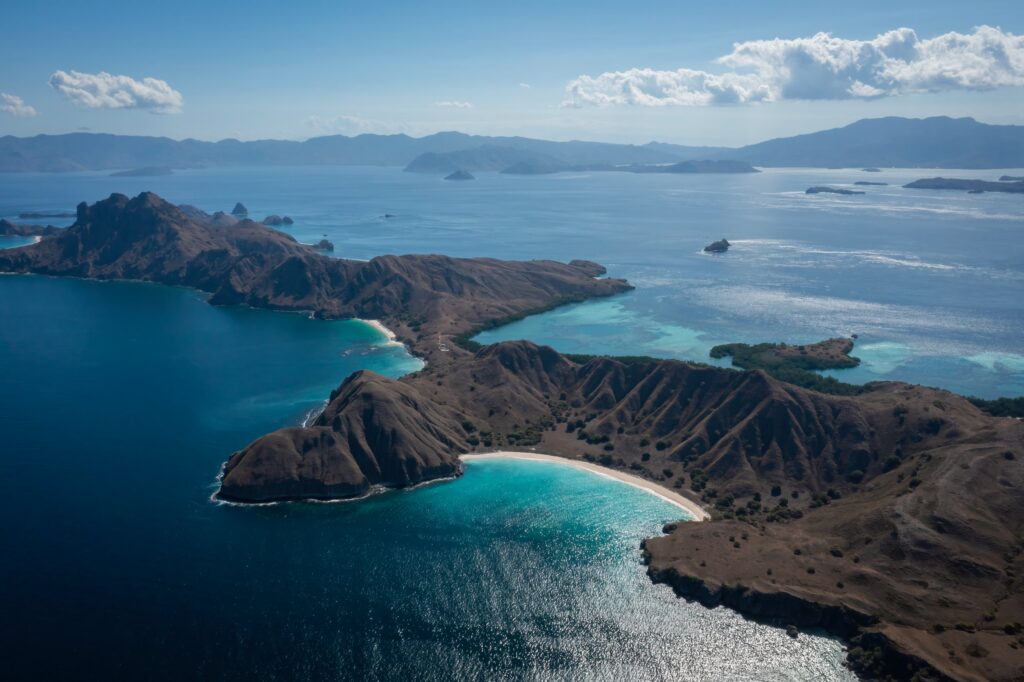
Komodo National Park is one of Indonesia’s most spectacular destinations both above and below the surface.
Located in the Indonesian archipelago, the park is famous for its prehistoric-looking Komodo dragons, dramatic volcanic landscapes and exceptional marine biodiversity. Its natural importance earned Komodo National Park UNESCO World Heritage Site status, with the designation recognizing both its terrestrial and marine ecosystems, including its remarkably diverse coral reefs.
But for divers, what’s below the surface is just as impressive.
Komodo’s waters are home to incredibly healthy coral reefs, huge schools of fish, manta rays, sharks, eagle rays, turtles, dolphins and an incredible variety of macro life. The combination of biodiversity, healthy reefs and dynamic diving makes Komodo one of Indonesia’s most rewarding dive destinations.
In this guide, we’ll cover what makes Komodo diving so special, what to expect underwater, the dive sites worth knowing, what experience and equipment you’ll want, when to go, and why we recommend exploring Komodo by liveaboard.
Why Dive Komodo?
There are plenty of reasons Komodo has become one of our favorite places to dive.
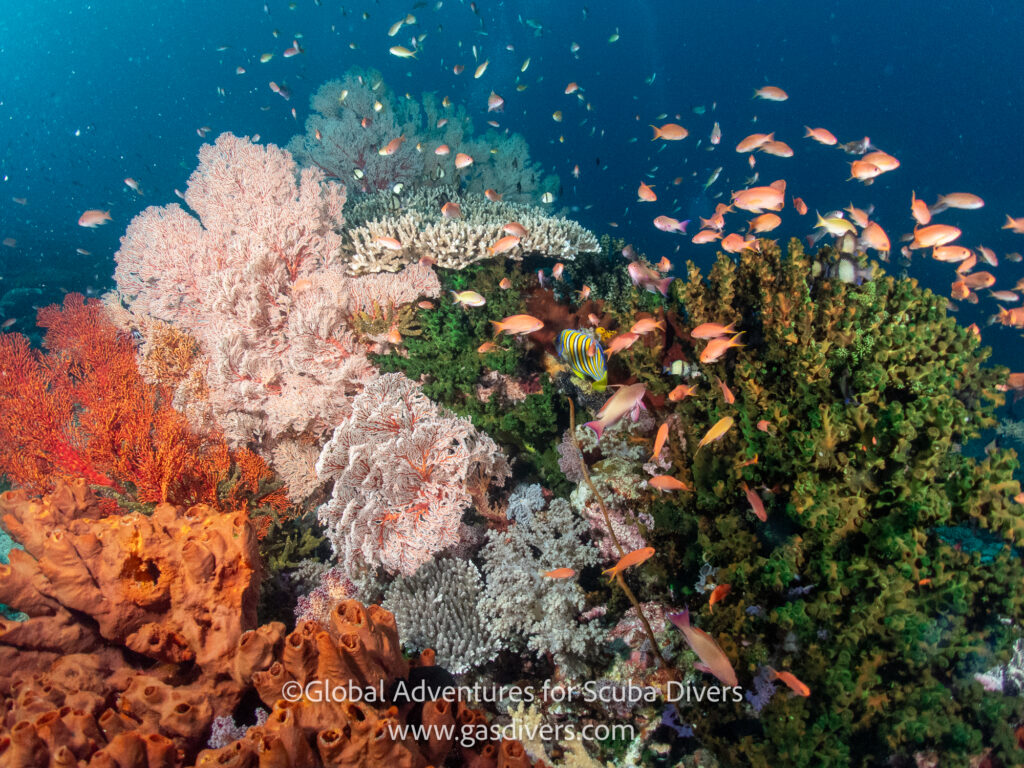
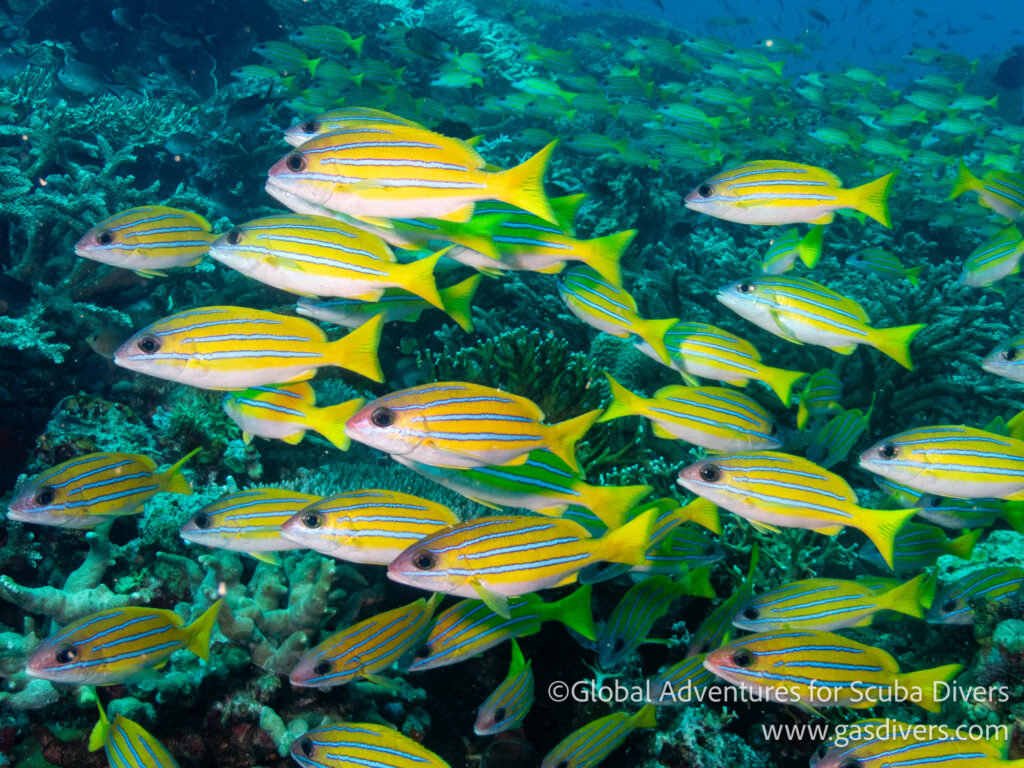
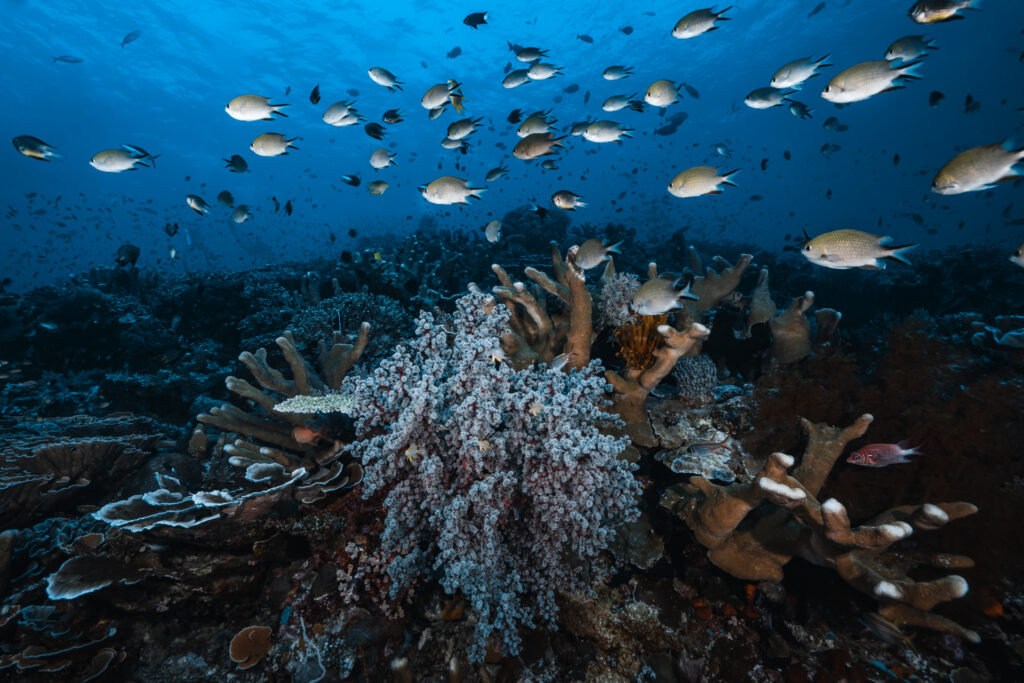
The reefs are exceptionally healthy, and the sheer variety of life is impressive. One dive might put you in the middle of a massive school of fusiliers, while the next has you watching manta rays glide through the blue.
And then there’s the macro.
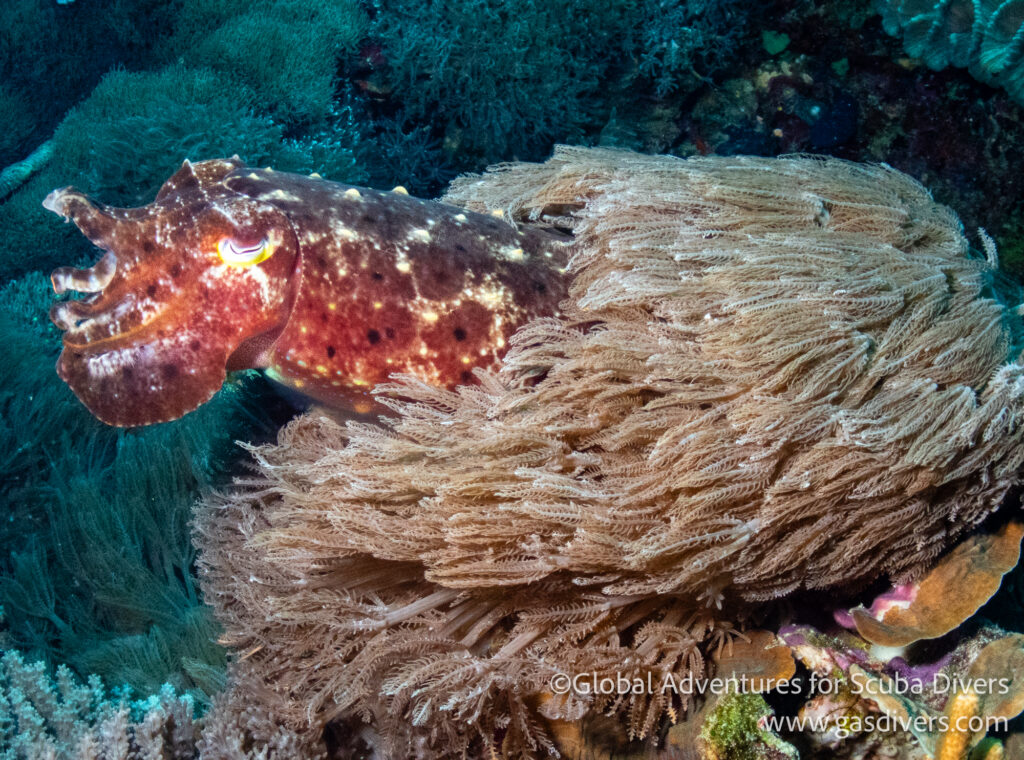
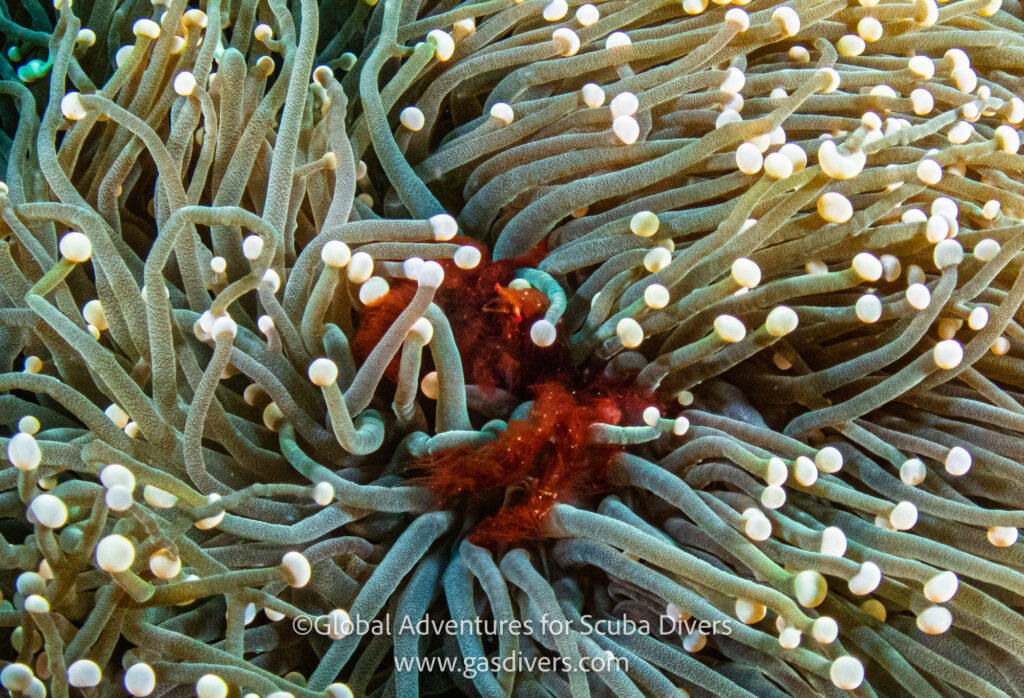
Look closely and you’ll find nudibranchs, frogfish, octopus, cuttlefish, crocodilefish, mantis shrimp, leaf fish and plenty of other small creatures hiding among the reef and rubble.
That combination is what makes Komodo so appealing:
Big animals + healthy reefs + incredible fish life + macro + dramatic topography.
The Indonesian Throughflow & Komodo’s Currents
Komodo sits in an area where water moves between the Indian and Pacific Oceans. The Indonesian Throughflow, combined with powerful tidal exchanges and seasonal upwelling, helps move nutrient-rich water through the region. That productivity is one reason Komodo supports such an extraordinary amount of marine life.
Those same currents are responsible for Komodo’s reputation as a challenging dive destination.
But we don’t think of the currents as something to simply tolerate.
They’re part of what makes the diving so rewarding.
The moving water brings nutrients, concentrates marine life and creates the conditions for spectacular reef and pelagic encounters. You’ll encounter everything from relatively calm reef dives to strong drift dives where the current does most of the swimming for you.
The key is understanding the conditions and knowing when to go with them—and when not to.
What Is the Diving Like in Komodo?
Komodo diving has a reputation for strong currents, and that reputation is deserved. But the currents are only part of the story.
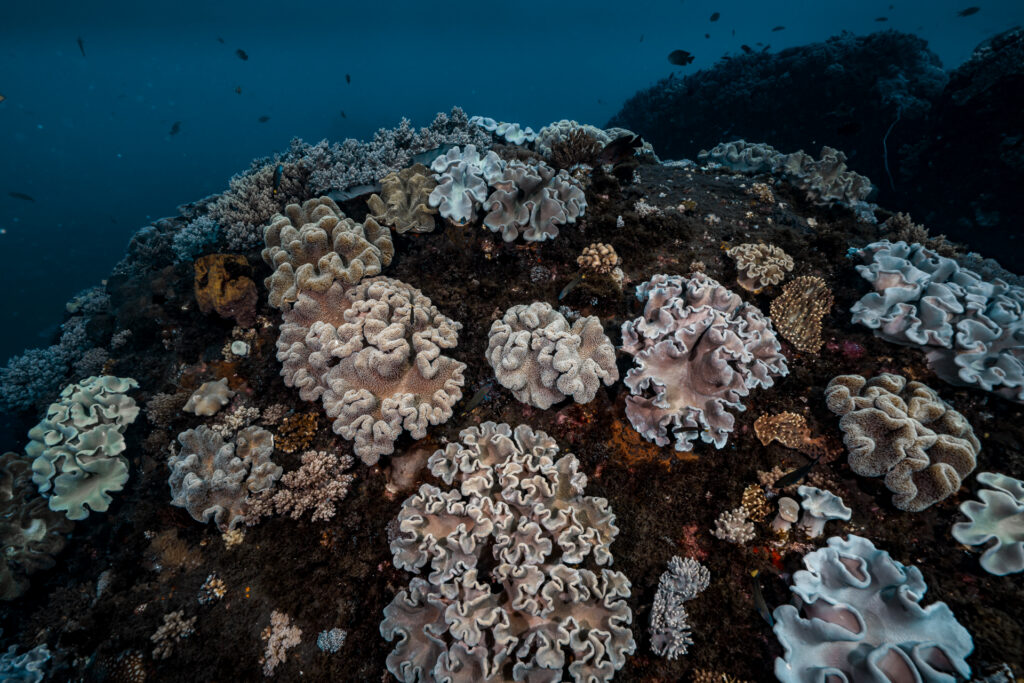
What makes Komodo so rewarding is what those currents help create: incredibly healthy reefs, abundant fish life and an extraordinary variety of marine animals.
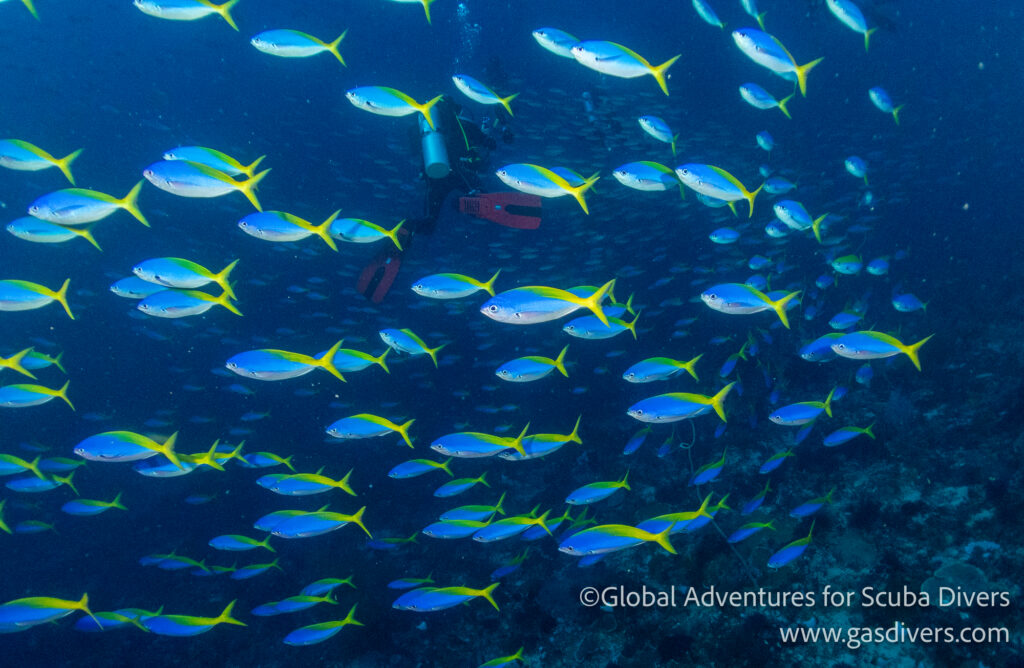
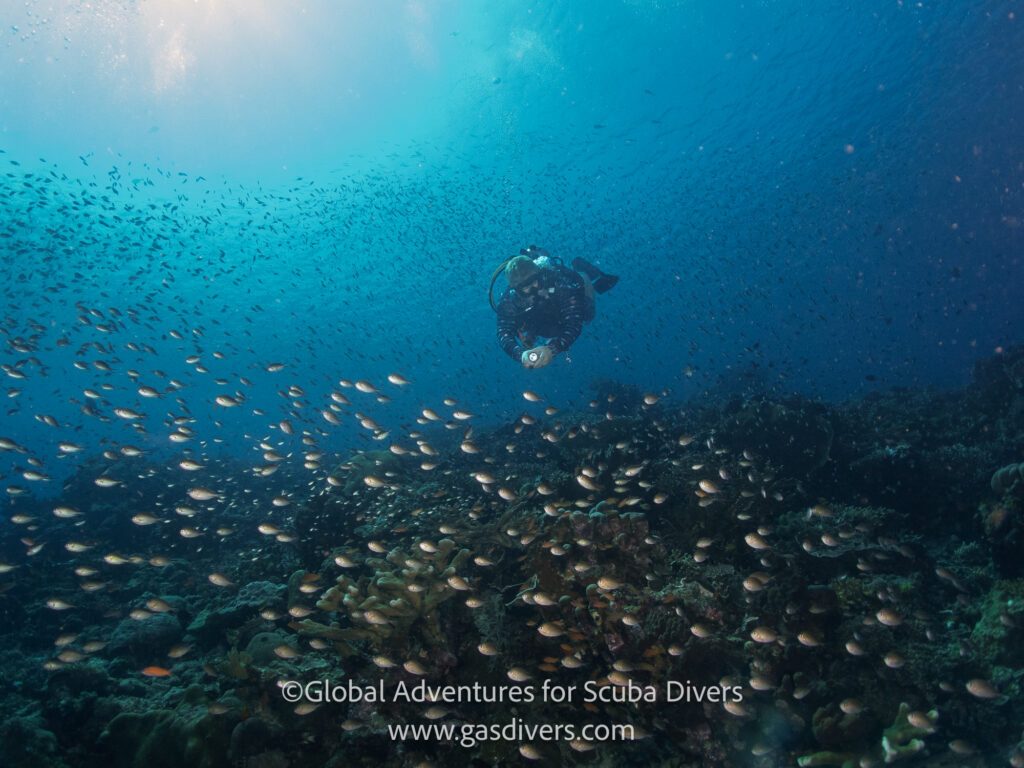
Schooling fusiliers can surround a pinnacle. Turtles cruise over coral gardens. Eagle rays pass through the blue. Sharks patrol the reef. Mantas gather around cleaning stations.
And then there’s the small stuff. We found cuttlefish, crocodilefish, octopus, nudibranchs, frogfish, baby bamboo sharks and plenty of other macro surprises throughout our trip.
You’re not just diving Komodo for one signature animal. You’re diving for the entire ecosystem.
Conditions can vary dramatically from one site to another and even from one dive to the next. Some dives may be relatively calm, while others involve strong drift currents or changing water movement.
That’s why a good dive briefing and an experienced local crew are so important.
The crew should understand the tides, know how the sites behave and be willing to change the plan when conditions aren’t right.
For an experienced diver, that combination of challenge and reward is part of what makes Komodo so special.
When Is the Best Time to Dive Komodo?
Komodo can be dived year-round, but conditions vary throughout the year.
For many divers, April through August is an excellent window for visiting, particularly if you’re interested in the classic Komodo experience of reefs, currents and big-animal encounters.
However, there isn’t one perfect month for every dive site. Water temperature, visibility, currents, weather and marine-life encounters can all vary depending on where you’re diving and the conditions on a particular day.
That’s another reason we like liveaboards: your crew can adapt the itinerary to the conditions rather than forcing you into a fixed schedule.
What Certification and Experience Do You Need?
Komodo isn’t necessarily the best destination for a diver who is still building basic experience.
We recommend divers joining a Komodo liveaboard have:
- Advanced Open Water certification or equivalent
- At least 50 logged dives—and we’d prefer more
- Experience diving in currents
- Good buoyancy and situational awareness
- Comfort with drift diving
- Experience managing yourself in changing conditions
- Nitrox certification, which is particularly useful on a multi-day liveaboard
- A Drift Diver specialty can be useful, although experience matters more than simply having the certification
You don’t need to be a technical diver.
But you should be a confident recreational diver who can manage yourself in current and follow a detailed dive plan.
Good buoyancy is especially important in Komodo. Our dive guides were very attentive to keeping divers a safe distance from the reef and making sure we weren’t accidentally kicking or contacting the coral. That’s important anywhere you dive, but particularly in a destination known for its incredibly healthy reefs.
If you’ve never experienced a current before, we’d recommend getting some experience elsewhere before making Komodo your first current-diving destination.
What Gear Should You Bring for Komodo?
You don’t need an enormous amount of specialized equipment, but there are a few things we’d consider particularly important.
DSMB & Reel
- We recommend bringing a large, highly visible DSMB with at least a 30-meter reel.
- Some situations may call for more line, so make sure your setup matches the dives you’ll be doing.
- And don’t wait until Komodo to learn how to deploy it. Practice beforehand.
Fins
- Bring a sturdy pair of fins that can handle current.
- This is one trip where we’d prioritize propulsion and control over choosing the smallest possible travel fin.
Exposure Protection
- We recommend at least a 3mm wetsuit, but be prepared for temperature changes.
- On our trip, some divers brought both 3mm and 5mm wetsuits so they could adjust depending on the site.
- A hood or vest can also be useful for colder sections.
Dive Computer & Nitrox
- A reliable dive computer is essential, particularly when you’re doing multiple dives per day.
- If you’re Nitrox certified, you’ll likely appreciate having that option on a liveaboard itinerary with repetitive diving.
Personal Emergency Equipment
For remote destinations, we also like to recommend that our divers consider carrying an EPIRB or other appropriate personal emergency locator device.
Is it overkill? Maybe.
But when you’re diving in remote areas, we prefer having another way to signal for help in an emergency.
Liveaboard vs. Land-Based Diving in Komodo
You can absolutely dive Komodo from a land-based resort, and it can be a great option for divers who want to combine diving with a resort stay and other activities. The major difference is access and flexibility.
Land-Based Diving
With a land-based trip, you’re generally working within a set daily schedule. Dive boats leave at specific times and return at specific times, and the distance from your resort can limit which sites are practical to visit on a given day.
That doesn’t mean you can’t experience excellent Komodo diving from land. You can.
But you’re more dependent on:
- Boat departure schedules
- Travel time to dive sites
- Weather and sea conditions
- Which sites are practical to reach that day
- The operator’s predetermined schedule
If conditions change, the day’s diving may need to be modified or sites closer to shore may be substituted.
Why We Prefer a Liveaboard for Komodo
For a dedicated dive trip, we strongly prefer a liveaboard.
The biggest advantage is simple: you’re already where you want to dive.
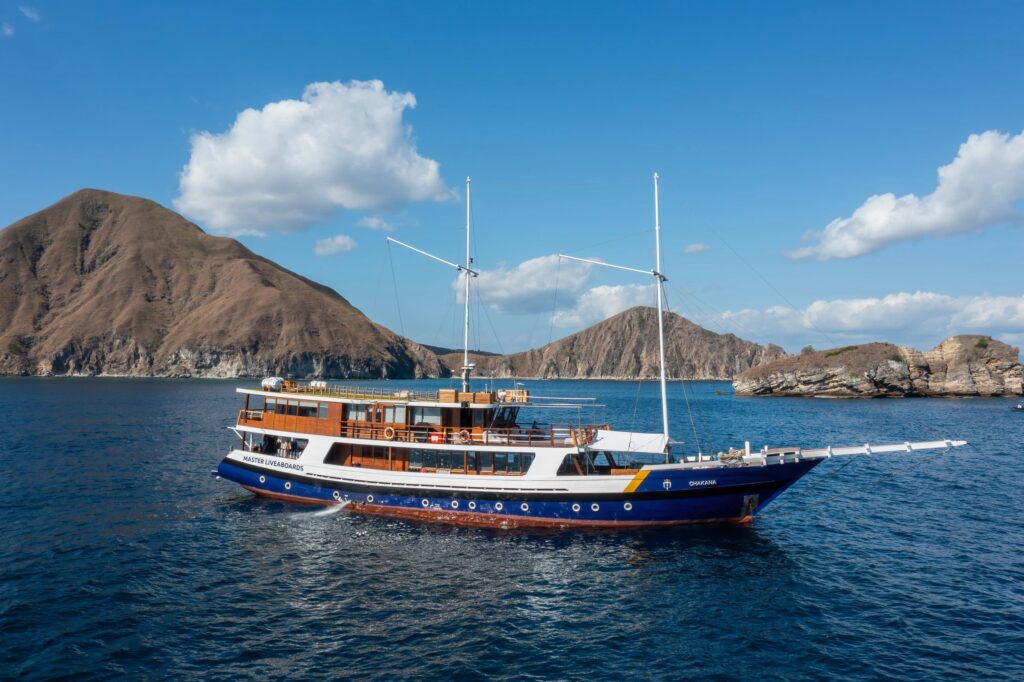
Instead of spending a significant portion of your day traveling back and forth between a resort and distant dive sites, the boat can move through the park while you’re sleeping or between dives.
That opens up a much wider range of dive sites and gives the crew more flexibility to build the itinerary around conditions.
Weather Flexibility
Weather can affect any Komodo itinerary, but a liveaboard has more options when conditions change.
A larger liveaboard can often seek shelter in bays or inlets, adjust its route and find more protected areas when weather or sea conditions aren’t cooperating.
That doesn’t mean a liveaboard is immune to weather. It isn’t.
Severe conditions can still affect diving, and a good operator should never push a dive simply to stick to a schedule.
But having a mobile base gives the crew more options than a land-based operation that has to return to the same resort every day.
More Time in the Water
A liveaboard also makes it easier to experience the full variety of Komodo diving.
You can combine:
- Manta dives
- Current dives
- Reef dives
- Macro sites
- Night dives
- More remote sites
And because you’re not tied to returning to the same port or resort every afternoon, you can spend more of your trip exploring different areas of the park.
The Bottom Line
Land-based diving can absolutely be a great way to experience Komodo. It’s particularly appealing if diving is only part of a larger vacation and you’d like more time at a resort or on land.
But if diving is the main reason you’re traveling to Komodo, we think a liveaboard is the better choice.
You get more access, more flexibility and more opportunities to experience the incredible variety of diving that makes Komodo special.
The Best Dive Sites in Komodo National Park
Komodo has a huge number of dive sites, and the exact sites you’ll visit depend on your liveaboard route, season, tides, weather and conditions.
Here are some of the sites worth knowing:
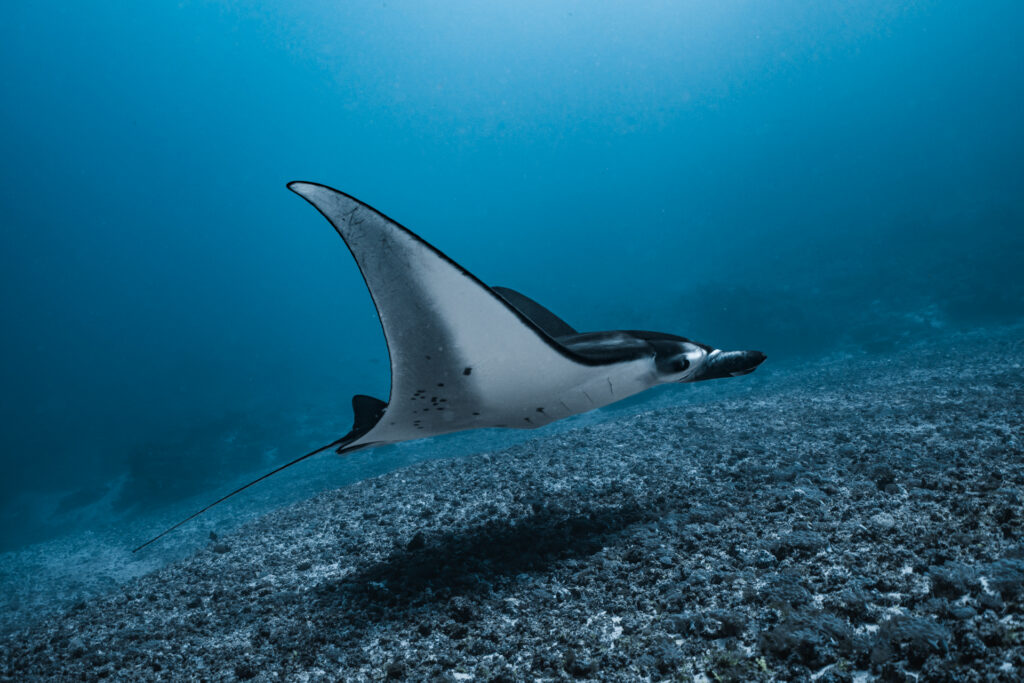
Manta Alley
Manta Alley is one of Komodo’s iconic manta sites.
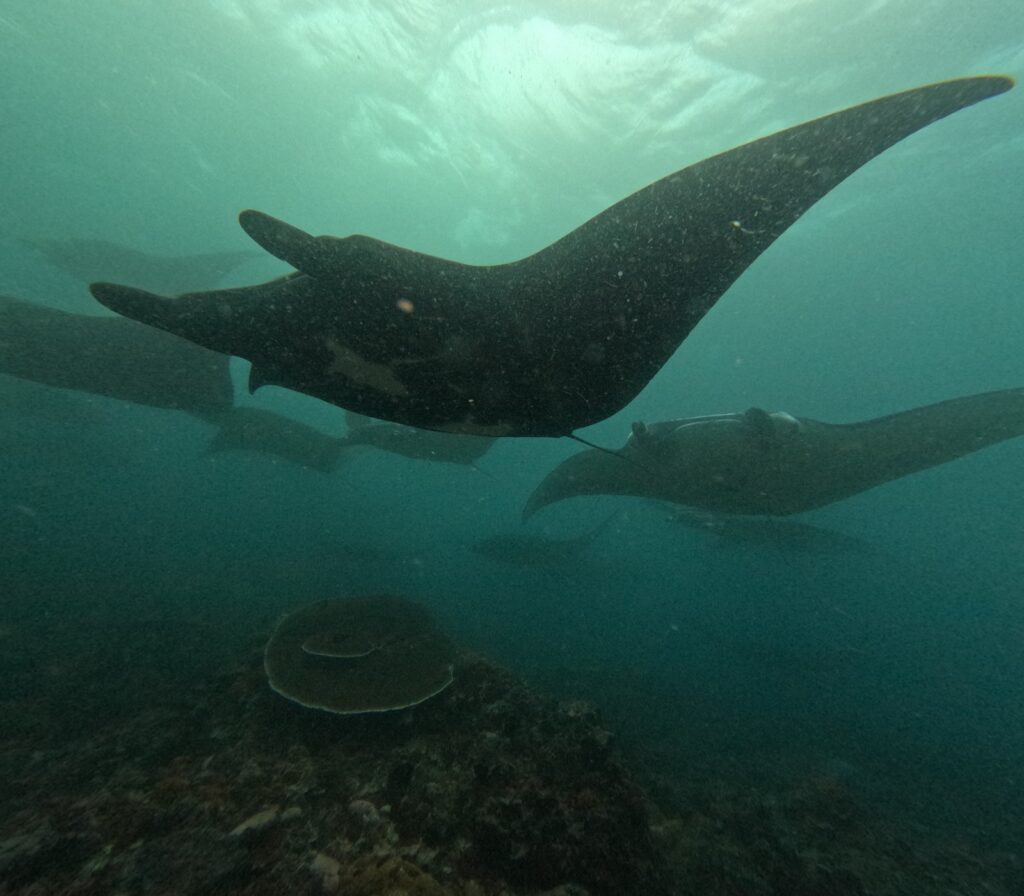
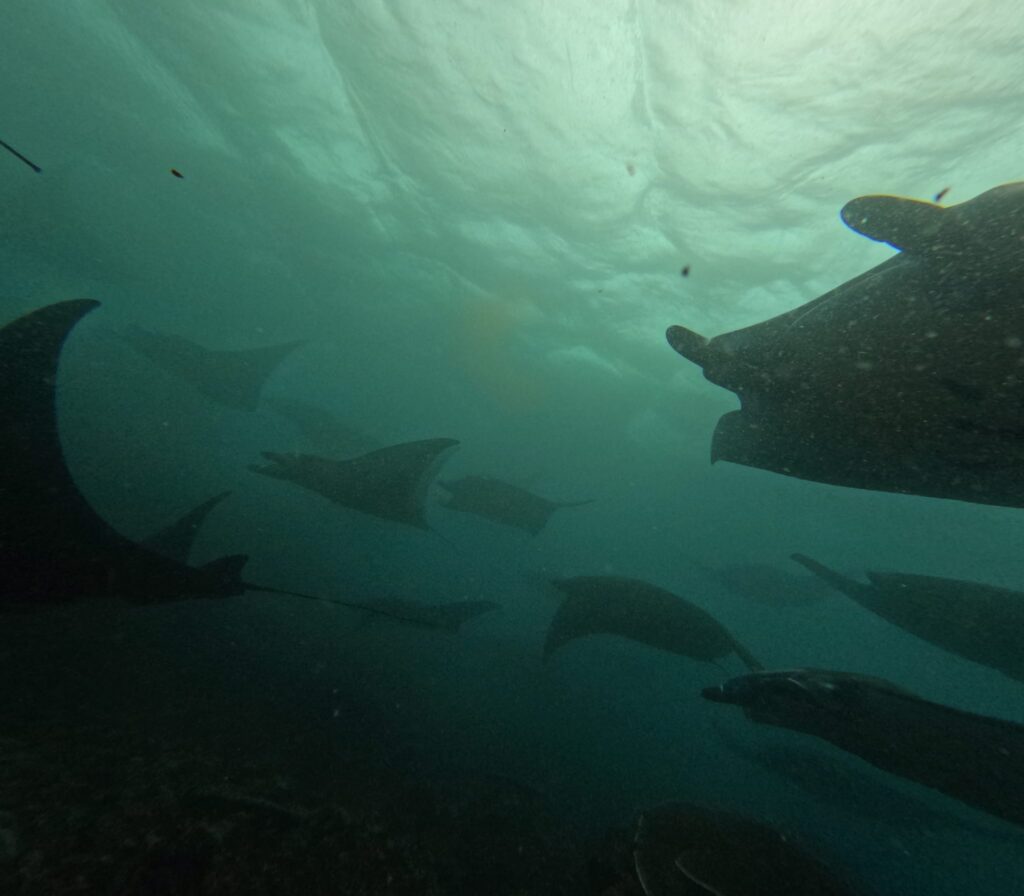
We spent two days diving the area on our trip and were incredibly lucky to see so many mantas.
Multiple dives also gave us the opportunity to observe their behavior rather than simply having one quick manta encounter.
Currents can be strong here, visibility can be poor, and its cold!
Crystal Rock
Wow.
Crystal Rock was one of our favorite sites.
The pinnacle was absolutely covered in life, with huge schools of fusiliers creating an explosion of movement around the reef.
It’s a great example of what makes Komodo so special: the reef itself is the attraction.
Strong currents but the dive team worked hard to time our dive on slack tide.
Shotgun / The Cauldron
Shotgun is famous for its current and the exhilarating drift it can provide when conditions are right.
Our experience was actually much calmer than some of the dramatic footage you’ll find online, which is a good reminder that Komodo dive sites can behave very differently depending on tides and conditions.
Can be very crowded as the day boats also come to dive this site.
Secret Garden
Secret Garden offers a different side of Komodo, with a calmer profile and plenty to discover if you take the time to look.
It’s a good reminder that not every Komodo dive needs to be an adrenaline-filled current dive.
Poor visibility and cold but lots of cool critters!
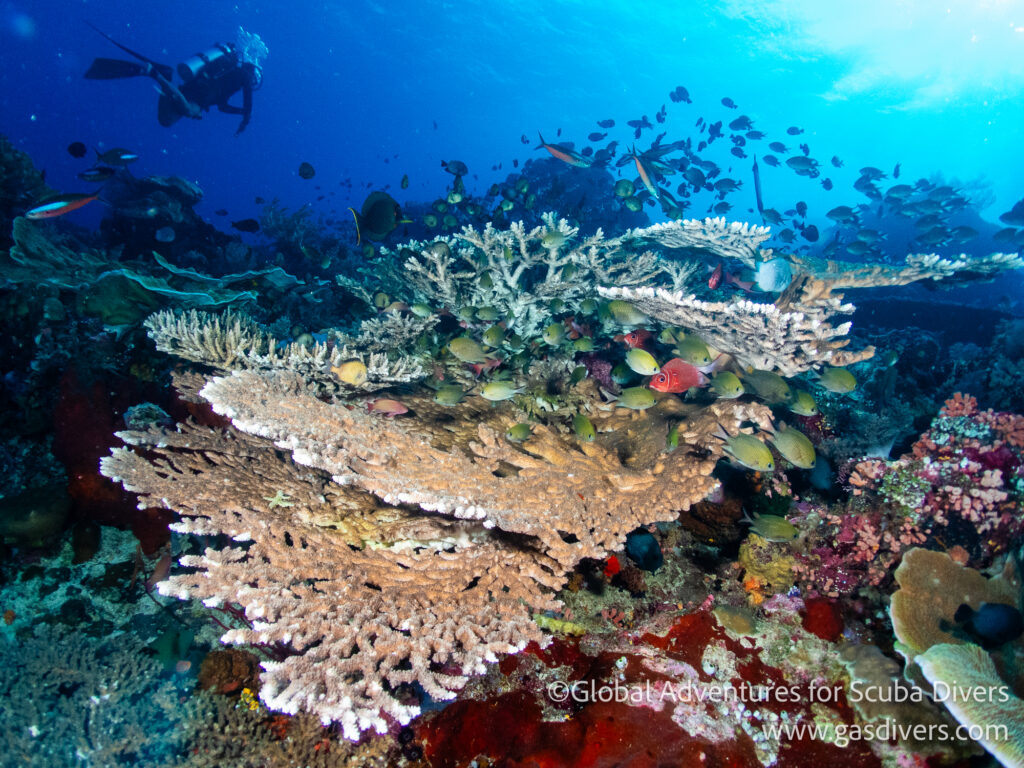
Tatawa Besar
Tatawa Besar is known for colorful coral and drift diving.
It’s a great example of how fun Komodo’s current diving can be when you’re working with the water rather than fighting it.
Mawan
Mawan is relatively shallow but offers plenty of variety. It’s also another site where manta encounters are possible, depending on conditions and season. We personally loved the macro at this site!
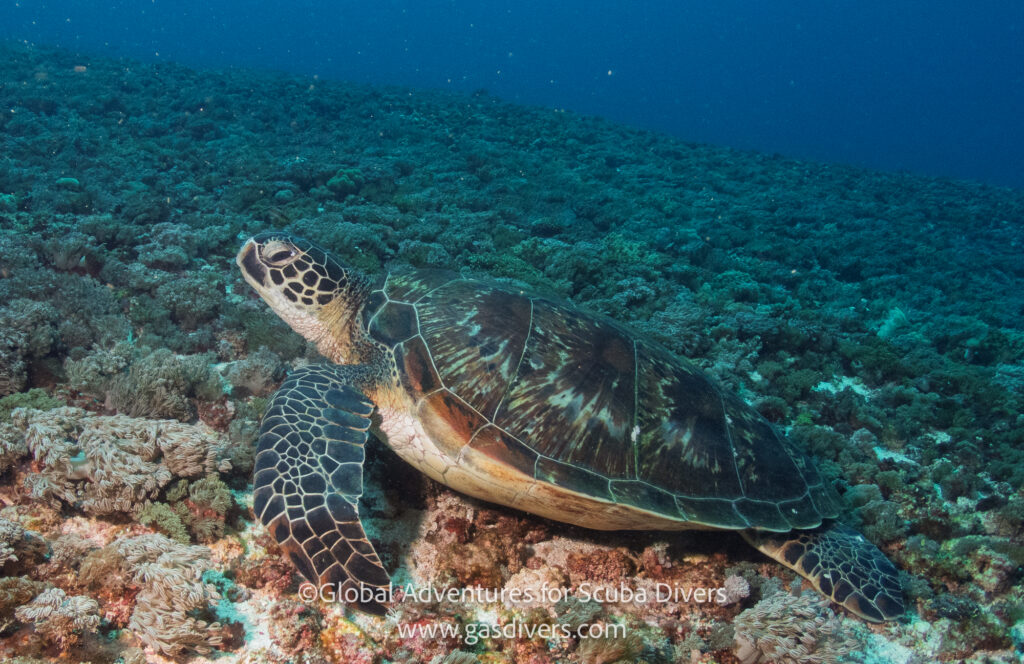
Karang Makassar
We didn’t see mantas at Karang Makassar—but we certainly weren’t disappointed.
We saw eagle rays feeding, bamboo sharks, octopus, nudibranchs, turtles and even a dolphin.
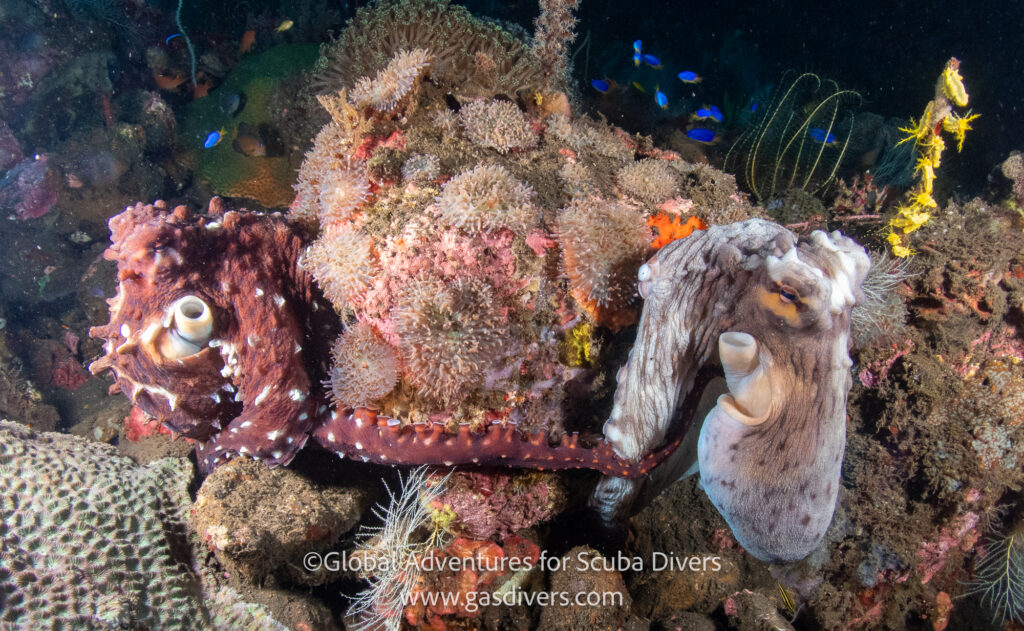
Sangeang Island
Sangeang Island was another favorite because it offered a completely different experience.
The black-sand environment was particularly interesting for macro diving, giving us another opportunity to slow down and look for the small stuff. Accessible via liveeabaord.
Other Komodo Dive Sites
Depending on your itinerary, you may also encounter sites such as:
- Batu Bolong
- Castle Rock
- Siaba Besar
- Manta Point
- And many others
That’s one of the advantages of a liveaboard: the itinerary can cover a much wider range of Komodo’s diving rather than relying on a small collection of sites.
Komodo’s Big Animals & Tiny Treasures
One of our favorite things about Komodo is that you don’t have to choose between big-animal diving and macro.
Big animals
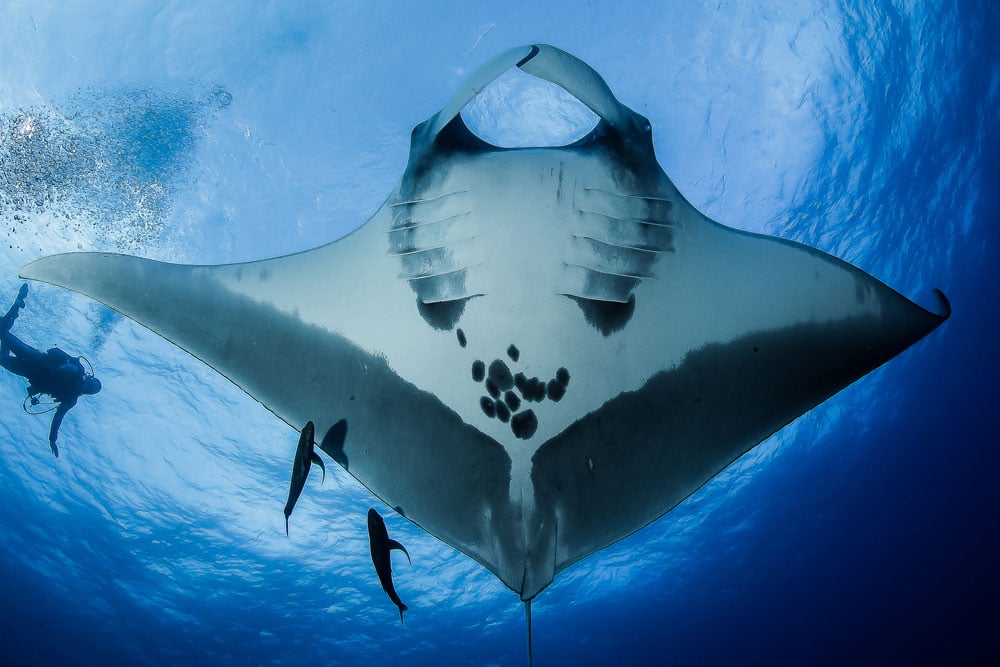
- Manta rays
- Sharks
- Eagle rays
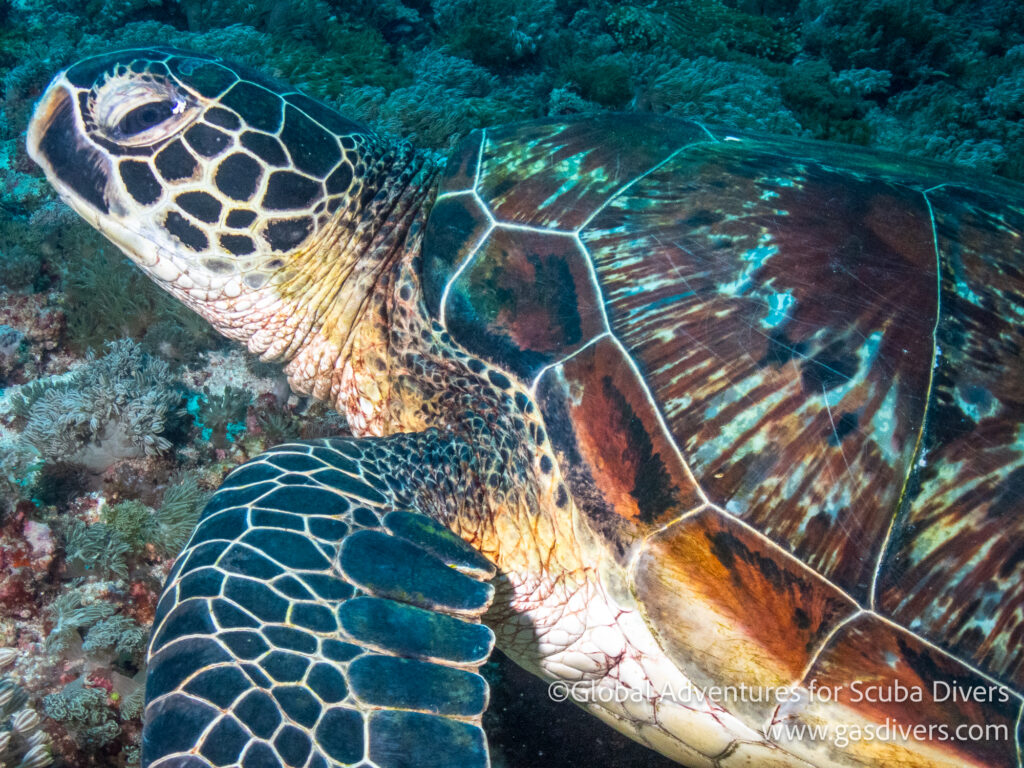
- Turtles
- Dolphins
- Large schools of reef fish
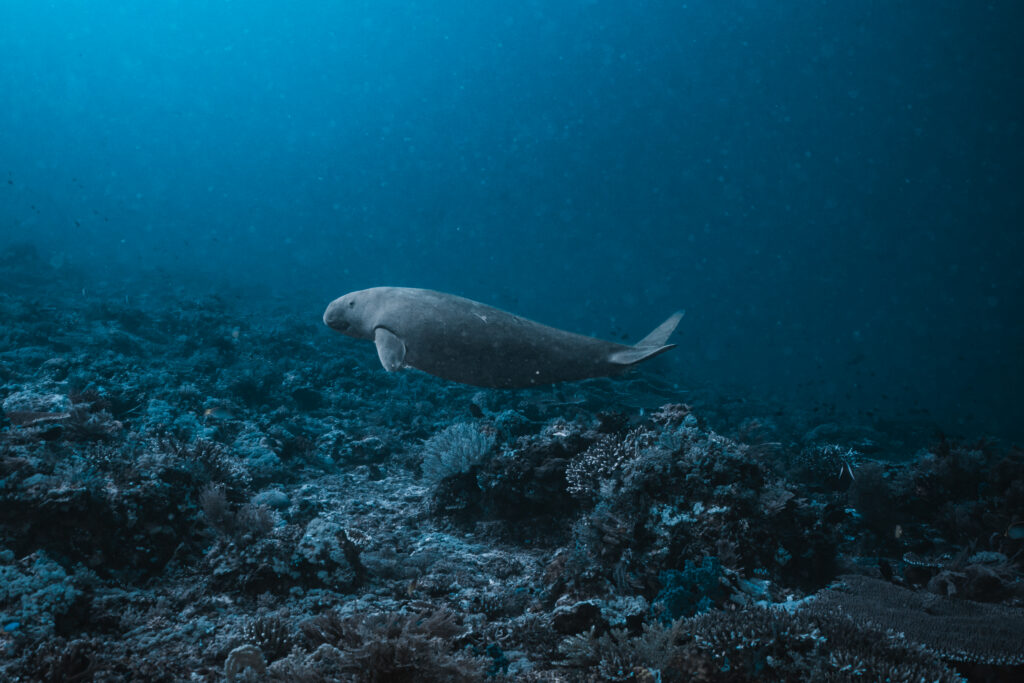
- And, if you’re lucky, even a dugong
Macro life
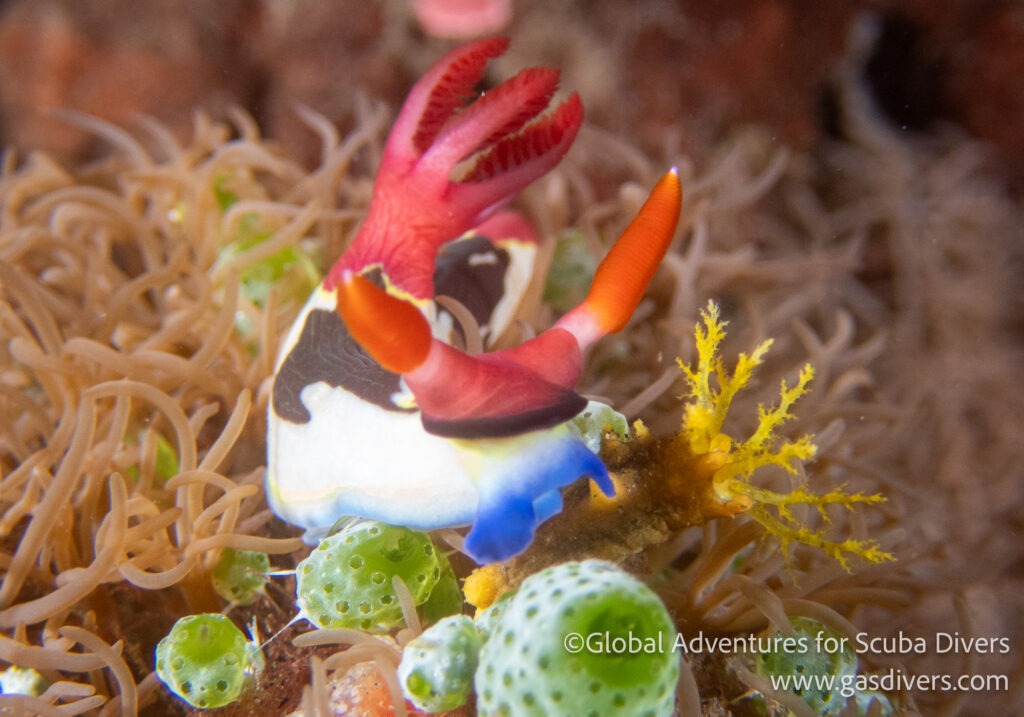
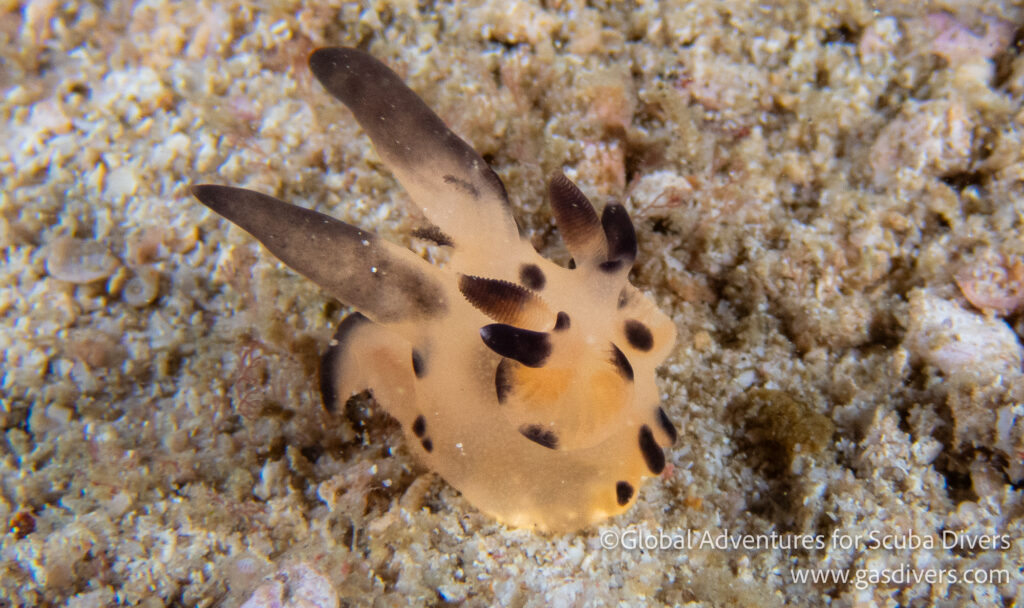
- Nudibranchs
- Frogfish
- Cuttlefish
- Octopus
- Mantis shrimp
- Leaf fish
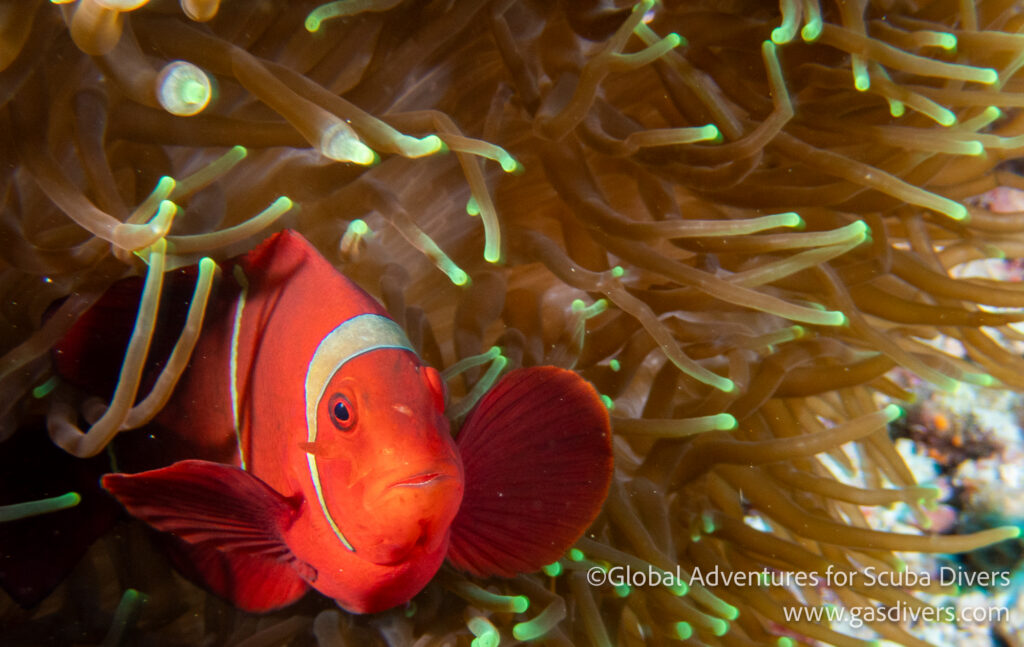
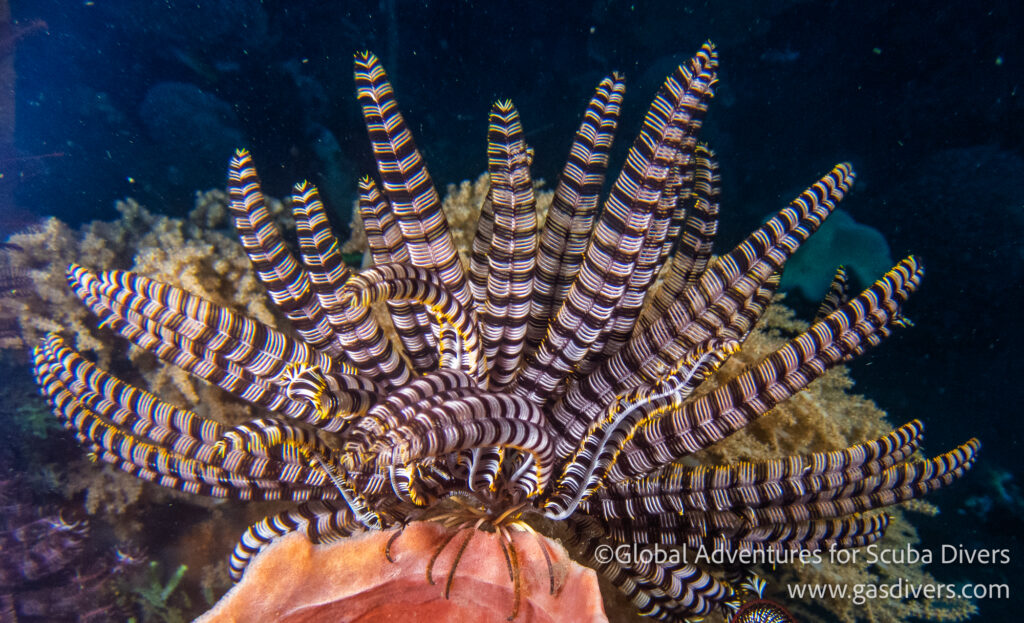
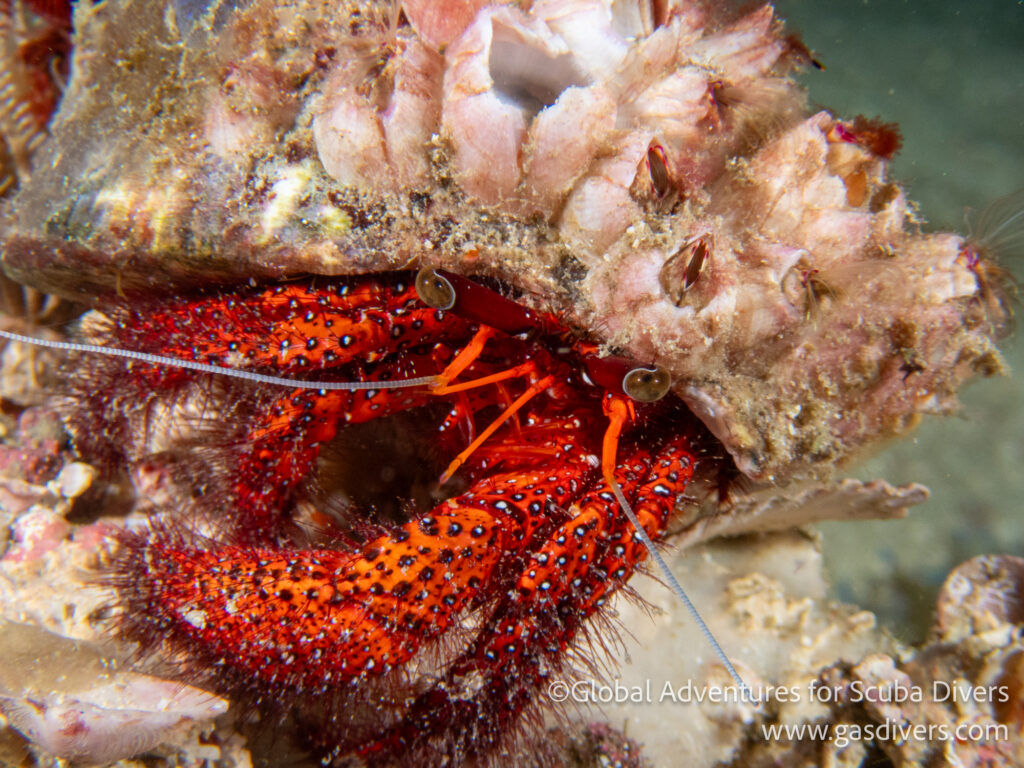
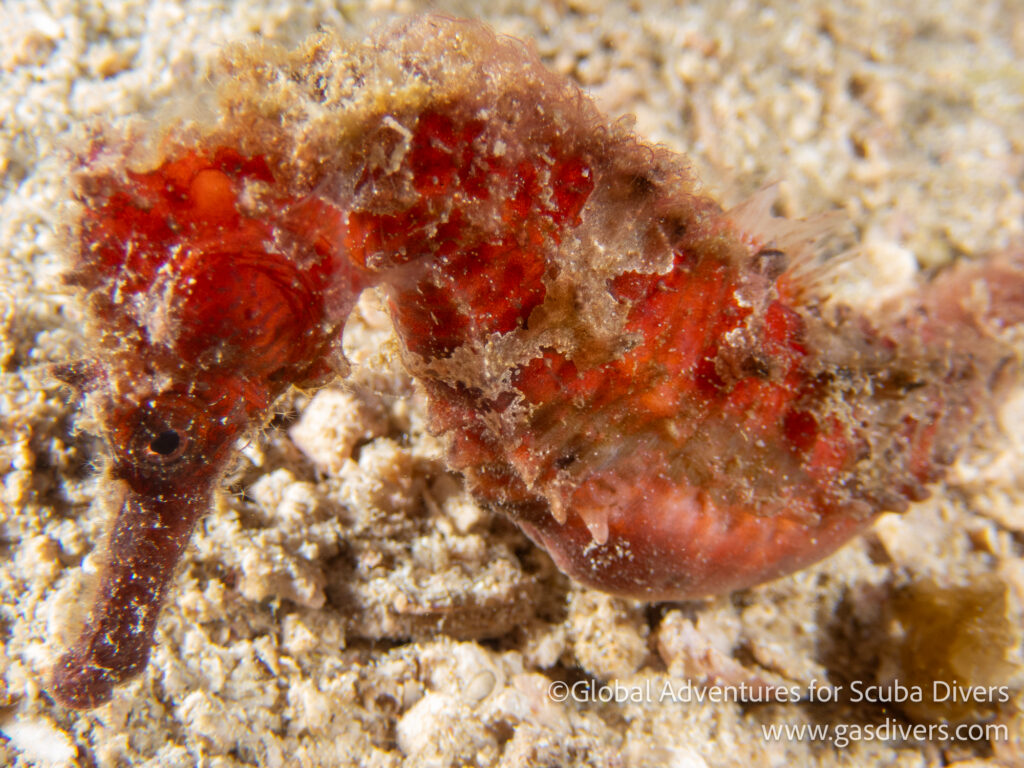
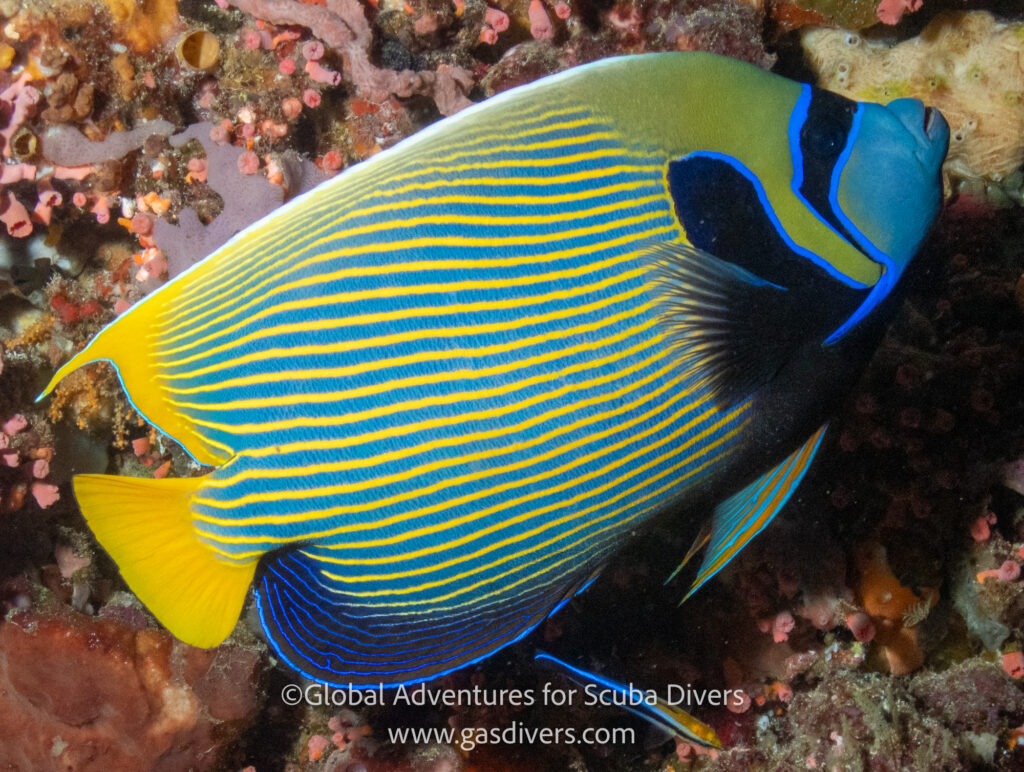
Just a few of the marine life encounters from our Komodo trip. From mantas and turtles to tiny nudibranchs and unexpected macro finds, the variety was one of our favorite things about diving Komodo.
Want to See What a Komodo Trip Is Really Like?
We recently spent 10 days exploring Komodo by liveaboard, diving everything from manta sites and current-swept pinnacles to black-sand macro sites and night dives.
Read our Komodo Trip Review to see where we went, what we saw, what we loved about the diving, and what it was really like traveling through Komodo with our group.
Don’t Forget the Land-Based Adventures
A Komodo diving trip isn’t just about what happens underwater. The national park is spectacular above the surface, too, and we strongly recommend making time for some of the land-based experiences.
Meet the Komodo Dragons
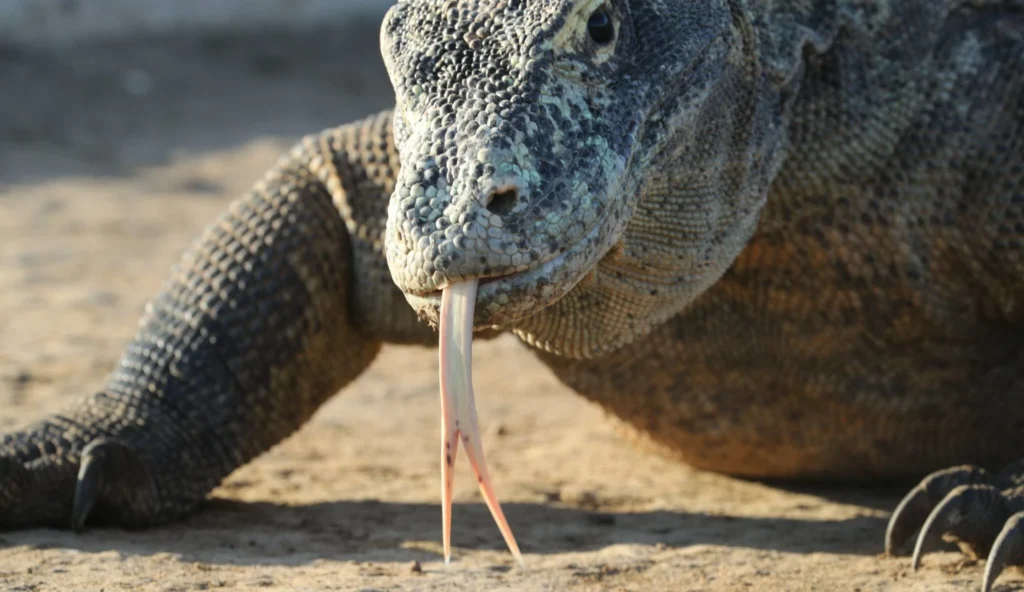
Of course, the dragons are a major part of visiting Komodo.
You’ll typically visit with a local ranger, who will take you through the area where the dragons live and explain more about these remarkable animals. They may look slow and almost prehistoric, but they’re powerful predators and deserve plenty of respect.
On our visit, we were even given a stick to help defend ourselves if necessary—which was both reassuring and a little amusing. 😂
The important thing is to follow your ranger’s instructions and give the dragons plenty of space.
Padar Island
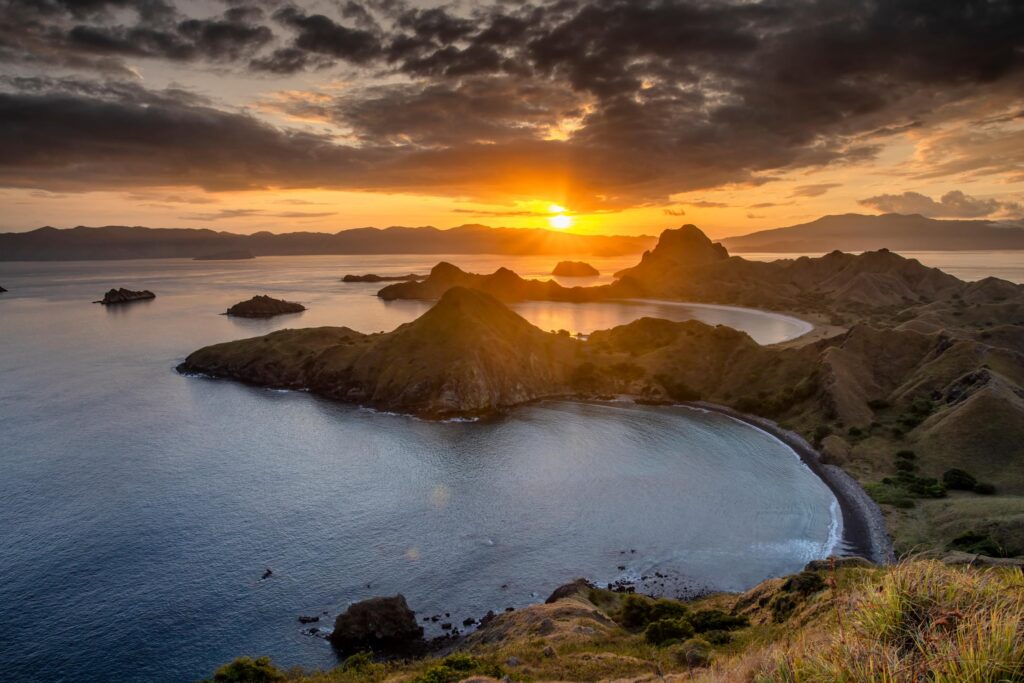
The view from Padar Island is one of the most recognizable landscapes in Indonesia, with dramatic volcanic ridges surrounding turquoise bays.
Getting there, however, requires a fairly substantial climb.
There are roughly 1,000 steps to the viewpoint, depending on which route you take. And while that’s not an especially difficult hike for someone accustomed to hiking, it hits a little differently after you’ve spent eight days doing multiple dives every day.
Our advice?
Save some energy for the stairs.
The view is absolutely worth it.
Pink Beach
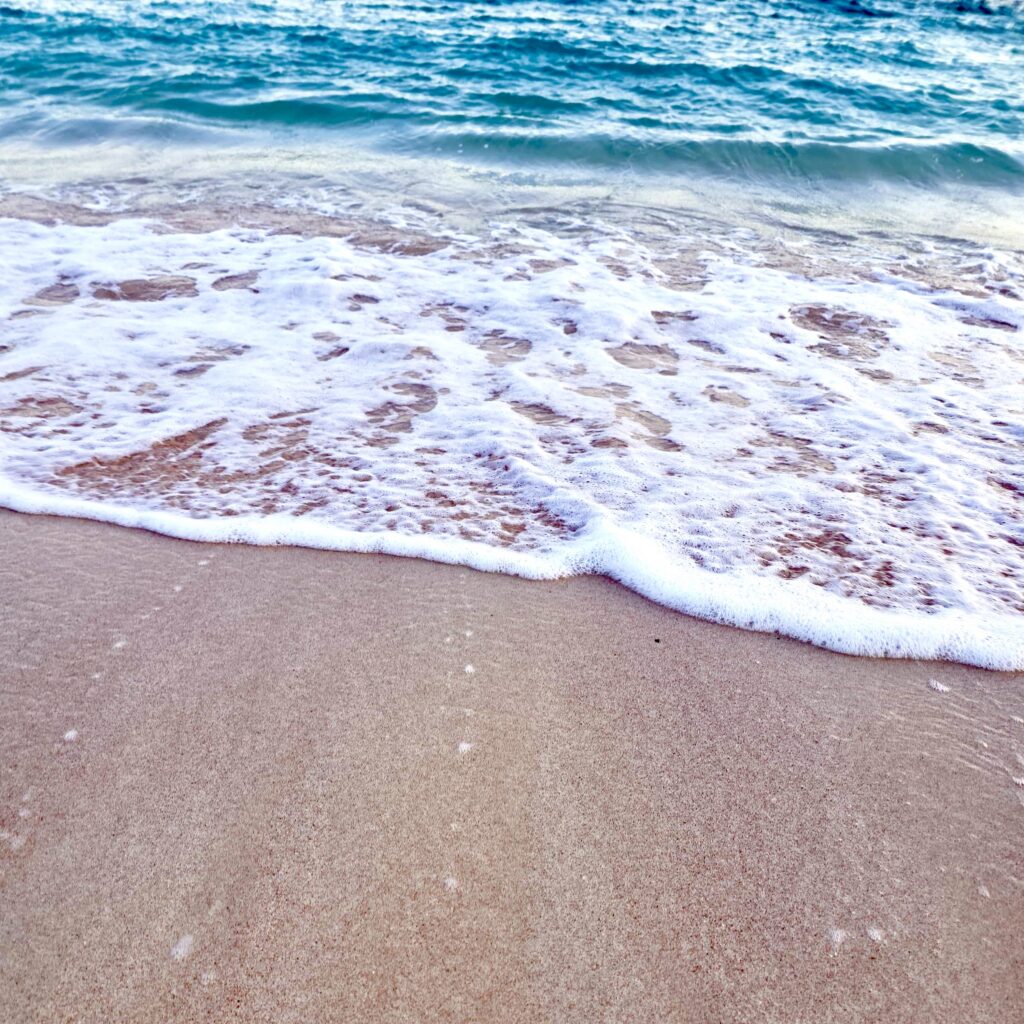
Pink Beach gets its distinctive color from tiny fragments of red coral mixing with the pale sand.
It’s beautiful—but we’ll offer one small reality check: it generally looks much less intensely pink in person than it does in heavily edited or carefully photographed Instagram images.
Still worth visiting? Absolutely.
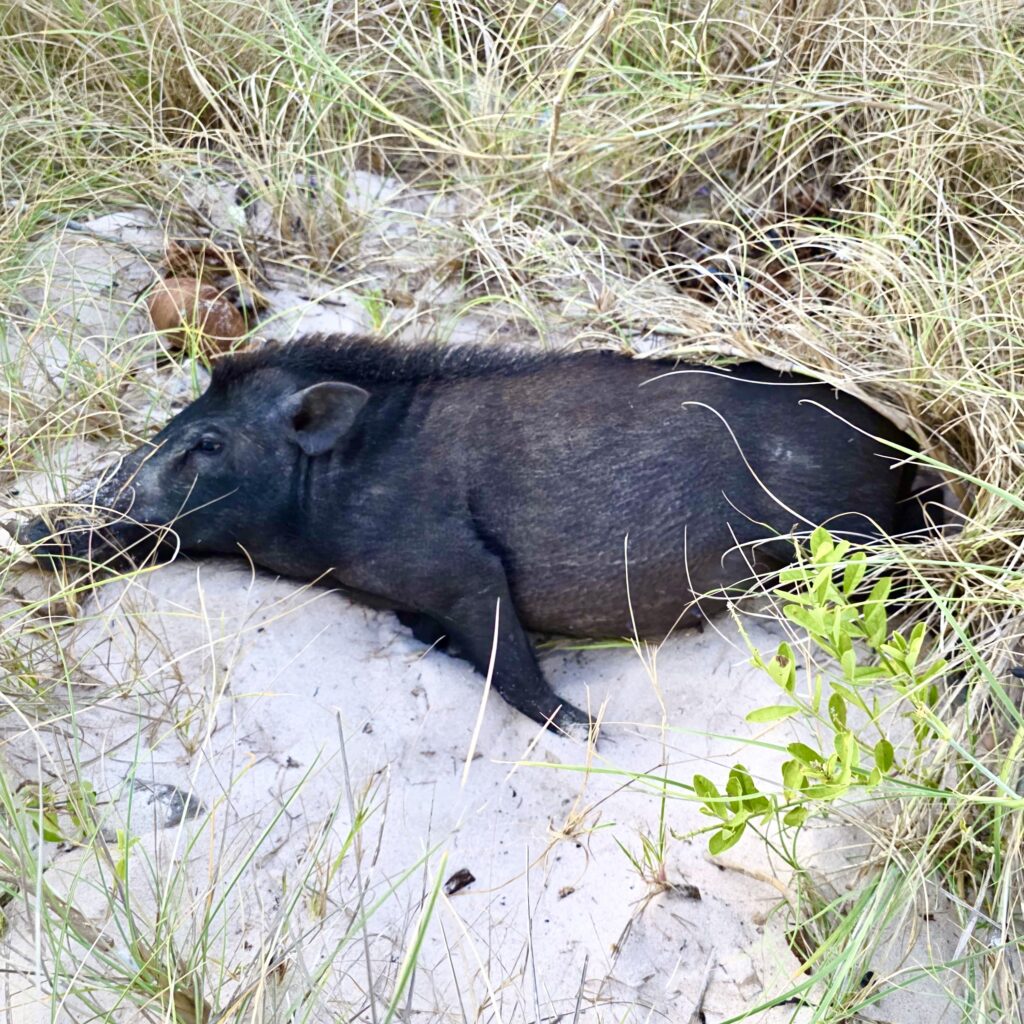
We also happened to make friends with a very friendly local pig while we were there, which wasn’t exactly on our itinerary but became one of our favorite memories.
Why These Experiences Matter
These excursions are part of what makes Komodo such a great destination. You’re not spending your entire trip underwater—you’re moving through a landscape that is every bit as dramatic as the reefs below it.
Choosing a Safe and Responsible Komodo Liveaboard
This is one area where we think divers should look beyond the boat’s cabins and amenities.
When choosing a Komodo liveaboard, consider:
- Safety record
- Crew experience
- Emergency procedures
- Dive group sizes
- How the crew handles currents
- Quality of dive briefings
- Gear handling
- Environmental policies
- Reef protection
- Marine-life interaction policies
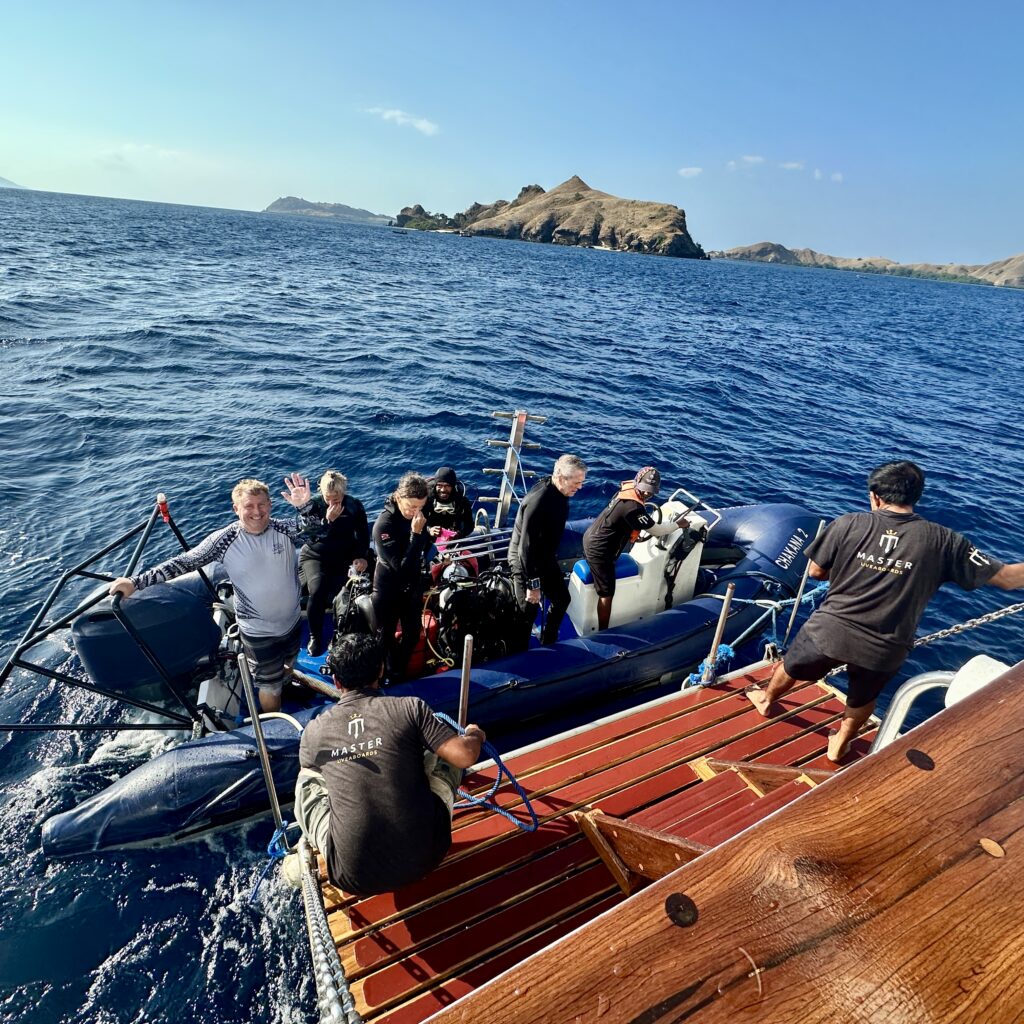
For example, on our recent Komodo trip, we chose the Indo Master in part because of its strong focus on safety and environmental responsibility.
One thing we particularly appreciated was the operator’s approach to reef hooks. They aren’t permitted at most sites because improperly used reef hooks can damage coral.
Komodo’s reefs are one of the reasons we’re traveling there in the first place. We want to dive operators that care about keeping those ecosystems healthy.
Is Komodo Right for You?
Komodo is an excellent choice if you want:
- Manta rays and big animals
- Healthy coral reefs
- Incredible fish diversity
- Current and drift diving
- Macro life
- Night diving
- Remote destinations
- Liveaboard travel
- Adventure above and below the surface
It may not be the right first destination for a brand-new diver or someone who is uncomfortable with current.
But for a confident recreational diver, Komodo can be incredibly rewarding.
Final Thoughts: Is Komodo Worth Diving?
Absolutely. What makes Komodo special isn’t one dive site or one animal.
It’s the combination of healthy reefs, incredible biodiversity, dynamic diving, big animals, macro life and an unforgettable landscape above the water.
The currents can make the diving challenging—but they also help create the incredibly productive environment you’re there to experience.
Come prepared, listen to your guides, respect the conditions and slow down enough to look beyond the obvious.
You might come for the mantas. You might leave talking about the nudibranchs.
And there’s a good chance you’ll spend at least a little time talking about the dragons, too.
Ready to Explore Indonesia?
Komodo was an incredible reminder of just how much there is to explore beneath the surface in Indonesia—and we’re definitely not done yet.
Next November, GAS Divers is heading to Raja Ampat, Halmahera & Lembeh, aboard the same boat and with the same crew we traveled with in Komodo.
Explore the Raja Ampat, Halmahera & Lembeh Trip
And if Komodo itself is what you’re after, we can still help. We don’t currently have a GAS Divers group departure scheduled, but we have a great relationship with Master Liveaboards and the Indo Master and can help arrange individual or custom bookings > Inquire about Your Komodo Trip