
Ask a typical diver what they hope to see underwater, and you’ll probably hear the same answers:
Sharks. Sea turtles. Manta rays. Colorful coral reefs.
Very few people say, “I can’t wait to stare at the sand for an hour.”
And yet, some of the most exciting dives we’ve ever done have happened over what, at first glance, looks like an ordinary stretch of sand or rubble.
Welcome to the wonderfully weird world of muck diving.
So, What Exactly Is Muck Diving?
Despite the name, muck diving isn’t about diving through mud.
Muck diving takes place in soft-bottom environments such as volcanic black sand, silt, rubble, seagrass beds, and sandy slopes. These sites can look fairly ordinary compared with a colorful coral reef—sometimes there’s little more than sand, scattered rocks, algae, and bits of debris covering the bottom.
And that’s exactly what makes them so interesting.
These environments provide food, shelter, burrows, and hiding places for an incredible variety of marine life. Some animals live in the sand itself, while others use the rubble, algae, or seagrass for camouflage and protection.
From above, it might not look like much.
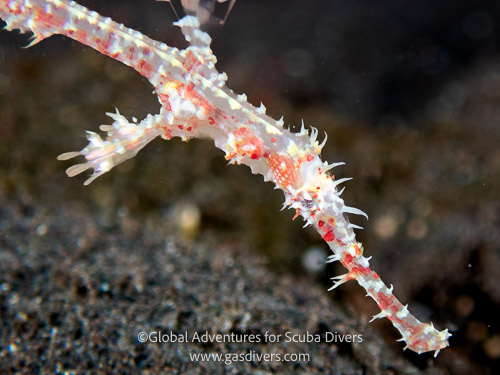
But slow down. Look closer. Suddenly, that shell has eyes. The piece of algae starts walking. The twig turns into a ghost pipefish. The “rock” blinks.
That’s the magic of muck diving.
Muck diving doesn’t necessarily mean giving up the reef.
Many destinations offer both. A single dive area may have soft-bottom muck sites alongside coral reefs, walls, wrecks, or other traditional dive sites. That means you can spend one dive searching for a tiny nudibranch in the sand and the next exploring a colorful reef.
That’s one of the things we love about destinations with a mix of dive environments—you don’t have to choose one style of diving for your entire trip.
Tulamben, Bali is a great example. The area is famous for its muck diving and incredible macro life, but there are also reefs and the USS Liberty wreck to explore.
And there’s another reason muck environments are so fascinating…
They’re often incredibly productive habitats for small and unusual marine life.
Rather than swimming over a large reef looking for something that catches your eye, muck diving is about searching a much smaller area carefully. Your dive guide might point out a tiny movement in the sand, a flash of color, or something that looks completely out of place.
And suddenly, you’re looking at a creature you might have swum right past five seconds earlier.
Muck Diving Marine Life: Amazing Adaptations
Why would so many fascinating animals choose to live in an environment that looks relatively barren?
Because what looks ordinary to us can provide exactly what these animals need to survive.
Soft-bottom environments can offer food, places to hide, burrows, and protection from predators. Over generations, marine animals have developed some truly remarkable adaptations to make the most of these habitats.
Camouflage and Mimicry
If there’s one thing muck-dwelling animals are exceptionally good at, it’s disappearing.
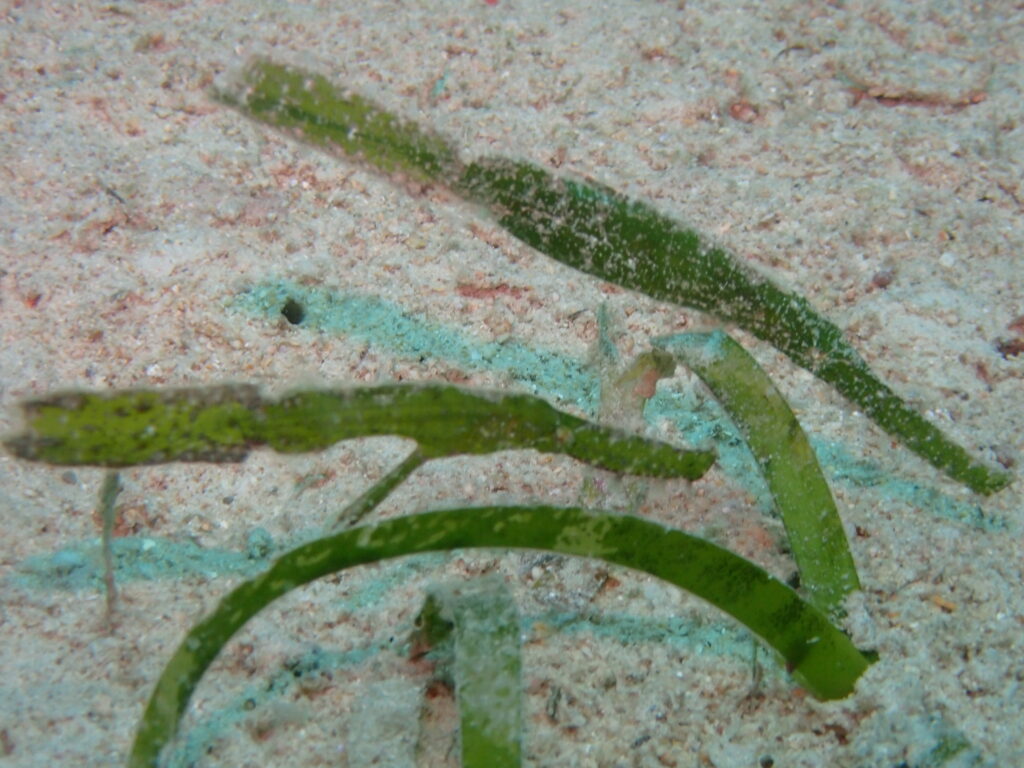
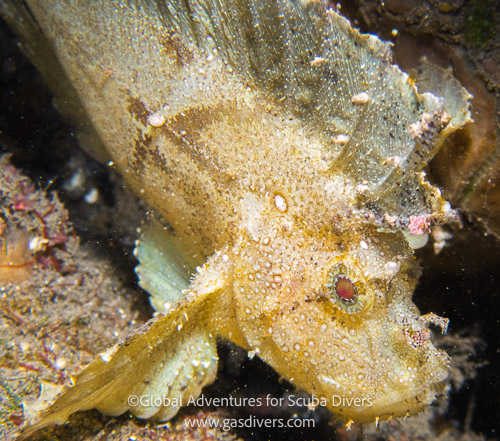
Frogfish can resemble sponges or rocks. Rhinopias can look like drifting algae. Leaf scorpionfish can disappear among fallen leaves. Ghost pipefish can blend into their surroundings so well that you may not realize you’re looking at an animal until your guide points it out.
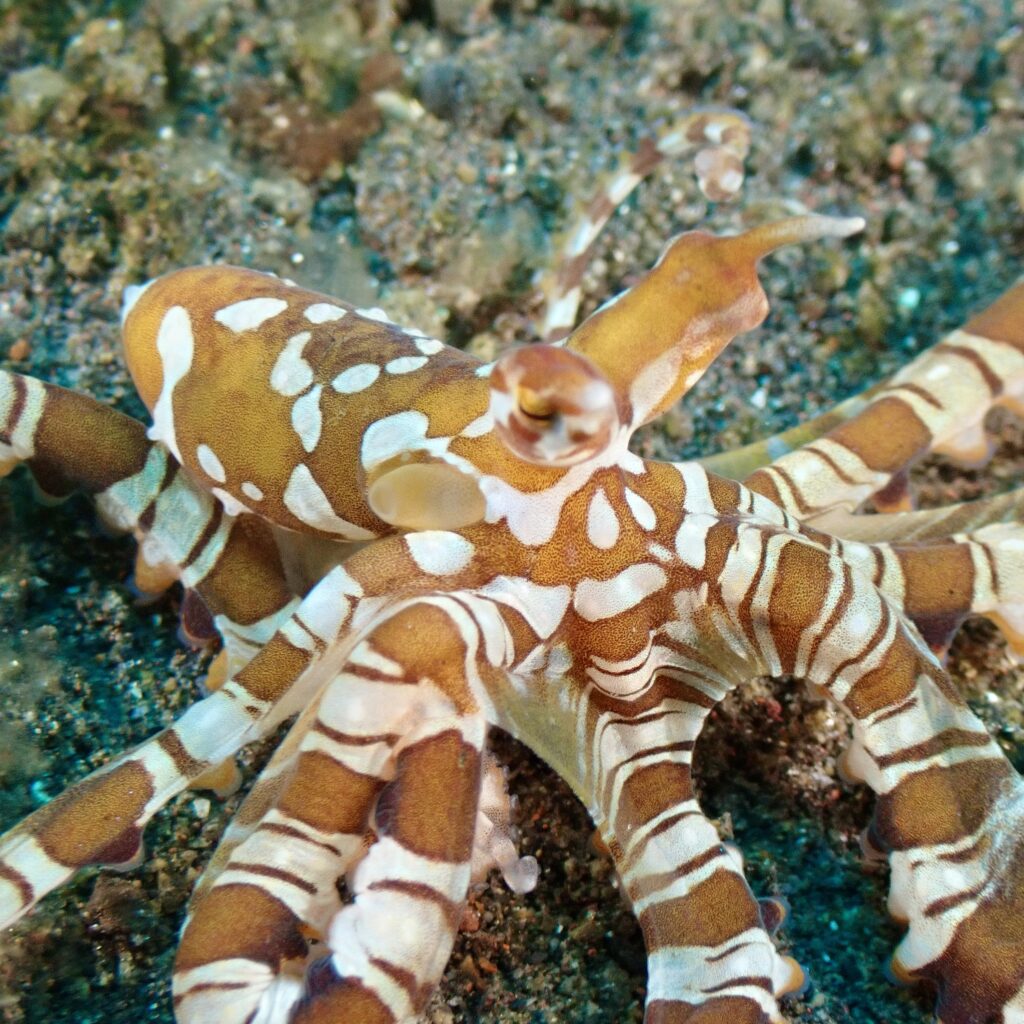
And then there are the octopuses.
Mimic octopuses can change their appearance and behavior to imitate other animals, while wonderpus are another highly sought-after encounter among macro-loving divers.
Some animals don’t just hide.
They become part of the scenery.
Which is why your dive guide will often spot something long before you do.
Defense Comes in Many Forms
Camouflage isn’t the only survival strategy.
Some muck creatures use venomous spines, toxic chemicals, intimidating displays, ink, or dramatic changes in appearance to discourage predators.
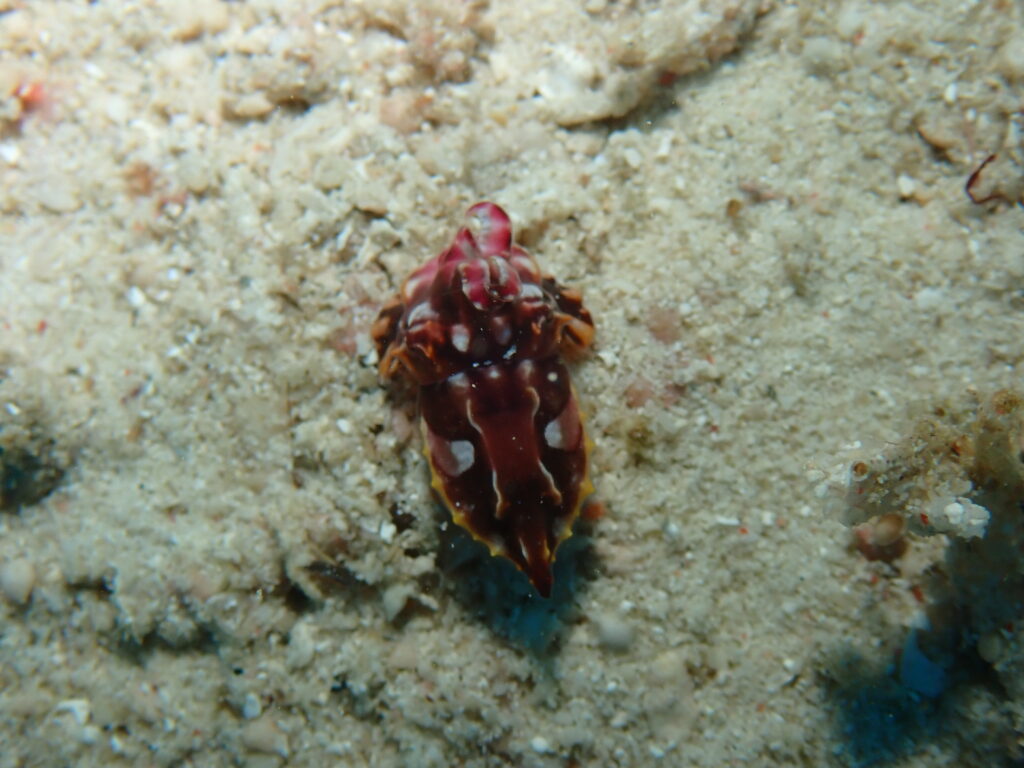
The flamboyant cuttlefish, for example, can display striking colors as a warning that it’s not an easy meal.
It’s tiny, beautiful, and potentially dangerous—a perfect reminder that even the smallest animals deserve plenty of respect and a hands-off approach.
In muck diving, size doesn’t necessarily tell you anything about an animal’s ability to defend itself.
Some of the Stars of a Muck Dive
There are certain creatures that make muck divers especially excited—and once you’ve seen them, you’ll understand why.
Octopuses
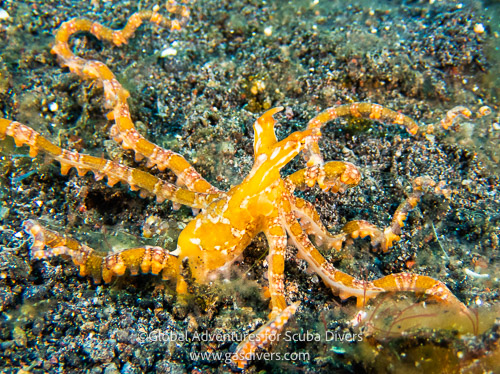
Blue-ringed octopuses, mimic octopuses, and wonderpus are all highly sought-after sightings. With its striking colors and distinctive movements, a wonderpus might seem like something you’d spot immediately—but against the right background, it can still be surprisingly difficult to find.
Frogfish
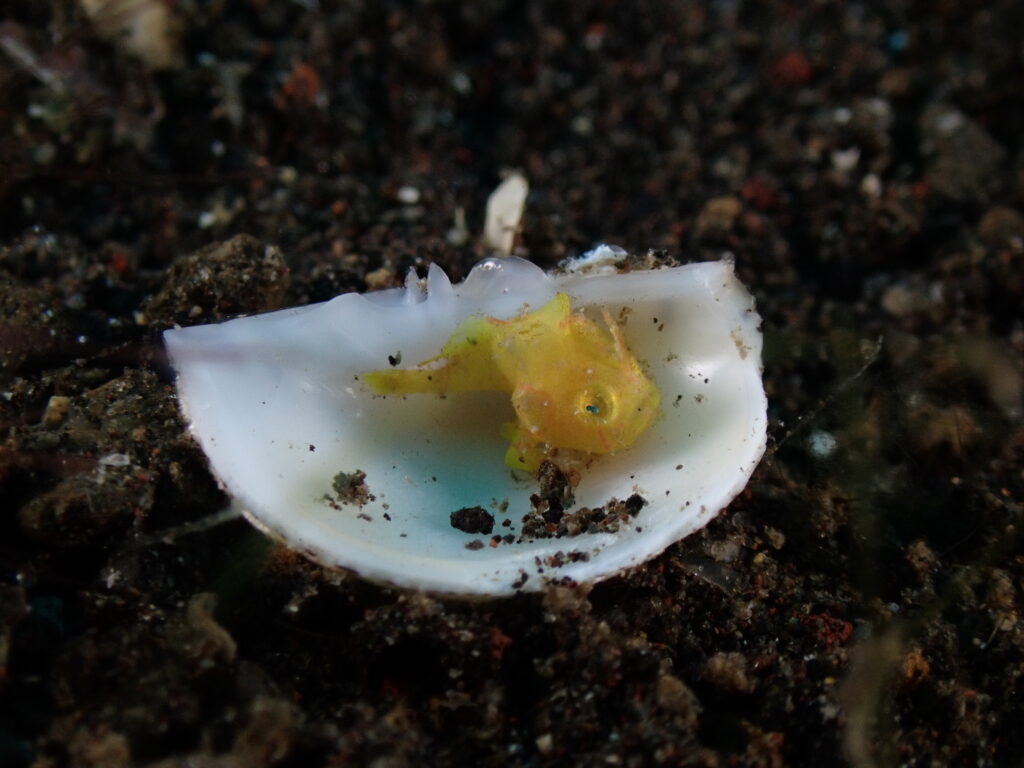
Big or small, frogfish are always a crowd favorite.
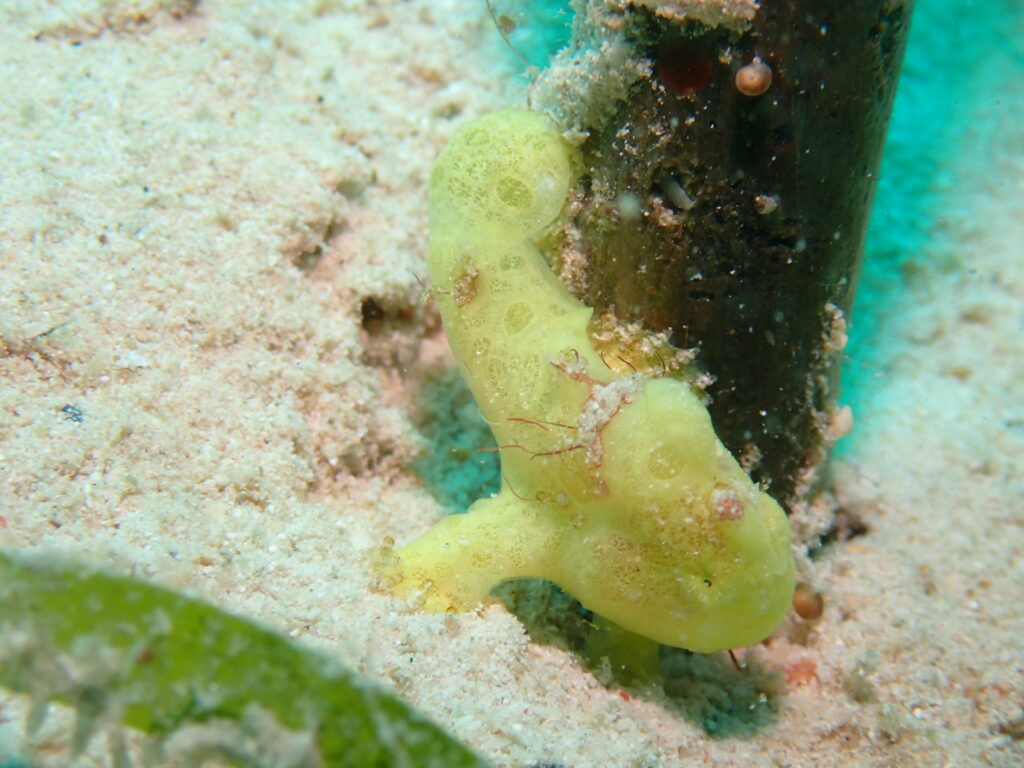
Juvenile frogfish can be incredibly tiny, while larger adults can somehow remain perfectly camouflaged despite being much easier to see.
Nudibranchs
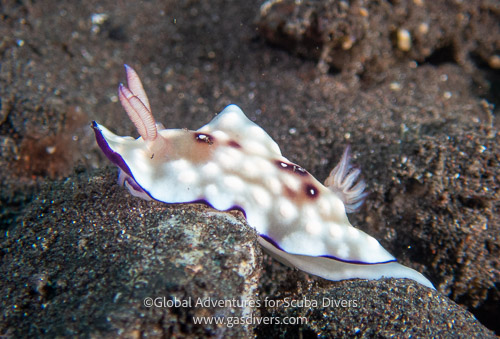
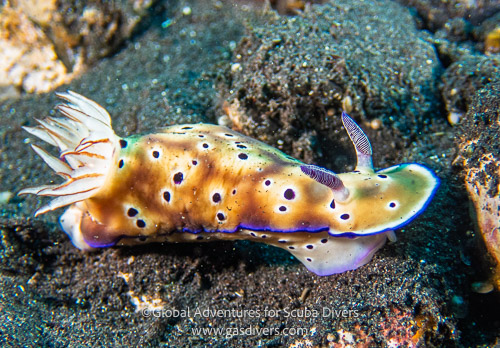
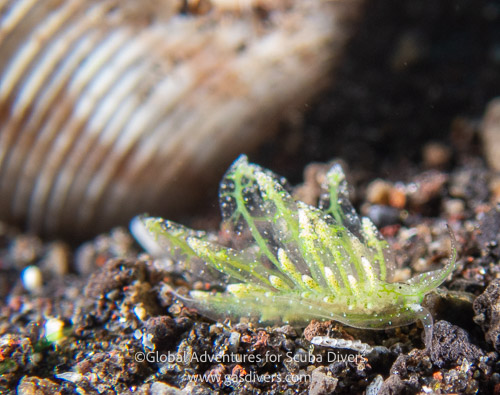
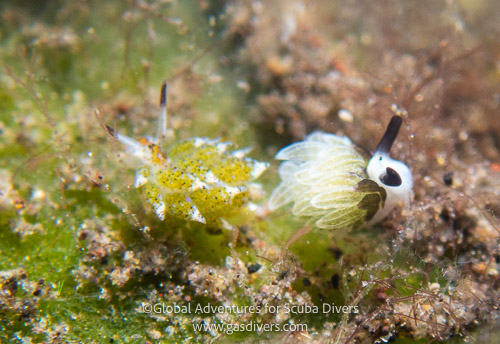
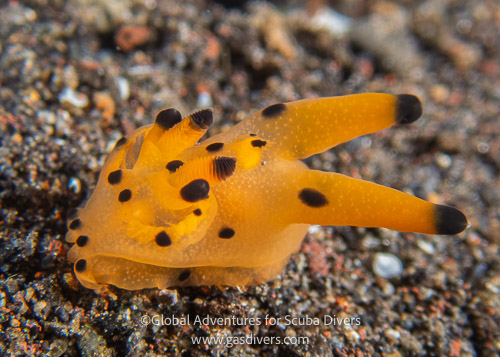
They come in incredible colors, shapes, and sizes, and some are so tiny you’ll need a magnifying glass to fully appreciate them. Shaun the Sheep nudibranchs are quite popular to search for—tiny, fuzzy-looking creatures that have become one of the unofficial celebrities of the muck diving world.
Bobtail Squid
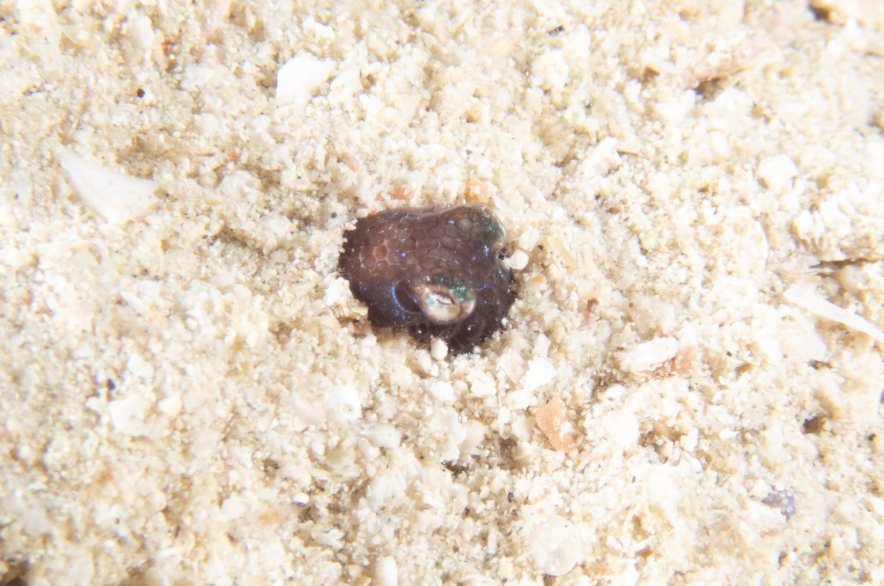
And then there are bobtail squid. Tiny. Adorable. And often seen during night dives.
Their ability to produce a beautiful blue-green glow through bioluminescence makes them especially memorable.
A Macro Photographer’s Playground
It’s no surprise that muck diving has a devoted following among underwater macro photographers.
On a typical reef dive, your subject might be tucked into coral, surrounded by rocks, or constantly moving in and out of the reef structure. There’s plenty of visual interest—but sometimes, there’s also a lot getting in the way of the shot.
Muck environments can be different.
With fewer corals, rocks, and other structures competing for attention, a tiny subject can stand out against a relatively simple background. That gives photographers more room to work with composition, lighting, focus, and depth of field.
And when your subject is a frogfish the size of your thumbnail, a tiny nudibranch, or a bobtail squid, having a little extra space can make a huge difference.
Of course, finding the animal is still the hard part.
Once you do, muck diving gives photographers the opportunity to slow down, experiment, and work toward that perfect shot.
The goal, though, isn’t just getting the photograph. It’s getting the shot without changing the animal’s behavior or disturbing its environment.
It’s one of the reasons you’ll find so many underwater macro photographers completely obsessed with muck diving.
And honestly, we understand.
It’s Not Just About Individual Animals
Some of the most fascinating muck encounters aren’t just about individual animals. They’re about relationships and behavior. These kinds of relationships are part of what makes muck diving so fascinating. Once you start paying attention, you’re not just looking for individual animals—you’re watching an entire ecosystem at work.
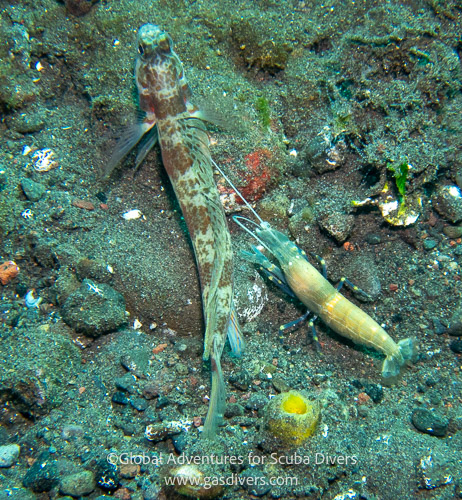
One of the classic examples is the partnership between pistol shrimp and gobies.
The shrimp spends much of its time excavating and maintaining a burrow. Because its eyesight isn’t particularly good, it relies on the goby to act as a lookout.
The goby watches for danger while the shrimp works.
When the goby senses a predator, it signals the shrimp, and both can retreat into the safety of their shared burrow.
It’s an incredible example of two very different animals working together to survive.
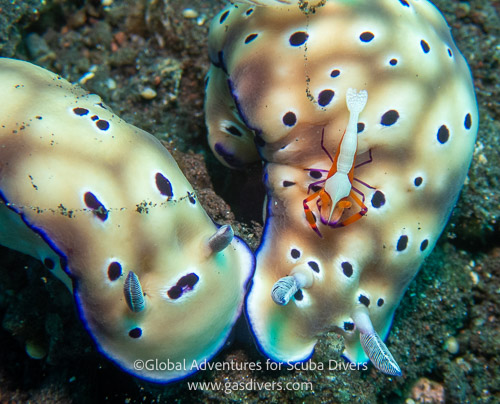
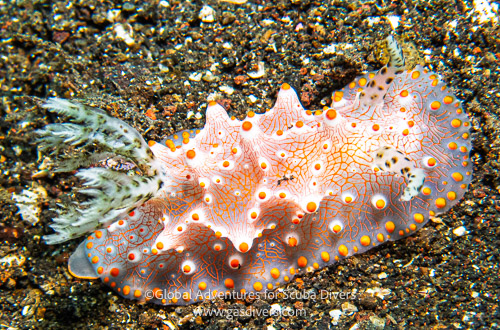
Another favorite among muck divers is the Emperor shrimp, which can be found hitching a ride on large nudibranchs, including some Ceratosoma species.
The shrimp gets transportation and opportunities to feed while moving around with its much larger host.
The Best Part? You Never Know What You’ll Find.
This might be our favorite thing about muck diving. There are no guarantees. You can have a specific creature at the top of your wish list and spend several dives searching without finding it.
Then, on the dive when you weren’t expecting anything particularly unusual, your guide points into the sand…
And there it is.
That’s happened to us in several parts of the world.
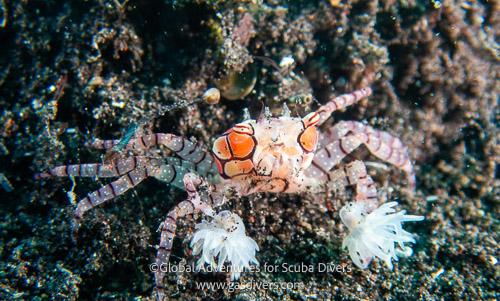
We’ve explored muck sites in Bali and Komodo, hunted for critters in the Philippines, and experienced muck diving in the Solomon Islands.
Every destination has its own personality and its own collection of unusual residents.
And night dives can make things even more interesting.
In Komodo, some of our favorite muck diving happened after dark, when a completely different cast of characters came out to hunt.
Best Muck Diving Destinations
Muck diving destinations can be found around the world, but Indonesia and the Philippines are especially well known for their incredible macro life.
Some of the destinations we’ve experienced include:
Indonesia — Some of the world’s best-known muck diving can be found throughout Indonesia, including Lembeh Strait, Bali, Komodo and other areas of the archipelago.
Philippines — Anilao, Dumaguete and Bohol offer excellent opportunities for macro and muck diving alongside reefs and other dive environments.
Solomon Islands — We’ve also experienced fantastic muck diving here, adding a completely different collection of critters to the hunt.
And that’s one of the things we love about muck diving: every destination has its own personality and its own collection of unusual residents.
The species may change.The habitat may change.The conditions may change.
But the feeling of not knowing what you’re going to discover next remains the same.
Muck Diving Tips for Beginners
If you’re new to muck diving, the biggest adjustment is learning to slow down and pay attention.
You’re not trying to cover miles of reef.
You’re looking.
Watch Your Buoyancy
Good buoyancy is especially important on a muck dive. The bottom can be soft and easily disturbed, and a misplaced fin kick can turn a clear scene into a cloud of sand—or worse, disturb the very creature you’re trying to see.
If you can frog kick, this is a great place to put that skill to work. Keeping your fins up and using controlled movements helps minimize the amount of sediment you stir up.
Give the Bottom Some Space
Try to avoid hovering directly over a creature or resting on the bottom while you photograph it.
Give animals room to behave naturally, and be especially careful around tiny or fragile creatures.
And remember:
Look, don’t touch.
Be a Good Muck-Dive Buddy
If you’re diving with a group, remember that not everyone is there to take photographs.
If you find something exciting, let the other divers have a look before settling in for your own photos.
And if you’re a photographer, try to give everyone a chance to see the animal before spending several minutes working on the perfect shot.
Everyone gets to enjoy the find.
A Few Things That Can Help
You don’t need a suitcase full of special gear to enjoy a muck dive, but a few things can make the experience enjoyable and more interesting:
- Macro lens: Great for tiny subjects and close-up photography.
- Magnifying glass/Cheaters: Surprisingly useful for appreciating very small nudibranchs and other tiny critters. Corey used his readers during our muck dives!
- Muck stick: Some photographers use one as a visual reference point while working around a small subject. Never use it to poke, move, or manipulate marine life.
- Marine-life identification book or app: Save this for after the dive. Trying to identify everything underwater means you might miss the actual experience.
Why We Love Muck Diving
Muck diving changes the way you look underwater. Instead of searching for the biggest animal or the most colorful reef, you start looking for the smallest details.
You start noticing camouflage, defense mechanisms, symbiotic relationships, predator-prey interactions, and adaptations that have developed to help these animals survive.
Before long, you stop thinking of the sand as empty.
You realize it’s anything but.
That’s the magic of muck diving.
You never really know what the weird stuff in the sand is going to do next.
Want to Try Muck Diving?
If we’ve convinced you that staring at the sand might actually be a pretty fantastic way to spend a dive, you’re in luck.
Some of our upcoming trips include destinations where muck diving is part of the underwater experience. If you don’t like it, don’t worry! These destinations also have fantastic reef systems close by you can explore!
Bali offers incredible muck diving around the Tulamben area, along with reefs, wreck diving, and plenty to experience above the surface. Our Blissful Bali trip combines that diving with culture, food, and plenty of time to relax!
Explore our Bali Trip > Blissful Bali November 2027
Our Philippines trips also offer opportunities to explore fantastic macro and muck diving while experiencing several different underwater environments.
Explore our Philippines Trip > Philippines January 2027
We love taking divers to places where you can spend one dive searching for something the size of your fingernail—and the next wondering what just swam past your head.
That’s the fun of diving with us.
You never quite know what you’ll find.