

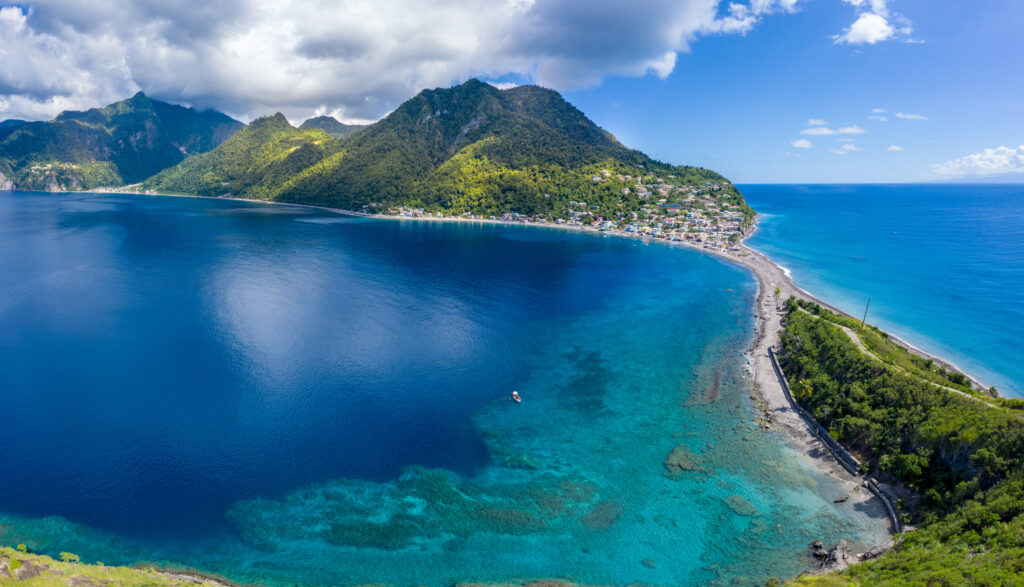
Dominica isn’t the Caribbean island you visit for sprawling resorts, endless rows of beach chairs or a highly polished resort experience.
And that’s exactly part of its appeal.
Known as the Nature Island of the Caribbean, Dominica is rugged, volcanic and incredibly green. Rainforest-covered mountains rise sharply from the coast, waterfalls tumble through the interior, and geothermal activity bubbles up in hot springs—and even beneath the sea.
For divers, that dramatic landscape continues underwater.
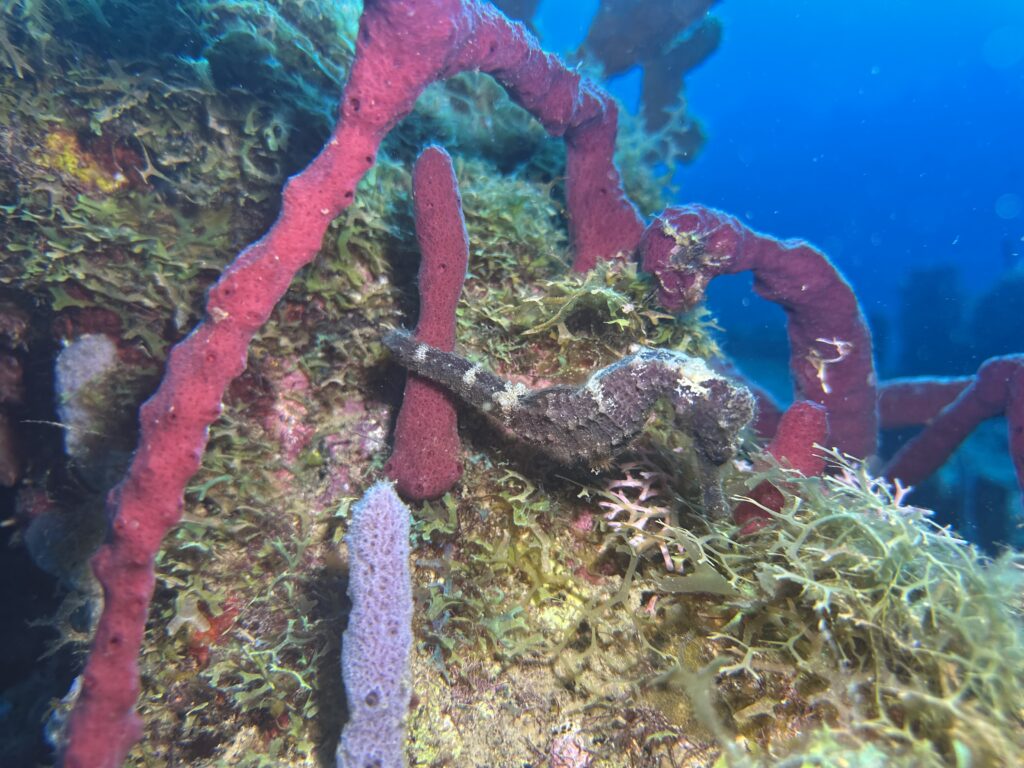
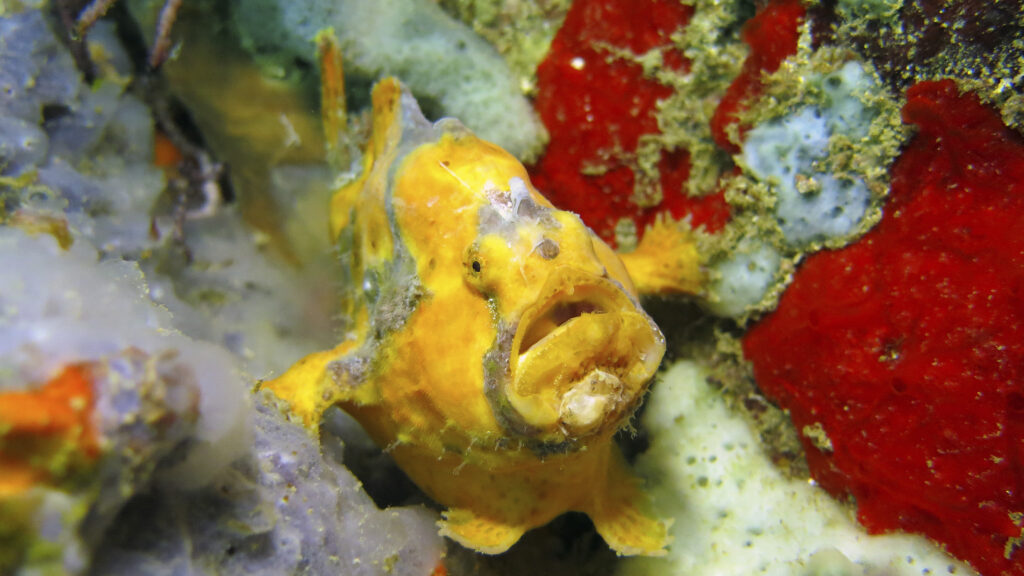
Scuba diving in Dominica offers beautiful reefs, walls, pinnacles, swim-throughs and volcanic formations, with marine life ranging from tiny seahorses and frogfish to turtles, rays and the occasional unexpected visitor.
But when we traveled to Dominica with GAS’D, one of our biggest surprises was how much the island itself became part of the experience.
We came to dive, but our days also included waterfalls, hot springs, river adventures, rainforest and time spent exploring a Caribbean island with its own fascinating history, culture and wonderfully relaxed pace of life.
And then there are the whales.
The deep waters just offshore are home to sperm whales, adding an entirely different kind of wildlife experience to a destination already packed with things to discover.
Dominica isn’t simply a place to plan a dive trip.
It’s a place to plan an adventure—with some pretty fantastic diving along the way.
In this guide, we’ll take you underwater, around the island and through the practical things we think you should know before you go.
Why Go Scuba Diving in Dominica?
The Caribbean has no shortage of great dive destinations, so why choose Dominica?
For us, the answer is variety—both underwater and above it.
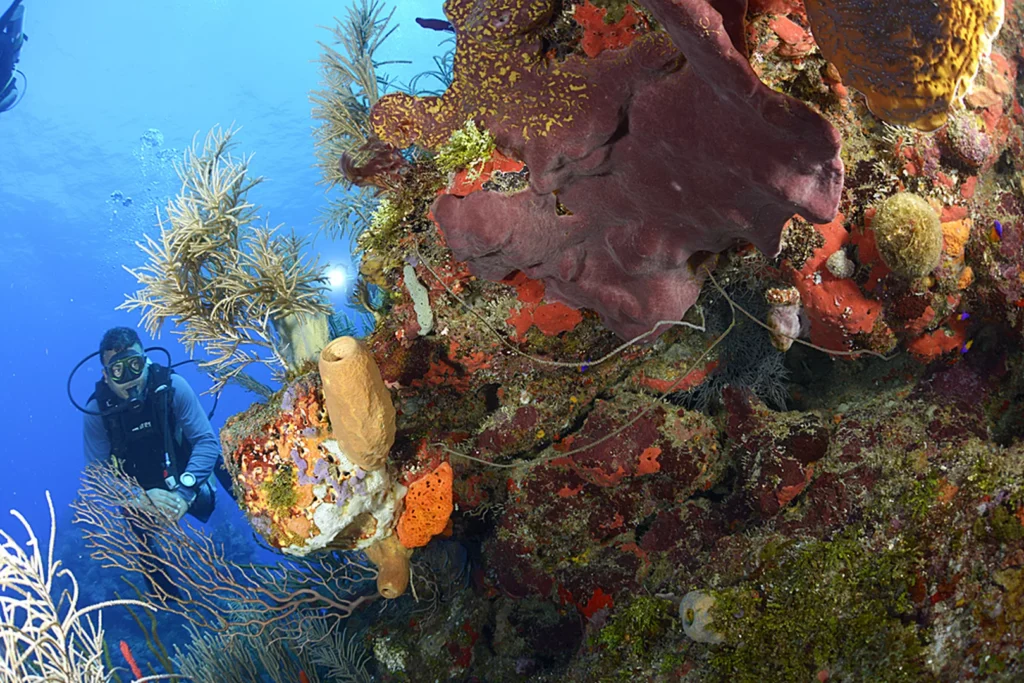
Dominica offers beautiful Caribbean diving without the sprawling resort scene or heavily trafficked feel of some better-known islands. Dive sites range from coral gardens and dramatic walls to swim-throughs and volcanic formations, with opportunities to look for both larger animals and tiny reef creatures.
But the diving is only part of what makes the island stand out.
Dominica is particularly well suited to travelers who want to experience the destination between dives. Rainforest hikes, waterfalls, hot springs, river adventures, whale watching and cultural experiences can all become part of the same trip.
That also makes Dominica an interesting choice for mixed groups or travelers with non-diving partners. You don’t necessarily have to separate into “diver vacation” and “non-diver vacation”—there’s plenty everyone can experience together.
And while there are certainly famous things to see here, Dominica isn’t really a destination we’d choose because of one must-see animal or single bucket-list dive site.
It’s the combination that makes it special.
Come for the diving, but leave enough room in your itinerary to discover the island, too.
What Makes Diving in Dominica Special
Dominica isn’t a destination built around one famous wreck, one must-see animal or one signature dive.
What makes the diving interesting is the variety.
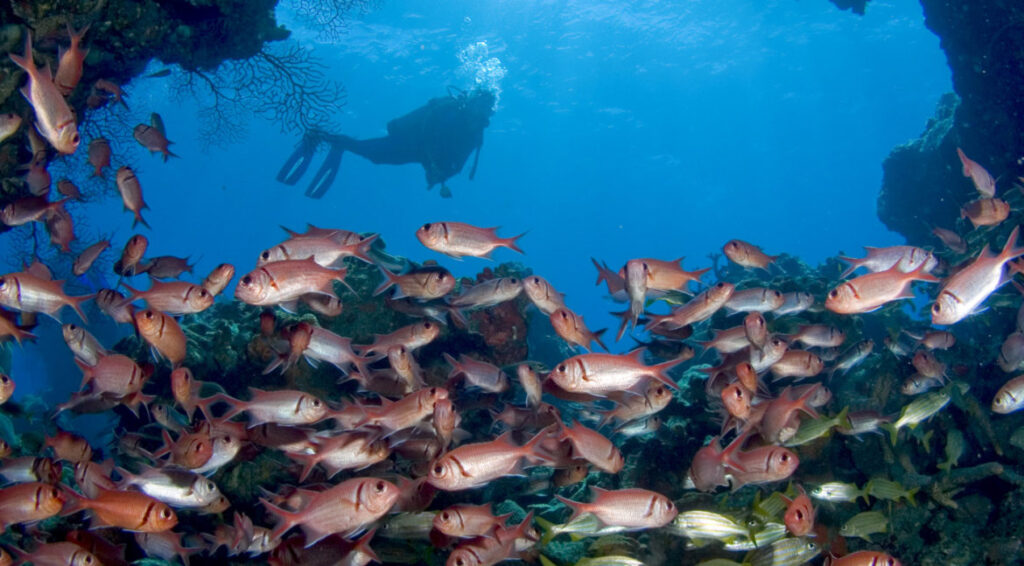
During our GAS’D trip, we explored coral gardens, dramatic walls and swim-throughs, with dives that ranged from admiring the bigger underwater scenery to slowing down and searching the reef for tiny creatures hiding in plain sight.
From Seahorses to Eagle Rays
Dominica gives you plenty of reasons to look both out into the blue and right in front of your mask.
During our dives, we encountered:
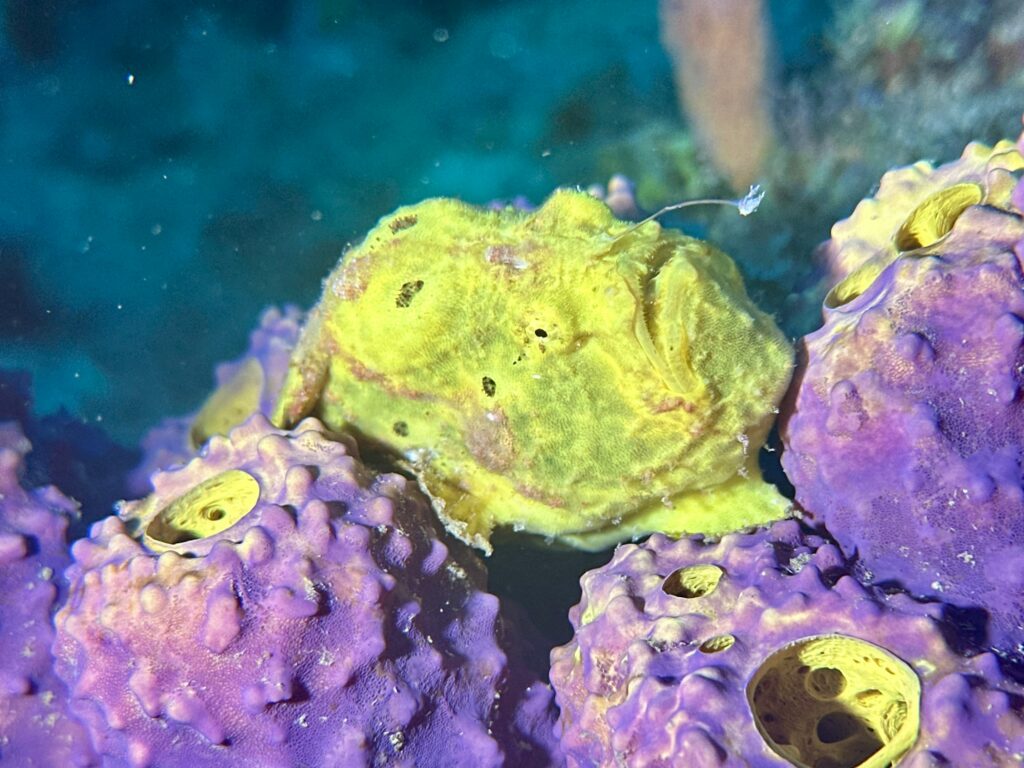
- Seahorses and frogfish hiding among the reef
- Turtles and eagle rays cruising through the dive sites
- Moray eels tucked into the coral
- Colorful Caribbean reef fish and healthy coral gardens
- Walls, swim-throughs and volcanic formations
- And, unexpectedly, a small manta ray
That manta definitely deserves an asterisk.
Mantas aren’t something we’d recommend booking a trip to Dominica specifically to see. We simply got lucky—and those unexpected encounters are part of what makes diving exciting.
Dominica also isn’t a destination where every dive feels like a variation of the one before it. One dive might have you hanging alongside a wall looking into the blue, while the next has you moving slowly over the reef searching for a seahorse.
And while some sites offer deeper profiles and occasional current, much of the diving can be quite approachable. You don’t necessarily need to be an expert diver to enjoy Dominica, although good buoyancy and comfort in the water will always make the experience better.
For us, that’s the appeal: you don’t have to choose between interesting underwater scenery and spending a dive looking for the little stuff. Dominica gives you both.
Dominica’s dramatic landscape doesn’t end at the shoreline.
The island is volcanic, and the same geological forces that created its steep mountains, deep valleys and geothermal features also shaped what divers see beneath the surface.
That helps explain some of Dominica’s most interesting underwater topography. Walls drop into deep water, pinnacles rise from the seafloor, and rocky formations and swim-throughs break up the reef.
But perhaps the most obvious reminder that you’re diving around a volcanic island is Champagne Reef.
Yes, the Reef Actually Bubbles
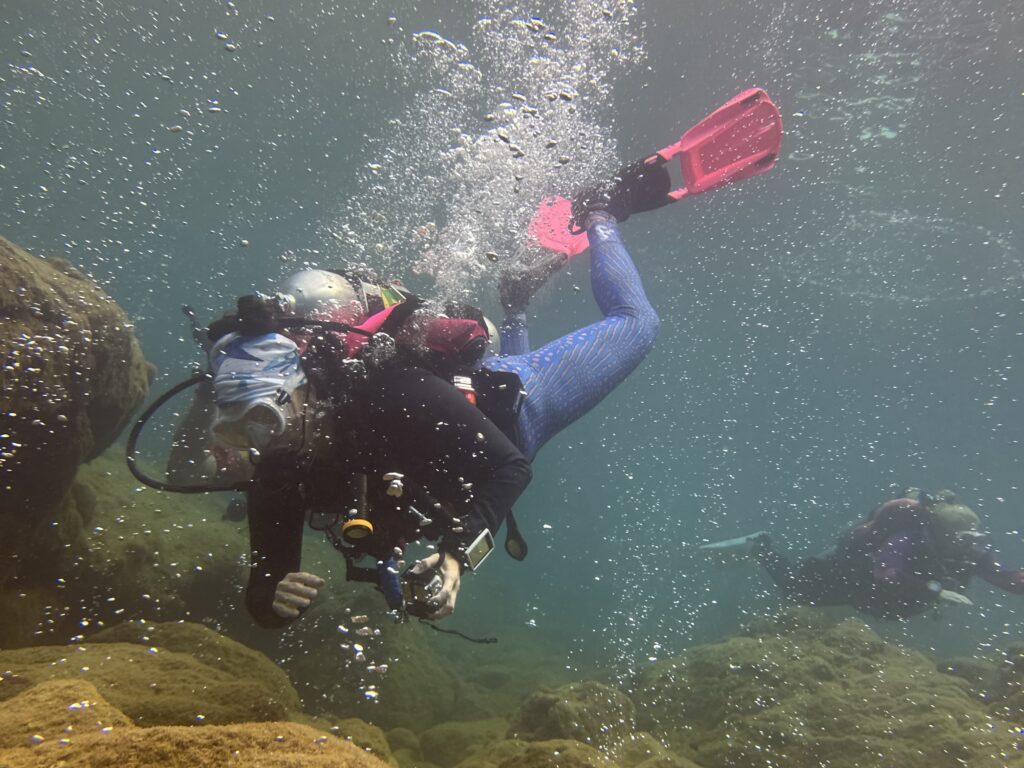
At Champagne Reef, geothermal gases escape through vents in the seafloor, sending streams of tiny bubbles toward the surface.
It’s how the site earned its name—and it’s a pretty unusual sensation to swim through.
The geothermal activity you see underwater is connected to the same volcanic system responsible for the hot springs, fumaroles and other geothermal features you’ll encounter while exploring Dominica on land.
That creates a fun connection between the two halves of the trip: you can dive through bubbles created by geothermal activity and later soak in naturally heated water surrounded by rainforest.
Volcanoes, Vents & Dominica’s Underwater Landscape
Dominica’s underwater geography becomes even more dramatic beyond the reef.
The seafloor drops into very deep water relatively close to the island’s western coast. Those deep offshore waters provide habitat for cetaceans—including the sperm whales for which Dominica has become particularly famous.
We’ll get to the whales later, but they’re another piece of the geological story.
Dominica transitions remarkably quickly from mountainous volcanic island → reef → deep Caribbean water.
And once you understand that landscape, a lot about diving here—from the walls and vents to the animals found offshore—starts to make sense.
Where to Dive in Dominica
Most of Dominica’s recreational diving takes place along the island’s Caribbean coast, where conditions tend to be more protected than on the exposed Atlantic side.
For many visiting divers, the biggest concentration of must-do sites is in the south, particularly around Soufrière and Scotts Head.
Soufrière & Scotts Head
The Soufrière–Scotts Head Marine Reserve is home to some of Dominica’s signature diving.
Sites such as Scotts Head Drop-Off and L’Abym (The Abyss) showcase the dramatic walls and drop-offs the area is known for, while Dangleben’s Pinnacles and Coral Gardens offer a different mix of underwater terrain and reef life.
But one of the coolest things about diving around Scotts Head isn’t necessarily a particular animal or reef.
Scotts Head sits at the southern end of Dominica, where the Caribbean Sea meets the Atlantic Ocean. Some dives in this area can give you the unusual experience of diving between these two bodies of water.
There aren’t many dives where part of the story afterward is:
“Oh, and we went from the Caribbean to the Atlantic underwater.”
It’s one of those little geographic details that makes diving Dominica particularly memorable.
Champagne Reef
Then there’s Champagne Reef, probably Dominica’s most famous dive and snorkeling site.
We’ve already talked about the geothermal activity that creates its streams of bubbles, but the site isn’t interesting only because it bubbles. It’s also a reef dive where you can slow down and look for marine life while experiencing one of Dominica’s most unusual geological features.
And because Champagne Reef can also be explored by snorkelers, it’s a nice option for groups traveling with non-divers.
Swim-Throughs, Reefs & Volcanic Terrain
Some of Dominica’s most enjoyable dives don’t need to involve a famous site name.
Sites such as Swiss Cheese are known for rocky formations and swim-throughs, while dives throughout the area can include coral gardens, slopes, walls and volcanic structures.
That variety was one of the things we particularly enjoyed during our GAS’D trip. The underwater scenery changed enough that each dive had its own personality.
You might spend one dive looking out into the blue from a dramatic wall and another weaving through formations or searching the reef for tiny marine life.
The geothermal activity you see underwater is connected to the same volcanic system responsible for the hot springs, fumaroles and other geothermal features you’ll encounter while exploring Dominica on land.
That creates a fun connection between the two halves of the trip: you can dive through bubbles created by geothermal activity and later soak in naturally heated water surrounded by rainforest.
In Dominica, the volcanic landscape isn’t simply something you see. It’s something you can experience above and below the surface.
When to Go & What Conditions to Expect
One of the nice things about scuba diving in Dominica is that you can dive year-round.
There isn’t one tiny window when the diving suddenly becomes good. Instead, choosing when to visit is more about weather, crowds and what you want to do during the rest of your trip.
December–May: Drier & Popular
Dominica’s drier season generally falls between December and May, making this a popular time for diving and exploring the island.
We visited in January, and it worked particularly well for the kind of trip we wanted: plenty of diving mixed with waterfalls, river adventures, hot springs and time outside exploring.
Of course, this is the Nature Island. All that rainforest doesn’t stay green without rain.
Even during the drier months, showers are always possible.
June–November: Wetter & Quieter
The wetter months generally fall between June and November, which also overlaps with Atlantic hurricane season.
That doesn’t mean you can’t dive during this period. You may encounter fewer visitors, and there can still be plenty of beautiful diving days.
But weather becomes a bigger consideration, particularly during the heart of hurricane season, so we’d build a little more flexibility into the trip.
So, When Would We Go?
For a first trip focused on combining scuba diving, hiking, waterfalls and other outdoor adventures, we’d lean toward the drier months—roughly December through May.
But there isn’t one magical week when Dominica suddenly becomes good for diving.
And that’s good news: the best time to visit may ultimately depend on what you want to do above the surface just as much as what you want to see below it.
One More Thing: Cruise Ship Season
If you’re hoping to experience Dominica at its quietest, there’s one other calendar worth paying attention to: the cruise ship schedule.
Dominica’s main cruise season generally falls during the drier winter months—the same time many travelers consider ideal for diving. When a ship is in port, some of the island’s most popular waterfalls, viewpoints and other attractions can become considerably busier for a few hours.
The good news is that cruise passengers are generally concentrated around certain attractions and time periods. If you’re staying on the island for a week, you have much more flexibility to plan around them.
It’s worth checking the cruise schedule when planning your topside days. A waterfall that feels busy at noon on a cruise-ship day can be a completely different experience early in the morning or on a day without a ship in port.
And this gives us a nice nuance for the recommendation:
December through May may offer some of the best overall weather for a dive-and-adventure trip—but it isn’t necessarily Dominica’s quietest season.
Water Temperature, Visibility & Dive Conditions
Dominica’s tropical location means warm-water diving throughout the year, but conditions do change somewhat with the seasons.
Water Temperature
Water temperatures generally range from around 26–29°C (79–84°F) over the course of the year, with the warmest water typically occurring in late summer and fall.
What wetsuit you choose is personal, of course. For many divers, a 3mm wetsuit will be comfortable, while divers who get cold easily—especially after several dives—may prefer something warmer.
Remember that even in warm water, repetitive diving can get chilly. We’d rather bring a little extra exposure protection than spend the second half of the week shivering on the boat.
Visibility
Visibility in Dominica can be excellent, often giving you beautiful views along the island’s walls and drop-offs.
But this is also a lush, mountainous, rainy island with rivers and runoff. Visibility can vary depending on recent rainfall, weather, location and sea conditions.
In other words, don’t book a trip expecting one guaranteed visibility number every day. Conditions are conditions.
Currents & Depth
Dominica isn’t generally a destination we’d categorize alongside more demanding current-heavy locations like Komodo or some remote Pacific liveaboards, but that doesn’t mean every dive is completely effortless.
Some sites can experience current, and the island’s dramatic walls and drop-offs mean depth can accumulate quickly if you’re not paying attention.
Good buoyancy control and depth awareness make these dives considerably more enjoyable.
Conditions can also vary from one site to another, which is another reason to listen to your local dive professionals when they’re choosing sites for the day.
Sperm Whales: Dominica’s Other Underwater Giants
There’s another side of Dominica’s underwater world that you won’t encounter on a typical reef dive.
The water gets deep. Very deep. Very quickly.
The deep waters off Dominica’s Caribbean coast provide important habitat for sperm whales, which can be found around the island throughout the year.
That alone makes Dominica pretty unusual.
Why Are Sperm Whales Found Around Dominica?
Sperm whales are extraordinary deep divers, descending into the darkness to hunt primarily for squid.
Dominica’s underwater geography gives them access to deep feeding habitat relatively close to shore. Instead of traveling enormous distances offshore to reach deep water, boats searching for whales can access suitable habitat comparatively quickly.
Even more interesting, researchers have documented social groups of female sperm whales and their young returning to Dominican waters over generations.
So while sightings are never guaranteed—these are wild whales, after all—Dominica isn’t simply somewhere sperm whales occasionally migrate past.
They are part of the island’s marine ecosystem.
Whale Watching vs. Swimming With Sperm Whales
There are two very different ways travelers may encounter sperm whales around Dominica.
Whale-watching trips take visitors offshore to search for sperm whales and other cetaceans from the boat.
Getting in the water with sperm whales is a completely different experience. In-water encounters are highly regulated and require the appropriate permits and authorized operators. This isn’t something you simply add onto a regular snorkel trip—and it definitely isn’t a scuba dive.
If swimming with sperm whales is a major reason for your trip, we’d plan that portion of the itinerary carefully and well in advance.

Beyond the Diving: Welcome to the Nature Island
This is where Dominica really separates itself from a lot of other Caribbean dive destinations.
You could easily spend every morning underwater and every afternoon doing something completely different. Rainforest, waterfalls, rivers, hot springs, gorges and hiking trails cover the island—and we think leaving time to experience them is essential.
Chase a Few Waterfalls
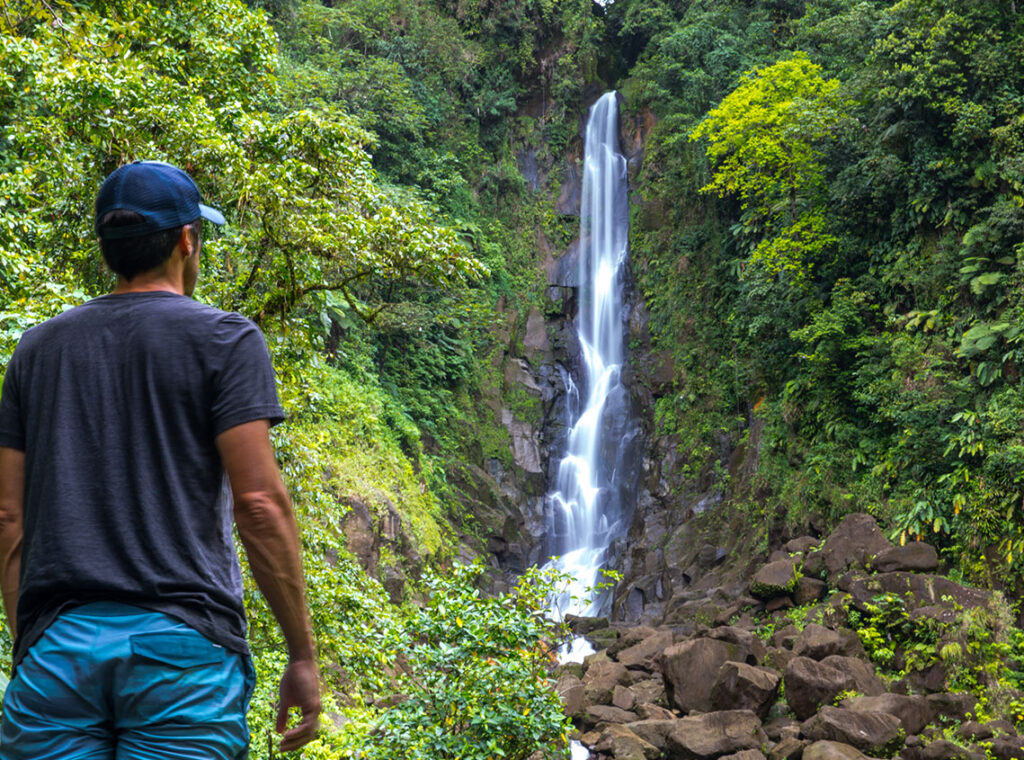
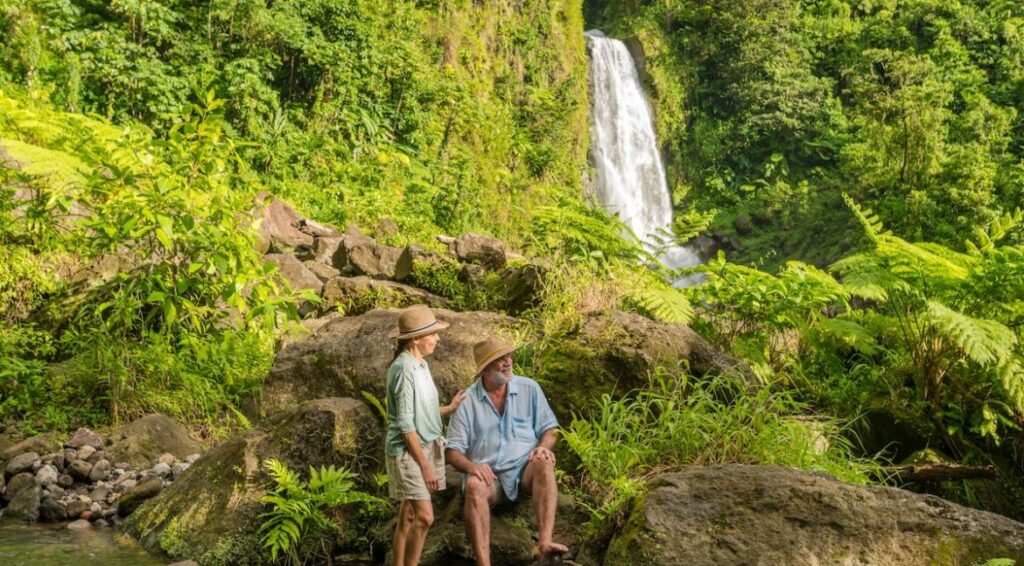
There are waterfalls seemingly everywhere in Dominica, but Trafalgar Falls is one of the island’s most famous stops.
The site features two waterfalls—often referred to as the Mother and Father Falls—surrounded by dense rainforest. It’s relatively easy to visit, making it a good addition to a dive day when you don’t necessarily want another major expedition.
For something a little more adventurous, there are plenty of other waterfalls scattered throughout the island.
You could probably build an entire Dominica vacation around waterfalls alone.
We don’t necessarily recommend doing that.
But we understand the temptation.
Explore Titou Gorge
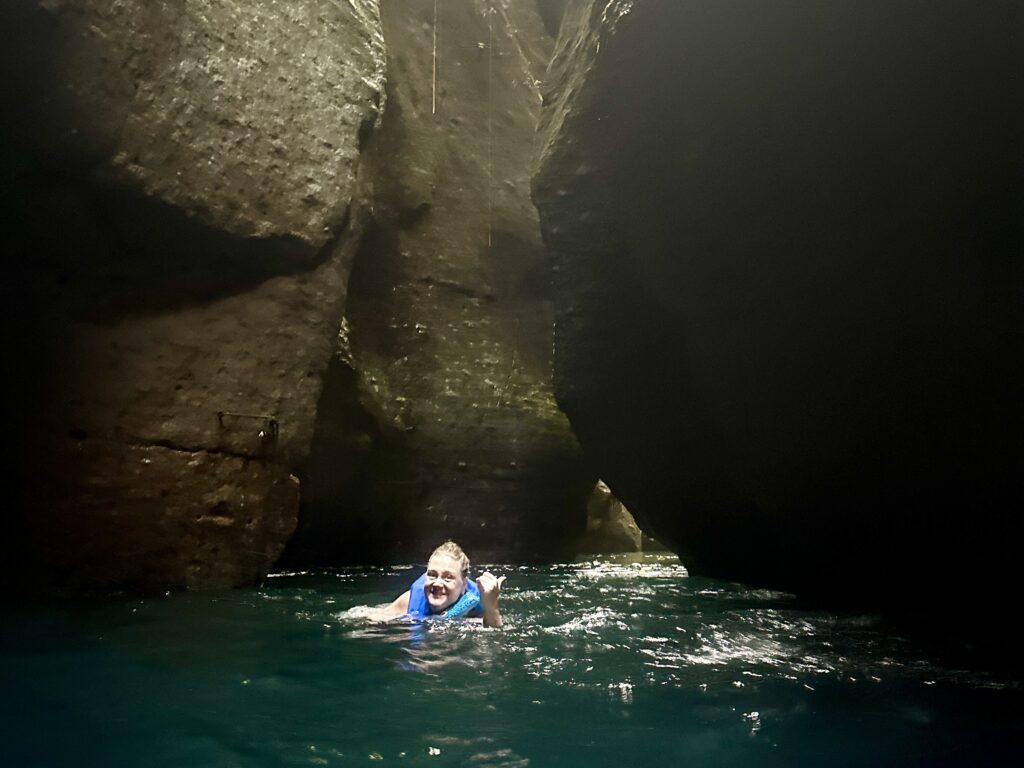
Titou Gorge is one of those places that doesn’t quite look real.
You enter the gorge through cool mountain water and swim between towering rock walls into the narrow canyon beyond. A waterfall sits farther inside, making the experience part swim, part canyon adventure.
It’s very different from anything you’ll experience underwater—which is exactly why we like adding things like this to a dive trip.
Soak in the Hot Springs
Remember all that geothermal activity we talked about earlier?
You can experience it on land, too.
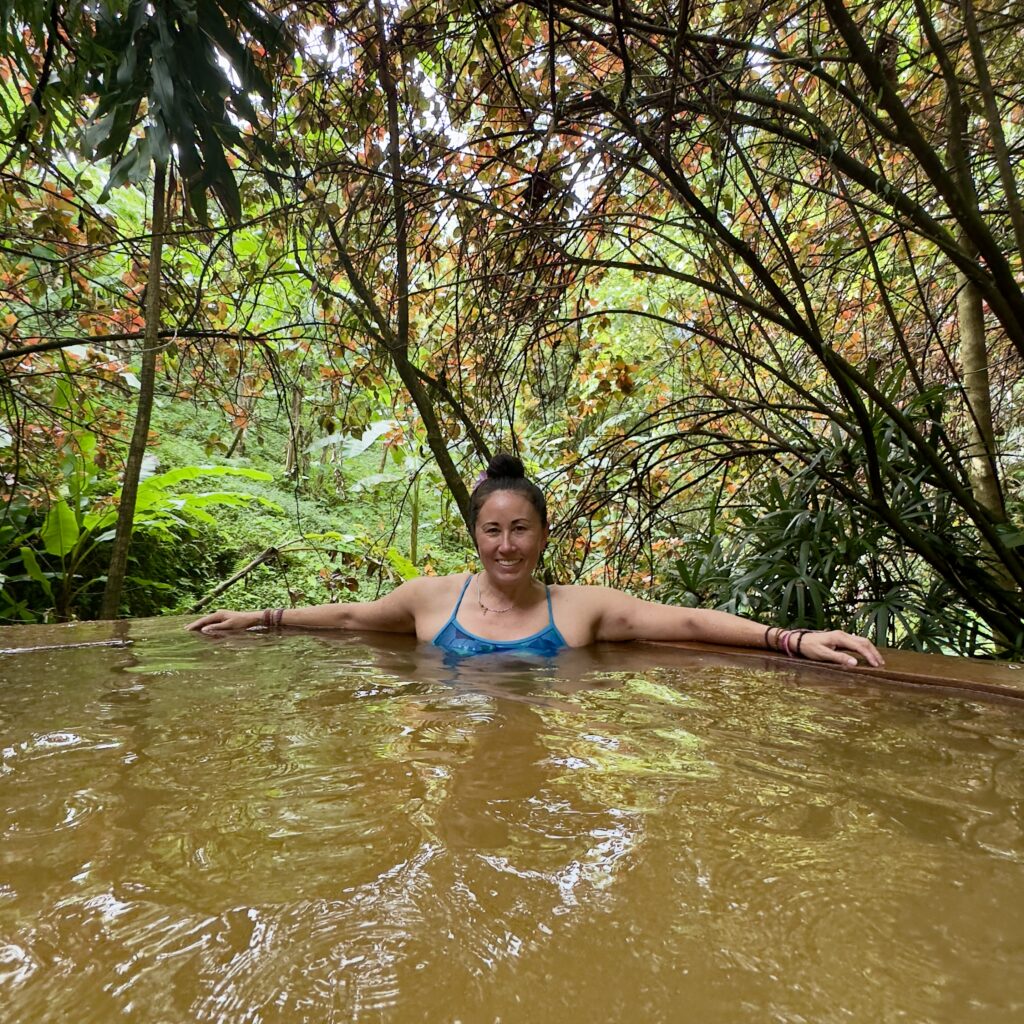
The Wotten Waven area is known for its natural hot springs and geothermal activity, with several places where visitors can soak in warm mineral-rich pools surrounded by tropical vegetation.
After several days of diving, a hot spring feels particularly wonderful.
Consider it unofficial diver recovery.
River Tubing
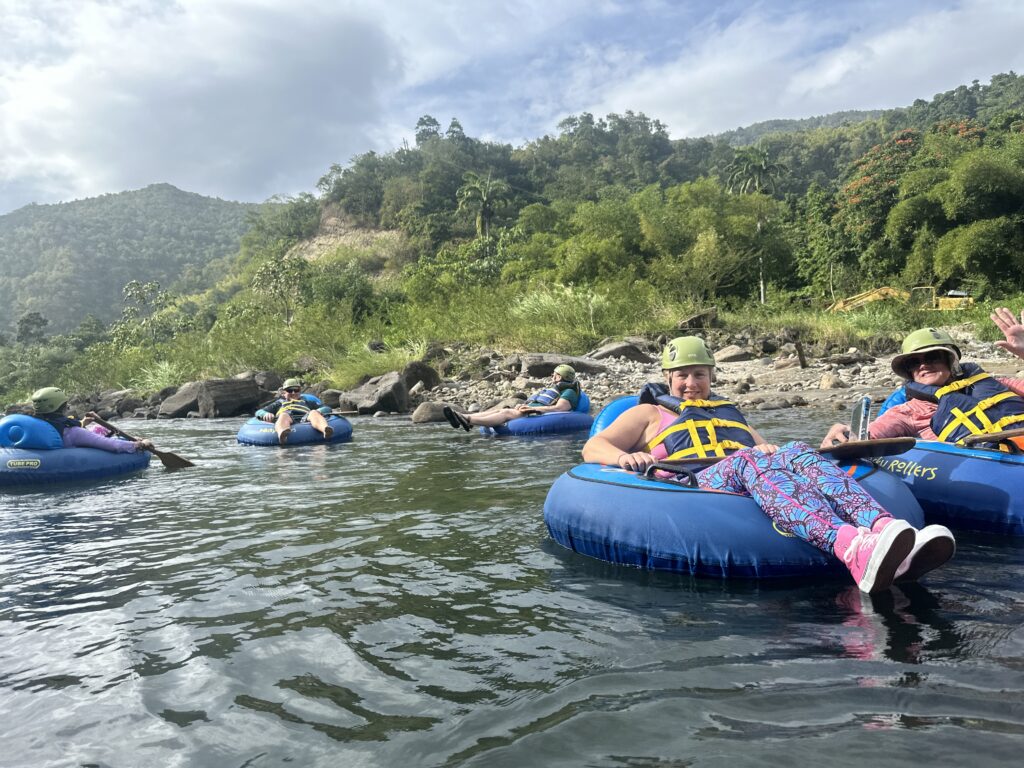
We also went river tubing during our GAS’D trip, which gave us yet another way to experience Dominica’s rainforest.
You float—and occasionally bounce—your way down the river while surrounded by dense tropical vegetation.
Apparently spending the morning underwater wasn’t enough. We needed an afternoon water activity too.
Leave Time to Explore
You don’t need to do everything.
In fact, trying to dive every possible tank and squeeze every waterfall, gorge, hot spring and hiking trail into a single week might be a little ambitious.
But we would intentionally leave at least some time away from the dive boat.
Dominica is one of those rare destinations where the topside adventures aren’t simply something to fill your surface intervals.
They’re part of the reason to come.
A Little History, Culture & Island Life
Dominica’s landscapes may get most of the attention, but getting to know the island also means learning a little about the people, history and culture that shaped it.
And Dominica has a story that is distinctly its own.
The Kalinago
Long before Europeans arrived in the Caribbean, Dominica was home to the Kalinago, the Indigenous people of the Lesser Antilles.
Dominica remains home to a significant Kalinago community today, centered around the Kalinago Territory on the island’s eastern coast. Kalinago traditions, crafts, food and cultural practices remain part of modern Dominican life.
That’s an important distinction: Kalinago culture isn’t simply part of Dominica’s past. It’s part of the island today.
Visitors can learn more about Kalinago heritage while exploring the territory, and we think experiences like these are best approached with curiosity and respect—you’re visiting someone’s community, not simply another tourist attraction.
An Island Shaped by Many Cultures
Dominica’s later history includes periods of French and British colonial control, along with the profound influence of Africans brought to the Caribbean through slavery.
Britain ultimately controlled the island before Dominica gained independence on November 3, 1978.
Those different influences are still visible in modern Dominican culture. English is the official language, while Kwéyòl (Dominican Creole French) remains an important part of the island’s identity.
You’ll see that blend in everything from place names and food to music and celebrations.
Get to Know the People
One of the things we particularly enjoyed during our trip was the people we met along the way.
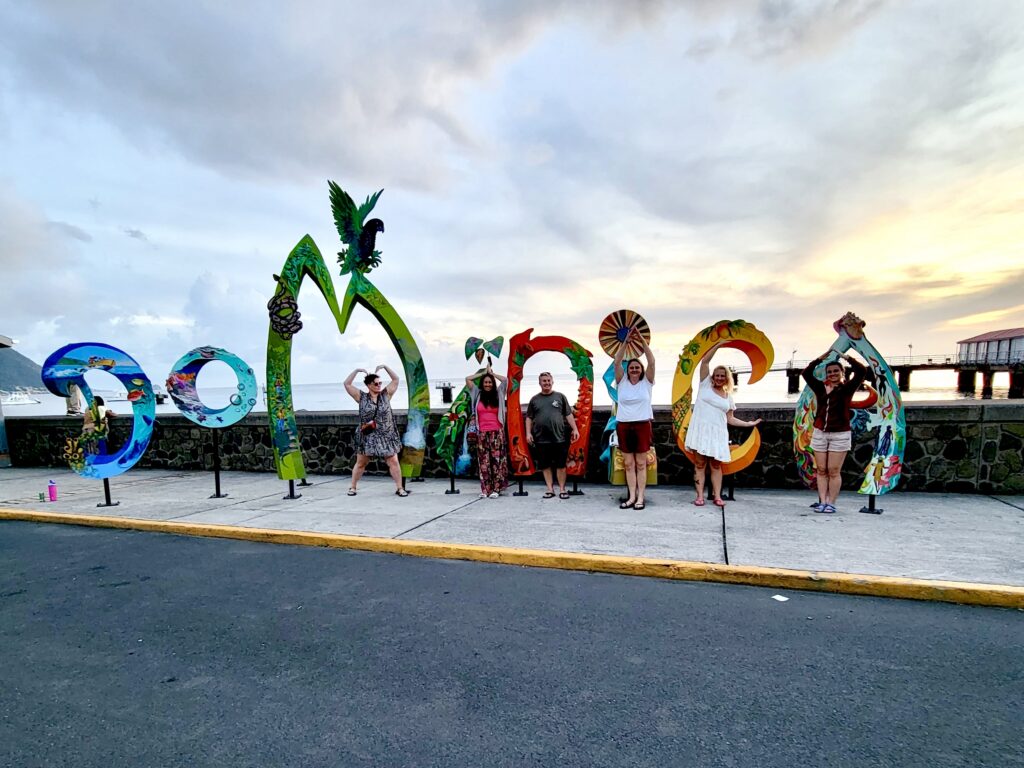
We found Dominicans to be warm, welcoming and proud to share their island. Some of our favorite moments came simply from talking with dive staff, guides, drivers and people we encountered while exploring.
Those interactions are another reason we’d encourage you to actually get out and experience the island rather than spending the entire trip at your hotel.
And Adjust to Island Time
There is one cultural adjustment we’d recommend making pretty quickly: Things may move slowly.
Restaurant service in particular can take considerably longer than many American travelers are accustomed to. Lunch is also a bigger part of the culture than we expected, and finding somewhere for dinner—especially later in the evening or outside the busier areas—can occasionally take some planning.
Our advice? Figure out dinner before you’re starving.
Check restaurant hours, ask locals or your accommodation for recommendations, and don’t necessarily assume the hours you find online tell the whole story.
And when lunch takes longer than expected, try not to schedule the rest of your day so tightly that it becomes stressful.
Dominica isn’t really an island designed to be rushed.
Take the extra few minutes. Talk to the people around you. Enjoy the meal. Let the day unfold a little.
Because experiencing Dominica isn’t only about seeing its reefs, whales and waterfalls.
The people and culture are part of the adventure, too.
Planning Your Dominica Dive Trip
Most international travelers arrive through Douglas–Charles Airport (DOM) on the northeastern side of the island.
Depending on where you’re traveling from, you may be able to fly directly to Dominica or connect through another Caribbean hub. Routes and schedules can change, so we’d recommend looking at the entire itinerary—not simply the airfare—when deciding how to get there.
And double-check that airport code:
DOM = Dominica. Not the Dominican Republic.
Once you arrive, be prepared for a drive if you’re staying near the primary dive areas on the western or southern side of the island.
Dominica is mountainous, with winding roads cutting through the interior. Something that looks close on Google Maps may not necessarily be a quick drive.
We’d arrange your airport transfer ahead of time rather than figuring it out after you land.
Where Should Divers Stay?
For a dive-focused trip, we’d primarily look at Soufrière or the Roseau area.
Soufrière puts you close to the Soufrière–Scotts Head Marine Reserve and some of Dominica’s signature dive sites. It’s quieter and a great option if diving is the priority.
Roseau and the surrounding area can be a convenient choice if you want to balance diving with exploring the island. You’ll have easier access to more restaurants and services while still being well positioned for diving along the Caribbean coast and heading inland for topside adventures.
We wouldn’t choose accommodations based solely on finding the quintessential Caribbean beach resort.
Dominica isn’t really that kind of island.
Prioritize a good dive operation, comfortable accommodations and a location that works for the rest of your itinerary.
Is Dominica Good for Non-Divers?
Absolutely. In fact, Dominica is one of those destinations where being a non-diver doesn’t mean being the person left behind at the hotel.
Because so much of the experience happens away from the dive boat, divers and non-divers can easily spend part of the day doing their own thing and then come back together for some of the island’s best adventures.
You Don’t Have to Dive—or Even Snorkel
A lot of dive destinations advertise themselves as “great for non-divers” and then immediately suggest snorkeling.
Which isn’t particularly helpful if your non-diver also doesn’t want to snorkel.
Dominica has plenty that doesn’t require putting your face in the ocean at all.
Non-divers can explore waterfalls, rainforest trails, hot springs, cultural sites, villages and the island’s volcanic landscape. River tubing, scenic drives and whale-watching excursions add even more options.
And if they do enjoy being in the water, snorkeling opens up additional possibilities, including places like Champagne Reef.
A Good Destination for Couples & Mixed Groups
Dominica works particularly well when one person wants to dive and another wants a more traditional adventure vacation.
The diver can head out for a couple of morning dives while the non-diver relaxes or does something independently. Then everyone can meet back up for a waterfall, hot spring, hike or other afternoon adventure.
Or you can intentionally build entire non-diving days into the itinerary and explore together.
That’s a very different experience from destinations where virtually everything revolves around scuba diving.
The People & Pace of Island Life
One of the things we enjoyed most about Dominica was the people.
Overall, we found Dominicans to be incredibly kind, welcoming and happy to share their island with us. Taking the time to talk with local guides, dive staff, drivers and people we met along the way became part of the experience.
But there is one adjustment we’d recommend making fairly quickly:
Slow down.
Dominica operates on a much more relaxed pace than many travelers—particularly Americans—may be accustomed to. Service can be very slow, especially at restaurants, and that’s not necessarily a sign that something has gone wrong.
Meals are meant to take time.
Lunch Is a Bigger Deal Than You Might Expect
We also found Dominica to have much more of a lunch culture than we were used to.
Lunch can be a substantial meal and an important part of the day, while finding a restaurant serving dinner—particularly later in the evening or outside Roseau—can sometimes be more challenging than you’d expect.
If you’re staying somewhere more remote, we recommend figuring out your dinner plans before you’re hungry. Check restaurant hours, ask your hotel or dive operator for recommendations and don’t assume everything you found online will be open late.
That’s particularly useful after a full day of diving when “we’ll just find somewhere for dinner” suddenly becomes a much bigger project than anticipated.
Embrace the Pace
Dominica isn’t a destination we’d recommend trying to rush through.
Give yourself extra time. Talk to people. Don’t schedule every activity down to the minute. And when lunch takes longer than expected, remember that you’re on an island where the pace of life may simply be different from home.
Once we adjusted to that rhythm, it became part of experiencing Dominica rather than something we were constantly trying to work around.
The island moves at its own pace. Your vacation gets a lot more enjoyable when you let yourself move with it.
