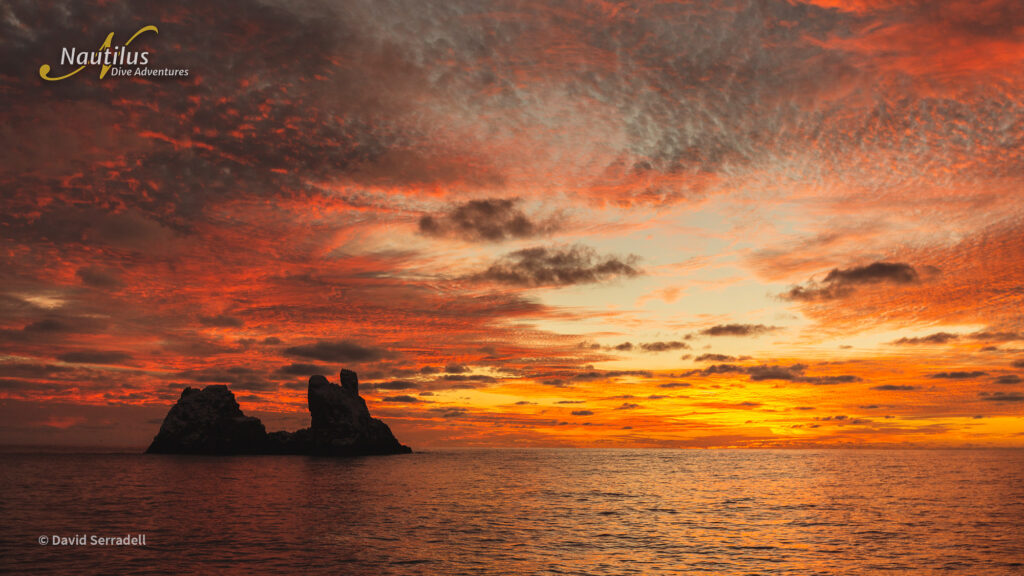

There are some dive destinations that feel larger than life long before you ever enter the water — and Socorro is one of them. Divers hear stories for years about giant oceanic manta rays gliding inches from their masks, schooling hammerheads disappearing into the blue, playful dolphins interacting with divers, whale sharks cruising through safety stops, and elusive tiger sharks patrolling the volcanic islands of the Revillagigedo Archipelago.
Located far offshore in the Pacific Ocean, Socorro (part of the Revillagigedo Archipelago) is one of the most remote and exciting dive destinations in the Pacific. If you’re new to the area, you can read more about the destination here.
For many divers, the dream of Socorro centers around one thing in particular: having your “manta moment.” That unforgettable interaction where an enormous oceanic manta ray chooses to engage with you, circling curiously overhead or gliding effortlessly beside you in the blue.
And after finally experiencing Socorro for ourselves, we completely understand the obsession.
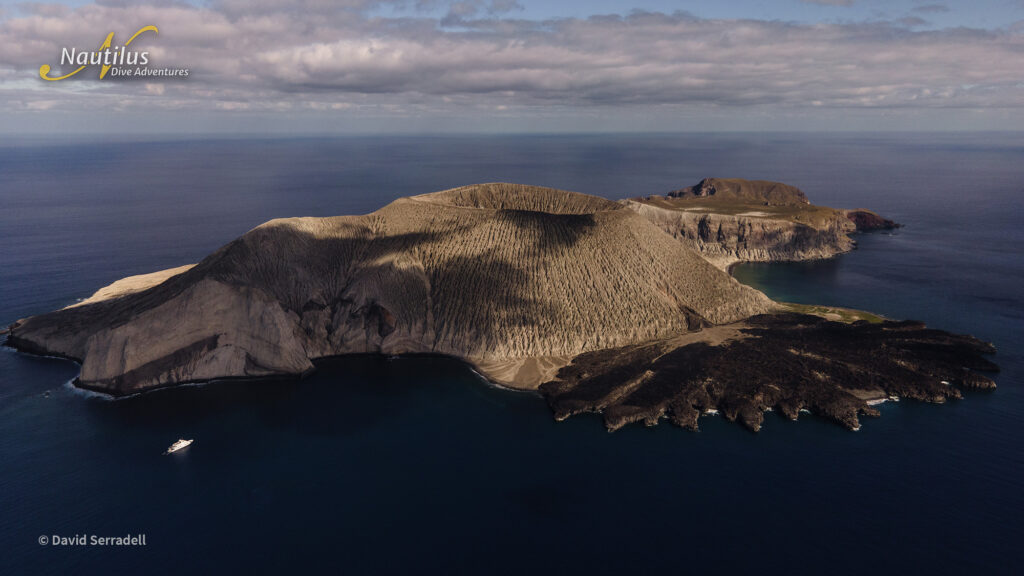
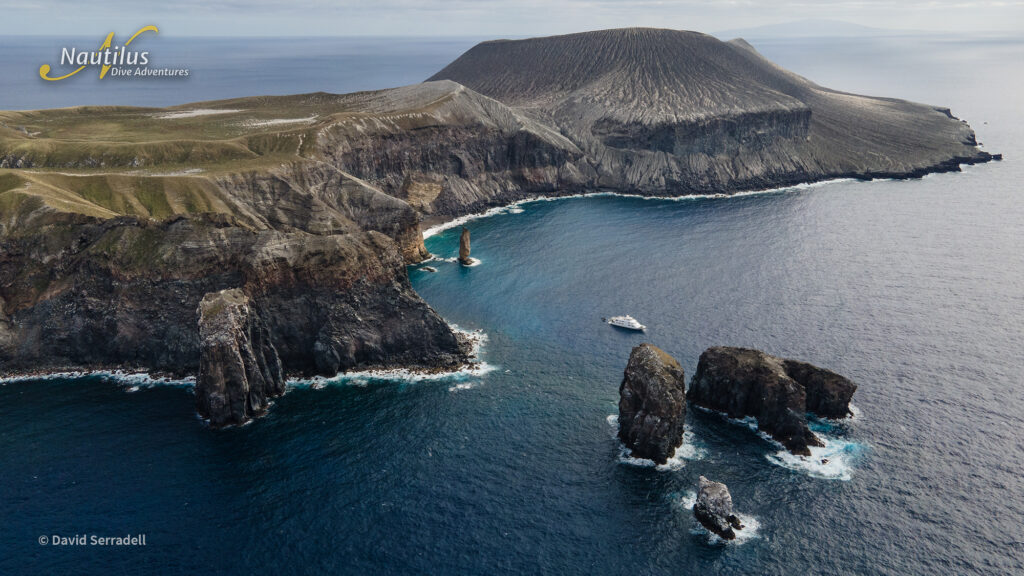
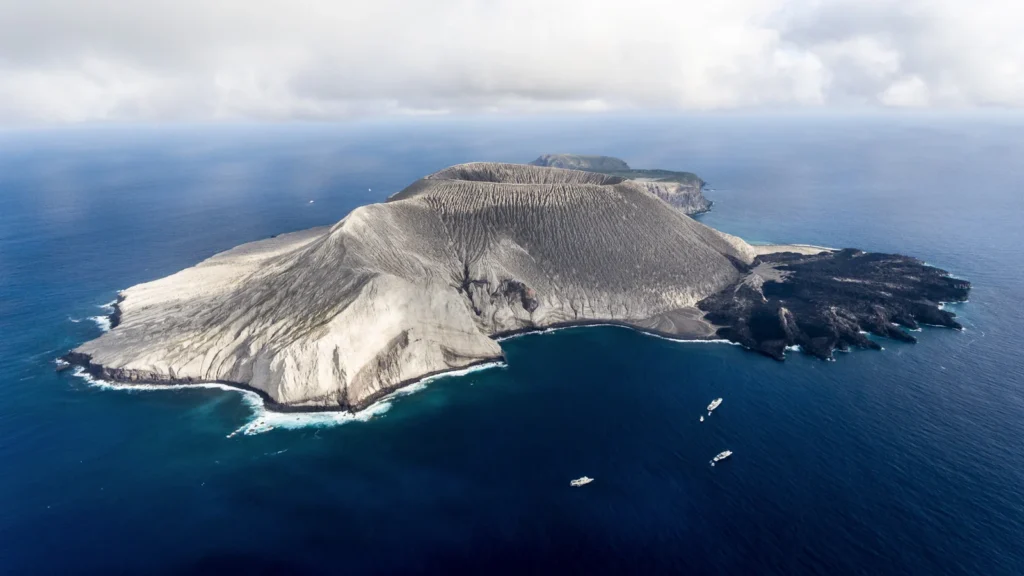
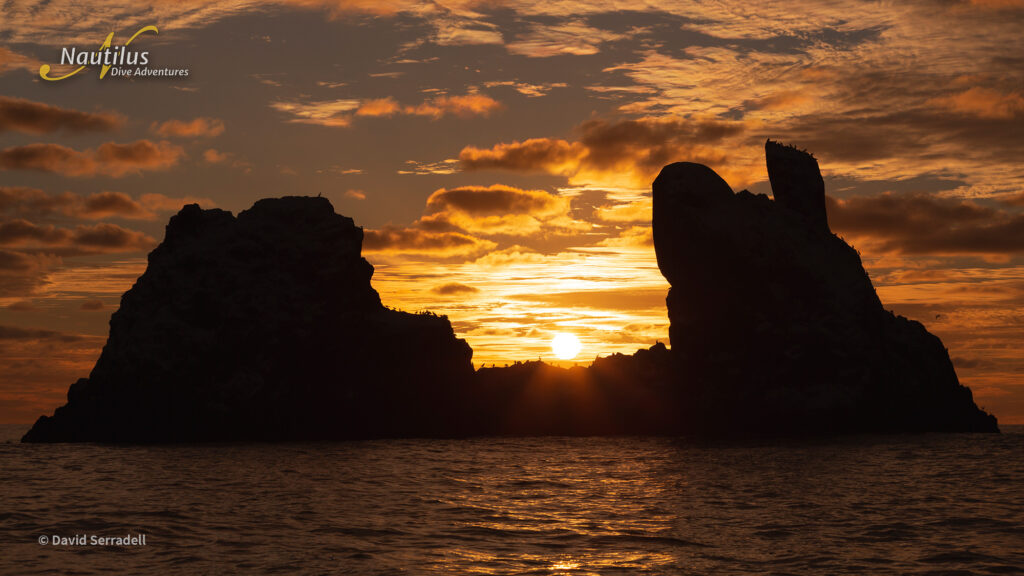
Socorro feels less like a traditional dive vacation and more like an expedition. The remote volcanic islands rise dramatically from the open Pacific, surrounded by deep blue water and pelagic life that can appear at any moment.
Unlike coral-rich tropical reefs, much of Socorro’s underwater landscape is made up of rocky pinnacles, walls, lava formations, and dramatic drop-offs. The scenery itself is rugged and beautiful, but the real reason divers come here is for the possibility of extraordinary wildlife encounters.
Every dive feels filled with anticipation. You never quite know what may appear out of the blue next.
One moment you’re watching cleaner fish work on a manta ray overhead, and the next you’re scanning the distance hoping to spot hammerheads materializing from the deep.
That unpredictability is part of the magic of Socorro.
Giant Manta Encounters in Socorro
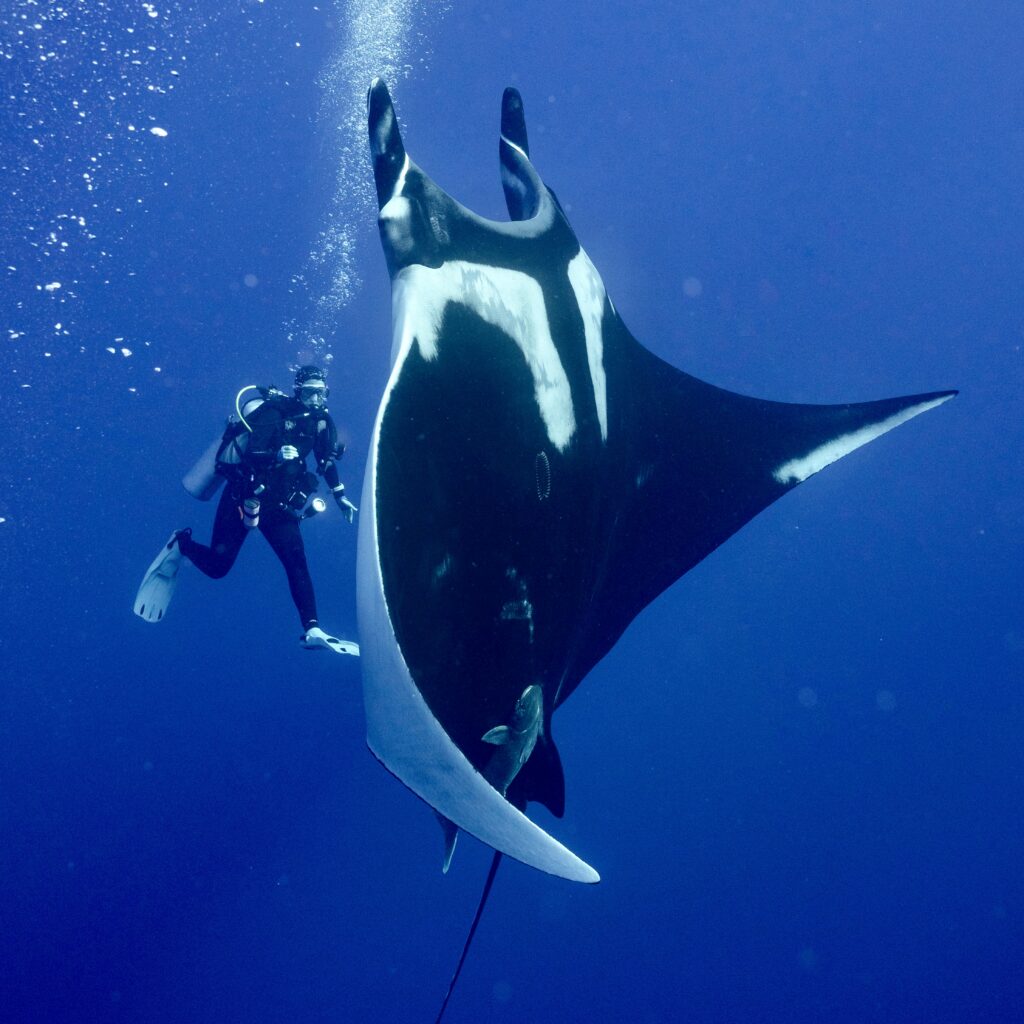
The giant oceanic manta rays are undeniably the stars of Socorro. What makes Socorro especially unique is that these interactions are incredibly unusual compared to manta encounters in most other parts of the world. In many destinations, manta rays tend to keep their distance from divers. But Socorro’s giant oceanic mantas are famous for their curiosity and willingness to engage closely with people underwater — something that has made the islands legendary among divers and underwater photographers.
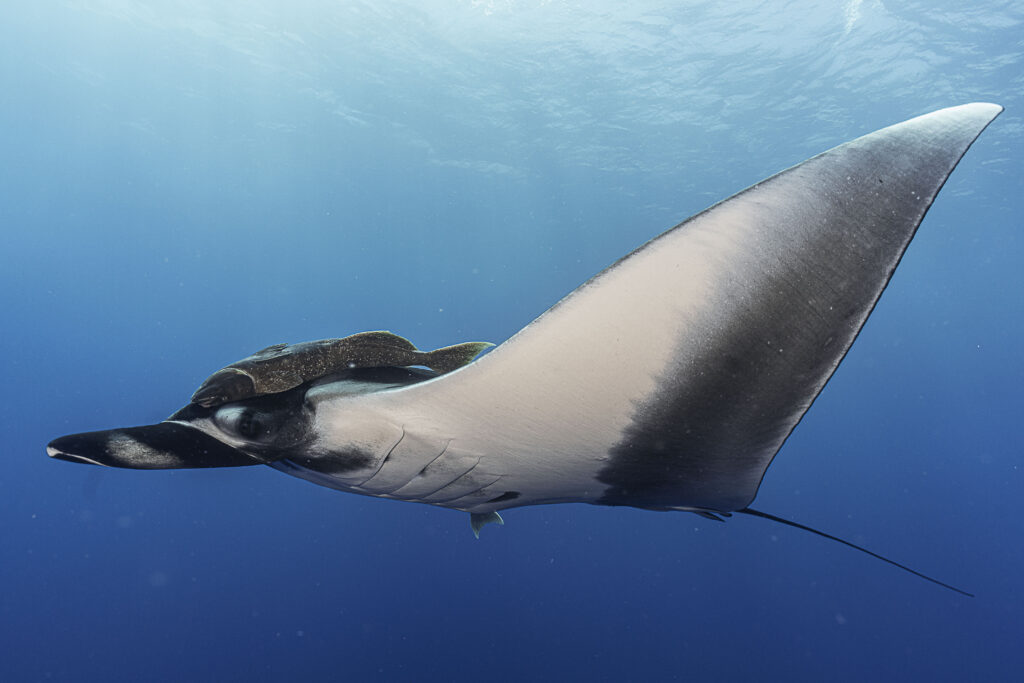
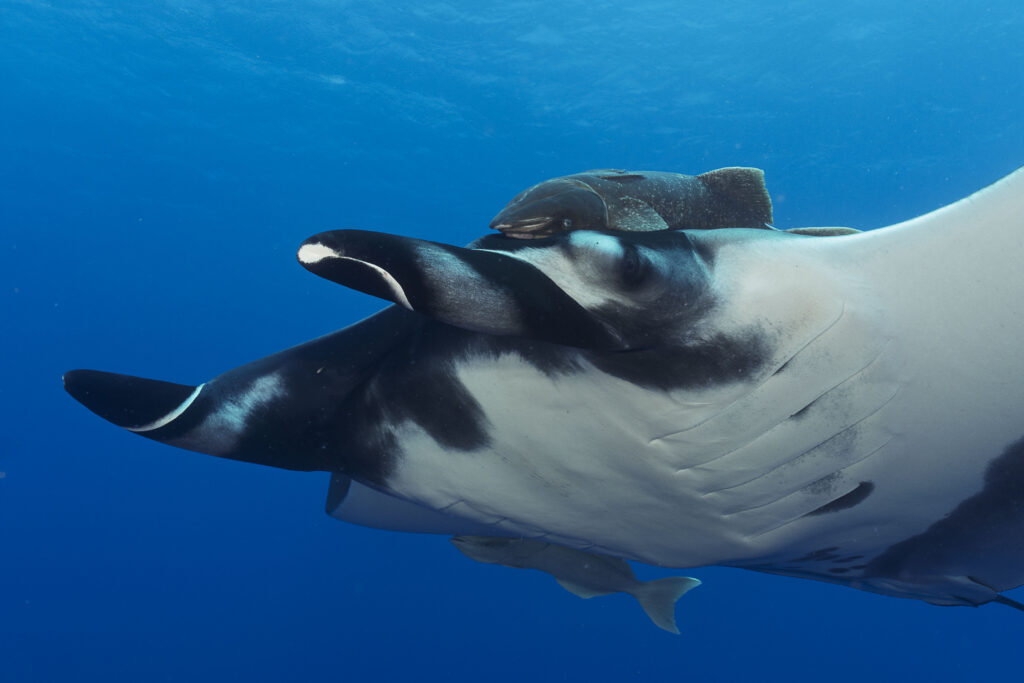
These manta rays aren’t just massive — they’re intelligent, curious, and incredibly interactive. Divers often describe the encounters as emotional because the mantas genuinely seem interested in engaging with people underwater.
Throughout our expedition, we had countless “manta moments.”
One of the most fascinating things we learned was how to read their behavior by watching their cephalic lobes — the two appendages near their mouths. When the lobes were tightly curled, the manta usually seemed focused and “on a mission,” often heading toward a cleaning station. But when the lobes were open and moving around freely, it was often a sign the manta was relaxed, curious, and interested in interacting with divers.
While divers are expected to respect the mantas’ personal space, the mantas themselves sometimes had other ideas.
Several came within inches of our faces. Corey even had one manta repeatedly barrel roll around him while he hovered underwater. It was one of those surreal underwater moments that’s almost impossible to describe unless you’ve experienced it yourself.
Socorro’s manta encounters are special because they don’t feel rushed or distant. Sometimes the mantas simply choose to spend time with divers — and when it happens, it’s unforgettable.
The Socorro Liveaboard Route
Most Socorro expeditions follow a route through the Revillagigedo Islands, with each island offering its own unique character and wildlife encounters.
[row_inner_3 v_align=”middle”]
We started at San Benedicto Island, home to two of the most famous dive sites in the region:
The Boiler — a legendary cleaning station known for incredibly friendly oceanic manta rays that often circle closely around divers.
El Cañon — a dramatic underwater landscape where divers can encounter schooling hammerheads, silky sharks, tiger sharks, manta rays, and even occasional whale sharks.
From there, our journey continued to Socorro Island where we explored:
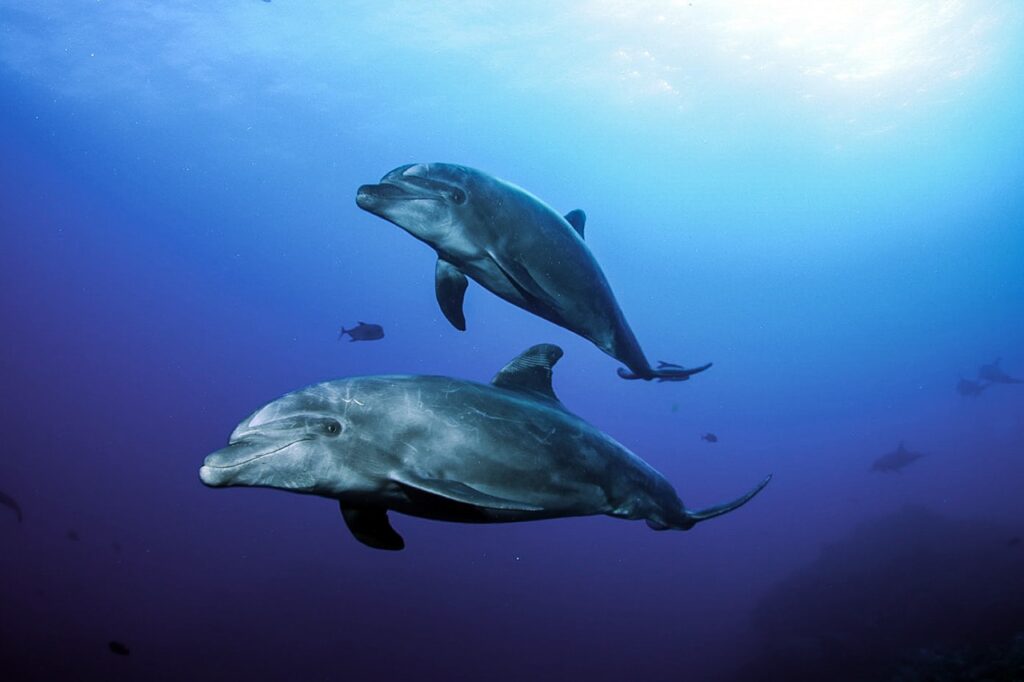
Cabo Pearce, known for its unique lava finger topography and playful dolphin interactions. Manta encounters can be less frequent here, but the dramatic underwater landscape and constant movement of pelagic life make it an unforgettable dive site in its own right.
From there, expeditions may move between Socorro Island and one of the most remote and iconic dive sites in the Pacific — Roca Partida.
Unlike the other islands, Roca Partida is a small and solitary pinnacle rising from the open ocean, far more exposed and isolated than any other stop in the region. This is where divers often encounter sleepy schools of white tip reef sharks, silvertip sharks, silky sharks, passing mantas, and large pelagic visitors moving through the blue. This spot delivers some of the best diving in the world, but it’s highly weather dependent since its so remote.
Sharks of Socorro: Hammerheads, Silkies & More
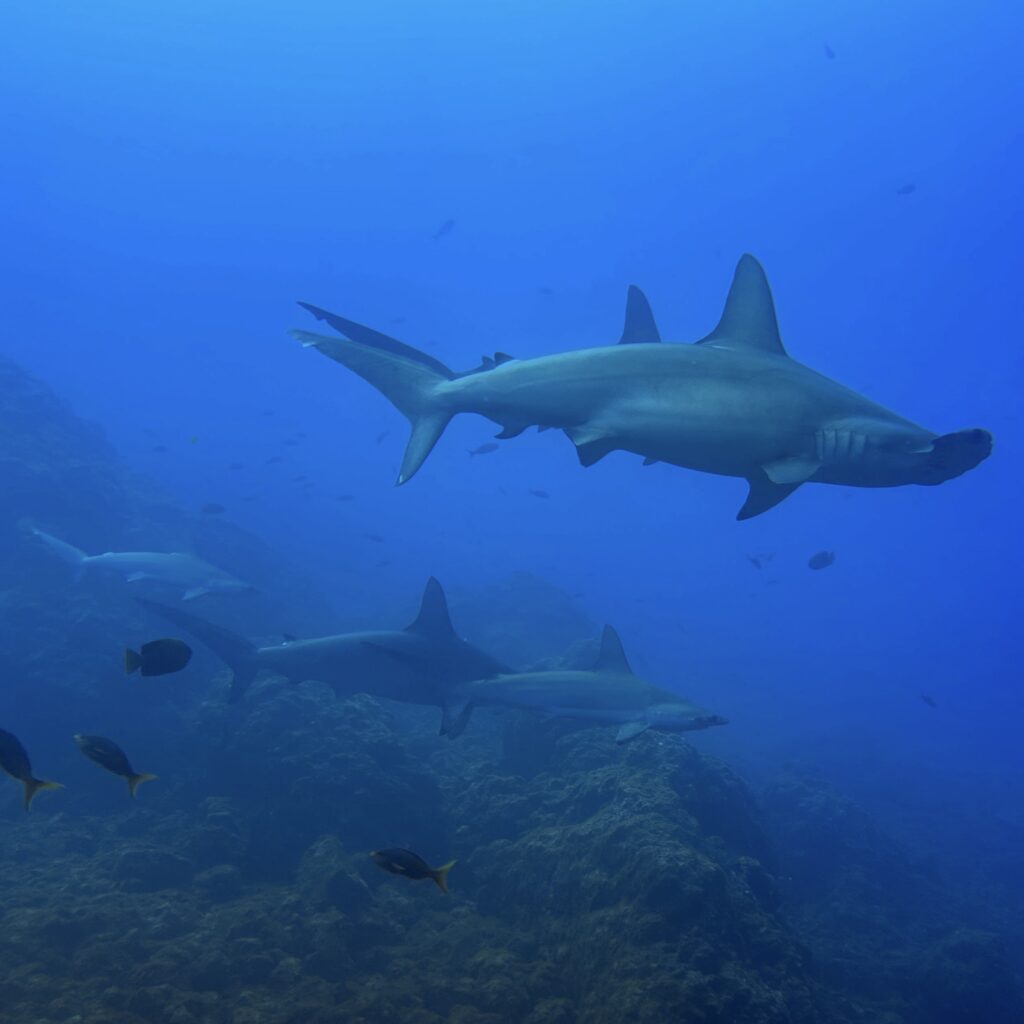
Socorro is also known for its incredible shark encounters.
Schooling hammerheads are one of the major highlights, especially at the famous dive site El Cañon. Hammerheads can be frustratingly shy at times, often staying just at the edge of visibility before disappearing back into the blue, but seeing an entire school glide past is still an incredible experience.
We also encountered silky sharks, white tip sharks, and signs that much larger tiger sharks were nearby. The diversity of pelagic life in Socorro is part of what makes every dive exciting — there’s always the possibility that something incredible could appear.
And then there were the dolphins.
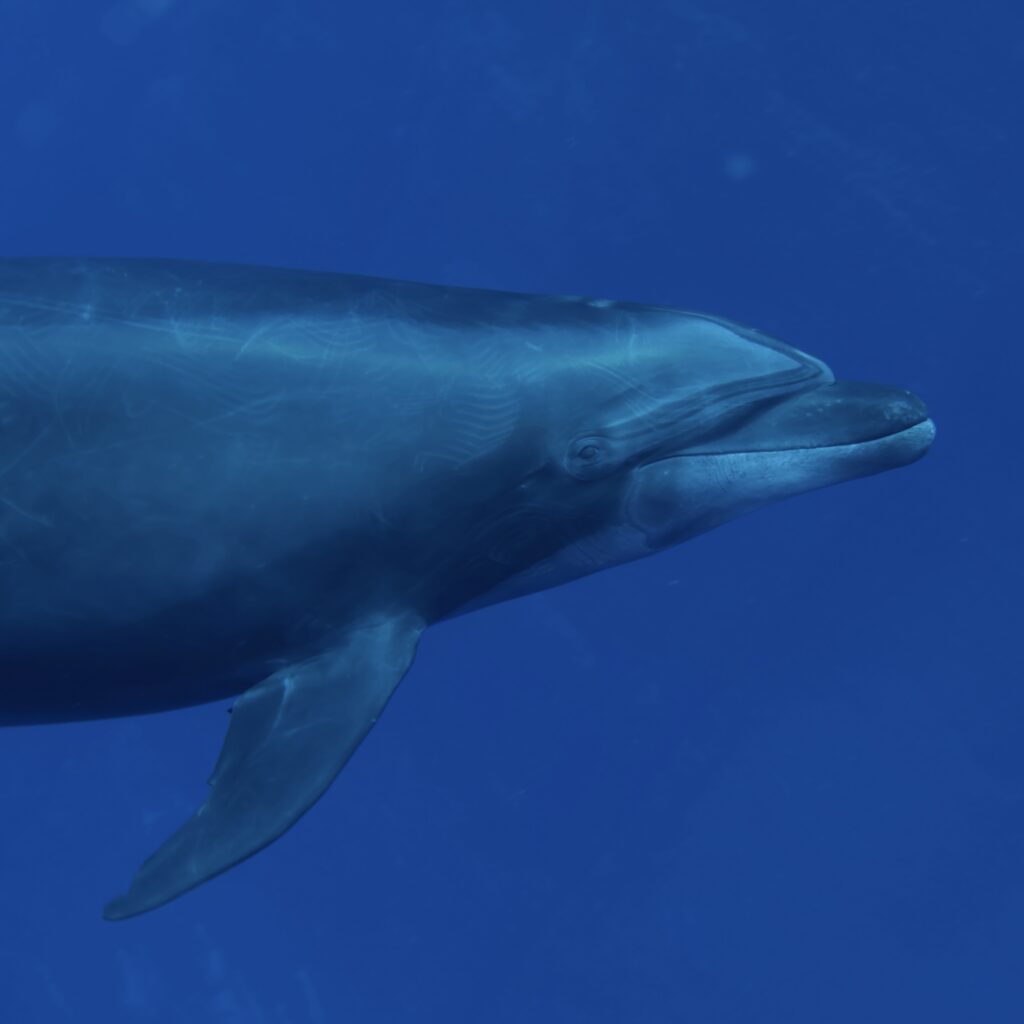
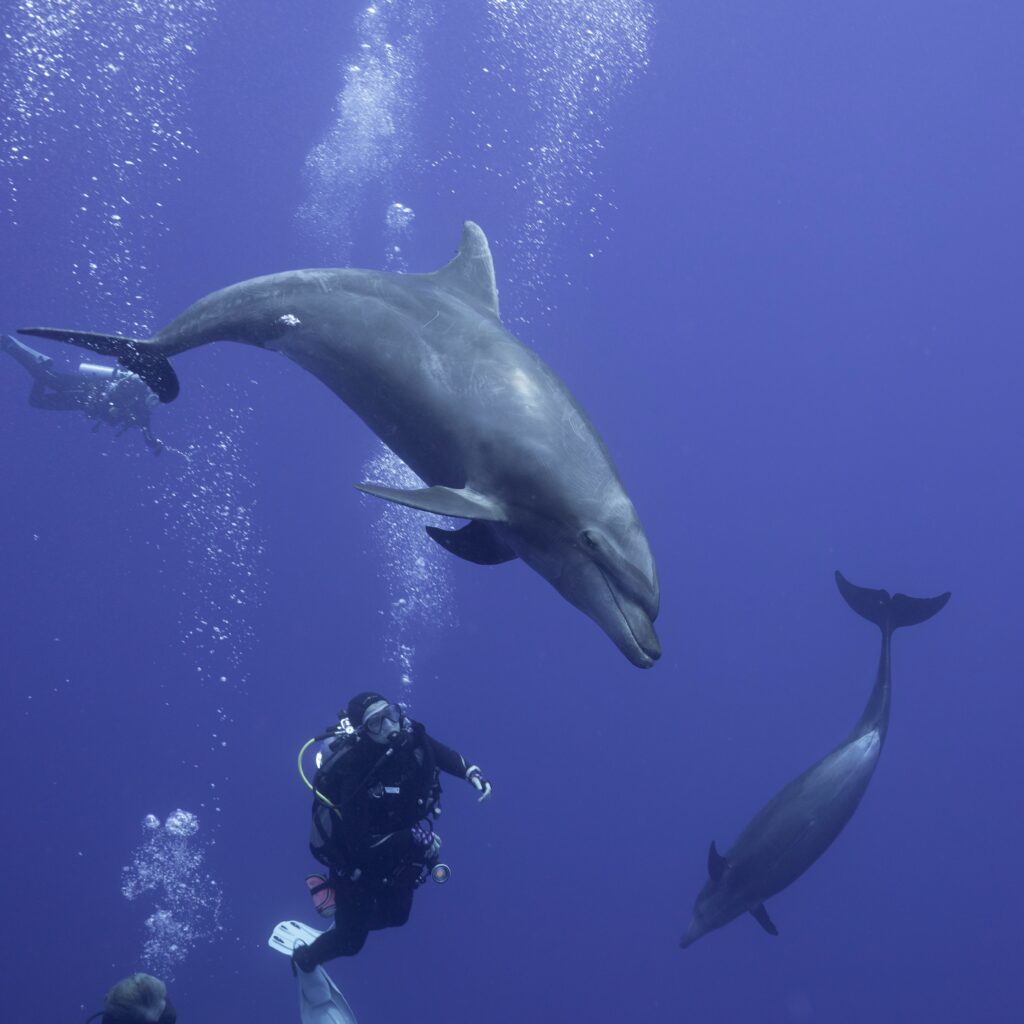
Socorro’s dolphins have a reputation for being playful with divers, and while we didn’t get long interactions every dive, we absolutely experienced their curious personalities. At times it felt like they were playing a game of “dive and seek,” cleverly hiding behind divers before suddenly darting through the group squeaking and spinning through the water.
We quickly learned that the dolphins seemed far more interested in playful interaction than cameras. Spinning underwater and engaging with them seemed to hold their attention far more than simply hovering with a camera pointed in their direction.
Conditions & Experience Level: What Divers Should Know
Socorro offers incredible diving, but it’s important to understand that this is advanced, expedition-style diving — not a relaxed tropical reef destination.
Currents can be strong and conditions can change quickly. Visibility can vary from crystal-clear blue water to much darker, plankton-rich conditions depending on weather and current activity.
While much of the diving takes place along walls, pinnacles, and rocky formations that provide visual reference points, it can still feel very much like blue water diving — especially when divers become distracted by manta rays and pelagic life appearing all around them.
Surge can also be significant, particularly at exposed sites like Roca Partida where there’s very little protection from open ocean swell. Boarding the pangas can sometimes be challenging, and timing becomes important, but the crew is there every step of the way to help divers safely in and out of the water.
[row_inner_3 v_align=”middle”] [col_inner_3 span=”6″ span__sm=”12″]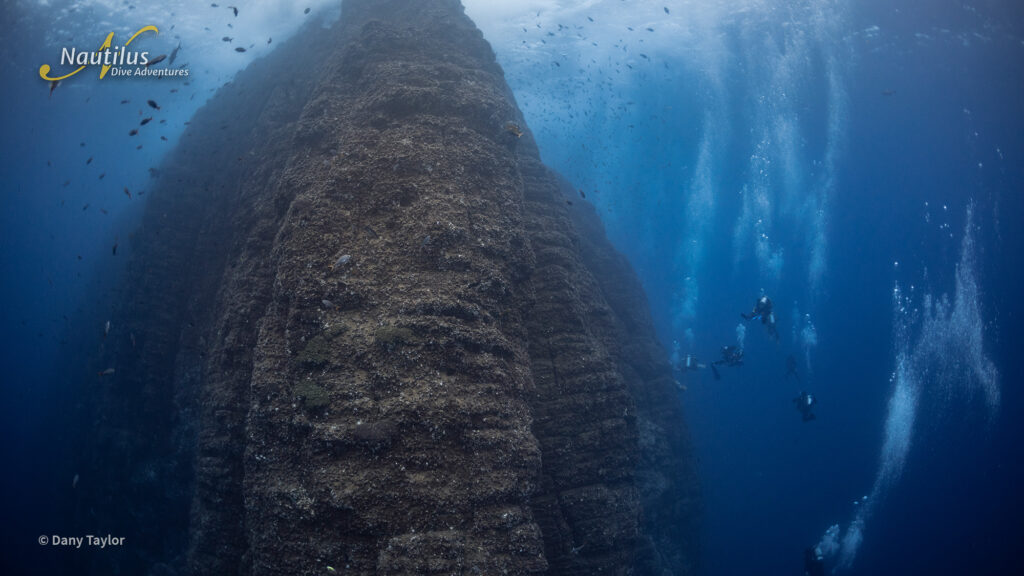
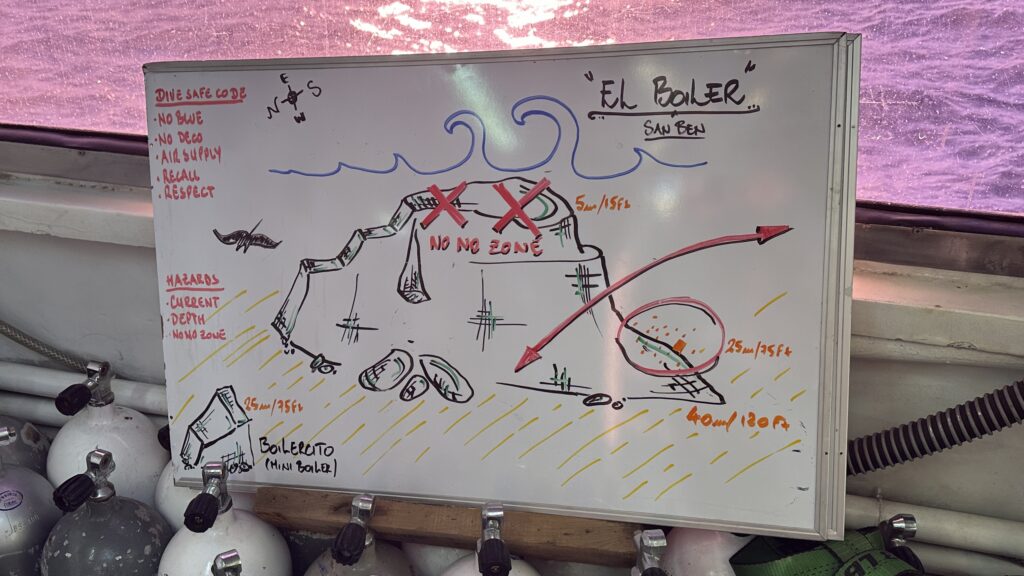
Negative entries are occasionally necessary depending on conditions. We only needed to perform one during our expedition, but it’s definitely recommended that divers feel comfortable with the technique before heading to Socorro.
Divers should also be prepared for dramatic temperature swings. On one dive we started in nearly 80°F water, only to hit a cold pocket around 71°F later in the dive — a pretty shocking difference underwater.
Experience with currents, strong buoyancy skills, and comfort in changing conditions are highly recommended. Advanced Open Water certification and Nitrox certification are also strongly encouraged for this destination.
[/col_inner_3] [/row_inner_3]Life on a Socorro Liveaboard
Because Socorro is so remote, diving here is done almost exclusively via liveaboard — and life onboard becomes a huge part of the experience.
We spent our expedition aboard the Nautilus Explorer and completed up to four dives per day. Since night diving typically isn’t offered in Socorro, the surface intervals sometimes felt shorter than expected, usually around two hours between dives.
The food onboard was excellent and became something everyone looked forward to after long dives. Fresh breakfasts, eggs cooked to order, buffets, snacks, and hearty meals kept everyone fueled throughout the trip.
[/col_inner_3] [col_inner_3 span=”6″ span__sm=”12″]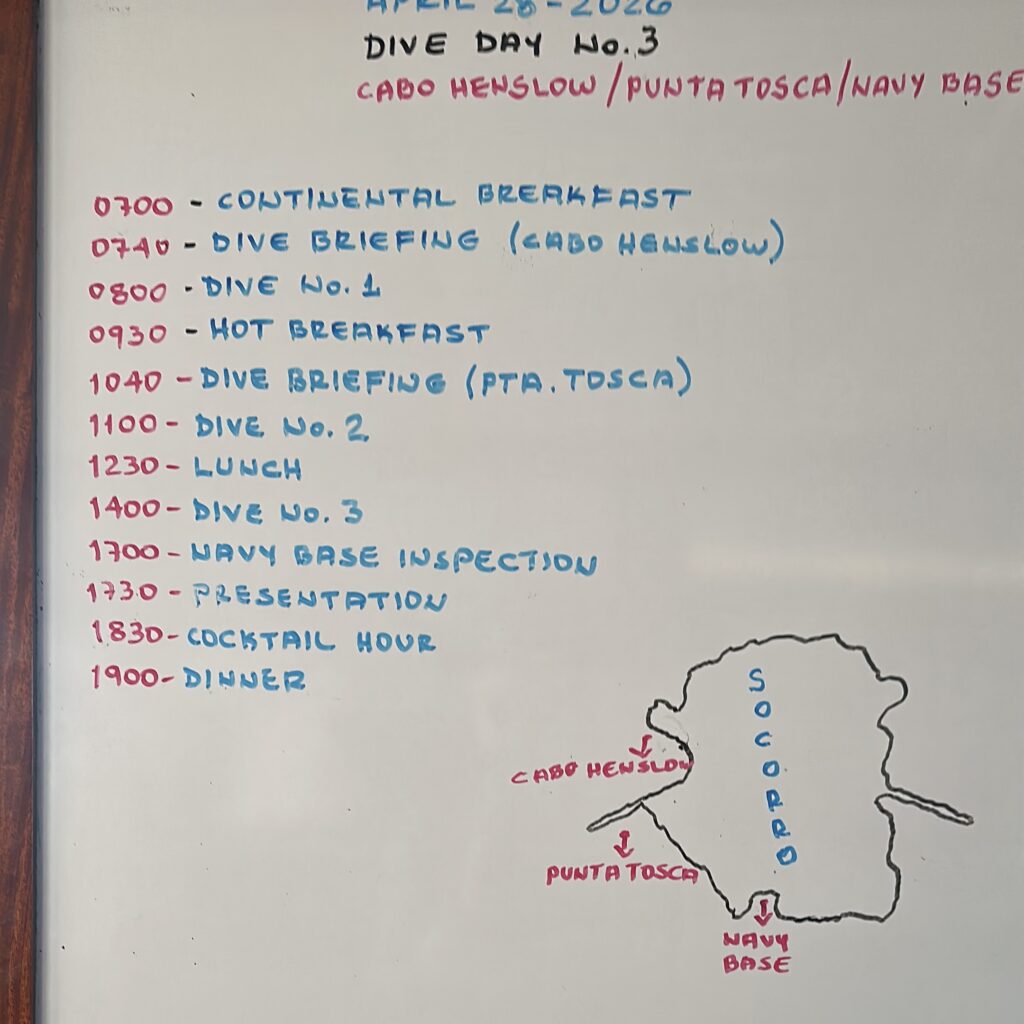
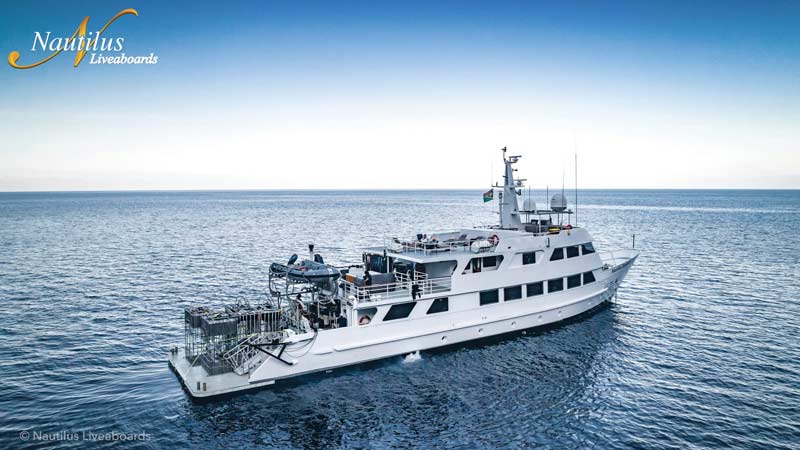
The atmosphere onboard was also a lot of fun. Between dives, divers gathered in the main salon, the galley, outdoor seating areas, and even the hot tub to swap stories about manta encounters, shark sightings, and near-missed whale shark opportunities.
Our trip, however, also reminded us that the Pacific can be incredibly unforgiving.
We experienced rough seas and large swells for much of the expedition, which made the crossings feel especially long and exhausting. At times, walking around the vessel became difficult due to the constant rocking.
[/col_inner_3] [/row_inner_3]Favorite Moments From the Expedition
It’s hard to narrow down the highlights because Socorro delivered so many unforgettable moments.
The manta interactions were easily some of the most emotional underwater encounters we’ve ever experienced. Watching these enormous animals glide effortlessly through the water — and sometimes directly toward us — felt surreal every single time.
And then there was the whale shark.
We had spent nearly the entire week hoping for one. Other dive groups spotted whale sharks early in the trip while our group repeatedly missed out. We visited multiple whale shark “hot spots” with no luck, and by the final day we had nearly accepted defeat.
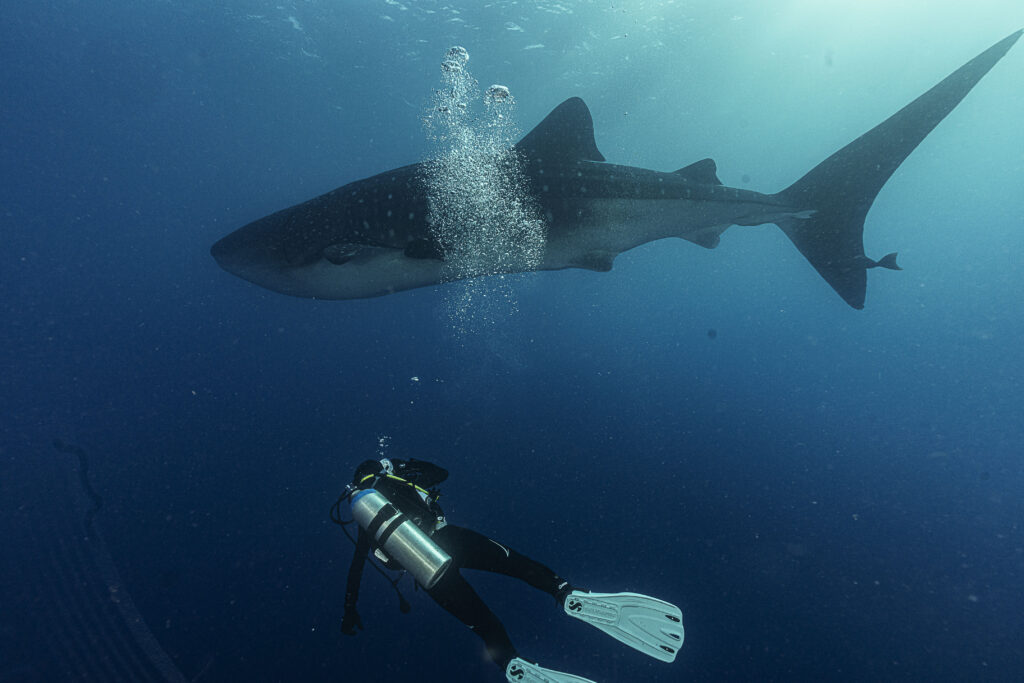
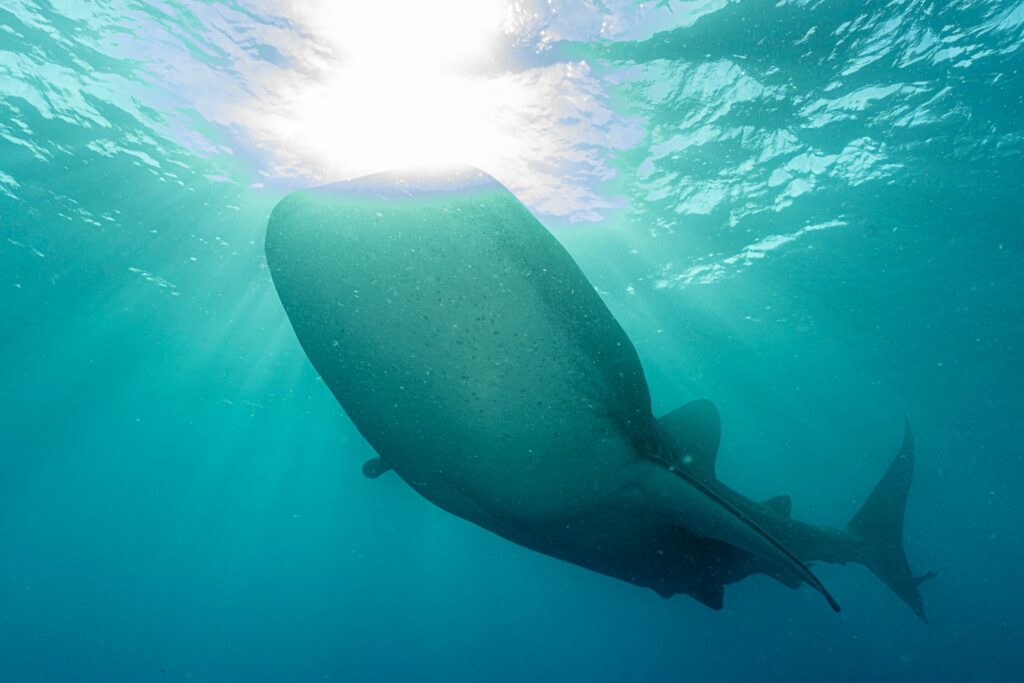
Then, during the very last dive of the trip — almost 55 minutes into the dive and right around our safety stop depth — a whale shark suddenly appeared.
A small, incredibly playful whale shark that became completely fascinated with our group. At one point our guide struggled to deploy his surface marker buoy because the whale shark was so interested in the bright orange SMB.
It was the perfect final surprise to end the expedition.
Who Would Love Diving Socorro?
Socorro is an incredible destination for:
- Big animal lovers
- Pelagic enthusiasts
- Underwater photographers
- Divers who enjoy expedition-style travel
- Experienced divers looking for something wild and different
This is a destination where patience and experience are rewarded.
Divers comfortable with currents, changing visibility, surge, and open ocean conditions will likely appreciate Socorro the most. It’s also ideal for people who enjoy the anticipation of not knowing what may appear next on a dive.
However, Socorro may not be the best fit for brand-new divers still building confidence in the water.
Why Socorro Belongs on Every Big-Animal Diver’s Bucket List
Socorro is one of those rare destinations that feels truly untamed.
The combination of giant manta rays, sharks, dolphins, whale sharks, rugged volcanic islands, and open Pacific conditions creates an experience that feels far removed from everyday diving.
And because Socorro is highly seasonal, every expedition can feel different. Whale sharks are more commonly seen when the water is warmer earlier in the season, while humpback whales migrate through the area later in the season to give birth.
The crossings may be rough. Some dives may require patience. Weather may change plans.
But when a giant manta ray locks eyes with you in the blue, or a whale shark suddenly appears at your safety stop on the final dive of the trip, you understand exactly why Socorro has become legendary among divers.
If giant pelagics, wild Pacific diving, and unforgettable marine life encounters are on your bucket list, Socorro absolutely deserves a place near the top.