


There are few wildlife encounters quite like seeing a whale in the wild. One moment you’re staring at an empty stretch of ocean, and the next a massive back breaks the surface, a plume of breath rises into the air, and everyone on the boat is suddenly very quiet. Whether it’s a blue whale rolling through the Sea of Cortez, a humpback breaching in French Polynesia, or a gray whale surfacing beside a boat in Baja, whales have a way of making us appreciate just how wild—and enormous—the ocean really is.
But whales are much more than their size. They’re highly adapted marine mammals with complex social lives, extraordinary migrations, specialized feeding strategies, and behaviors scientists are still working to understand. They’re also becoming increasingly popular as wildlife tourism destinations, giving more people the opportunity to experience these animals while they’re still wild.
So what makes whales so fascinating, where can you see them, and how can we make sure our desire to experience them doesn’t come at their expense?
What Makes a Whale a Whale?
Whales spend their entire lives in the ocean, but they are mammals just like us. They breathe air, are warm-blooded, give birth to live young, and nurse their calves with milk. Whales, dolphins, and porpoises all belong to a group of marine mammals called cetaceans, which includes more than 90 species ranging from relatively small dolphins to the enormous blue whale.
Perhaps the strangest part of their story is that the ancestors of modern whales didn’t always live in the ocean. Tens of millions of years ago, their ancestors walked on land. Over time, they became increasingly adapted to life in the water, eventually evolving into the fully aquatic animals we know today.
Built for Life in the Ocean
Millions of years in the water have produced some extraordinary adaptations. Whales have streamlined bodies, powerful tail flukes for propulsion, and thick layers of blubber that help insulate them in cold water. Unlike fish, whose tails generally move from side to side, whales propel themselves by moving their flukes up and down.
And because whales are mammals, they still have to breathe air. Their nostrils evolved into blowholes positioned on top of the head, allowing them to breathe quickly at the surface without lifting their entire head out of the water. Some species can also remain underwater for extraordinary lengths of time, with deep-diving whales adapted to handle pressures that would be impossible for humans without specialized equipment.
Baleen or Teeth?
All whales fall into one of two main groups: baleen whales and toothed whales.
Baleen whales—including blue, humpback, gray, and right whales—don’t have teeth. Instead, rows of flexible baleen plates hang from their upper jaws and act as enormous filters, allowing the whales to separate food from seawater.
Toothed whales, which include sperm whales, orcas, dolphins, and porpoises, actively hunt individual prey. Many also use echolocation, producing sounds and listening for the returning echoes to navigate and locate prey—even in darkness.
Built to Find Food
For animals this large, finding enough food is a serious undertaking, and different whales have evolved remarkably different strategies.
Blue whales can consume enormous quantities of krill by lunging into dense patches of prey and filtering the water through their baleen. Gray whales use a completely different strategy, feeding along the seafloor and filtering small animals from sediment. Humpbacks may lunge-feed on schooling fish or use techniques such as bubble-net feeding, where whales release curtains of bubbles to concentrate prey before surging through the middle.
Sperm whales take feeding in the opposite direction—literally. Rather than feeding near the surface, they can descend deep into the ocean in search of squid and other prey, relying heavily on echolocation in a world with little or no sunlight.

A World of Sound
For whales, the ocean is a world of sound. Sound travels extremely well underwater, making it an important tool for communication, navigation, maintaining social connections, and finding food.
Humpback whales are particularly famous for their complex songs. Males produce long sequences of sounds that can change over time, with whales within the same population often sharing variations of the same song. Toothed whales use clicks and other vocalizations for communication and, in many species, echolocation.
Sound is so important to whales that it also helps explain why human-generated underwater noise—from ships, construction, sonar, and other activities—has become an important conservation concern.
Meet Some of the World’s Most Fascinating Whale Species
There are dozens of whale species around the world, each with its own biology and behavior. We could spend an entire book getting to know them, but a few stand out for their size, unusual adaptations, or the incredible places where travelers can encounter them.
Blue Whale: The Biggest Animal on Earth
The blue whale is the largest animal known to have ever lived. That’s a difficult fact to comprehend until you’ve actually seen one. Even then, the experience can be surprisingly understated: a blow on the horizon, a massive back rolling through the water, and then the whale disappearing beneath the surface.
Blue whales are baleen whales that feed primarily on tiny prey such as krill. Despite their enormous size, they aren’t interested in hunting large animals. Instead, they can consume huge quantities of small prey when they encounter dense feeding areas.
The waters around Loreto, Baja California Sur, are one place where blue whales can be encountered seasonally. Other well-known destinations include parts of Sri Lanka and Timor-Leste, making blue whales a bucket-list species for wildlife travelers willing to go farther afield.

Humpback Whale: The Show-Off
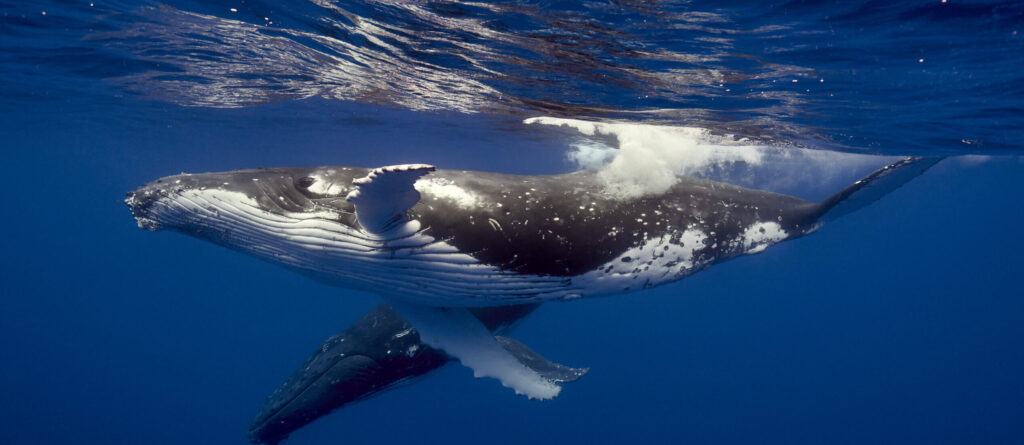
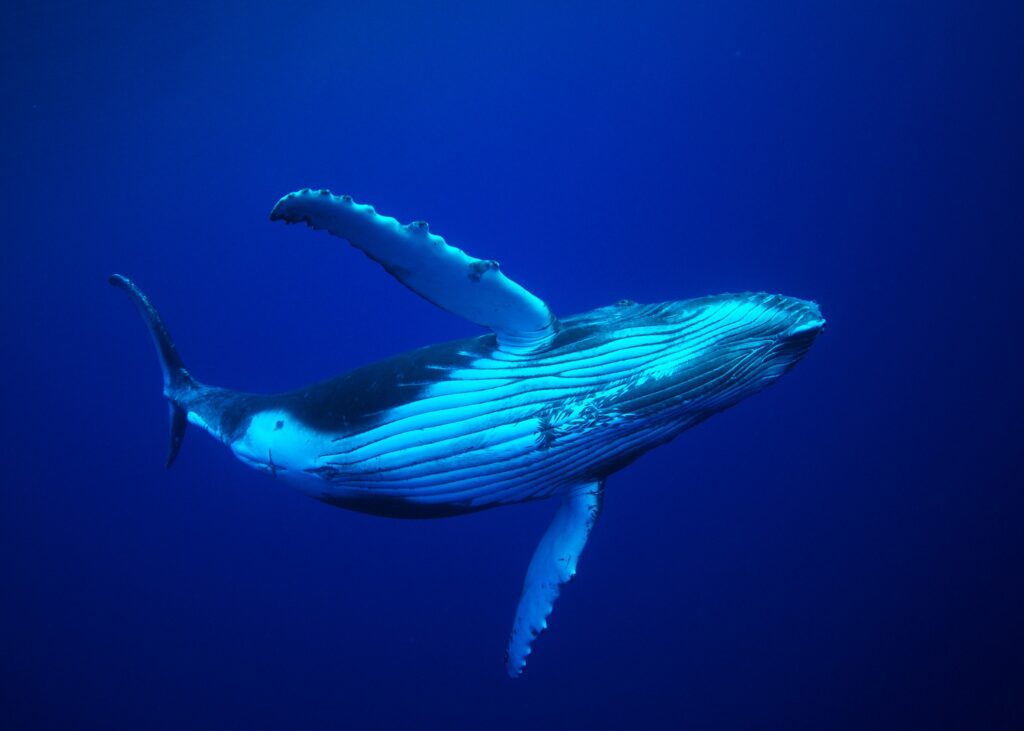
If blue whales win for sheer size, humpbacks may win for personality. Breaching, tail slapping, pectoral fin waving, bubble-net feeding, and those famous songs have made humpbacks one of the world’s most recognizable whales.
They’re also highly migratory, spending portions of the year in productive feeding grounds before traveling to warmer waters to breed and calve. That makes them one of the easiest whales to build a trip around, with famous seasonal destinations ranging from Hawaii to French Polynesia and beyond.
And while watching a humpback from a boat is spectacular, some destinations offer the opportunity to enter the water with them under carefully managed conditions. That’s an entirely different kind of encounter—and one that comes with an even greater responsibility to respect the animal’s space.
Gray Whale: The Great Traveler
Gray whales are famous for their long migrations along the Pacific coast. Each year, many travel between northern feeding grounds and breeding and calving areas farther south.
The protected lagoons of Baja California are particularly important to eastern North Pacific gray whales. San Ignacio Lagoon, on the Pacific side of the peninsula, is one of the places where travelers can encounter mothers and calves during the winter season.
Seeing a gray whale and her calf is a reminder that migration isn’t simply a spectacular natural phenomenon. These are animals moving through the ocean for very specific reasons: to reproduce, raise young, find food, and continue a cycle that has been repeated for generations.

Sperm Whale: Master of the Deep
Sperm whales take whale life in an entirely different direction. They are among the ocean’s great deep divers, descending into the darkness to hunt squid and other prey.
Their bodies are remarkably adapted to this environment, allowing them to withstand tremendous pressure and remain underwater for extended periods. Their powerful echolocation clicks help them navigate and hunt where sunlight barely—or never—reaches.
If blue whales demonstrate the scale of the ocean, sperm whales demonstrate its depth.

Orca: The Apex Predator
Orcas are another reminder that whales aren’t all enormous filter feeders. As toothed whales, they are highly capable predators, and different populations have developed remarkably specialized diets and hunting techniques.
What’s particularly fascinating is how much of this behavior appears to be learned. Different groups can have their own vocalizations, social structures, prey preferences, and hunting strategies, with behaviors passed from one generation to the next.
In other words, whale culture isn’t just about biology. In some populations, it’s about knowledge.

Where to See Whales Around the World
Many whales migrate between productive feeding grounds and warmer waters used for breeding, giving birth, and raising calves.
Why Do Whales Migrate?
Some whales undertake extraordinary seasonal journeys. Many baleen whales move between productive feeding grounds in cooler waters and warmer breeding and calving areas, traveling thousands of miles along the way.
Humpback whales are famous for these long migrations, while eastern North Pacific gray whales travel between Arctic and sub-Arctic feeding grounds and the protected breeding and calving lagoons of Baja California. For these whales, timing matters: the animals you find in a particular destination can change dramatically with the season.
But not every whale follows the same pattern. Some populations migrate shorter distances, follow different seasonal movements, or remain in productive waters throughout much of the year. Dominica’s resident sperm whales are a great example—which is why understanding where whales go, when they go there, and what they’re doing when they arrive is such an important part of understanding their lives.


Baja California — A Whale-Rich Peninsula
Baja is unusual because so many different marine giants pass through its waters. Gray whales return to the Pacific coast to breed and calve, blue whales can be found seasonally in the Sea of Cortez, and humpbacks frequent the waters around the southern peninsula. The region’s whale calendar overlaps with seasonal appearances by whale sharks, mobula rays, sea lions, and other pelagic wildlife, making Baja one of the most diverse big-animal destinations in the region.
French Polynesia — Humpbacks in the Blue
French Polynesia is another important tropical destination for humpbacks during their breeding season. The islands are also known for regulated in-water encounters, offering a very different experience from watching whales from a boat.
Want to get in the water with humpback whales?
Our French Polynesia adventure combines dedicated whale snorkeling on two islands with scuba diving, giving us multiple opportunities to experience the region both above and below the surface. The trip is timed around the seasonal arrival of humpbacks, with whale encounters conducted according to local regulations and guidelines.
Of course, Baja and French Polynesia represent only a tiny piece of the whale world. In Dominica, resident sperm whales use the island’s deep offshore waters throughout the year. Head toward the poles and the picture changes again: Arctic waters support whales adapted to life around sea ice, while the Antarctic becomes an incredibly productive summer feeding ground for humpbacks, minke whales, orcas, and other marine wildlife.
There isn’t one universal whale season. Where you go, when you go, and which species you’re hoping to encounter all matter.
Whale Tourism & Conservation
Our relationship with whales has changed dramatically over the past century. Many whale populations were once hunted on an enormous scale, with commercial whaling pushing some species and populations to dangerously low numbers. Today, millions of people travel specifically to see whales alive and in the wild—a shift that has helped turn whale watching into an important part of the tourism economy in coastal communities around the world.
That can be good news for whales. Wildlife tourism can create economic incentives to protect animals and the habitats they depend on, while giving people the opportunity to experience these animals in a way that can inspire a much deeper appreciation for them. But more tourism doesn’t automatically mean better conservation. Too many boats, close approaches, excessive noise, chasing animals, and poorly managed in-water encounters can turn tourism itself into another source of pressure.

Conservation Can Work
Whales have faced centuries of pressure from commercial whaling, but their conservation story isn’t entirely bleak. International protections, national laws, habitat protection, and decades of research have helped some whale populations make remarkable recoveries.
Humpback whales are one of the clearest examples. Commercial whaling severely reduced their numbers, but protections introduced over the past several decades—including the International Whaling Commission’s commercial whaling moratorium—have helped many populations rebound. NOAA now considers nine of 14 identified humpback whale populations recovered enough that they no longer require protection under the U.S. Endangered Species Act, although several populations remain threatened or endangered.
Gray whales offer another encouraging example—and one that is especially meaningful for anyone visiting Baja. The eastern North Pacific population was once heavily depleted by commercial whaling but recovered enough to be removed from the U.S. Endangered Species List in 1994.
But recovery doesn’t mean the work is finished. Different whale populations face very different circumstances, and today’s threats include entanglement and bycatch, ship strikes, underwater noise, pollution, habitat degradation, and climate change. In fact, the International Whaling Commission estimates that more than 300,000 whales, dolphins, and porpoises die in fishing gear each year, making bycatch one of the biggest threats facing cetaceans today.

What Can You Do to Help?
You don’t have to be a marine biologist—or even live near the ocean—to make a difference. One of the most direct ways travelers can help is by choosing wildlife tourism carefully.
Before booking a whale-watching or in-water encounter, look beyond the promise of getting close to an animal. Find out what regulations apply, whether the operator is authorized, how encounters are managed, and what happens if an animal chooses not to interact. Good operators should be able to explain the rules clearly and should never put getting the perfect photograph ahead of the animal’s welfare.
When you’re actually in the water or on a boat, give whales space and let them control the encounter. Don’t chase, surround, touch, feed, or attempt to attract an animal. Follow local approach distances and time limits, keep noise to a minimum, and be prepared to back away if the whale shows signs of changing its behavior. Sometimes the most responsible encounter is the one where you simply watch from a respectful distance.
There are plenty of things you can do beyond whale encounters, too. Choosing sustainably sourced seafood, reducing single-use plastics and other waste, supporting marine conservation organizations, participating in beach or waterway cleanups, and making choices that reduce your carbon footprint can all contribute to healthier oceans.
And don’t underestimate the value of paying attention and sharing what you learn. Conservation depends in part on people caring about these animals and understanding the pressures they face. When travelers know what responsible wildlife tourism looks like, they can make better choices—and encourage others to do the same.
We’ve covered the broader principles of responsible big-animal encounters in our guide, [Swimming With Giants: How to Have Incredible Big-Animal Encounters Responsibly →].
Whale conservation has already shown us that change is possible. The whales we see today are here in part because previous generations recognized that these animals needed protection. What we do now helps determine whether future generations will have the same opportunity.
There’s Always More to Discover
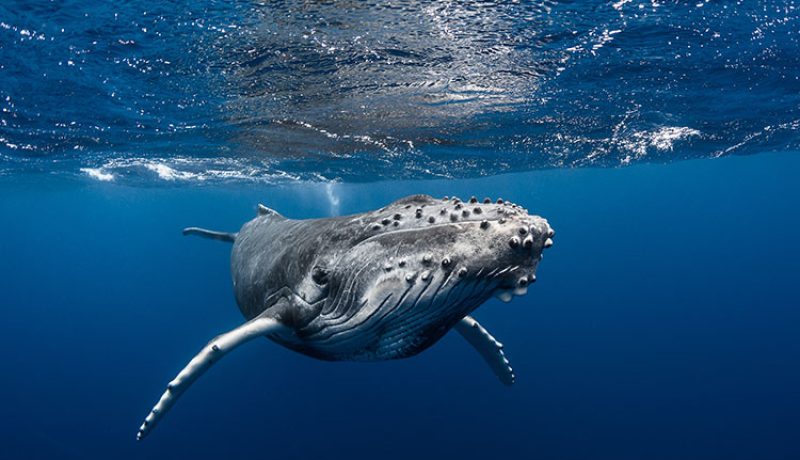
There are few things that put the size and wildness of the ocean into perspective quite like watching a whale disappear beneath its surface.
Maybe your dream is a gray whale and her calf in Baja, a blue whale rolling through the Sea of Cortez, humpbacks breaching in Hawaii, or an in-water encounter in French Polynesia. Maybe it’s an expedition to Antarctica or a deep-diving sperm whale. There are almost as many ways to experience whales as there are places they travel.
And that’s part of what makes them so compelling. You don’t have to see every whale to appreciate the incredible lives they lead. You just have to start paying attention to where—and when—they are.
At GAS Divers, we build many of our adventures around wildlife seasons and the places where incredible marine-life encounters are possible. If whales are on your bucket list, start with the whale you want to see. Then we’ll figure out where to find it.
Because sometimes the best adventure starts with a very simple question: Where are the whales?
