

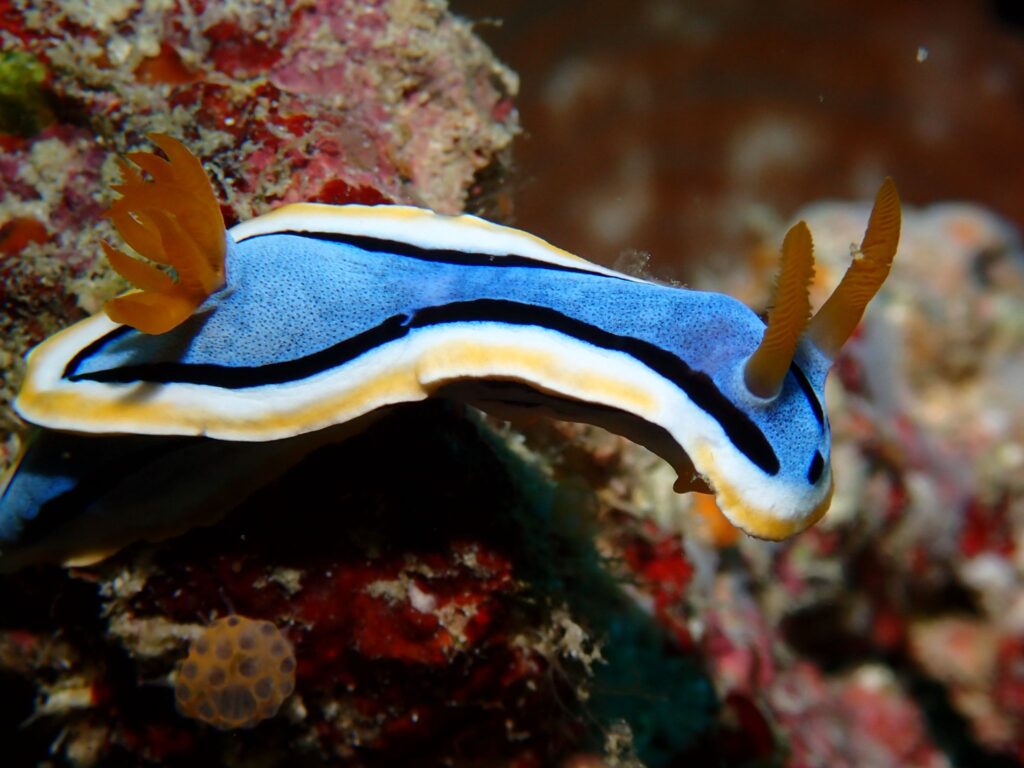
If you’ve spent any time diving in places like Indonesia or the Philippines, there’s a good chance you’ve heard an excited divemaster pointing out a tiny creature no bigger than your thumb — usually followed by underwater cheering from the macro photographers nearby.
Welcome to the wonderful world of nudibranchs.
These tiny sea slugs have developed an almost cult-like following among divers, underwater photographers, and marine life enthusiasts. And while they may not be as large or dramatic as sharks or manta rays, nudibranchs have a way of completely changing how people experience diving.
Once you start noticing them, every dive becomes a treasure hunt.
And if you’re new to them, the reaction is usually the same: “Wait… that tiny thing?”
Yes. That tiny thing.
Nudibranchs are one of the most beloved creatures in scuba diving — not because they’re big or powerful, but because they’re strange, beautiful, and surprisingly complex once you start paying attention.
What exactly is a nudibranch?
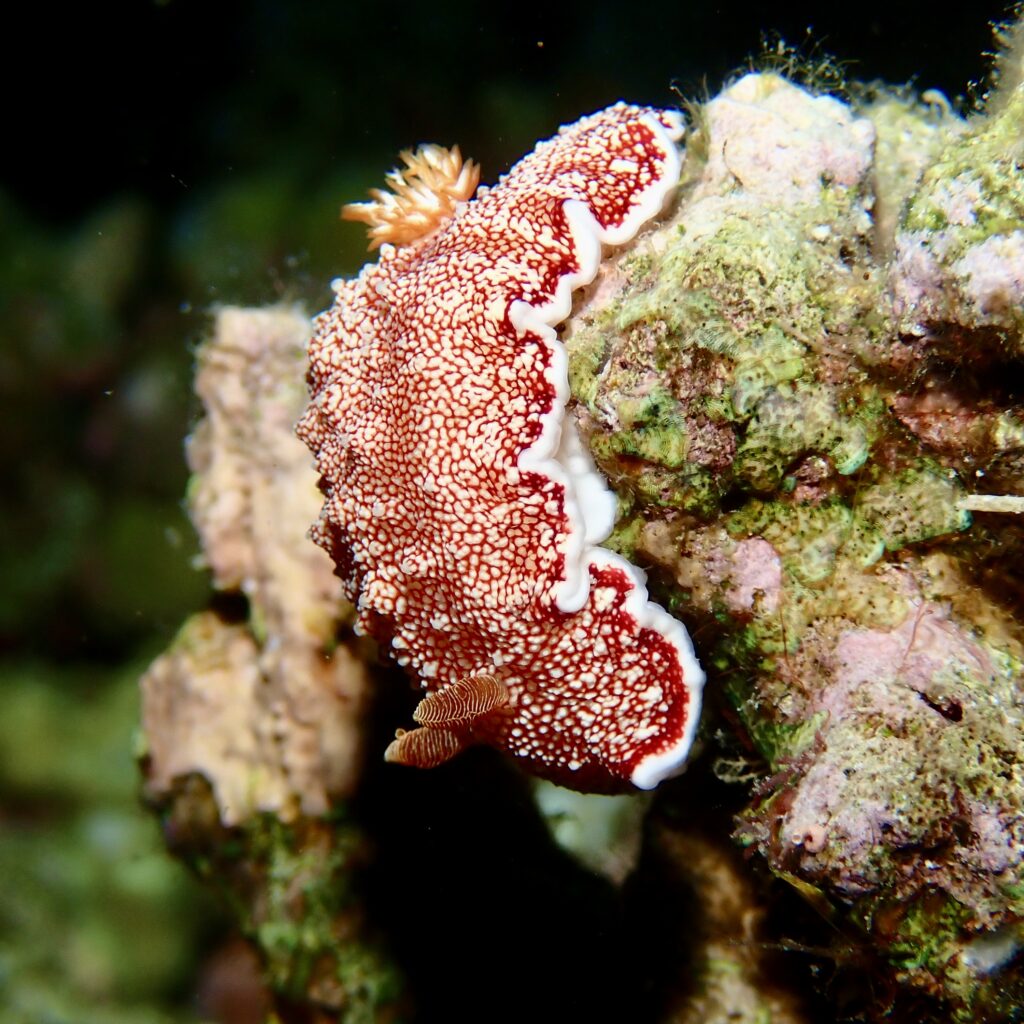
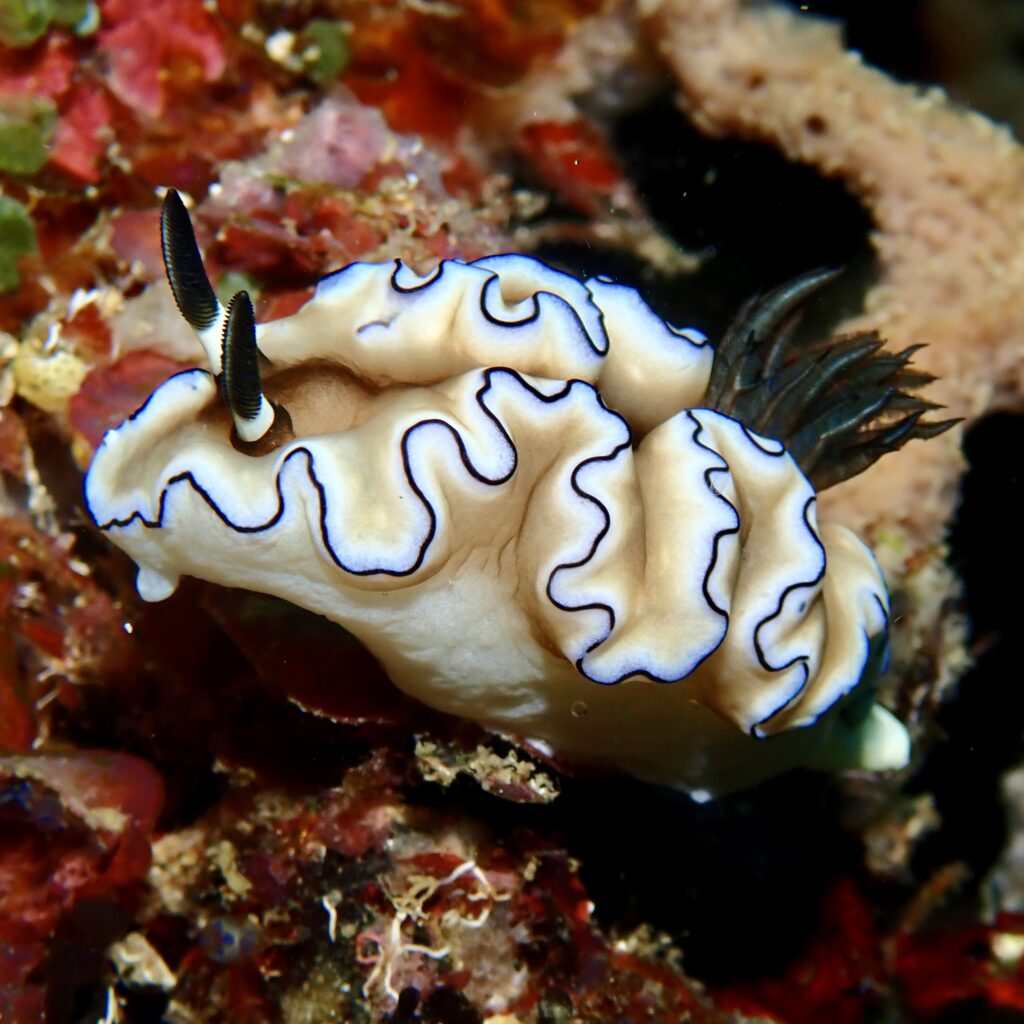
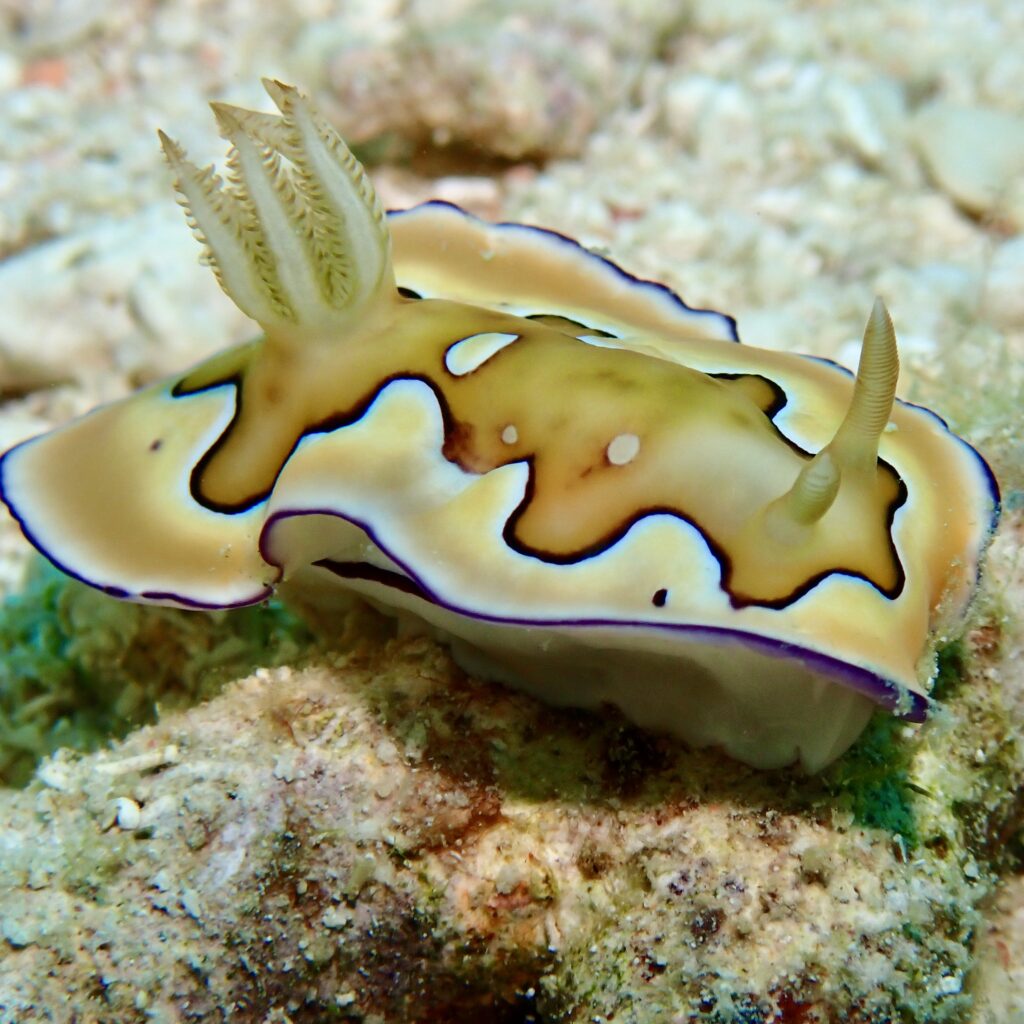
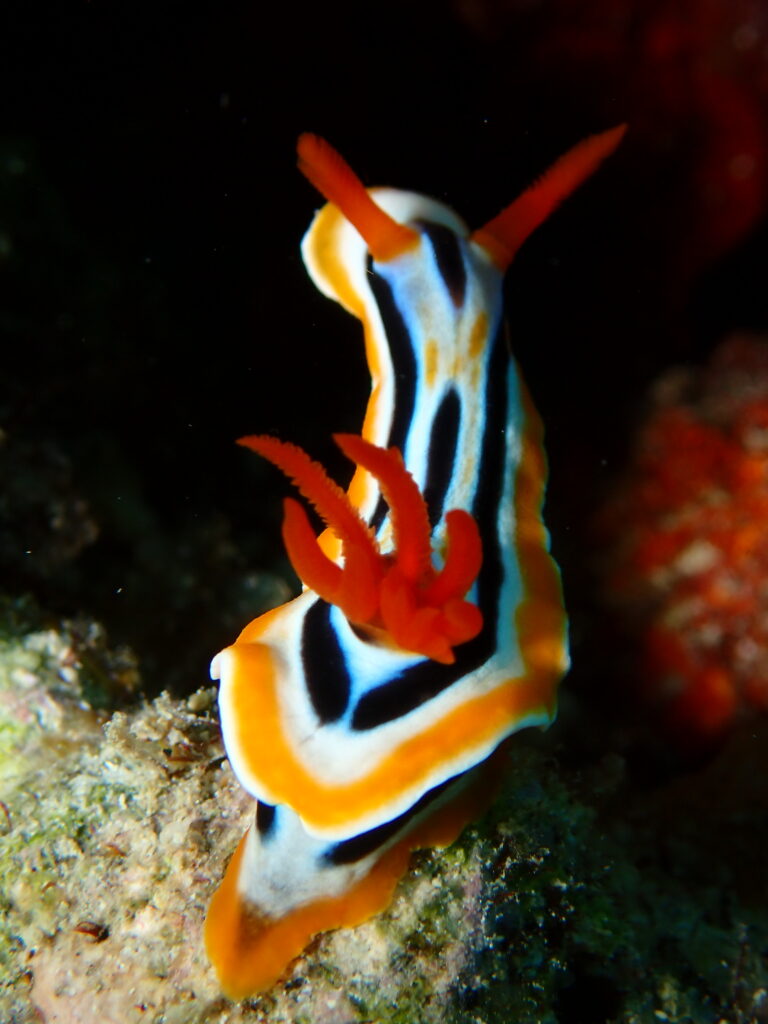
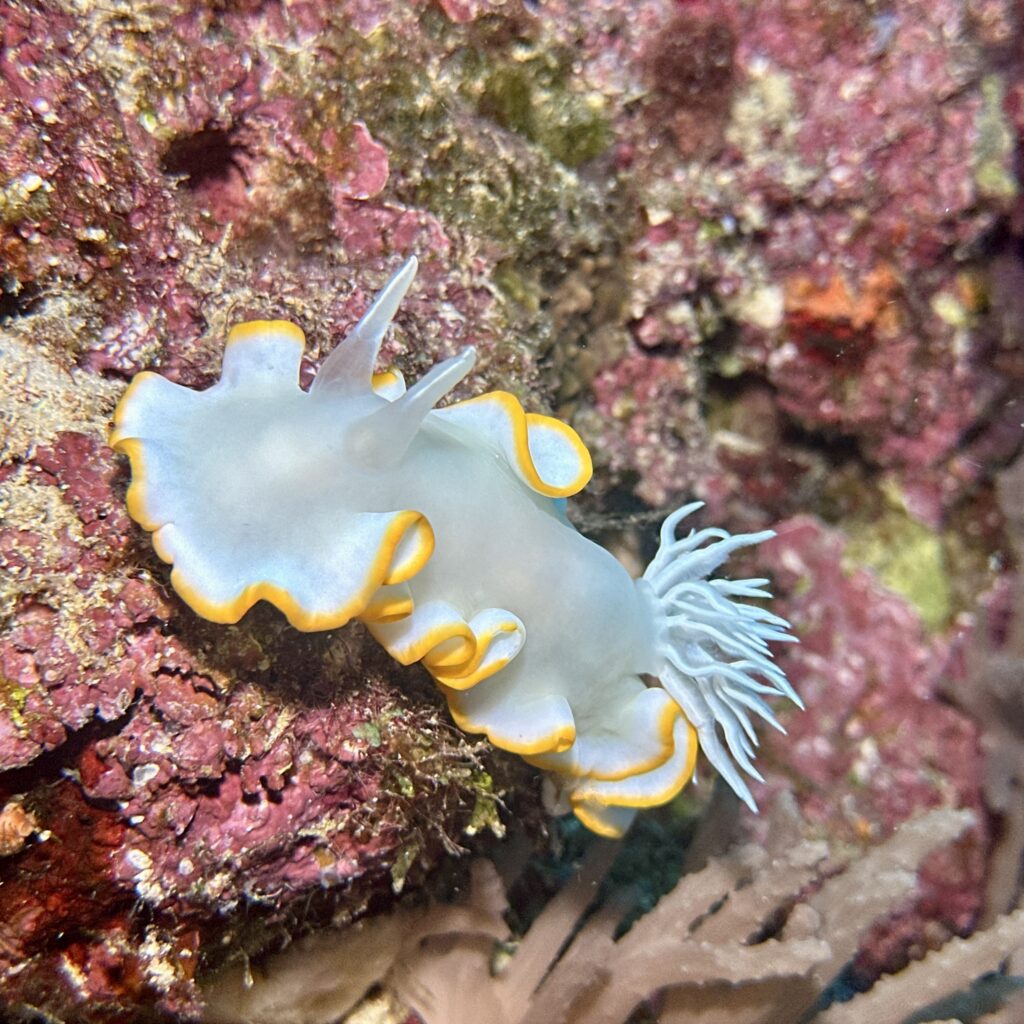
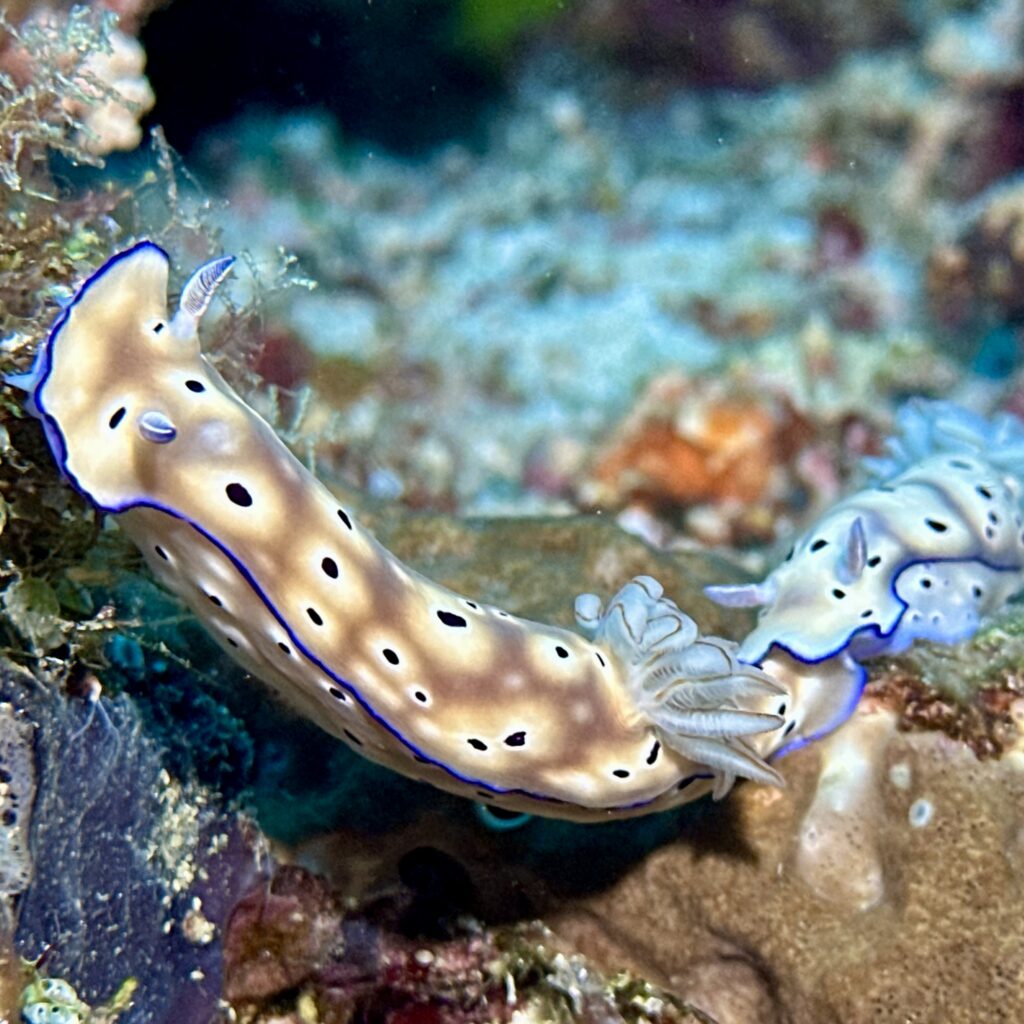
Nudibranchs are soft-bodied marine mollusks — essentially sea slugs — but that simple description doesn’t do them justice. Unlike snails, they don’t have a shell as adults. Instead, they’ve evolved into incredibly diverse shapes and colors, ranging from neon purples and electric blues to fiery oranges and intricate patterns that look almost artificial. They’re part of a larger group of marine gastropods, but nudibranchs stand out because of one major trait:they ditched the shell and went all-in on chemical defenses, camouflage, and visual intimidation.
The name “nudibranch” actually means: “naked gills”
Many species have exposed feathery gills or decorative appendages on their backs, giving them their signature alien-like appearance.
Where do nudibranchs live?
Nudibranchs are found in oceans all over the world, from shallow tropical reefs to cold-water environments. But divers tend to encounter the most diversity in:
- Indonesia (Raja Ampat, Komodo, Bali, Lembeh Strait)
- The Philippines (Anilao, Anda, Moalboal)
- Malaysia and Papua New Guinea
- Cold-water sites like Alaska, California, and even Antarctica!
They tend to prefer:
- reefs with lots of growth and sponge life
- rocky or rubble areas
- coral-rich ecosystems
- places with strong biodiversity (macro diving hotspots)
Basically, if a dive site has a lot going on biologically, nudibranchs are probably there — you just have to slow down enough to notice them.
Why are nudibranchs so colorful?
The short answer: survival. Their colors often serve as:
- warnings to predators (“don’t eat me, I taste terrible”)
- camouflage on brightly colored sponges or corals
- chemical signaling tied to their diet and toxins
Some nudibranchs even steal toxins or stinging cells from their prey and reuse them for defense. In other words: they are both beautiful and mildly terrifying from an evolutionary standpoint.
How to identify nudibranchs (the easy way)
Look for “color blobs”
They don’t swim. Nudibranchs glide slowly across reefs, coral, rocks, or sponges. If you spot something that looks like a tiny moving jewel, there’s a good chance it’s a nudibranch.
Pay attention to shape (not just color)
Two key features help a lot:
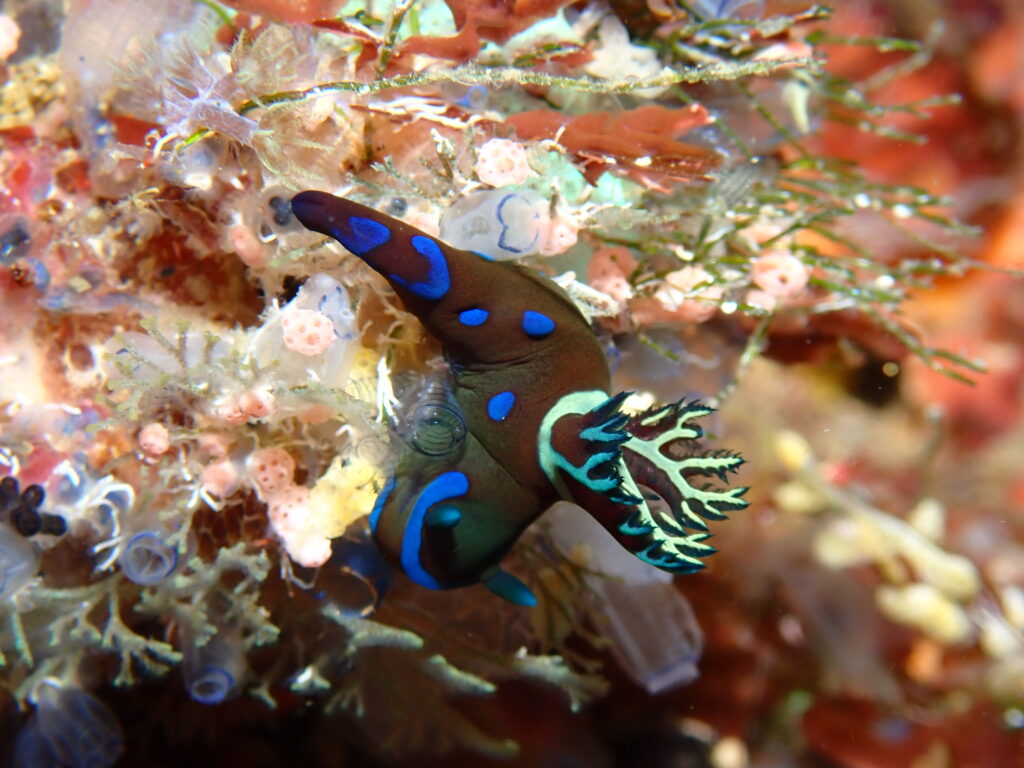
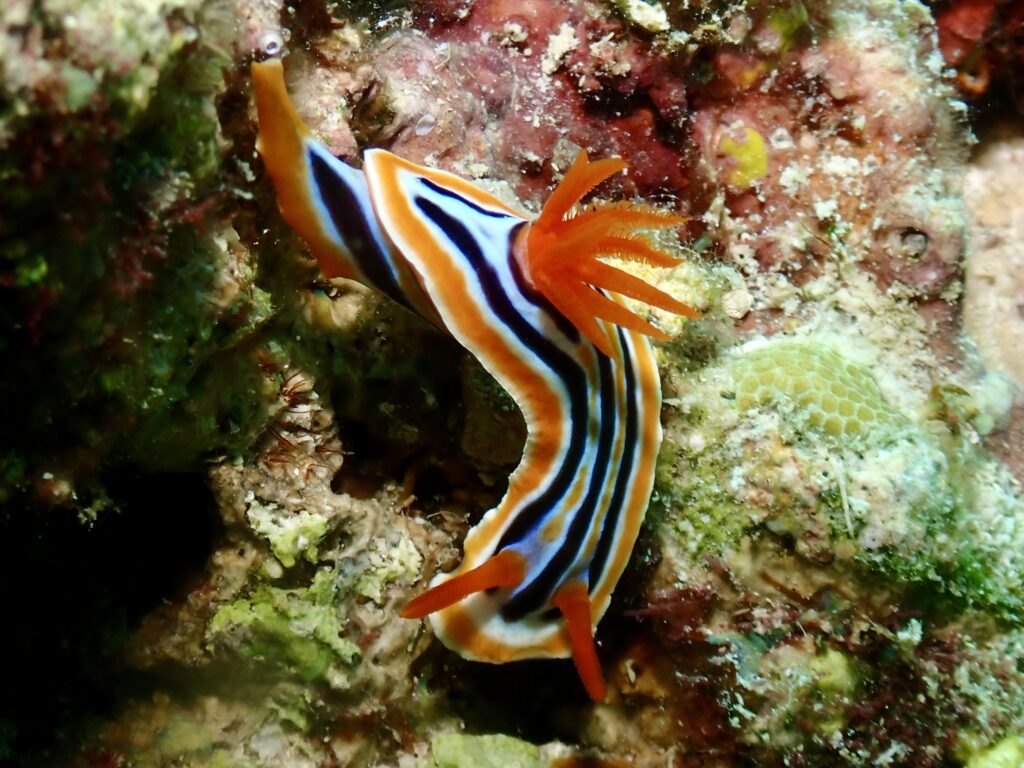
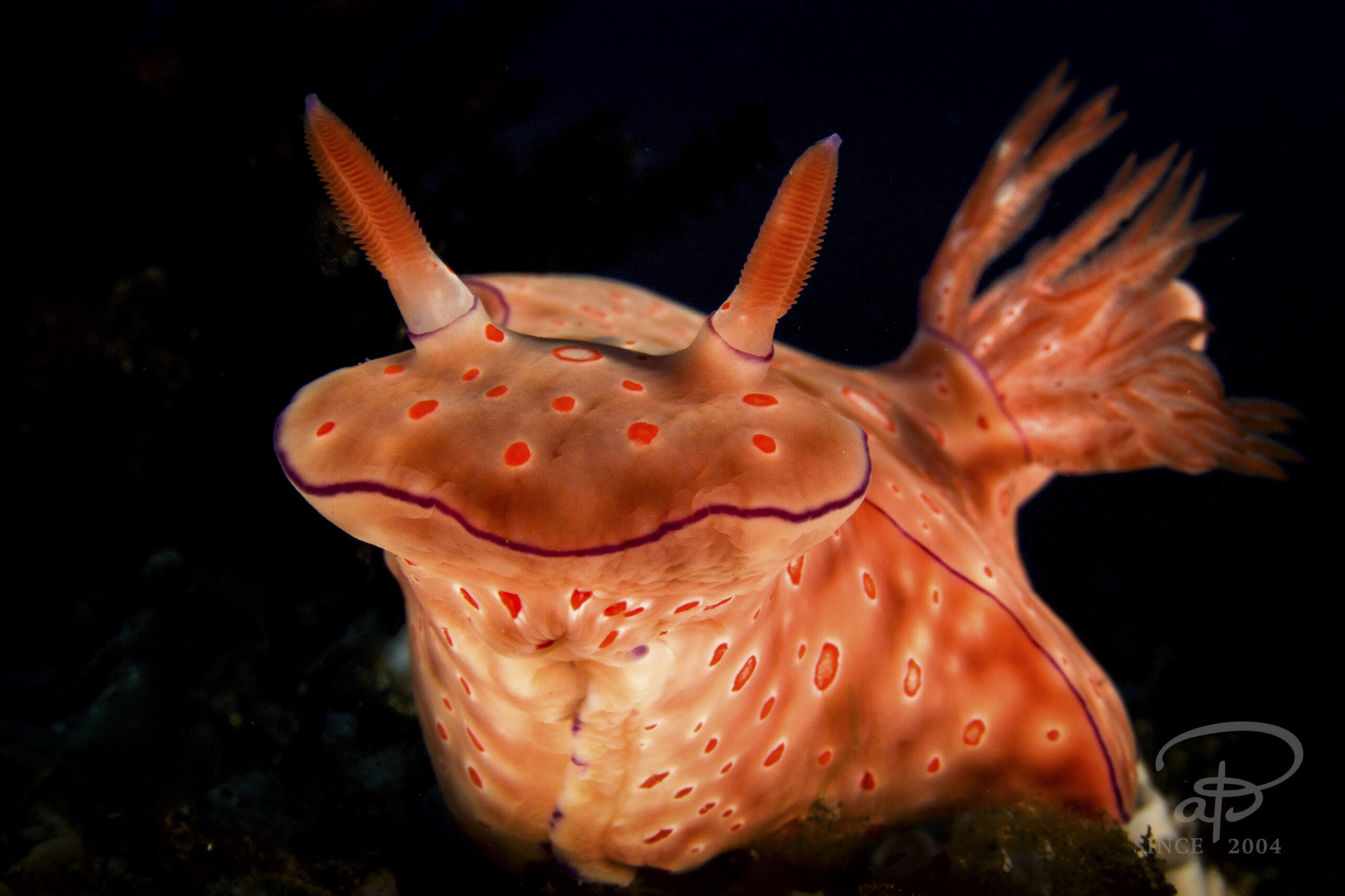
- Rhinophores: little antenna-like structures on their head used for smelling
- Cerata or gill plumes: feathery or finger-like extensions on their back (we call it the party tail)
Different species have very distinct shapes, which helps with ID even when colors are similar. Common features include, feathery gills, finger-like appendages, frilly backs, dramatic textures
Slow down your diving
This might be the most important tip of all.
Nudibranchs reward patient divers. The slower you move and the more carefully you scan the reef, the more likely you are to spot them.
Some of our favorite nudi facts
They’re incredibly diverse
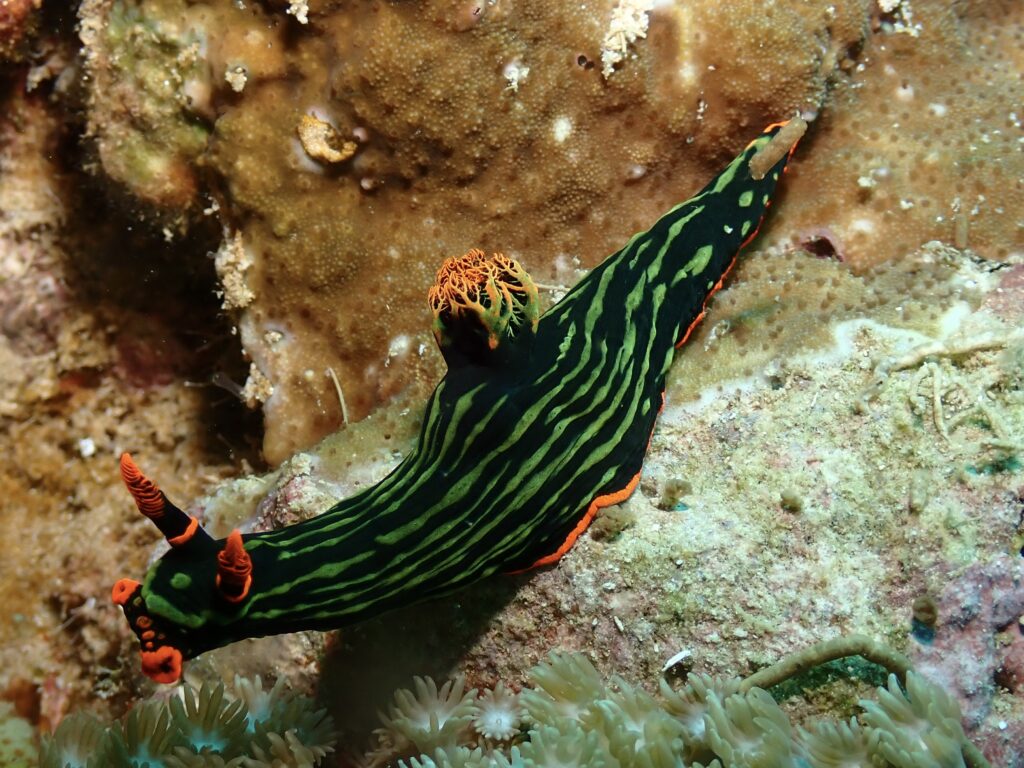
There are over 3,000 known species — and likely many more still undiscovered. It’s not uncommon to see several different species on a dive!
They “borrow” abilities from what they eat
Some species can:
- store toxins from prey
- recycle stinging cells from jellyfish or hydroids
- absorb pigments directly from food
They are basically underwater recyclers with attitude.
Why Divers Love Nudibranchs
Part of the appeal of nudibranchs is the sense of discovery they create underwater.
Finding one often feels like spotting hidden treasure on the reef. They encourage divers to:
- slow down
- improve buoyancy
- pay attention to details
- appreciate reef ecosystems more closely
For many divers, nudibranchs become the gateway into macro diving and underwater photography.
And once you start looking for them, it becomes hard to stop.
Final Thoughts
Nudibranchs may be tiny, but they represent one of the most fascinating sides of scuba diving.
They remind us that some of the ocean’s most incredible creatures are also some of the easiest to overlook. Whether you’re an experienced macro photographer or simply someone who enjoys exploring reefs carefully, nudibranchs have a way of turning every dive into an underwater scavenger hunt.
And honestly? That’s part of what makes them so addictive.
Once you start looking for nudibranchs, every dive becomes a treasure hunt. Some of our favorite trips are designed for divers who enjoy searching for the tiny details — colorful critters, rare macro life, and those unforgettable “how did you even spot that?” moments underwater.
Want to See Nudis? Our Trip Recommendations
The Philippines
January 2027
We’re going Anda, Bohol and Moalboal – choose your week or stay for both!
Blissful Bali
NOVEMBER 2027
Landbased adventure with fabulous critter diving!

MISOOL Halmahera & Lembeh Expedition
NOVEMBER 2027
12-night liveaboard journey exploring the best of Indonesia’s Coral Triangle

BEST OF BORNEO
August 2028
Explore one of tge most exclusive and rarely offered liveaboard routes in all of Indonesia
If you’ve spent any time diving in places like Indonesia or the Philippines, there’s a good chance you’ve heard an excited divemaster pointing out a tiny creature no bigger than your thumb — usually followed by underwater cheering from the macro photographers nearby.
Welcome to the wonderful world of nudibranchs.
These tiny sea slugs have developed an almost cult-like following among divers, underwater photographers, and marine life enthusiasts. And while they may not be as large or dramatic as sharks or manta rays, nudibranchs have a way of completely changing how people experience diving.
Once you start noticing them, every dive becomes a treasure hunt.
And if you’re new to them, the reaction is usually the same: “Wait… that tiny thing?”
Yes. That tiny thing.
Nudibranchs are one of the most beloved creatures in scuba diving — not because they’re big or powerful, but because they’re strange, beautiful, and surprisingly complex once you start paying attention.
What exactly is a nudibranch?
Nudibranchs are soft-bodied marine mollusks — essentially sea slugs — but that simple description doesn’t do them justice. Unlike snails, they don’t have a shell as adults. Instead, they’ve evolved into incredibly diverse shapes and colors, ranging from neon purples and electric blues to fiery oranges and intricate patterns that look almost artificial. They’re part of a larger group of marine gastropods, but nudibranchs stand out because of one major trait:they ditched the shell and went all-in on chemical defenses, camouflage, and visual intimidation.
The name “nudibranch” actually means: “naked gills”
Many species have exposed feathery gills or decorative appendages on their backs, giving them their signature alien-like appearance.
Where do nudibranchs live?
Nudibranchs are found in oceans all over the world, from shallow tropical reefs to cold-water environments. But divers tend to encounter the most diversity in:
- Indonesia (Raja Ampat, Komodo, Bali, Lembeh Strait)
- The Philippines (Anilao, Anda, Moalboal)
- Malaysia and Papua New Guinea
- Cold-water sites like Alaska, California, and even Antarctica!
They tend to prefer:
- reefs with lots of growth and sponge life
- rocky or rubble areas
- coral-rich ecosystems
- places with strong biodiversity (macro diving hotspots)
Basically, if a dive site has a lot going on biologically, nudibranchs are probably there — you just have to slow down enough to notice them.
Why are nudibranchs so colorful?
The short answer: survival. Their colors often serve as:
- warnings to predators (“don’t eat me, I taste terrible”)
- camouflage on brightly colored sponges or corals
- chemical signaling tied to their diet and toxins
Some nudibranchs even steal toxins or stinging cells from their prey and reuse them for defense. In other words: they are both beautiful and mildly terrifying from an evolutionary standpoint.
How to identify nudibranchs (the easy way)
Look for “color blobs”
They don’t swim. Nudibranchs glide slowly across reefs, coral, rocks, or sponges. If you spot something that looks like a tiny moving jewel, there’s a good chance it’s a nudibranch.
Pay attention to shape (not just color)
Two key features help a lot:
- Rhinophores: little antenna-like structures on their head used for smelling
- Cerata or gill plumes: feathery or finger-like extensions on their back (we call it the party tail)
Different species have very distinct shapes, which helps with ID even when colors are similar. Common features include, feathery gills, finger-like appendages, frilly backs, dramatic textures
Slow down your diving
This might be the most important tip of all.
Nudibranchs reward patient divers. The slower you move and the more carefully you scan the reef, the more likely you are to spot them.
Some of our favorite nudi facts
They’re incredibly diverse
There are over 3,000 known species — and likely many more still undiscovered. It’s not uncommon to see several different species on a dive!
They “borrow” abilities from what they eat
Some species can:
- store toxins from prey
- recycle stinging cells from jellyfish or hydroids
- absorb pigments directly from food
They are basically underwater recyclers with attitude.
Why Divers Love Nudibranchs
Part of the appeal of nudibranchs is the sense of discovery they create underwater.
Finding one often feels like spotting hidden treasure on the reef. They encourage divers to:
- slow down
- improve buoyancy
- pay attention to details
- appreciate reef ecosystems more closely
For many divers, nudibranchs become the gateway into macro diving and underwater photography.
And once you start looking for them, it becomes hard to stop.
Final Thoughts
Nudibranchs may be tiny, but they represent one of the most fascinating sides of scuba diving.
They remind us that some of the ocean’s most incredible creatures are also some of the easiest to overlook. Whether you’re an experienced macro photographer or simply someone who enjoys exploring reefs carefully, nudibranchs have a way of turning every dive into an underwater scavenger hunt.
And honestly? That’s part of what makes them so addictive.
Once you start looking for nudibranchs, every dive becomes a treasure hunt. Some of our favorite trips are designed for divers who enjoy searching for the tiny details — colorful critters, rare macro life, and those unforgettable “how did you even spot that?” moments underwater.
Want to See Nudis? Our Trip Recommendations
The Philippines
January 2027
We’re going Anda, Bohol and Moalboal – choose your week or stay for both!
Blissful Bali
NOVEMBER 2027
Landbased adventure with fabulous critter diving!
MISOOL Halmahera & Lembeh Expedition
NOVEMBER 2027
12-night liveaboard journey exploring the best of Indonesia’s Coral Triangle
BEST OF BORNEO
August 2028
Explore one of tge most exclusive and rarely offered liveaboard routes in all of Indonesia