

When divers dream about big-animal encounters, it’s easy to start looking halfway around the world.
But some of the planet’s most exciting marine megafauna encounters are found right here in the Eastern Tropical Pacific, along the Pacific side of the Americas. Eastern Tropical Pacific diving brings you into an enormous ocean system stretching from Mexico through Central America toward Ecuador and the Galápagos.
From southern Baja and the Revillagigedo Archipelago to Cocos, Coiba, the Galápagos and the Pacific coast of South America, this region encompasses an extraordinary collection of big-animal hotspots.
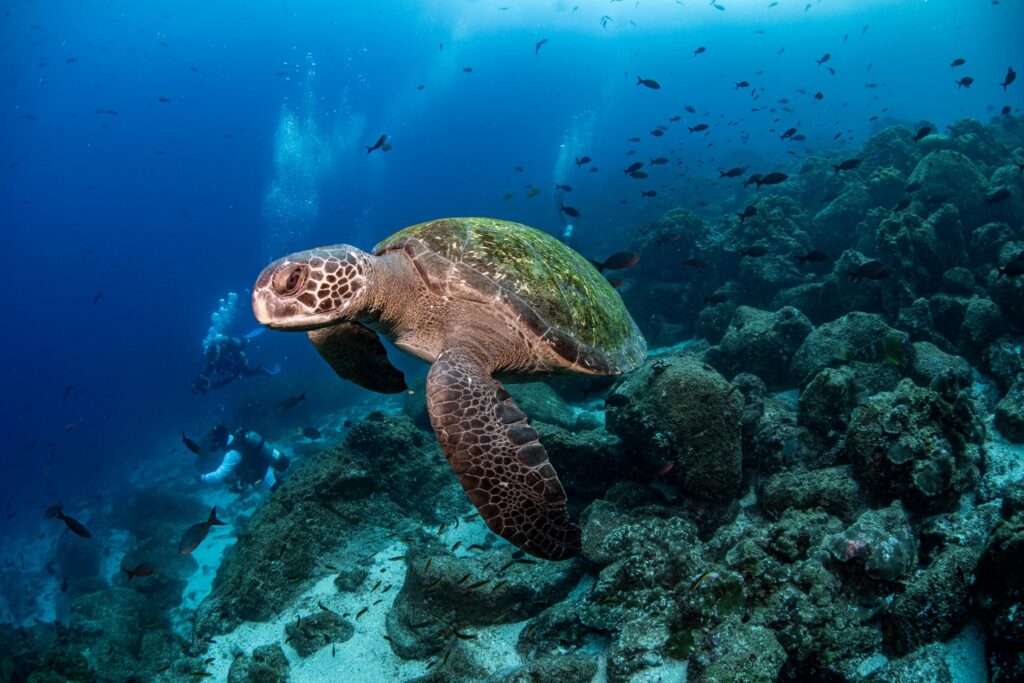
Scalloped hammerheads. Whale sharks. Giant manta rays. Humpback whales. Mobula rays. Dolphins. Sea turtles.
Of course, you can find many of these animals elsewhere in the world. What makes this region so interesting is how many remarkable big-animal destinations are concentrated on this side of the Pacific—and the oceanographic forces and animal movements that connect the larger story.
One region. Very different destinations. And an incredible amount of marine life. Let’s dive in!

What Makes the Eastern Tropical Pacific So Productive?
There isn’t one current responsible for everything that happens in the Eastern Tropical Pacific.
Instead, this enormous region is influenced by several interacting current systems. In the north, cooler California Current waters meet warmer tropical waters around southern Baja and Revillagigedo. Closer to the Equator, equatorial currents become increasingly important. Along South America, the cool, nutrient-rich Humboldt Current has a major influence.
Add seasonal upwelling, islands, seamounts and underwater ridges, and you get an ocean that is constantly moving—and frequently delivering nutrients into the food web.
Those nutrients support plankton and small organisms. Those feed fish. And where fish and plankton gather, larger animals tend to follow.
That’s part of what makes the Eastern Tropical Pacific such an extraordinary region for marine megafauna.
You’re not simply diving on a reef. You’re entering a much larger ocean ecosystem.

The Eastern Tropical Pacific Marine Corridor
That’s where the Eastern Tropical Pacific Marine Corridor, or CMAR, comes into the picture.
What is CMAR?
The Eastern Tropical Pacific Marine Corridor is a regional conservation initiative created by Ecuador, Colombia, Panama and Costa Rica to strengthen cooperation around marine conservation and ecological connectivity.
Research has also revealed connections extending beyond those original core areas. Revillagigedo and other parts of the Eastern Pacific are increasingly relevant to the broader conversation about how highly migratory marine animals move through this enormous ocean.
A Remarkable Collection of World Heritage Sites
One of the easiest ways to appreciate how exceptional this region is? Look at how many of its marine destinations have received international recognition.
Revillagigedo, Cocos Island, Coiba National Park, Malpelo and the Galápagos Islands are all UNESCO World Heritage Sites.
Each was recognized for its own ecological importance, but together they reveal something bigger: an extraordinary chain of protected marine environments stretching across a huge portion of the Eastern Pacific.
And the protected islands themselves are only part of the story.
Many of the animals that make these places famous spend significant portions of their lives outside park boundaries.
Which means protecting the places matters—but so does understanding what happens between them.
Big-Animal Diving Across the Eastern Tropical Pacific
The Eastern Tropical Pacific isn’t one type of dive destination.
That’s part of what makes it so interesting.
The Galápagos Islands
Galápagos Islands is probably the most famous destination in the Eastern Tropical Pacific—and for good reason.
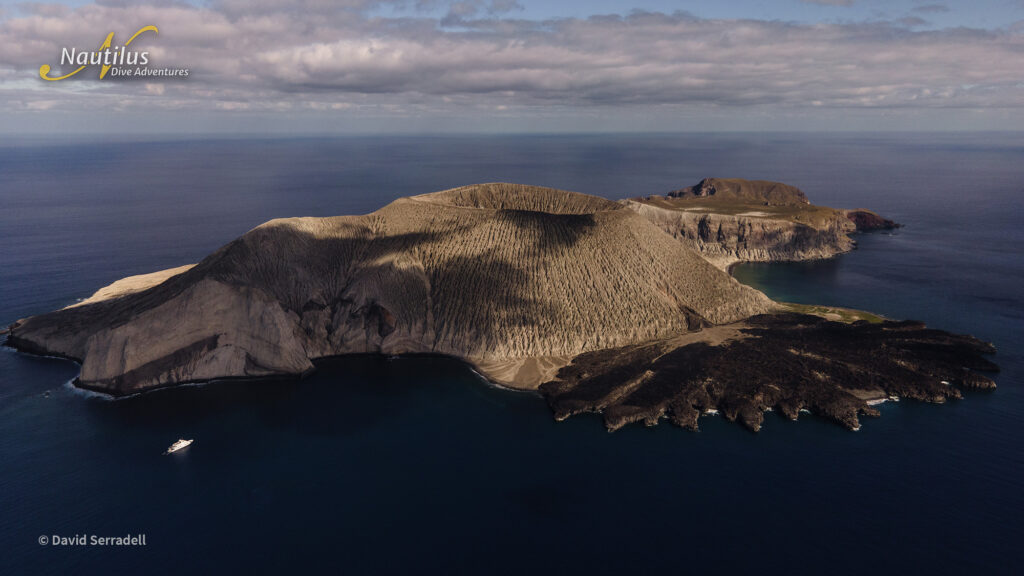
The archipelago sits at the convergence of major ocean currents, creating a remarkably dynamic marine environment. UNESCO describes the surrounding marine reserve as a meeting point for three major eastern Pacific currents, with the resulting conditions playing a major role in the region’s marine biodiversity.
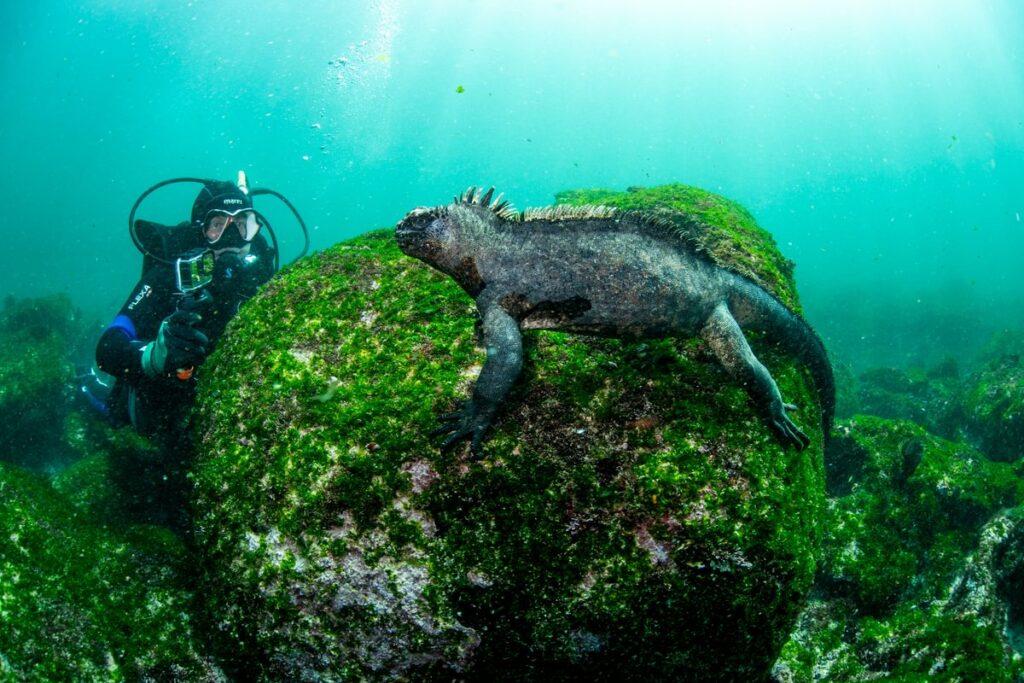
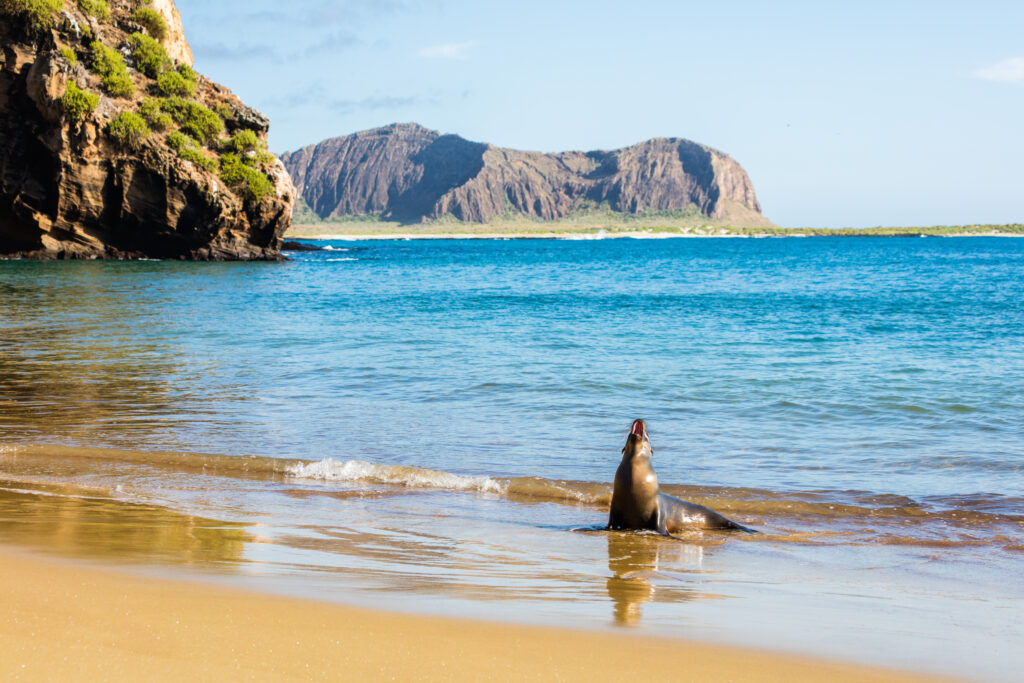
For divers, that can mean an incredible mix of marine life: hammerheads, rays, sea lions, marine iguanas, turtles, penguins and enormous schools of fish.
Around the northern islands, these enormous fish are seasonal visitors—and if you’ve never seen one underwater, there’s really no way to prepare yourself for the scale.
That’s big-animal diving at its best.
You might be watching a school of hammerheads when a sea lion rockets past.
You might be looking for marine iguanas when penguins dart through the water.
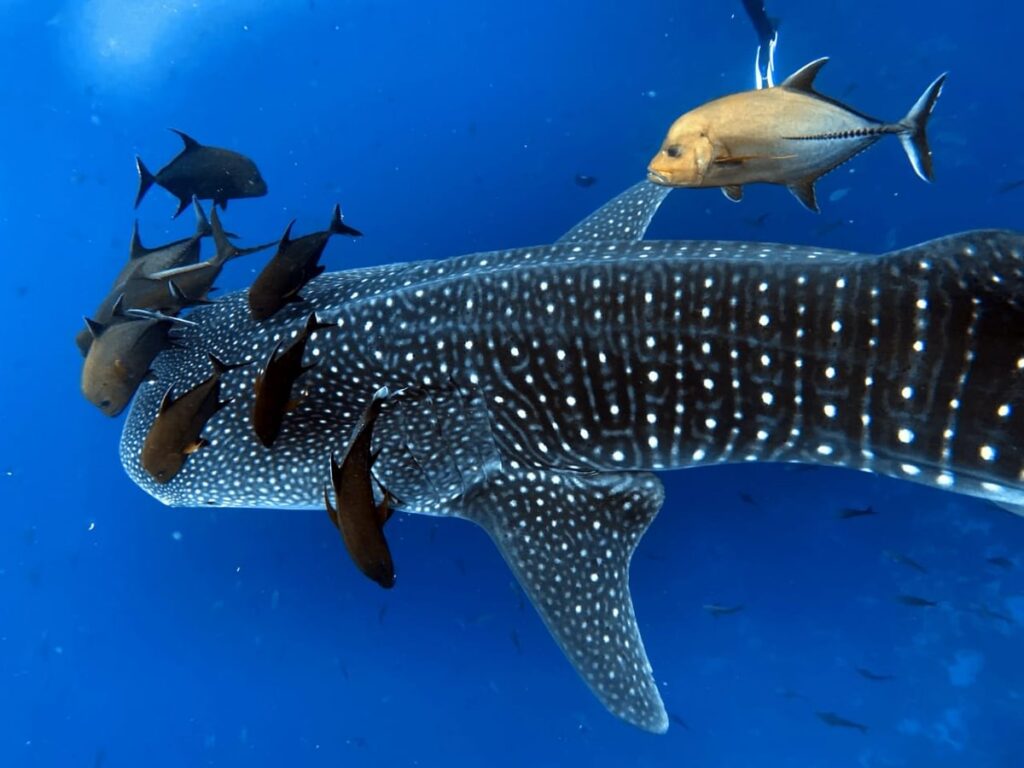
Or you might suddenly find yourself next to a whale shark.
That’s big-animal diving at its best.
Coiba: Panama’s Wild Pacific
If the Galápagos represents the iconic expedition side of Eastern Pacific diving, Coiba offers a very different way to experience the region.
Here, lush islands and coastal reefs meet open Pacific water, creating habitat for sharks, rays, sea turtles, cetaceans and huge schools of pelagic fish.
Whale sharks have a documented seasonal presence around Coiba, while humpback whales arrive during their annual breeding migration.
Coiba National Park protects a remarkably diverse marine environment made up of islands, reefs, mangroves, deep water and offshore seamounts.
And perhaps one of the most appealing things about Coiba? Its uncrowded, quiet and you don’t need a liveaboard to experience it.

Cocos Island: Hammerhead Country
Far offshore from Costa Rica, Cocos Island is one of the world’s legendary shark destinations.
Its enormous schools of hammerheads have made it a bucket-list destination for divers from around the world.
But Cocos isn’t simply about hammerheads.The remote island and surrounding waters are home to rays, turtles, dolphins, whale sharks and other pelagic species.
Getting there requires a liveaboard, and that remoteness is part of the magic. Cocos feels like an expedition because it is one.And we’re working on getting there .Cocos Island is currently in the works for a future Global Adventures for Scuba Divers adventure.
So if the idea of dropping into the blue with hundreds of hammerheads sounds like your kind of vacation, stay tuned.Quite the opposite.
Each one is different—and that’s exactly what makes the larger ecosystem so fascinating.

The Animals Don’t Stay in One Place
That’s one of the biggest challenges—and most fascinating parts—of understanding the Eastern Tropical Pacific.
A hammerhead encountered at Cocos may travel far beyond the island’s protected waters. Giant mantas can move between offshore islands and coastal habitats. Whale sharks can cover extraordinary distances. Humpback whales move between entirely different regions of the planet.
Researchers are now using satellite tags, acoustic receivers, genetics and oceanographic models to piece together those journeys.
MigraMar, a scientific network focused on migratory marine species in the Eastern Pacific, has been using satellite and acoustic tracking to study how sharks, rays, turtles and marine mammals move through the region. Its research has helped reveal connections among places such as Galápagos, Cocos, Coiba and Malpelo, including specific swimway initiatives linking protected areas.
In other words, the hammerhead you see at Cocos isn’t necessarily a “Cocos hammerhead.”

Why Timing Matters for Big-Animal Diving
There’s another important part of this story:Big animals don’t follow our calendar.
Currents change. Upwelling strengthens and weakens. Water temperatures shift. Food becomes concentrated in different places. Animals migrate to feed, breed and give birth.
That doesn’t mean there’s necessarily a bad time to visit the Eastern Tropical Pacific.
It means different seasons can bring very different experiences.
At Galápagos, December through May generally brings warmer conditions, while June through November brings cooler, nutrient-rich water and some of the destination’s most famous pelagic encounters, including seasonal whale sharks around Darwin and Wolf.
At Coiba, whale sharks have a documented seasonal presence from roughly December through March. Later in the year, humpback whales arrive along Panama’s Pacific coast to breed and give birth.
At Cocos, the wetter months from roughly June through November can bring stronger currents and increased pelagic activity. Hammerheads are a year-round attraction, while whale shark encounters tend to increase during the wetter season.
So if there’s a particular animal you’re dreaming about, don’t just ask:
Where should I go?
Ask: When should I go?
Marine Megafauna of the Eastern Tropical Pacific
If you’re fascinated by marine megafauna, the Eastern Tropical Pacific is hard to beat.
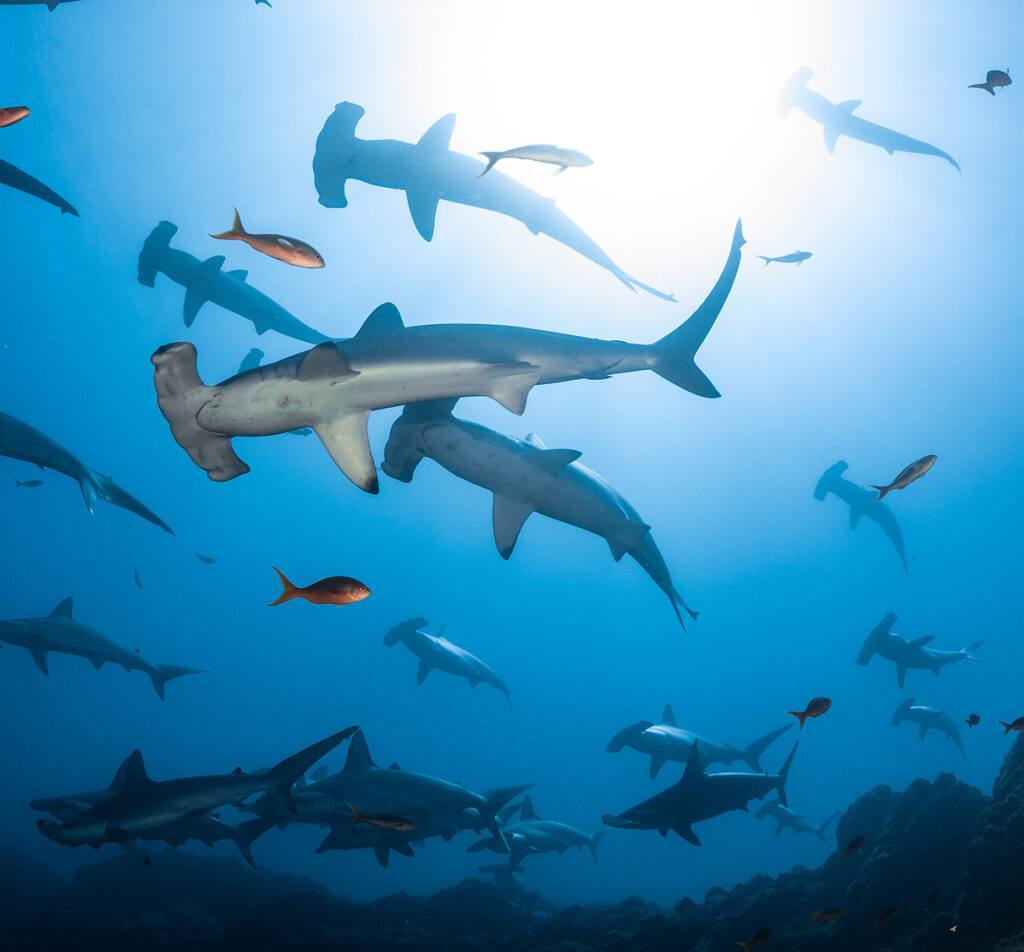
Scalloped Hammerhead Sharks
Hammerheads are probably the Eastern Tropical Pacific’s most iconic shark.
Large schools can gather around offshore islands and seamounts, particularly where currents and food create the right conditions.
Seeing one hammerhead is exciting.
Seeing dozens—or more—moving through the blue is something else entirely.
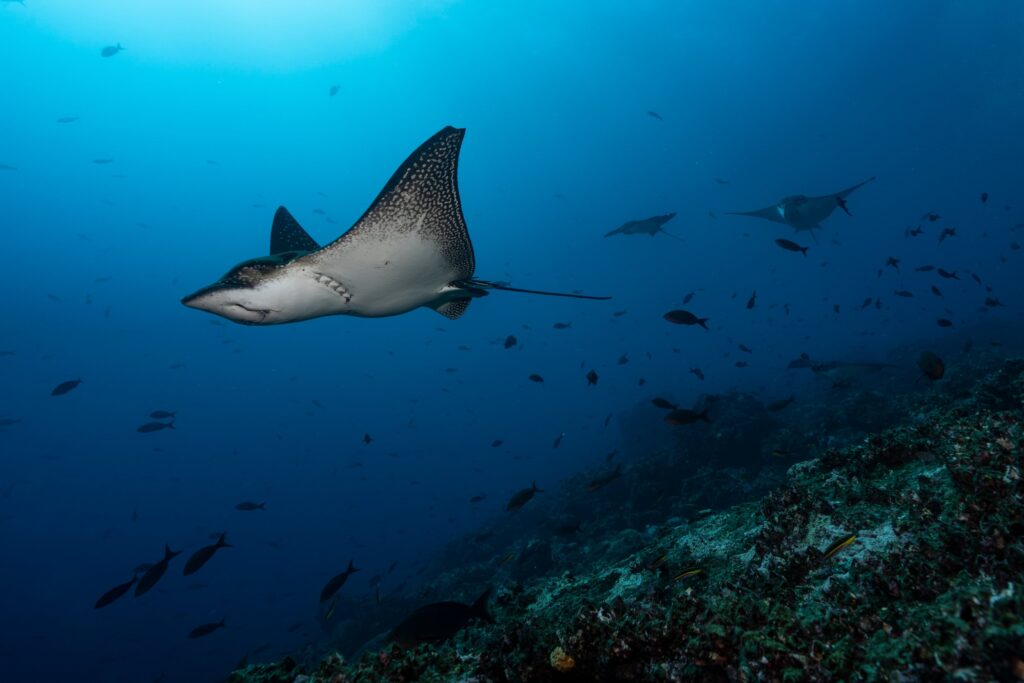
Giant Manta Rays
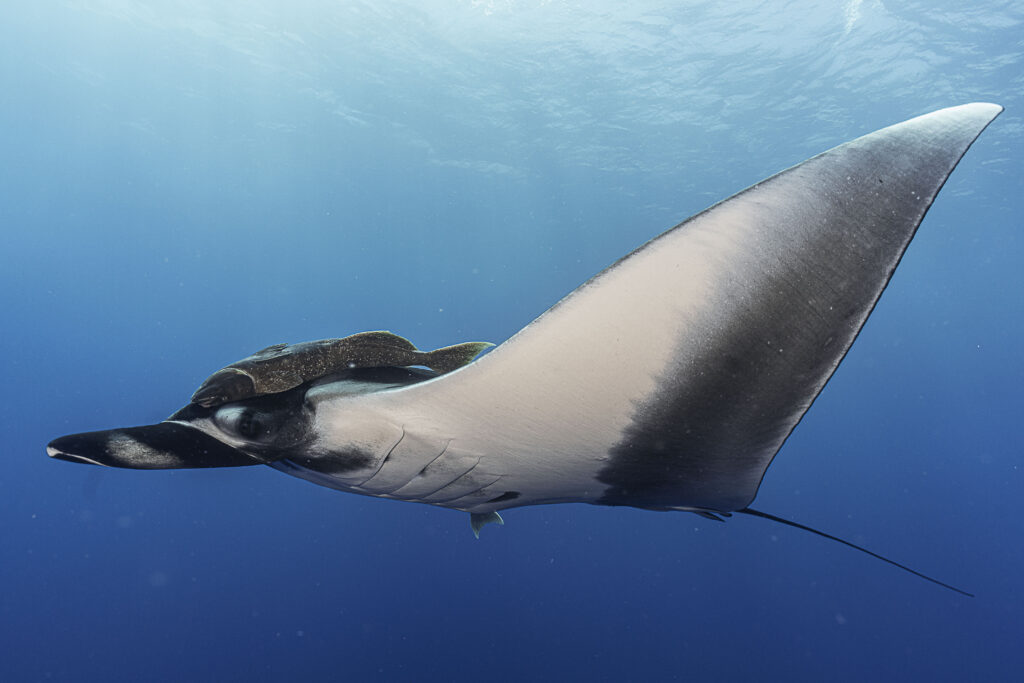
The region is also home to giant manta rays.
These enormous animals move through productive waters in search of food and important cleaning areas, making them another excellent example of why connected marine habitats matter.
A manta doesn’t care which country’s waters it happens to be swimming through.
It follows the ocean.
Whale Sharks
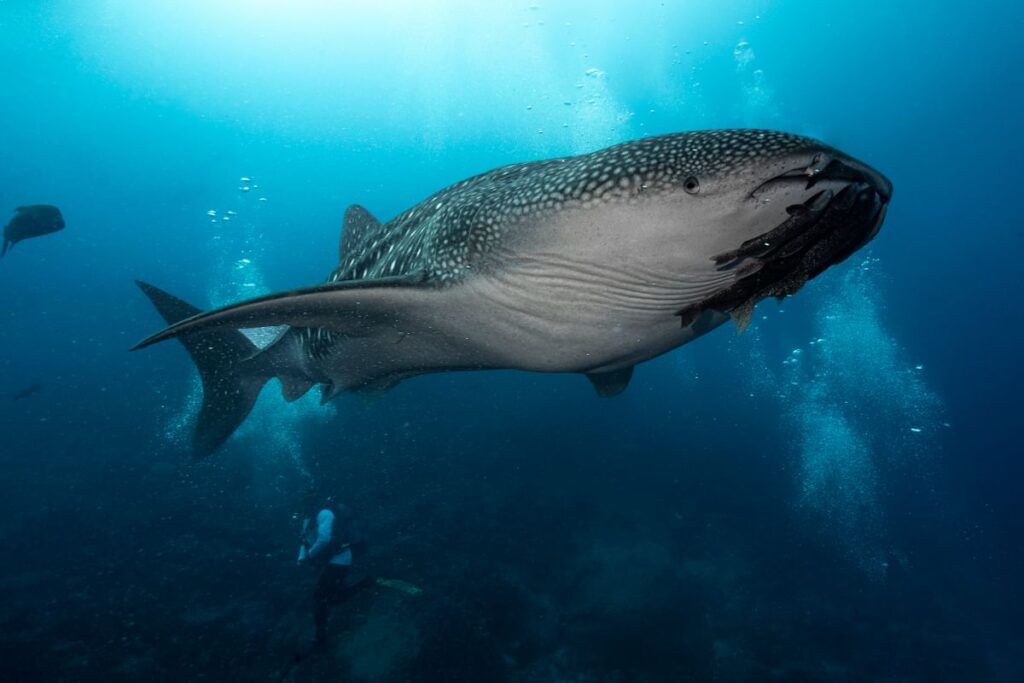
The largest fish in the ocean can reach enormous sizes, and encounters with them are one of the ultimate marine megafauna experiences.
Whale sharks are seen around the Galápagos, particularly in the waters around the northern islands, and they can also be encountered around Coiba.
And honestly?They’re huge.
Seeing one glide past you in the blue puts the scale of the ocean—and the animals living in it—into perspective pretty quickly.
Whales
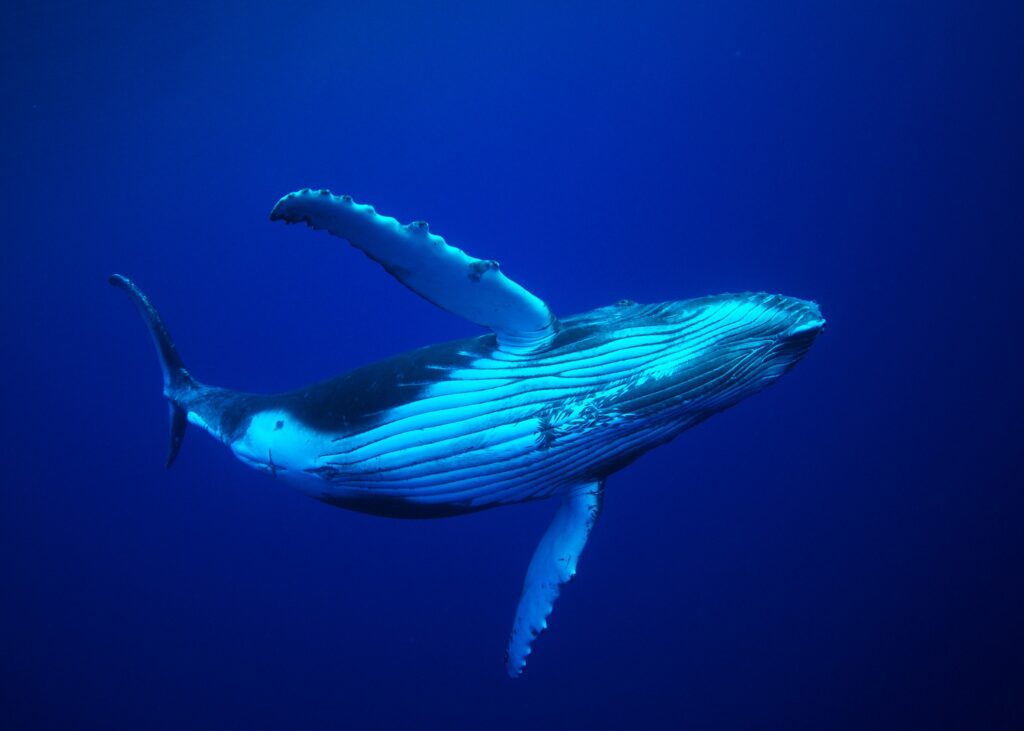
Whales add an entirely different dimension to the Eastern Pacific.
Humpback whales undertake seasonal migrations through the region, and Coiba is one destination where divers and travelers can encounter them.
There’s something pretty special about entering the water hoping for sharks and finding yourself listening to the songs of humpbacks instead.
That unpredictability is part of what makes big-animal encounters so memorable.
Dolphins, Sea Turtles and Everything Else
And then there are the animals that don’t always get top billing but are every bit as important to the ecosystem: dolphins, sea turtles, tuna, billfish, silky sharks and an enormous variety of reef and pelagic fish.
That’s the thing about the Eastern Tropical Pacific. You might travel for the hammerheads and end up remembering the dolphins. You might hope for a whale shark and get surrounded by mobulas instead.
The ocean gets a vote.
Big Animals Need Big Protection
Many of the animals that make the Eastern Tropical Pacific so extraordinary don’t spend their lives inside a single marine protected area. Sharks, manta rays, whales, whale sharks and sea turtles can travel across national borders and through vast stretches of open ocean.
That’s why conservation here isn’t just about protecting individual destinations. It’s also about protecting migration routes, maintaining healthy ecosystems and supporting cooperation between countries.
For travelers, we have a role to play too. Choosing responsible operators, respecting wildlife regulations, giving animals space and supporting science-based conservation all help ensure these encounters remain possible for generations to come.
The Real Destination Is the Ocean
Maybe that’s the most important thing to understand about the Eastern Tropical Pacific:
The destination isn’t really the island. It’s the ocean surrounding it.
Revillagigedo, Cocos, Coiba, Galápagos and the Pacific coast of South America are very different places. But all are influenced by a larger, constantly changing ocean system.
Currents shift. Upwelling changes. El Niño and La Niña can alter water temperatures and productivity. And the animals respond—following food, favorable conditions and the rhythms of their own migrations.
That’s also why research and conservation across the region matter. Protecting individual destinations is important, but many of the animals that make these places so extraordinary travel far beyond the boundaries of any one marine park—or any one country.
When we dive here, we’re not simply looking for a shark, manta, whale or whale shark.
We’re stepping into an ecosystem with its own currents, seasons and migrations.
The animals decide where they go and when they arrive.
We just have to show up, pay attention and be ready for whatever the ocean brings.
Ready to Explore the Eastern Tropical Pacific With GAS Divers?
Reading about hammerheads, whale sharks, giant mantas and humpback whales is one thing, but seeing them in the wild is another. At GAS Divers, we love exploring the places where marine megafauna thrive, and the Eastern Tropical Pacific is about as good as it gets.
We currently offer adventures to the Galápagos and Coiba, giving you two very different ways to experience this incredible region. The Galápagos offers an iconic expedition experience and some of the world’s most famous big-animal encounters, while Coiba offers the chance to explore a spectacular Eastern Pacific ecosystem from a land-based adventure.
And we’re not stopping there. Cocos Island is in the works!
If there’s one thing we’ve learned from exploring the Eastern Tropical Pacific, it’s that you don’t have to choose just one animal. You just have to choose where you want to start.
→ Explore our 2027 Coiba adventure
→Explore our 2028 Galápagos adventure