

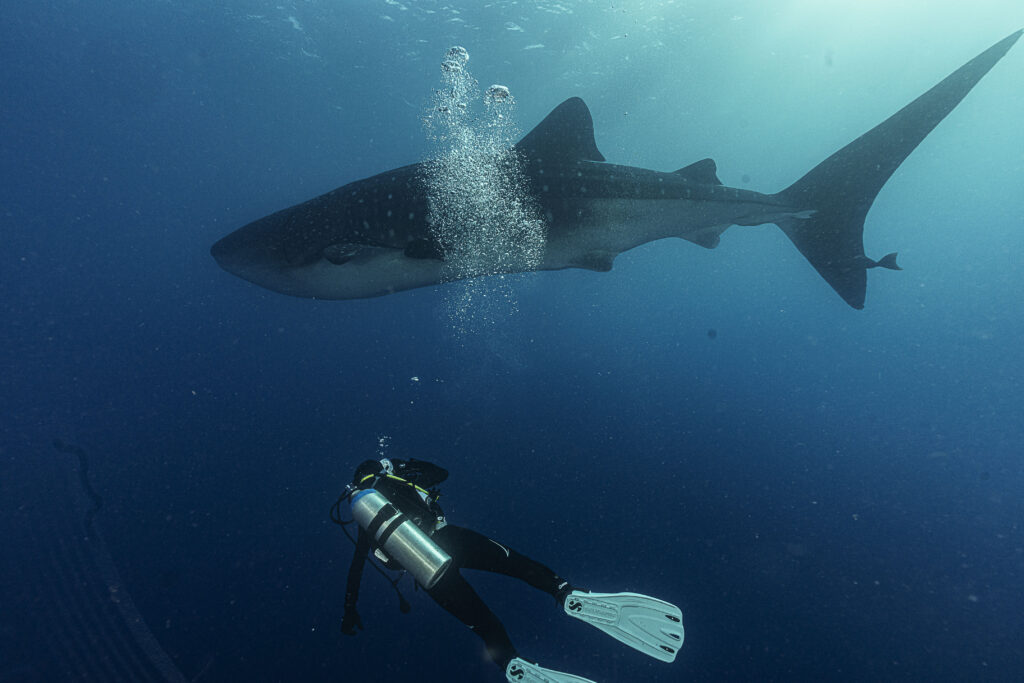
There are some moments underwater that make you forget everything else.
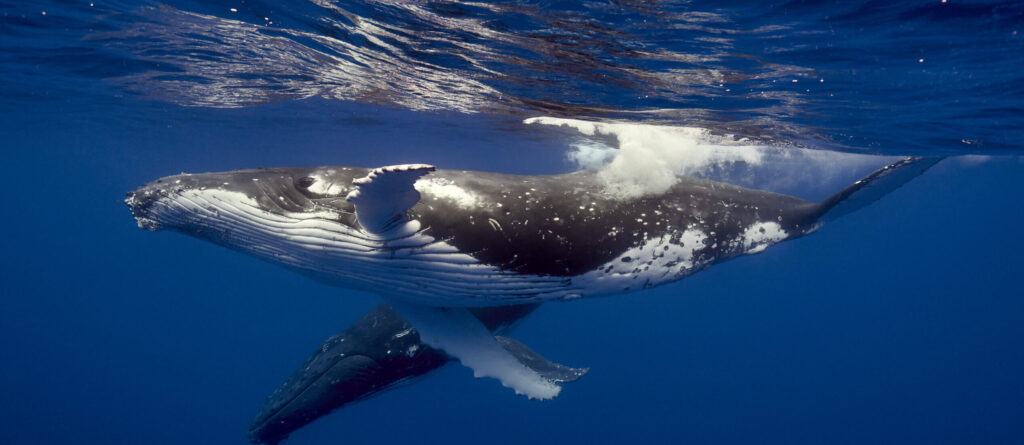
A whale glides overhead and suddenly the ocean feels very, very small. A whale shark appears out of the blue, a manta cruises toward a cleaning station, a school of hammerheads materializes in the blue, or a curious sea lion decides your fins look like the most interesting thing in the ocean. Even watching thousands of sardines move as one enormous bait ball can leave you wondering how a place this wild still exists.
And that’s part of what makes these encounters so special: we are guests in their world.
But there is another part of these experiences that doesn’t always make it into the photographs: how do we have these incredible encounters without changing the animals’ behavior—or making their lives harder simply because we wanted to see them?
At GAS Divers, many of our trips are built around wildlife. We love big-animal encounters as much as anyone, but we’ve also learned that responsible wildlife tourism isn’t about taking the excitement out of an encounter. It’s about remembering that we’re visitors in their world—and sometimes, the best thing we can do is simply get out of the way.
Here are our 10 tips for swimming with giants while giving them the space to remain wild.
1. Let the Animal Decide How Close Is Close Enough
Getting close to wildlife isn’t necessarily the problem. Pursuing wildlife is.
A whale shark swimming several yards away can be just as incredible as one passing directly underneath you. Watching a manta glide through the blue from a distance can be more rewarding than positioning yourself directly in its path. And when a curious sea lion decides to come check you out on its own, that’s a very different experience from chasing after it hoping to get a close-up photograph.
And sometimes, despite your best efforts, the animal chooses you.
I know what you’re thinking when you look at some of my photos: “Wait a minute… didn’t she just tell us to give animals space?”
Yep. I did.
I have photos where manta rays are practically on top of me, sea lions are inches from my camera, and whales have come remarkably close. I didn’t chase them or swim toward them. They chose me. I’ve been practically run over by manta rays more than once.
That’s the difference between getting close to wildlife and allowing wildlife to get close to you. Give the animal space, don’t pursue it, and let it decide how close is comfortable.
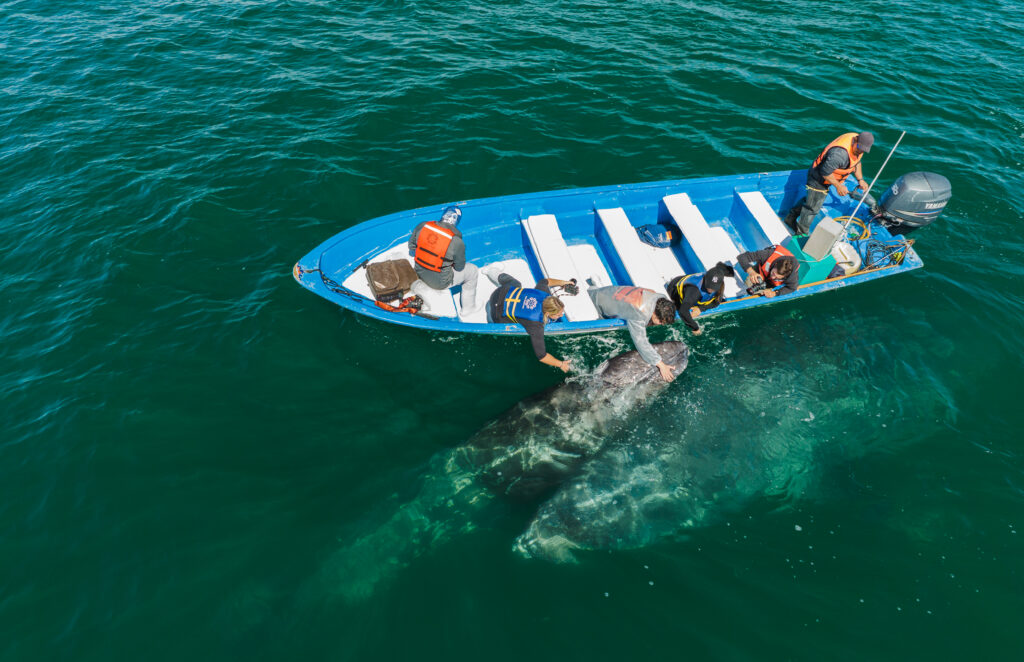
Baja’s gray whales are a great example. In the protected lagoons of Baja California Sur, gray whales sometimes approach boats on their own terms. We’re not chasing them around trying to get closer. We give them the opportunity to approach—and if they do, that’s their choice.
The same principle applies whether you’re watching gray whales in Baja, mantas at a cleaning station, whale sharks in the Philippines, or hammerheads in Panama.
The goal isn’t the closest possible photograph. It’s an encounter where the animal remains comfortable enough to behave naturally.
Baja is a great example of why responsible wildlife encounters can’t always be reduced to a single rule about distance.
In the lagoons of Baja California Sur, gray whales are known for approaching boats on their own terms. A whale may come alongside, linger near a boat, or even approach closely enough that the encounter feels almost surreal.
The important distinction is who is making the decision to get closer.
We’re not chasing the whale around the lagoon trying to get within touching distance. We’re allowing the whale to decide whether it wants to approach us. If it comes closer, we enjoy the encounter. If it moves away, we let it go.
That’s a very different interaction from pursuing an animal until it finally tolerates our presence.
And that’s really the point: responsible wildlife tourism isn’t always about maintaining some arbitrary distance from every animal. It’s about understanding the animal, following the rules for that particular environment, and allowing the animal to retain control of the interaction.
The same principle applies whether you’re looking at a gray whale in Baja, a manta in Raja Ampat, a whale shark in the Philippines, or a hammerhead in Panama: don’t make the animal accommodate you.
2. Don’t Just Avoid Disturbing the Animal—Avoid Disturbing What It’s Doing
This is one of the most important principles of responsible wildlife tourism.
Wild animals aren’t simply swimming around waiting for us to arrive. They’re feeding, cleaning, resting, migrating, hunting, courting, socializing and raising young.
So when you encounter an animal, ask yourself: What is it here to do?
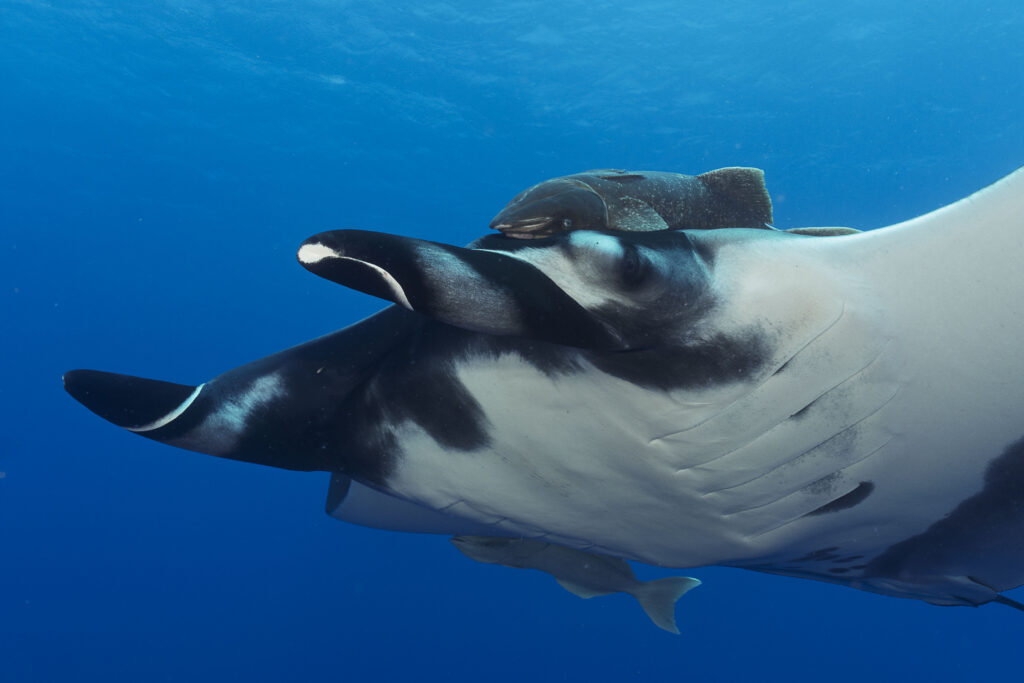
Manta rays are a great example. Cleaning stations are important places where manta rays allow cleaner fish to remove parasites and other material from their bodies. They can also be important locations for social interactions and other natural behaviors.
That means a cleaning station isn’t simply another place for divers to gather.
Swimming directly onto or over a cleaning station can disturb the mantas and cause them to leave. Instead, position yourself nearby and let the manta decide whether it wants to approach. You’re still getting to witness something fascinating—you just aren’t interrupting it.
The same principle applies everywhere. If a whale shark is feeding, don’t block its path. If a manta is feeding, don’t repeatedly swim in front of it. If a shark is hunting, don’t chase it. If whales are traveling, don’t try to intercept them.
Don’t just ask, “Am I touching the animal?” Ask, “Am I interfering with what this animal came here to do?”
3. Give Wildlife an Escape Route
You don’t have to touch an animal to interfere with it.
Sometimes the problem is simply where we position ourselves.
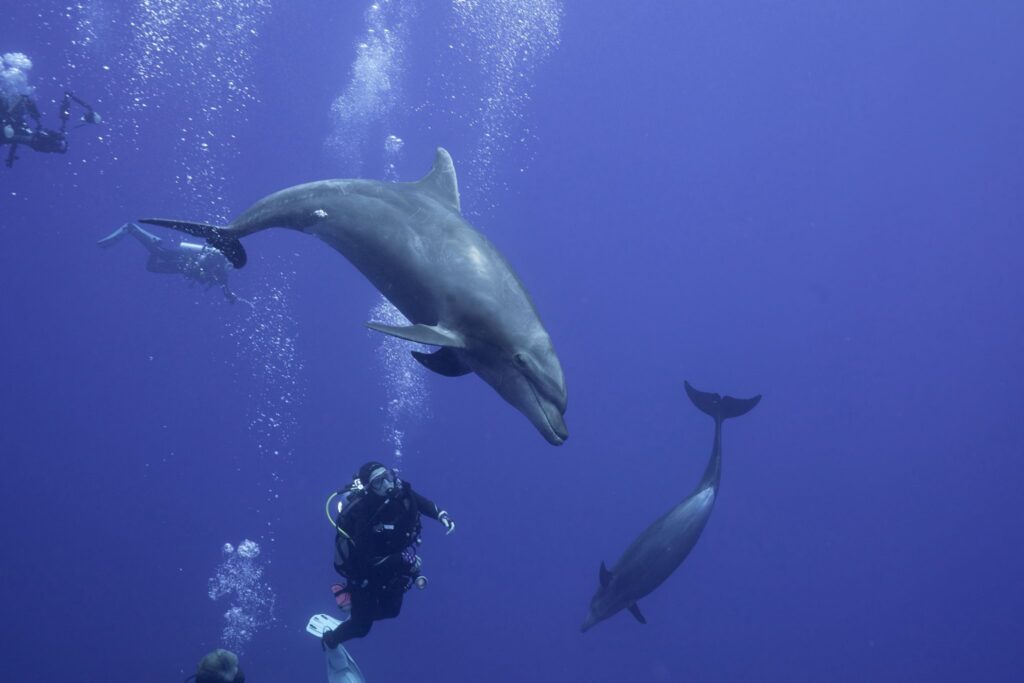
Imagine a whale shark moving through the water and suddenly finding a wall of snorkelers in front of it. Or a manta arriving at a cleaning station only to find divers occupying the exact space it needs. Even if nobody touches the animal, we’ve made it harder for the animal to move naturally.
This becomes especially important when there are multiple boats, snorkelers or divers in the water.
Whenever possible, leave wildlife a clear path to change direction and move away from you. Don’t surround it. Don’t cut it off. Don’t position yourself directly in its path just because that’s where the best photograph happens to be.
A good wildlife encounter should never feel like a trap.
4. Don’t Tempt the Playful Ones
Some animals make responsible wildlife encounters particularly difficult because they’re just so much fun to watch.
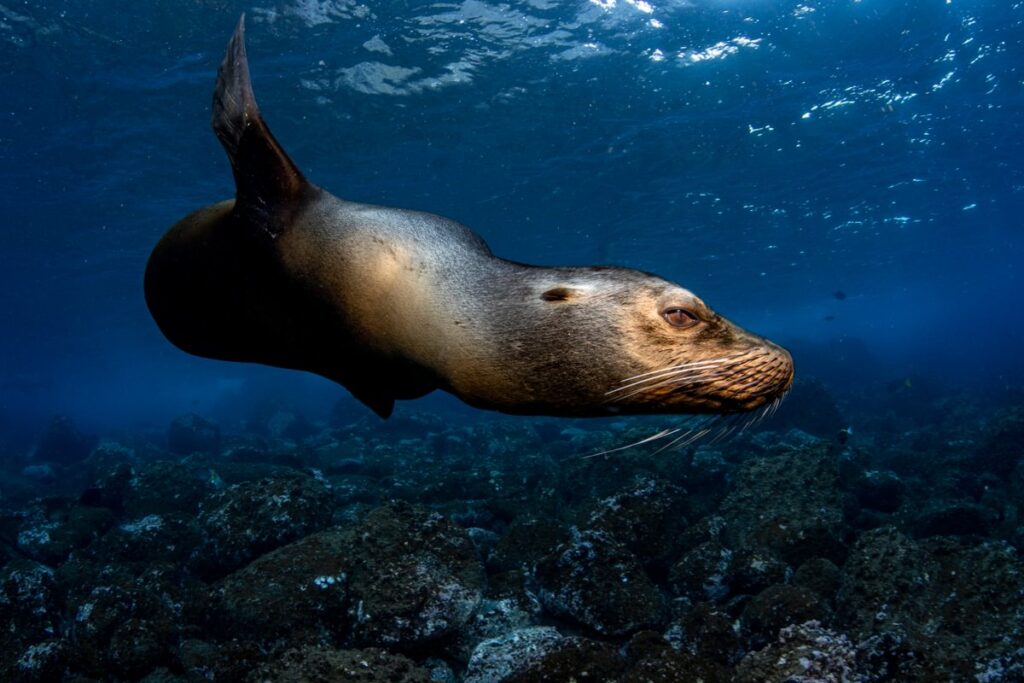
Sea lions are a great example. They’re fast, curious, incredibly agile—and sometimes genuinely interested in you. A young sea lion may dart toward a diver, circle around your fins, investigate your camera, or decide that you’re the most interesting thing in the water.
If a sea lion clearly wants to interact, give it a spin! Try a little barrel roll. Sometimes they’ll get excited and mimic you—and, naturally, they’ll do it much better than you ever could.
The important distinction is letting the sea lion initiate the interaction. You don’t need to chase it, wave your fins around to get its attention, or repeatedly swim toward it to make the encounter happen. If it swims away, let it go. If it comes back looking for more, enjoy the moment.
There’s a big difference between observing behavior and creating behavior. Our job isn’t to make wildlife perform for us. But when an animal chooses to engage, there’s nothing wrong with being a willing participant.
5. Follow the Rules—Even When Nobody Is Watching
Wildlife tourism guidelines can sometimes feel restrictive, especially when you’re watching an incredible animal and the perfect photograph seems just a few feet closer.
Follow them anyway.
Local regulations and operator guidelines may cover minimum distances, how boats approach wildlife, how many people can enter the water, how long an encounter can last, whether touching is prohibited, and how guests should position themselves.
Those rules exist for a reason.
And if there isn’t a guide or ranger standing next to you, the rules haven’t suddenly stopped applying.
In fact, that’s probably when they matter most.
A good wildlife guide isn’t there to get you closer to the animal at any cost. They’re there to help protect the encounter.
6. Ask Hard Questions About Wildlife Feeding
This one is complicated.
You may hear people say that any wildlife feeding experience is automatically irresponsible. We don’t think it’s quite that simple.
There are carefully managed shark-diving experiences where feeding is part of the interaction, and those experiences can introduce people to sharks in a way that changes how they understand and appreciate them. We’ve experienced shark encounters ourselves that have been incredibly memorable.
But feeding wildlife changes the equation.
When humans deliberately provide food, we’re no longer simply observing an animal in its natural environment. We may influence where it goes, when it appears, how it behaves or how long it stays in an area.
That doesn’t necessarily mean every feeding experience has the same impact. It does mean it’s worth asking questions.
Who is feeding the animals? Why? How much food is provided? Which species are involved? How many animals and people are participating? What regulations are in place? Is the interaction monitored? What happens when the food stops?
And perhaps the biggest question: Would these animals still be here if we weren’t feeding them?
A Lesson From Oslob
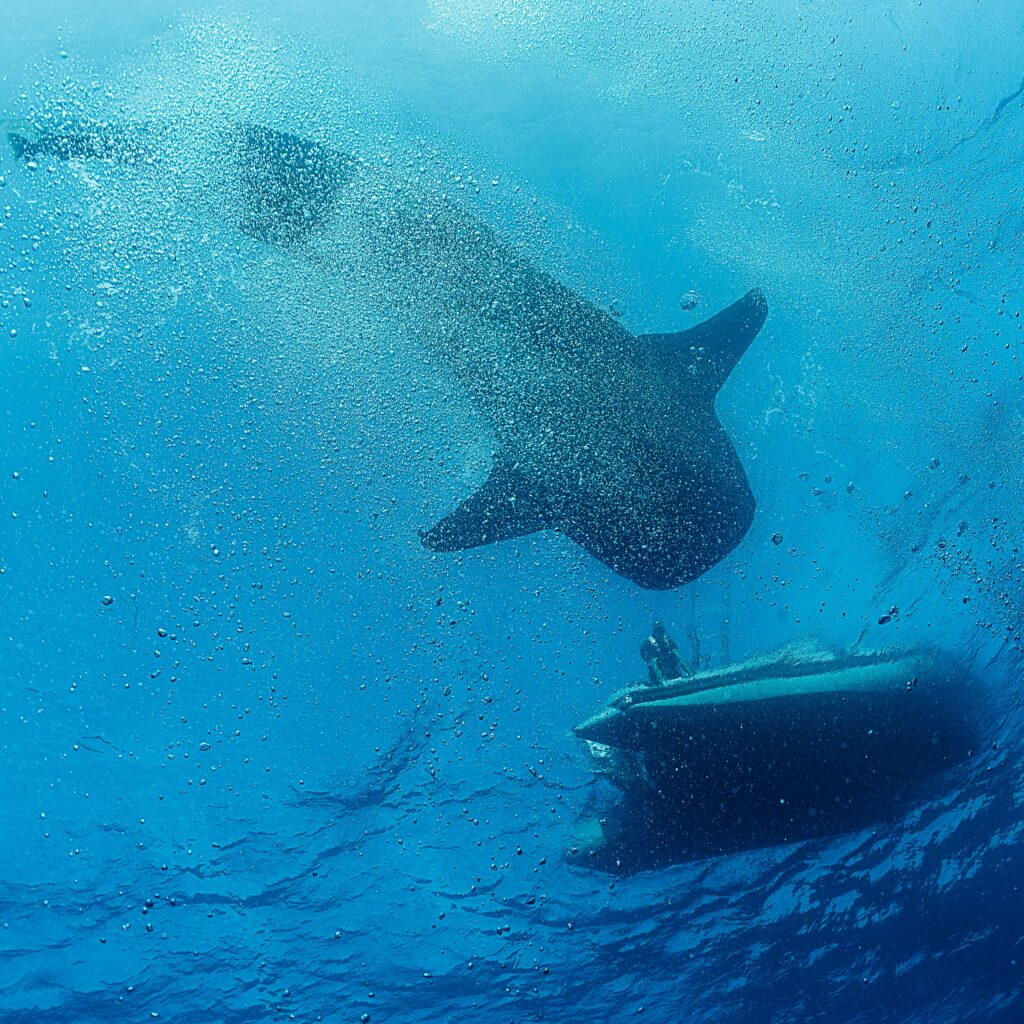
I’ve personally visited Oslob in the Philippines, where whale sharks are deliberately provisioned so visitors can reliably encounter them.The whale sharks themselves were incredible. The experience, however, left me with questions.
Oslob is a particularly interesting example because the story isn’t as simple as “tourism bad, conservation good.” The whale shark tourism industry provides significant economic benefits to local communities, and researchers have debated the broader conservation and ecological impacts of provisioning.
At the same time, research has documented changes in whale shark residency and behavior around the provisioning site, while other studies have raised concerns about altered feeding behavior, prolonged residency, human crowding and the long-term effects of conditioning.
7. Don’t Let Your Camera Be in Charge
We love photography. We take cameras diving. We understand the temptation to get the shot.
But wildlife encounters can create a dangerous kind of tunnel vision.
You’re looking through the viewfinder, trying to get the animal perfectly positioned, and suddenly you’re paying more attention to your camera than to the animal.
Look up.
Where is the animal going? Are you in its path? Is it trying to leave? Are other divers crowding it? Are you drifting closer without realizing it?
Your camera should document the encounter—not dictate it.
Sometimes the best photograph comes from being patient and letting the animal come to you.
And sometimes the best memory is the one you never photograph at all.
8. Choose Your Wildlife Operator Carefully
A spectacular wildlife encounter starts long before you get into the water.
When choosing a dive shop, snorkeling operator or liveaboard, look beyond the photographs on their website.
Ask how they handle wildlife interactions.
Do they brief guests before getting in the water? Do they have clear distance guidelines? What happens when an animal tries to leave? Do guides stop guests from chasing or touching animals? How do they handle crowded encounters? Do they participate in research or conservation efforts?
And pay attention to how they market the experience.
There’s a difference between:
“Come see these animals in their natural environment.” and “Come get closer than anyone else.”
The first one tells you the animal is the attraction.
The second suggests that the interaction itself is the product.
We’d choose the first every time.
9. Remember the Ecosystem Is the Attraction, Too
It’s easy to become focused on the giant animal.
That’s understandable. They’re spectacular.
But big animals don’t exist in isolation.
Whale sharks follow food. Mantas depend on productive marine environments. Hammerheads gather where environmental conditions and prey bring them together. Humpback whales migrate, breed and raise calves. Sardines form enormous schools that become part of one of the ocean’s most spectacular food webs.
The more we understand the ecosystem, the more meaningful the encounter becomes.
And sometimes the most memorable animal on a trip isn’t even the one you came looking for.
A tiny nudibranch. A strange frogfish. A school of reef fish moving across the reef. A shark you weren’t expecting. A behavior you didn’t know existed.
The ecosystem is the story. The giant animal is just one spectacular chapter.
Ready to Swim With Giants?
If you’re ready to put these ideas into practice, we’ve got a few adventures where the big animals are very much part of the experience. Each destination is different, but they all have something in common: the animals are the reason we’re there—and they’re still wild.
There are a lot of ways to experience big animals.
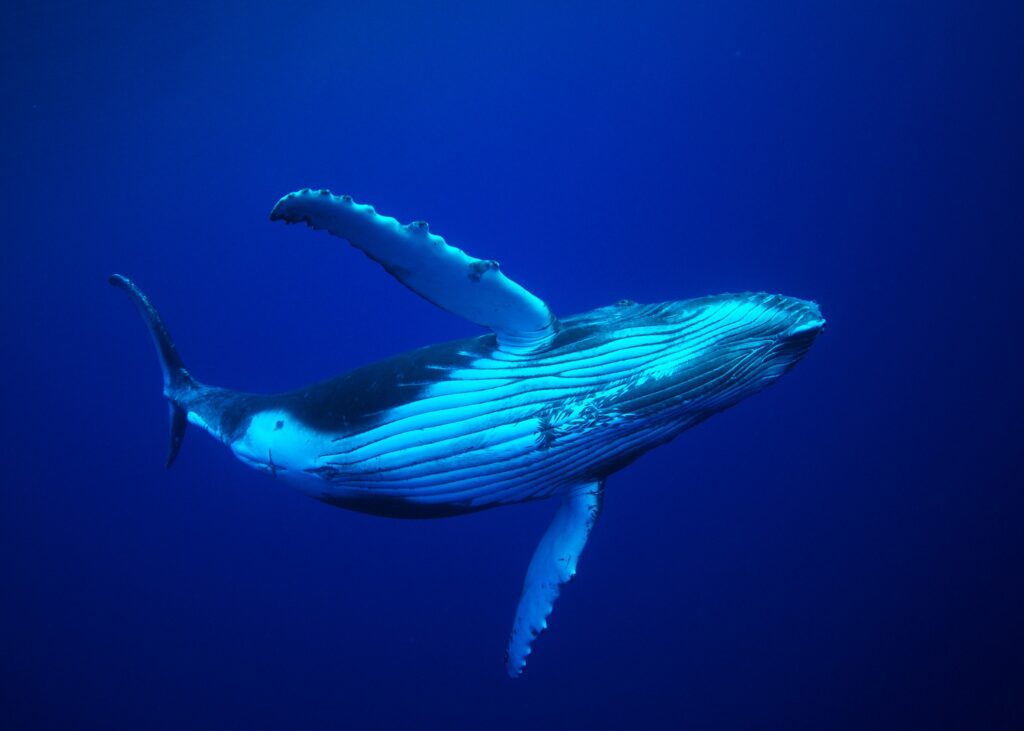
You can sit quietly in a small boat while a gray whale decides to come over and investigate. You can snorkel with humpbacks in French Polynesia. You can descend into the blue and watch hammerheads move through the water in Panama. You can encounter whale sharks and the incredible sardine run in the Philippines. You can dive the Galápagos and hope for that unforgettable mola mola encounter.
The experiences are wildly different.The philosophy doesn’t have to be.
We believe the best big-animal trips aren’t about checking a species off a list or getting the closest possible photograph. They’re about experiencing extraordinary wildlife in places where those animals belong—and doing our part to make sure they can keep coming back.
Because let’s be honest: big animals are freaking cool.
They’re iconic. They’re fascinating. They’re important. And getting to share the ocean with them is one of the reasons we travel in the first place.
Let’s just make sure we’re good guests while we’re there.
Panama — Schooling Hammerheads
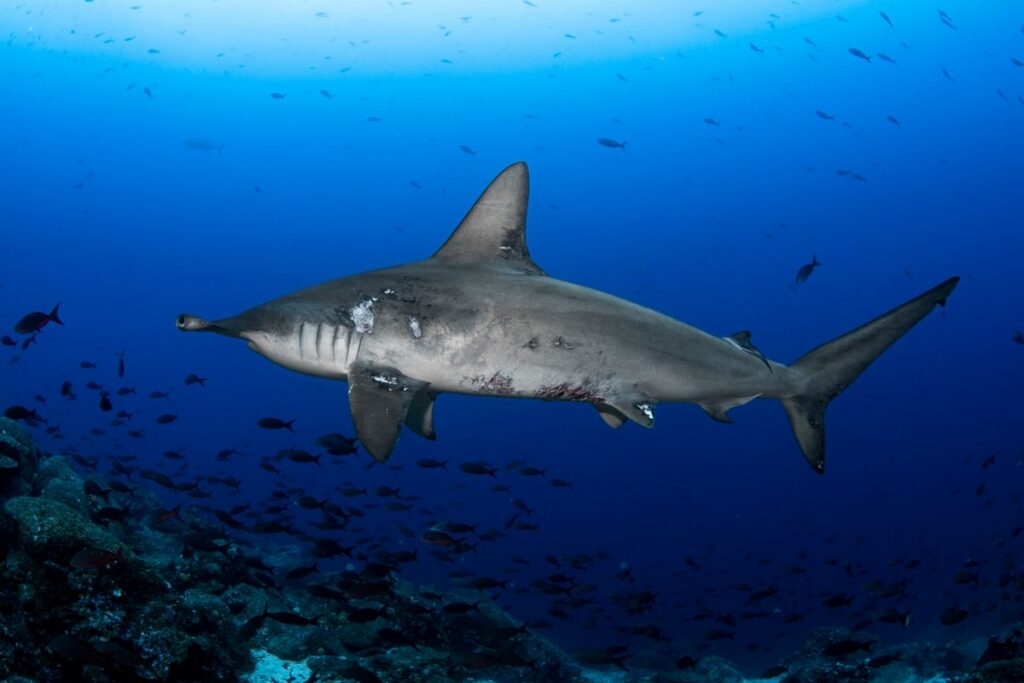
If your definition of “swimming with giants” involves sharks, Panama belongs on the list.
Coiba National Park and the waters offer the possibility of encountering schooling hammerheads in the blue, along with a remarkable variety of other marine life. These are wild encounters, and conditions can be unpredictable—which is exactly why patience, good diving skills and responsible positioning matter.
Sometimes you see the sharks. Sometimes you don’t. And that’s part of diving with truly wild animals.
→ Explore our Panama Hammerhead adventure
French Polynesia —Humpbacks, Sharks & Epic Pelagics
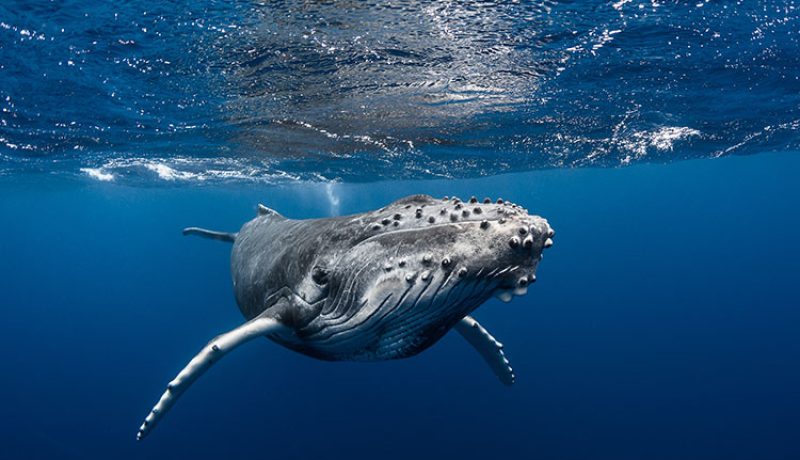
French Polynesia is another destination where the big-animal possibilities are seriously impressive. We have two different opportunities, on two different islands, to snorkel with humpback whales, giving us more than one chance to experience these incredible animals in the water.
But the whales aren’t the only reason we’re going. The waters of French Polynesia are famous for spectacular pelagic encounters, with a high likelihood of seeing sharks and other large marine life. And then there’s the Wall of Sharks—one of those underwater experiences that is difficult to even describe until you’ve seen it for yourself.
Like all wildlife encounters, nothing is guaranteed. That’s part of the adventure. We’re entering the water as guests in an ecosystem that is very much doing its own thing, and we’re there to experience whatever shows up.
The Galápagos — Big Animals Everywhere
The Galápagos is one of those places where the big-animal list just keeps getting longer.
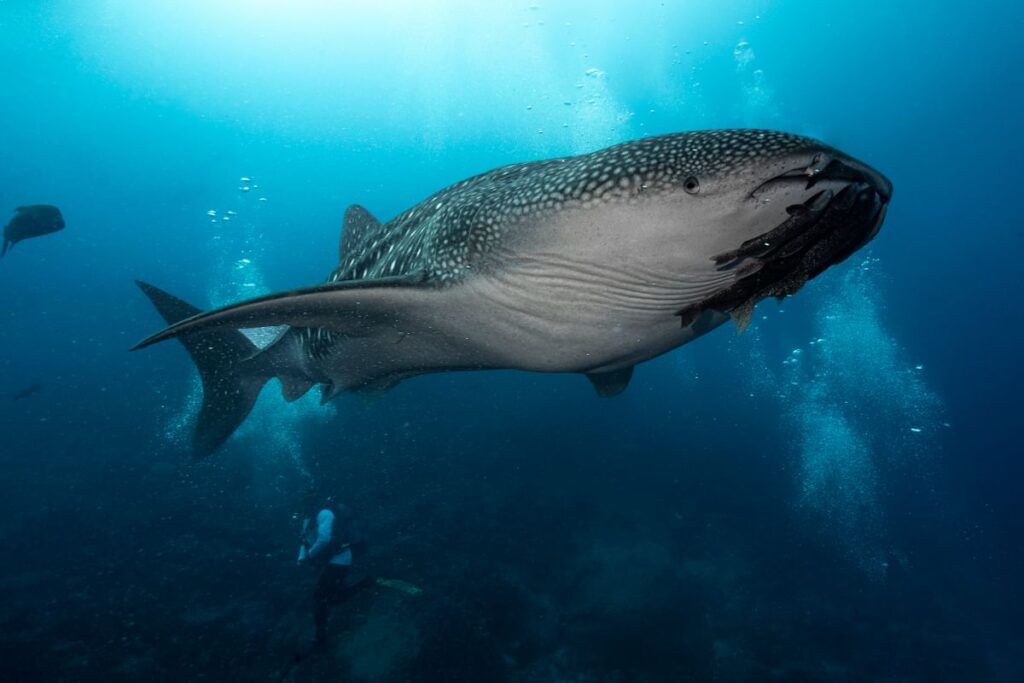
Whale sharks. Schooling hammerheads on steroids. Marine iguanas. Mola mola. Penguins. Sea lions. Turtles. Rays. And that’s still not the whole list.
What makes the Galápagos so special is that you’re not traveling there for just one signature animal. You’re entering an ecosystem where the wildlife can feel almost overwhelming. One dive might put you in the middle of a massive school of hammerheads, while another has you watching marine iguanas feeding underwater or sharing the water with playful sea lions.
And then there are the encounters you simply can’t plan for. That’s part of the magic of the Galápagos—and exactly why we love wild places where the animals, not the itinerary, get the final say.
→ Explore our Galápagos Liveaboard adventure