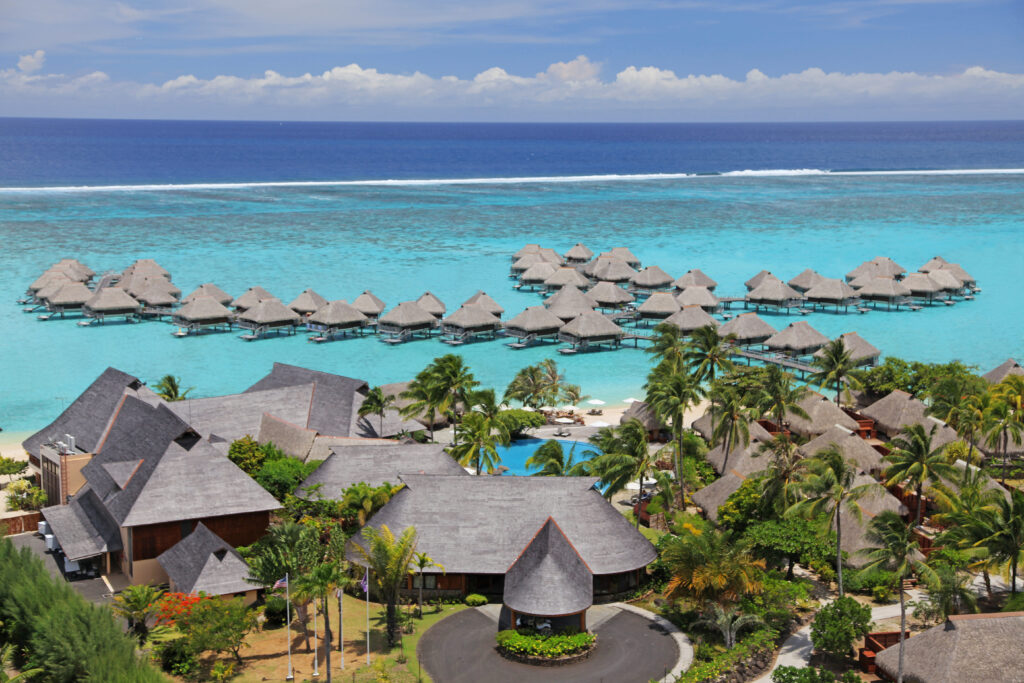

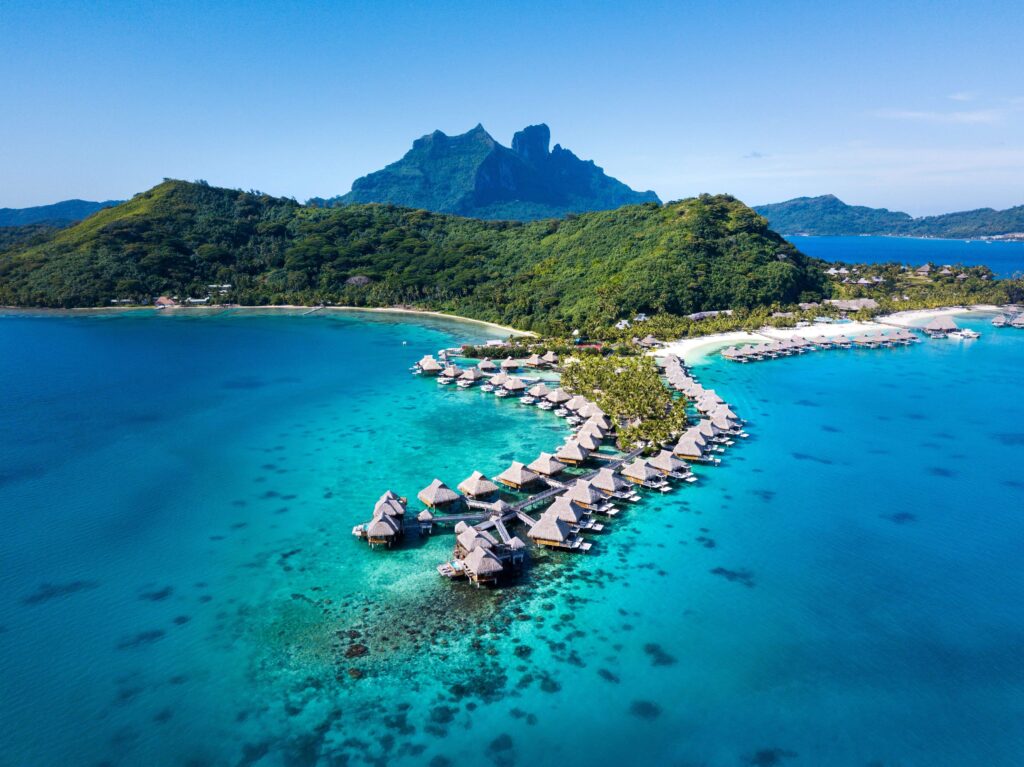
French Polynesia is enormous, remote and surprisingly diverse. For divers, that’s part of the appeal. French Polynesia diving ranges from drifting through shark-filled passes to exploring hard-coral reefs and watching the blue for dolphins, rays and other pelagic life.
Spread across an enormous stretch of the South Pacific, French Polynesia is a place where lush volcanic islands give way to remote coral atolls, ancient Polynesian culture meets modern French influence, and some of the most beautiful lagoons on Earth sit alongside ocean passes filled with sharks, dolphins, rays and enormous schools of fish.
For divers, names like Rangiroa and Fakarava have almost legendary status. For wildlife lovers, humpback whales arrive seasonally in Polynesian waters. Tahiti and Moorea offer mountains, waterfalls, hiking and plenty of diving of their own. And if your idea of a vacation involves doing absolutely nothing from an overwater bungalow for a few days, French Polynesia is pretty good at that, too.
This is a destination that can be as adventurous — or as relaxing — as you want it to be. It’s also remote, sometimes logistically complicated and notoriously expensive.
So, is French Polynesia worth the journey?
Let’s take a closer look.
Where Exactly Is French Polynesia?
French Polynesia isn’t a single island, or even one compact group of islands. There are 118 islands and atolls spread across five archipelagos in the South Pacific: the Society Islands, Tuamotu Islands, Marquesas Islands, Austral Islands and Gambier Islands.
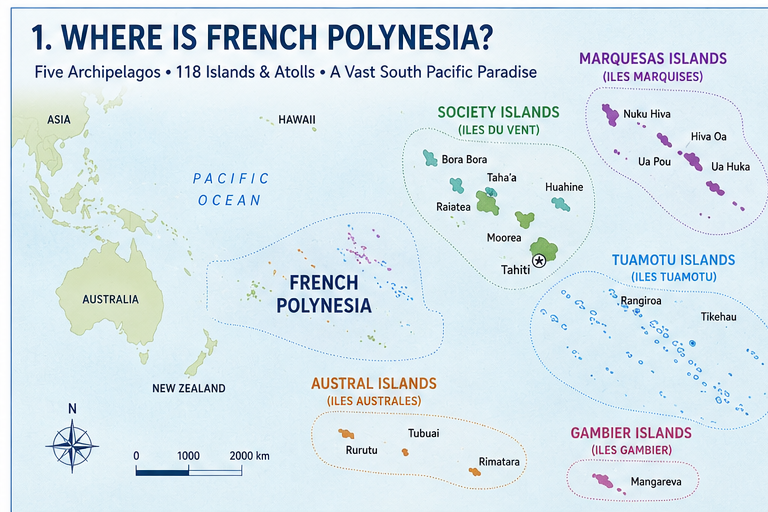
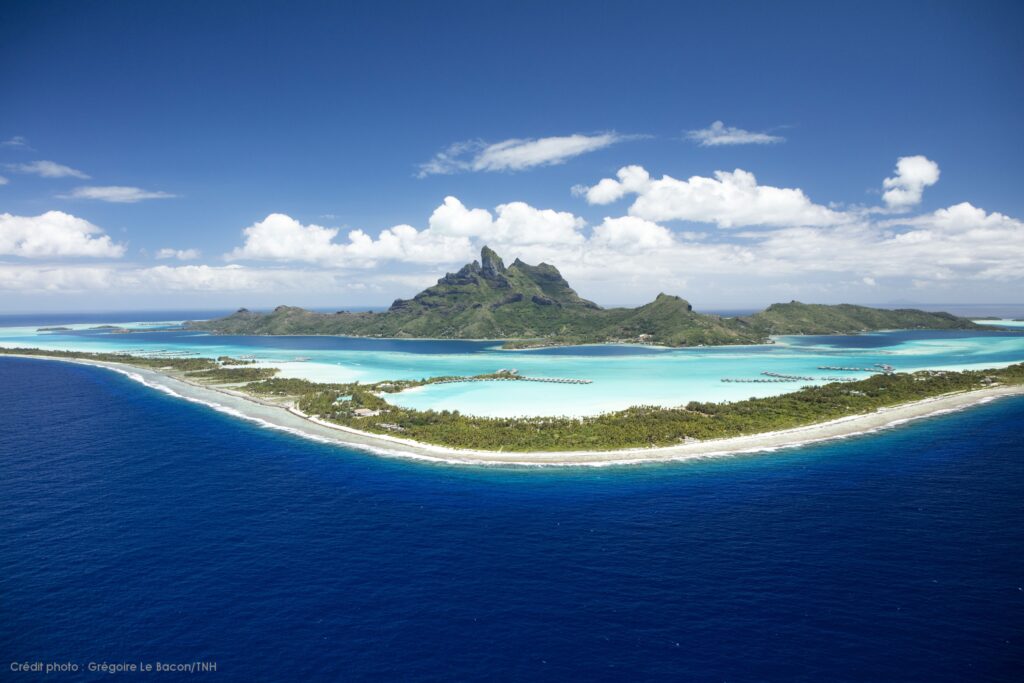
Those five island groups can be remarkably different from one another. The Society Islands include many of the names travelers recognize immediately — Tahiti, Moorea, Bora Bora, Huahine, Raiatea and Taha’a. These are largely the dramatic, mountainous islands people picture when they imagine French Polynesia, with volcanic peaks covered in green vegetation and surrounded by reefs and luminous lagoons.
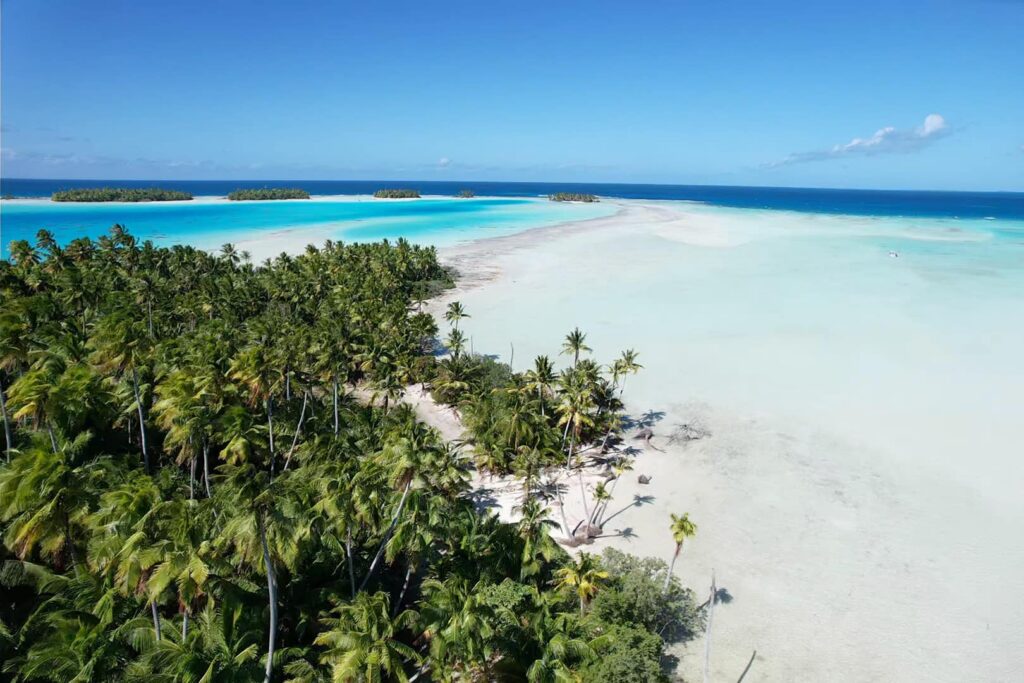
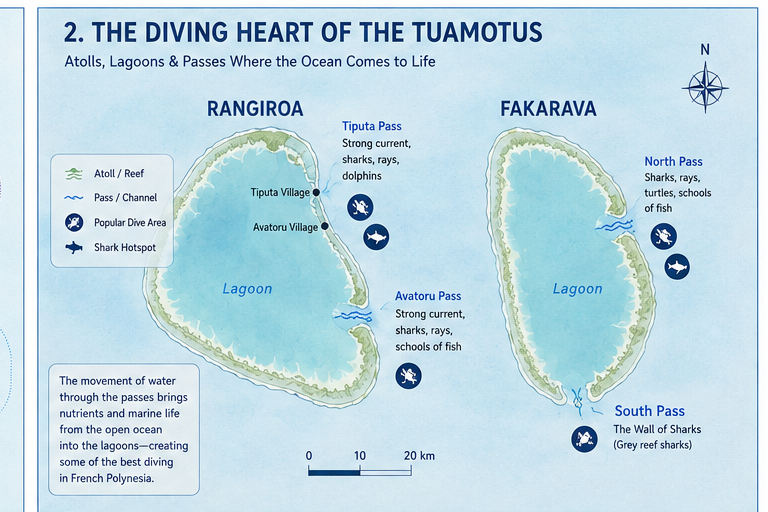
Travel northeast into the Tuamotus, and the landscape changes completely. This archipelago includes Rangiroa, Fakarava and Tikehau, where low-lying coral atolls surround enormous lagoons instead of towering volcanic peaks. Narrow passes connect those lagoons to the open Pacific, and the movement of water through them helps create some of the most exciting diving in French Polynesia.
Farther afield are the Marquesas, remote volcanic islands known for dramatic landscapes and a strong cultural and artistic heritage; the Austral Islands, including Rurutu, which is particularly well known for seasonal humpback whales; and the remote Gambier Islands, with Mangareva as their principal inhabited island.
Tahiti, Moorea and Bora Bora may be the famous names, but they’re only one corner of French Polynesia.
A Little History of the Islands
Long before European ships appeared on the horizon, Polynesian navigators were crossing extraordinary distances through the Pacific. Using generations of accumulated knowledge about the stars, ocean swells, winds, birds and other natural signs, they found and settled islands separated by enormous stretches of open ocean.
Over time, communities throughout what is now French Polynesia developed their own traditions, languages, political systems and relationships with the sea. European explorers began reaching different parts of the region from the 16th century onward, while Tahiti became much more familiar to Europeans during the 18th-century voyages of Samuel Wallis, Louis-Antoine de Bougainville and James Cook.
The centuries that followed brought enormous change as missionaries, traders and colonial powers arrived. The Pōmare dynasty established the Kingdom of Tahiti, but growing French influence eventually led to a French protectorate in the 19th century and later annexation. Today, French Polynesia is an overseas collectivity of France with substantial autonomy and a distinctly Polynesian identity.
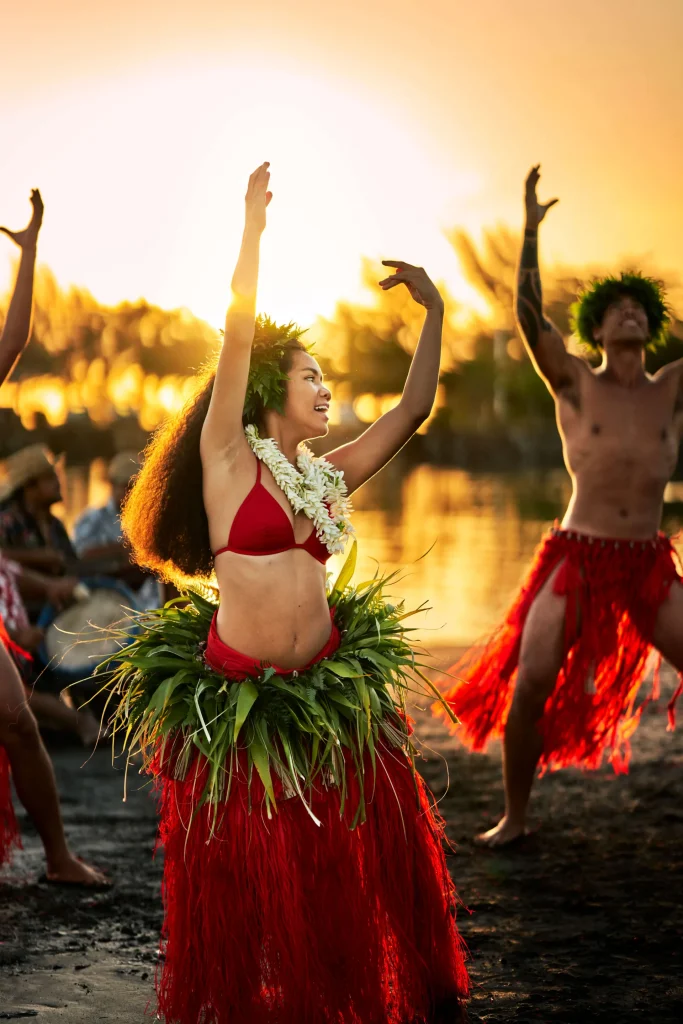
That identity remains deeply visible in language, dance, music, tattooing, food, art, outrigger canoe traditions and everyday life. The ocean isn’t simply something beautiful surrounding these islands; it has connected them and shaped life here for generations.
Which Islands Should You Visit?
With 118 islands and atolls to choose from, you’re probably not going to see everything in one trip — and trying to would miss the point anyway. Different islands offer very different experiences, so where you spend your time should depend on the kind of French Polynesia vacation you actually want.
Tahiti: Don’t Just Fly Through It
Tahiti is home to Papeete and French Polynesia’s international airport, so it’s easy to treat the island as little more than a gateway to somewhere else. We think that’s a mistake.
The largest island in French Polynesia has a rugged, mountainous interior filled with valleys and waterfalls, along with black-sand beaches, cultural sites and plenty of opportunities to get outside. Hiking can be surprisingly challenging, though. Tropical heat, humidity, steep terrain and significant elevation gain can turn a seemingly straightforward hike into a real adventure.
And yes, you can absolutely scuba dive Tahiti. There are reefs, wrecks and plenty of marine life around the island. But if you’re also heading to Rangiroa and Fakarava, we’d save at least some of your Tahiti time for exploring above the surface.
Moorea: A Little Bit of Everything
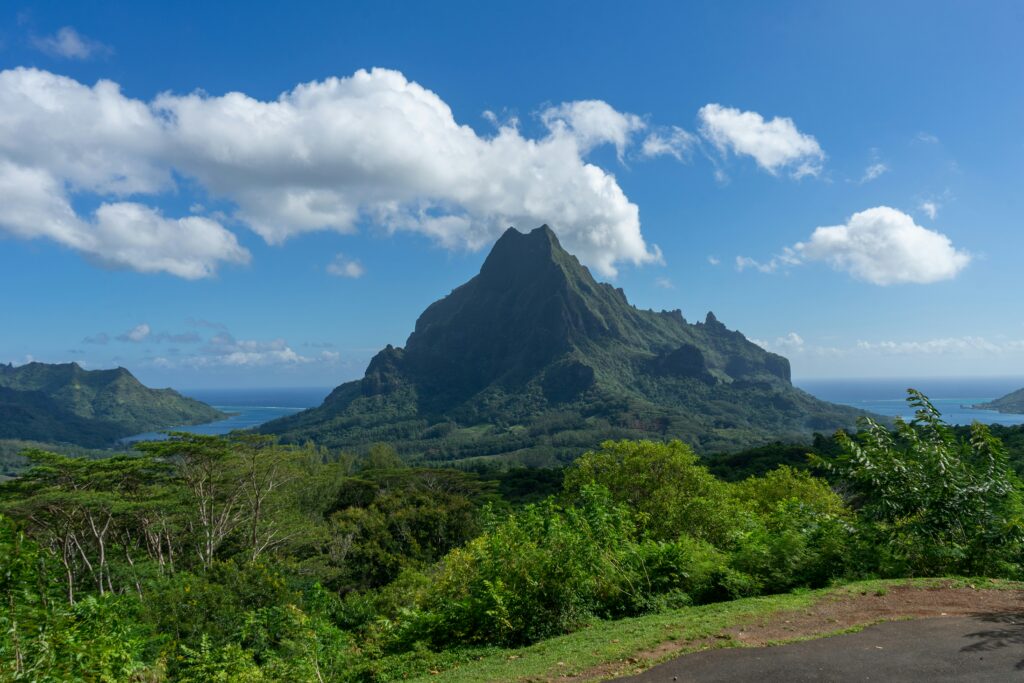
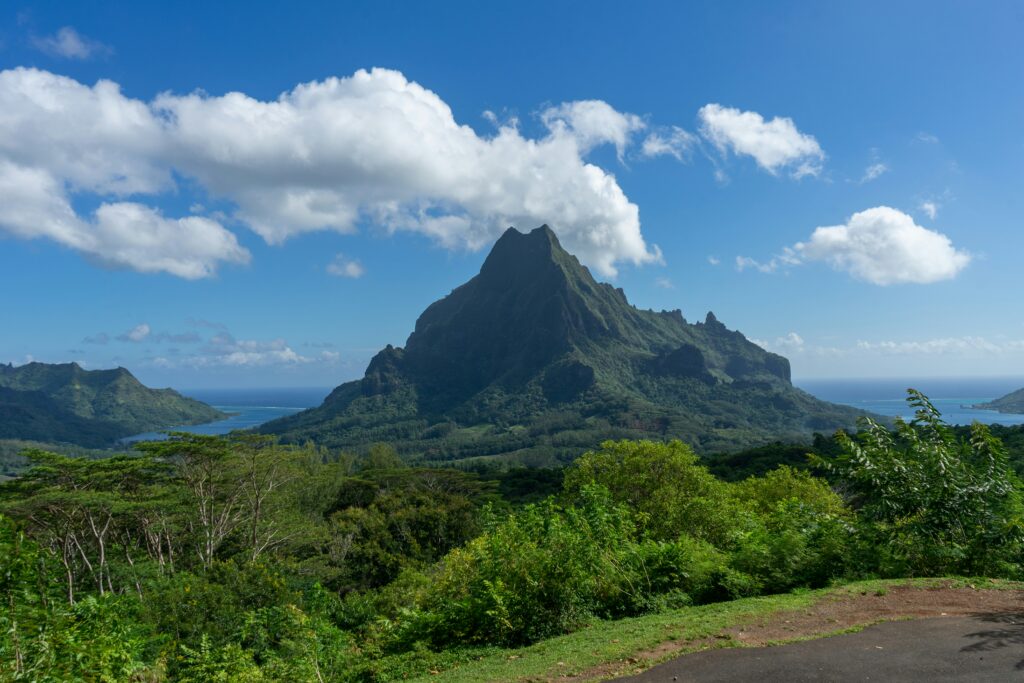
Just across the water from Tahiti, Moorea looks almost unreal. Jagged volcanic peaks rise above lush valleys while a turquoise lagoon wraps around much of the island. If the scenery feels like something from an animated Polynesian adventure, there’s a reason: Moana’s fictional world drew inspiration from the cultures and landscapes of Polynesia throughout the Pacific.
Moorea is another place where divers face a difficult decision. There is excellent diving, but there’s also hiking, snorkeling, lagoon exploration, whale encounters during the season and some truly spectacular scenery above water. Some of the hikes can be challenging, particularly when you add elevation and tropical conditions, but the views are worth working for.
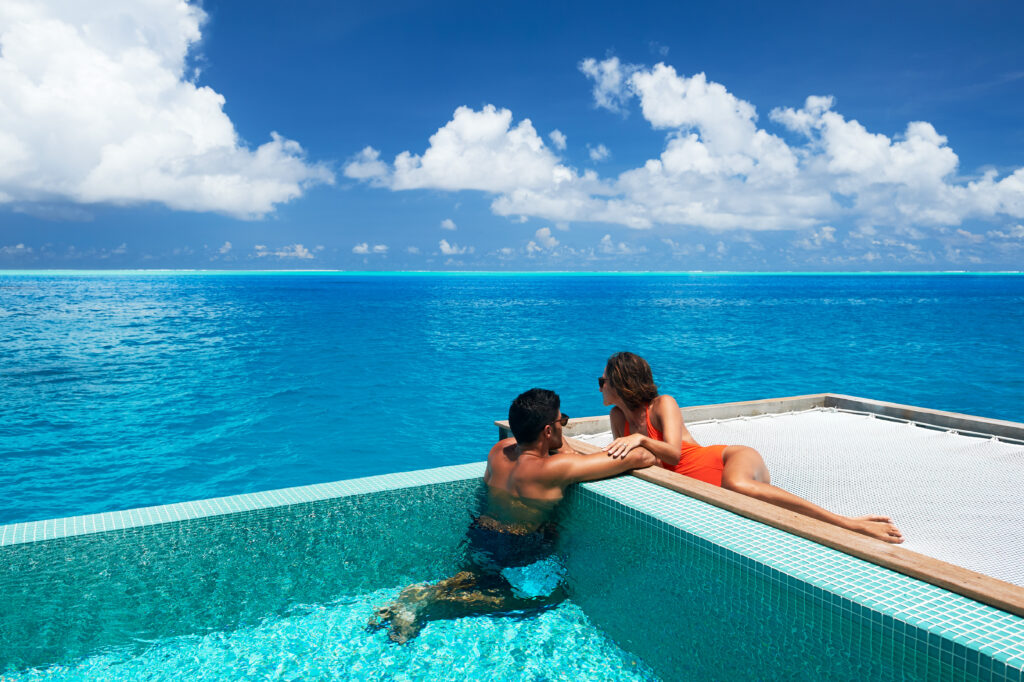
Or you could sit in an overwater bungalow staring at the mountains and accomplish absolutely nothing.
We support this option as well.
Moorea is particularly good for travelers who want adventure and relaxation in the same vacation.
Bora Bora: Yes, It Really Looks Like That
Bora Bora is famous for a reason. Its enormous lagoon, Mount Otemanu and luxury resorts have made it one of the most recognizable tropical destinations in the world.
There is diving, snorkeling and plenty to explore around the lagoon, but Bora Bora is also where French Polynesia’s luxury side really takes center stage. If staying in an overwater bungalow is part of your bucket-list vision, this is one of the iconic places to do it.
It’s also one of the easiest places in French Polynesia to spend a lot of money very quickly. More on that later.
Diving Rangiroa: Now We’re Here to Dive
Then you fly into the Tuamotus.
And everything changes.
Rangiroa is one of the world’s largest coral atolls. Instead of Moorea’s towering mountains, you’re looking across an enormous lagoon surrounded by narrow stretches of land and reef.
It’s flat. Really flat.
And that’s part of what makes arriving here so interesting. You’ve traveled from one type of tropical island to something completely different.
Underwater, however, things get considerably more dramatic.
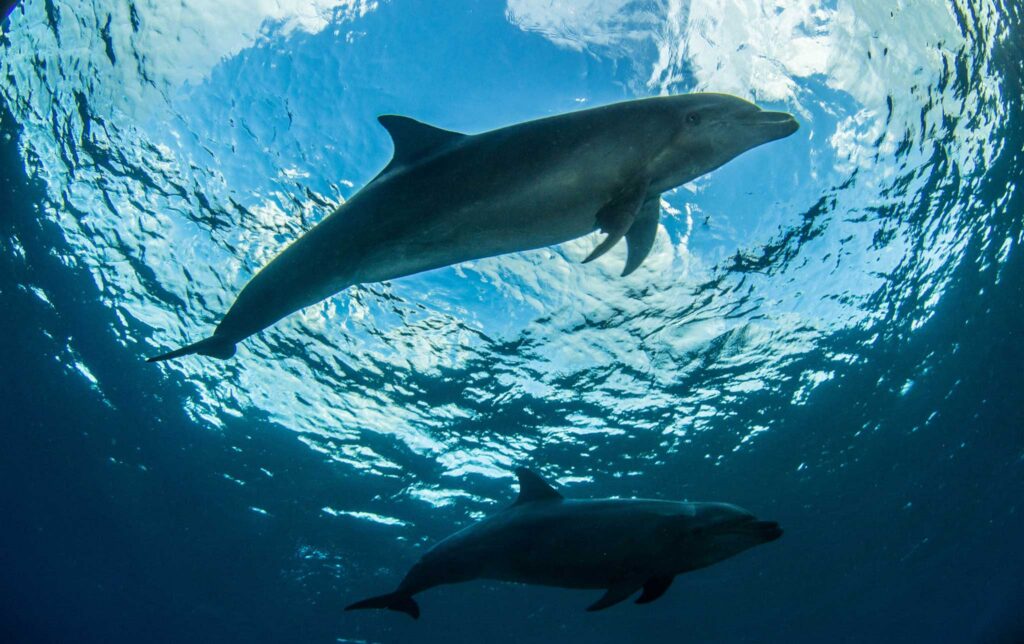
The movement of water between the lagoon and open ocean creates conditions that attract an incredible amount of life. Depending on the dive and conditions, that can mean sharks, rays, barracuda, jacks and other schooling fish, along with the bottlenose dolphins for which Rangiroa has become particularly famous.
There are hard-coral reefs to explore, but Rangiroa is also very much about looking out into the blue. You never quite know what might come cruising past.
If diving is the primary reason you’re traveling to French Polynesia, Rangiroa should be high on your list.
Diving Fakarava: Sharks, Passes and a Lot of Blue
Fakarava is another enormous coral atoll in the Tuamotu Archipelago, and once again the landscape is strikingly different from Tahiti and Moorea.
Like Rangiroa, there’s no dramatic mountain backdrop.
Instead, there’s an enormous lagoon, palm-covered motu, coral reef and a horizon that seems to go on forever.
Fakarava is part of the UNESCO-designated Commune de Fakarava Biosphere Reserve and has become legendary among divers for its sharks, healthy reef systems and passes.
The two best-known diving areas are the Garuae Pass in the north and the southern pass near Tetamanu. As with Rangiroa, the movement of water through these passes helps create the conditions that make the diving so productive.
But there’s one experience in particular that has made Fakarava famous.
The Wall of Sharks
Fakarava’s South Pass is famous for an extraordinary concentration of gray reef sharks. Hundreds can gather in and around the pass, creating the spectacle divers have nicknamed the Wall of Sharks.
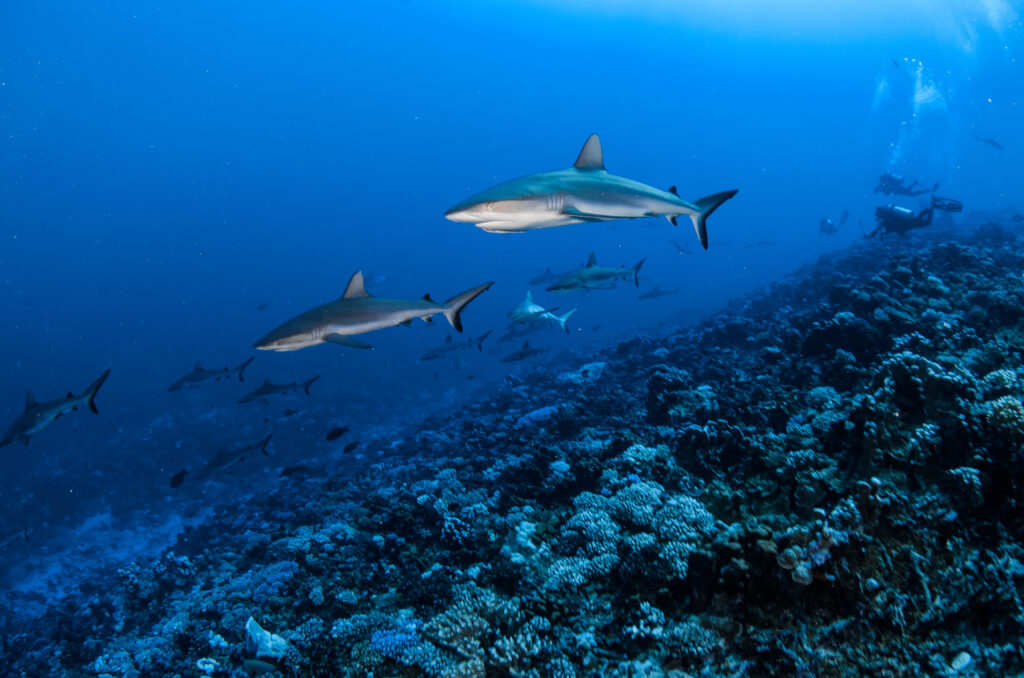
Fakarava is known for extraordinary concentrations of gray reef sharks, particularly around the southern pass. Rather than seeing one shark cruise past and disappearing into the blue, divers can encounter dozens—or even hundreds—of sharks occupying the water column.
From a distance, their silhouettes begin stacking across the reef.
A wall of sharks.
And despite the dramatic name, this isn’t about baiting sharks or manufacturing an encounter. You’re entering an ecosystem where sharks naturally occur in remarkable numbers.
For shark lovers, it’s one of French Polynesia’s signature dives.
What Is French Polynesia Diving Really Like?
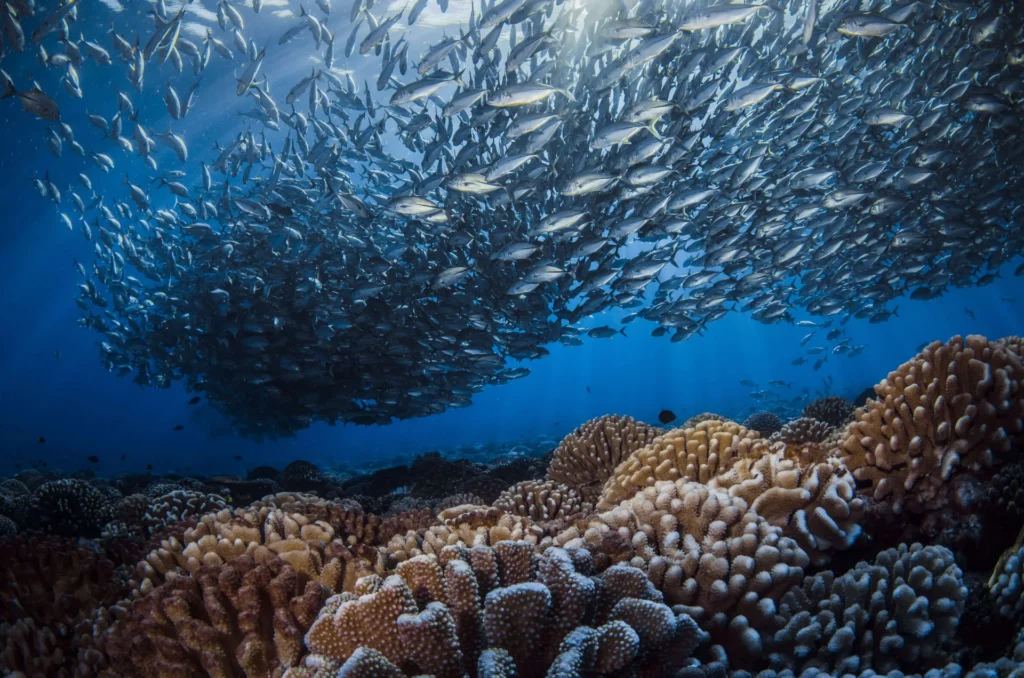
French Polynesia isn’t primarily a soft-coral destination. Much of the reef scenery — particularly in the Tuamotus — is dominated by hard-coral reefs and coral gardens surrounded by exceptionally clear blue water. If you’re accustomed to diving somewhere like Indonesia, where huge soft corals can dominate certain sites, the underwater landscape here can feel quite different.
But the coral isn’t necessarily the headline. The action is.
Sharks, dolphins, rays, turtles, barracuda, jacks, Napoleon wrasse and huge schools of fish are all part of the experience. Visibility can be excellent, and warm tropical water makes diving possible throughout the year.
Tahiti and Moorea both offer worthwhile diving, and you could easily dedicate plenty of underwater time to either island. But if diving is the primary goal of your trip, Rangiroa and Fakarava are the standouts. We’d prioritize your dive days there and leave some time on Tahiti and Moorea to see what makes those islands special above water.
The Current Is Part of the Experience
There’s a reason so much marine life congregates around the passes of the Tuamotus. Water moving between the lagoons and open Pacific brings nutrients and fish — and where the fish go, predators tend to follow.
It also means current.
Conditions change with tides and the direction and strength of the flow. Some dives become exhilarating drifts through the pass, while others can involve strong water movement and require good buoyancy, situational awareness and comfort diving in current.
French Polynesia certainly has sites appropriate for less experienced divers, particularly around some of the Society Islands. But if your bucket-list dives include the famous passes of Rangiroa and Fakarava, we’d recommend arriving with some experience in current and drift diving.
HOW EXPERIENCED SHOULD I BE?
French Polynesia isn’t exclusively an advanced diving destination, but the famous Tuamotu passes can be challenging. Divers who are comfortable with drift diving, current, good buoyancy control and occasionally looking out into open blue water will generally get much more from the experience.
Big Animals Are Part of the Appeal
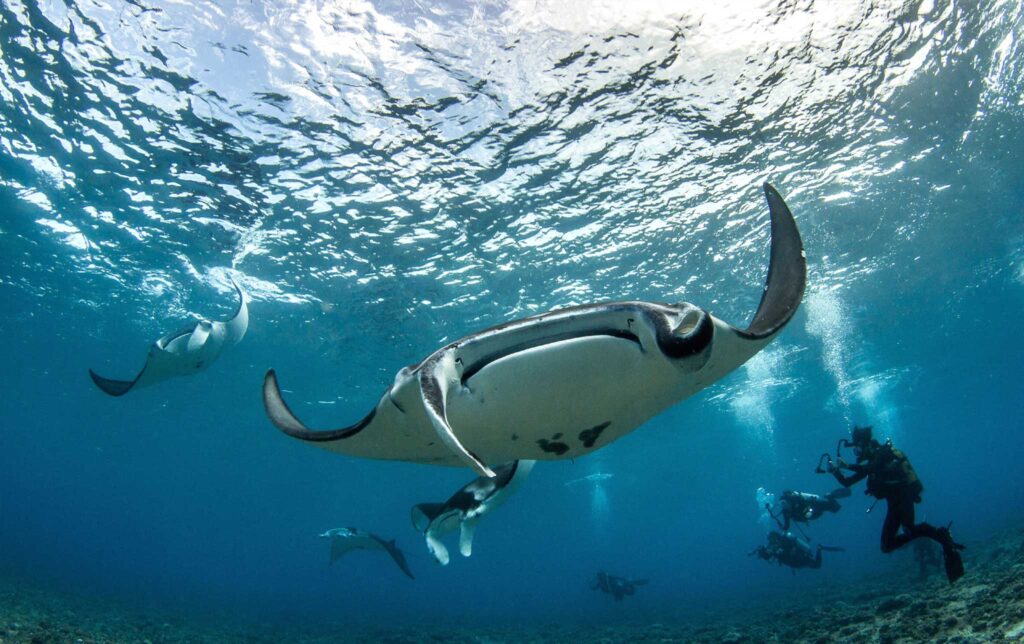
The sharks get plenty of attention, but French Polynesia’s marine life roster is much longer. Depending on where and when you travel, encounters can include manta and eagle rays, stingrays, turtles, dolphins, large schools of barracuda and jacks, Napoleon wrasse and numerous shark species.
And then there are the seasonal visitors.
Humpback Whale Season
Each year, humpback whales migrate into French Polynesian waters during the austral winter, generally from July into November. They come to warmer tropical waters to mate, give birth and care for their calves.
Tahiti, Moorea and the Austral Islands can all offer opportunities for whale encounters. French Polynesia is also one of the destinations where, under regulated conditions and with authorized operators, in-water observation may be possible.
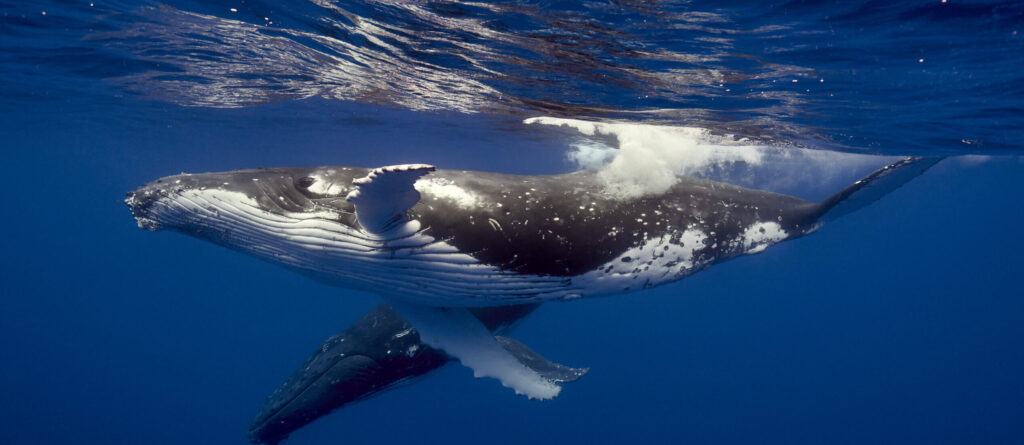
If you’re curious about where humpbacks go when they leave these tropical waters—or where to encounter other whale species around the world—our Wonderful World of Whales dives deeper into whale migrations, species and some of the best places to see them.
Whale watching is possible around several islands, and under regulated conditions there may also be opportunities to enter the water with humpbacks on authorized snorkeling excursions.
If seeing whales is one of the reasons you’re traveling to French Polynesia, timing matters. And because these encounters happen with wild animals, how we approach them matters, too. Before getting in the water, check out our guide to responsible big-animal encounters and learn why giving wildlife the choice to approach—or not—is such an important part of the experience.
The Other Famous Season: Fakarava’s Grouper Spawning
Whales aren’t the only wildlife event worth planning around. Each year around June and July, thousands of camouflage groupers gather in Fakarava around their spawning period, creating one of the most dramatic seasonal underwater events in the Pacific.
The groupers aren’t the only ones who show up.
Large numbers of gray reef sharks gather around the aggregation, creating an extraordinary predator-prey spectacle on an already shark-heavy reef. The exact timing is tied to the lunar cycle, which is why serious divers often plan their Fakarava trips specifically around the event.
Importantly, you don’t need to visit during the grouper spawning to experience Fakarava’s famous Wall of Sharks. The shark population is one of the things that makes the atoll extraordinary throughout the diving season; the spawning aggregation is an additional seasonal event.
When Is the Best Time to Visit French Polynesia?
There isn’t one perfect month to visit French Polynesia because the answer depends heavily on what you want to experience.
If humpback whales are high on your list, you’ll want to travel during their seasonal migration, generally between July and November. Divers hoping to experience Fakarava’s grouper spawning usually target June or July and pay close attention to the lunar cycle. Diving itself is possible throughout the year, although conditions and marine-life encounters vary between islands and seasons.
For hiking and land exploration, the generally cooler and drier period from roughly May through October can be particularly appealing. That doesn’t mean you’ll never see rain — these are tropical islands — but conditions can be more comfortable for getting out and exploring.
Instead of asking When is the best time to go?, we’d start with a different question:
What do you most want to experience while you’re there?
When Is the Best Time to Visit French Polynesia?
There isn’t one perfect month to visit French Polynesia because the answer depends heavily on what you want to experience.
If humpback whales are high on your list, you’ll want to travel during their seasonal migration, generally between July and November. Divers hoping to experience Fakarava’s grouper spawning usually target June or July and pay close attention to the lunar cycle. Diving itself is possible throughout the year, although conditions and marine-life encounters vary between islands and seasons.
For hiking and land exploration, the generally cooler and drier period from roughly May through October can be particularly appealing. That doesn’t mean you’ll never see rain — these are tropical islands — but conditions can be more comfortable for getting out and exploring.
Instead of asking When is the best time to go?, we’d start with a different question:
What do you most want to experience while you’re there?
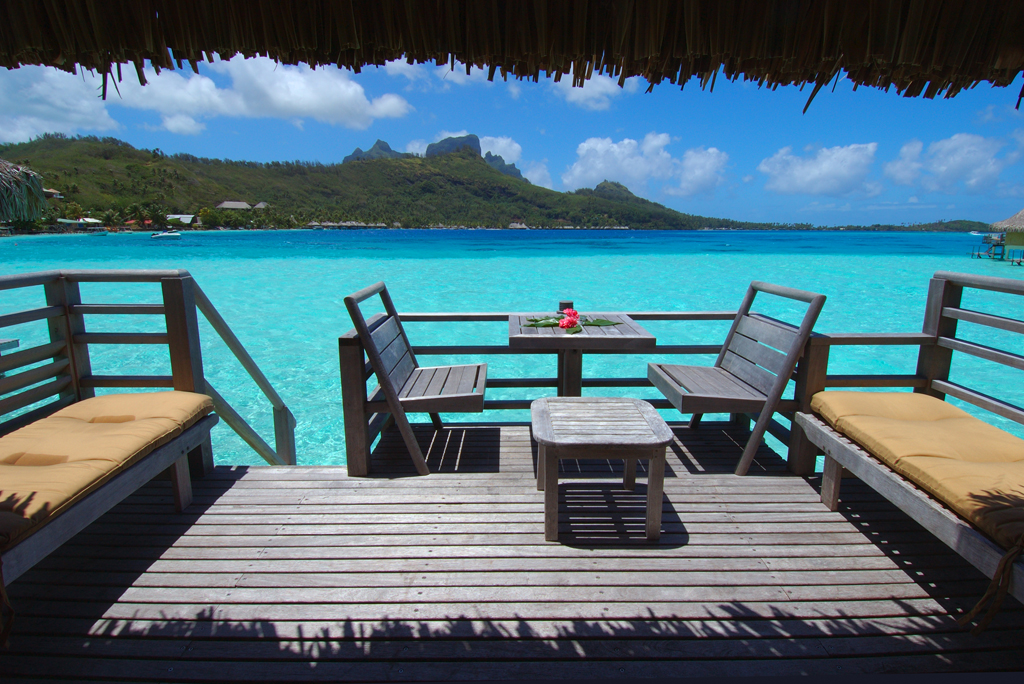
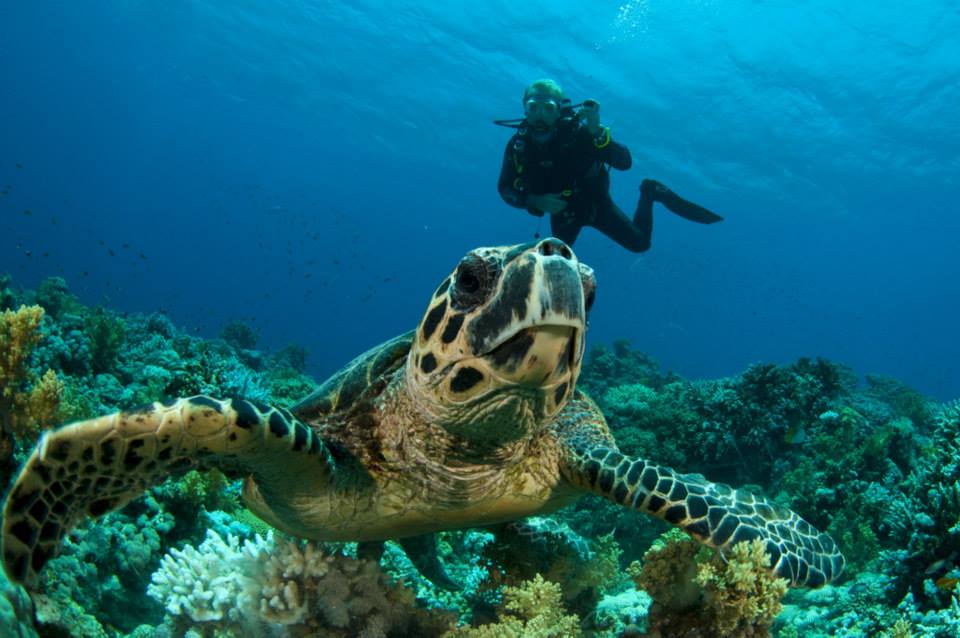
In fact, combining the two may be even better. Spend part of your trip diving and exploring, then slow everything down for a few days in the Society Islands.
Not every vacation needs to leave you needing another vacation.
Let’s Talk About the Price
There’s no particularly delicate way to say this: French Polynesia can get really expensive.
Luxury resorts get much of the attention, but accommodation is only part of the equation. Inter-island flights, ferries, transfers, meals, diving, whale excursions, tours and baggage costs can add up quickly, particularly if you’re trying to experience several islands during one trip.
Island hopping also introduces logistics that don’t exist when you’re simply staying at one resort for a week. Flights need to line up with accommodations, diving and activities, and baggage allowances become particularly important for travelers carrying dive and camera gear.
That doesn’t mean you need an unlimited budget to visit French Polynesia. Staying primarily on one or two islands can help control costs, while travelers treating this as a major bucket-list adventure may decide that seeing several very different islands is worth the additional expense.
Whatever style of trip you choose, we’d recommend looking at the total cost of the experience rather than comparing hotel rates alone. Transportation, diving, excursions and meals can change the math considerably.
A Few Things to Know Before You Go
Don’t try to see everything. There are 118 islands and atolls, and trying to squeeze too many of them into one vacation means spending a lot of your bucket-list trip in transit. Choose islands based on what you actually want to experience and give yourself enough time to enjoy them.
If you’re a diver, we’d plan your underwater priorities first. Protect your dive days in Rangiroa and Fakarava, then build the rest of the itinerary around them. Tahiti deserves more than an airport transfer, and Moorea is far too beautiful to spend your entire visit underwater.
Also pay attention to domestic baggage allowances before packing every piece of dive and camera equipment you own. Inter-island travel is a major part of exploring French Polynesia, and a little planning before you leave can save some expensive surprises once you’re there.
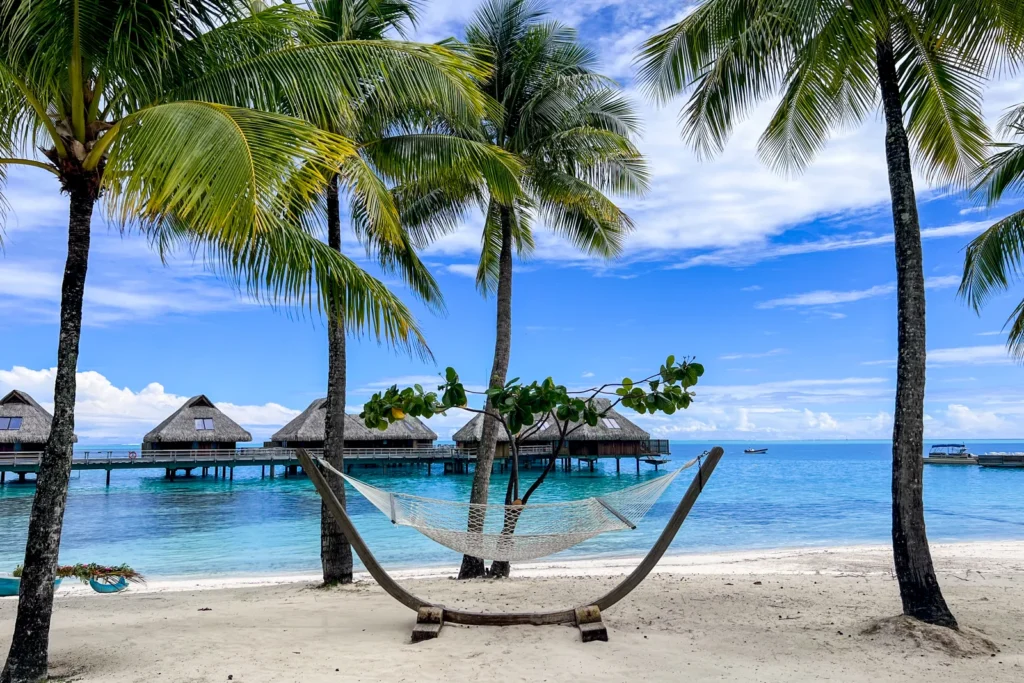
So, Is French Polynesia Worth It?
French Polynesia asks a little more from travelers than some tropical destinations. It’s remote, it’s expensive and island hopping takes planning. For divers, some of its most famous sites can also be challenging, particularly if you’re not comfortable in current.
But there’s a reason people dream about coming here for years.
French Polynesia combines ancient volcanic mountains and low-lying coral atolls, Polynesian culture and remote wilderness, hard-coral reefs and deep blue passes, hundreds of sharks and quiet lagoons. One day can involve serious diving or a challenging hike; the next might involve snorkeling with a whale or doing very little from an overwater bungalow.
There isn’t just one French Polynesia experience.
And that’s exactly what makes it such an incredible bucket-list destination.
Experience French Polynesia With Us
When we designed our 2027 French Polynesia Island-Hopping Expedition, we wanted to experience several different sides of the destination rather than staying on a single island.
Our route takes us through two different archipelagos and four very different destinations: Tahiti → Rangiroa → Fakarava → Moorea
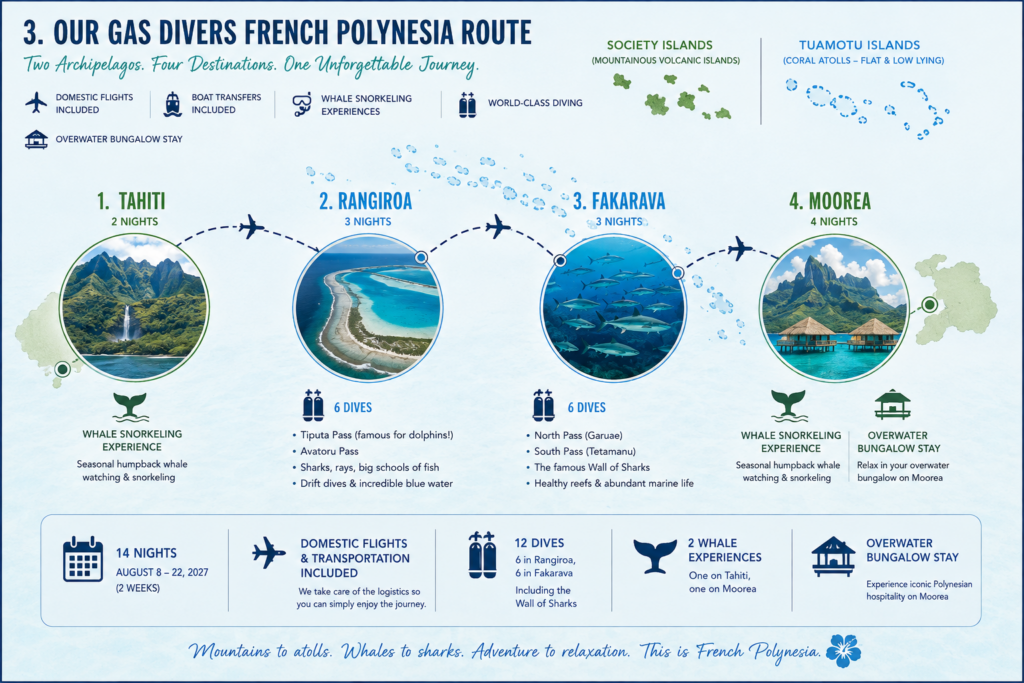
Our 14-night French Polynesia adventure was designed to experience more than just one side of this enormous destination. We’ll travel from the mountainous Society Islands into the remote coral atolls of the Tuamotus, combining some of French Polynesia’s most famous diving with seasonal humpback whale encounters, island exploration and a little bit of that iconic Polynesian luxury.
Along the way, we’ll spend time on Tahiti, Rangiroa, Fakarava and Moorea, with 12 dives focused in Rangiroa and Fakarava — including Fakarava’s famous Wall of Sharks — and two dedicated humpback whale watching and snorkeling experiences on Tahiti and Moorea.
We’ll also get to check another classic French Polynesia experience off the bucket list with a stay in an overwater bungalow on Moorea. And because getting around French Polynesia can be both complicated and expensive, our domestic flights and inter-island transportation are built into the package.
It’s a big trip for a big destination — with enough time to dive it, explore it, slow down and actually enjoy being there.
This is still a big trip. French Polynesia is a bucket-list destination, and we think it’s worth treating it like one.
If you’ve been waiting for the right opportunity to finally experience it, we’d love to have you along.
Explore Our August 2027 French Polynesia Island-Hopping Expedition