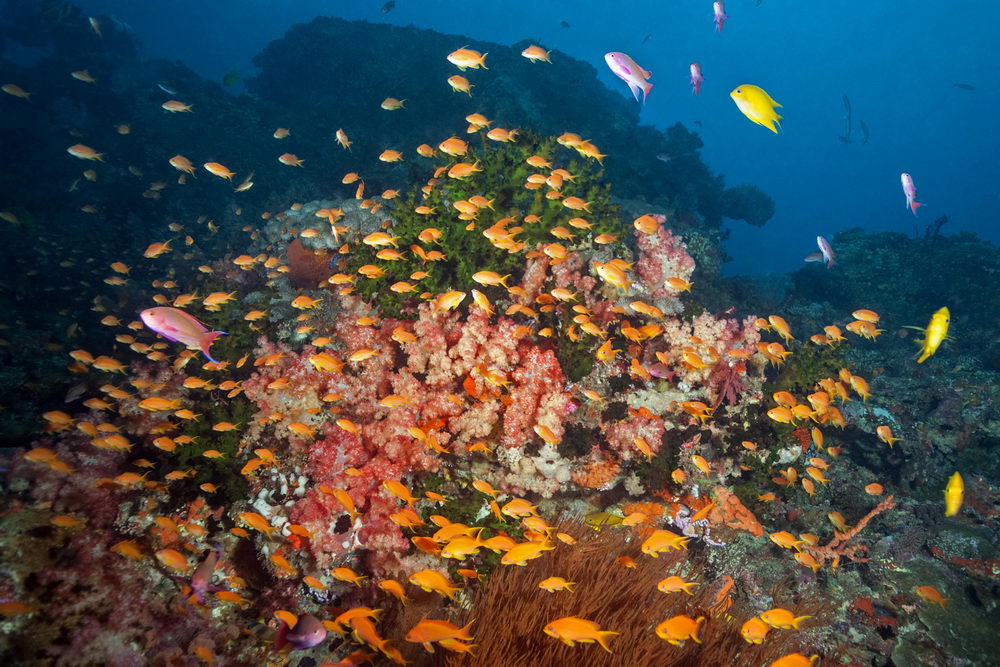

Scuba diving in Fiji is one of those experiences that keeps pulling us back. Some destinations you visit once. Fiji is not one of those places for us.
Over the years, we’ve had the chance to experience several very different sides of Fiji, from the famous soft corals of Taveuni and the remote Great Sea Reef to the shark diving of Beqa Lagoon and the colorful reefs of the Bligh Waters.
And that’s one of the most important things to understand when planning a dive trip to Fiji: there isn’t just one Fiji diving experience.
With more than 300 islands spread across the South Pacific, where you choose to stay can completely change what you see underwater. One trip might mean drifting past walls covered in soft coral. Another could put you face-to-face with sharks. Elsewhere, you might spend your dives exploring pinnacles, hard coral gardens, walls and reefs filled with smaller marine life.
After multiple trips, we understand why Corey kept coming back.
Fiji delivers spectacular diving, but the diving is only part of what makes this destination special. The people, culture, landscapes and wonderfully relaxed pace of island life have a way of becoming just as memorable as whatever you encountered underwater.
So, where should you dive in Fiji? When should you go? And which part of the country is right for your trip?
Let’s explore.
Where to Go Scuba Diving in Fiji: Choosing the Right Region
One of the biggest mistakes you can make when planning a dive trip to Fiji is simply deciding to “go diving in Fiji.”
Fiji is an island nation with an enormous amount of reef, and its major dive regions can feel surprisingly different from one another. Where you stay determines not only which dive sites you can reach, but also the type of diving, marine life, currents and underwater landscapes you’re likely to experience.
We’ve now had the opportunity to dive several of Fiji’s major regions, and each has given us a completely different reason to love the destination.
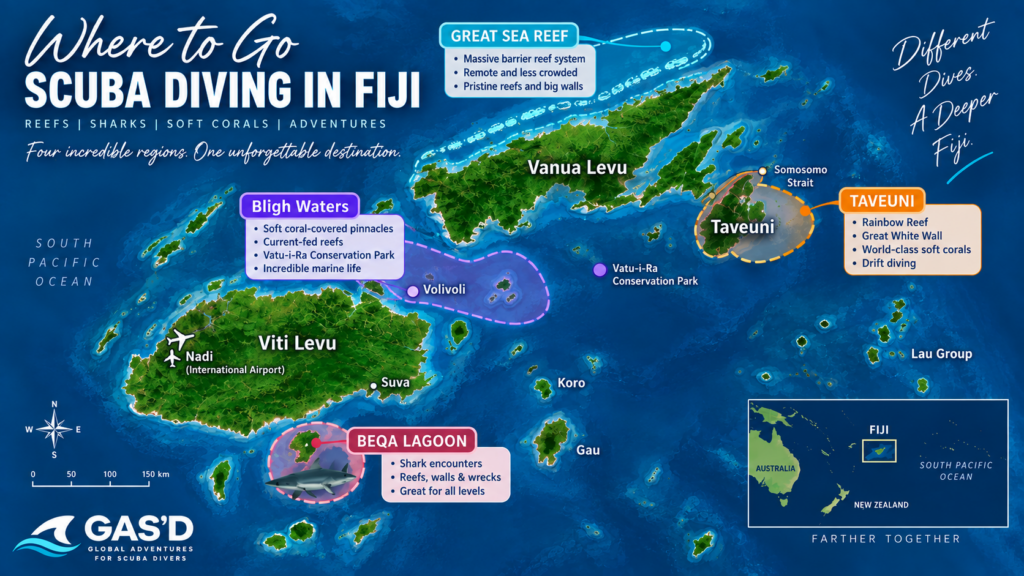
Diving Taveuni & the Somosomo Strait
Go for: Spectacular soft corals, Rainbow Reef and dramatic reef diving
Taveuni is home to some of Fiji’s most famous diving, including Rainbow Reef and the Great White Wall. Between Taveuni and neighboring Vanua Levu, water moving through the Somosomo Strait delivers nutrients that fuel an extraordinary amount of marine life.
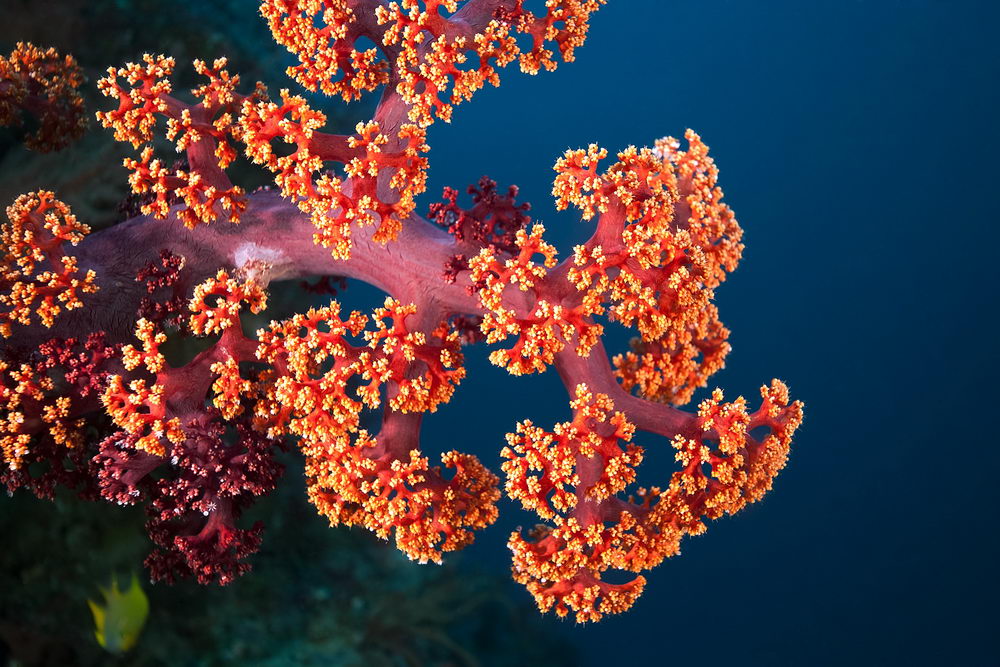
The result is exactly the kind of diving Fiji is famous for: colorful walls, coral-covered bommies, clouds of reef fish and spectacular soft corals.
And here’s the catch: a little current can be a very good thing.

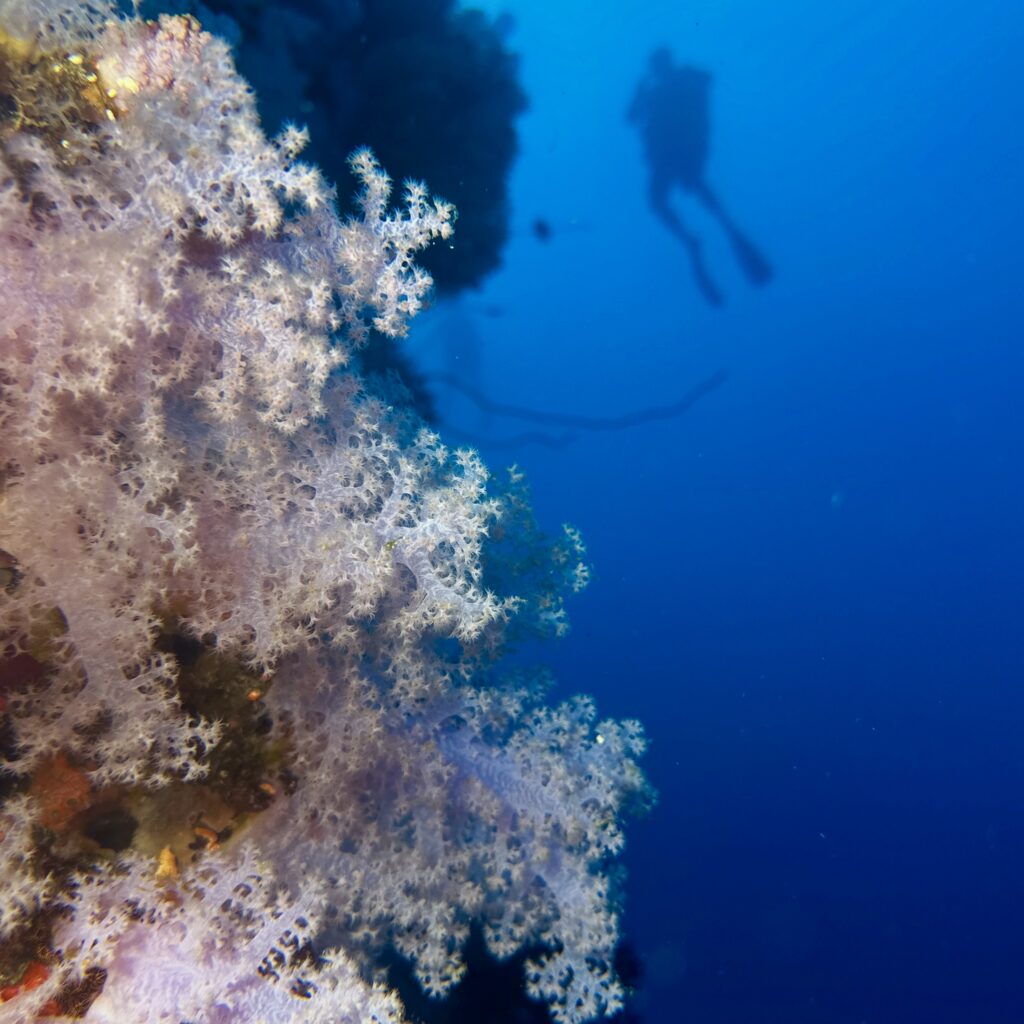
Diving the Great Sea Reef: Fiji’s Less-Explored Giant
Go for: Remote reefs, fewer divers and a completely different side of Fiji
The Great Sea Reef might not have the name recognition of Rainbow Reef or Beqa Lagoon, but that’s part of what makes diving here so interesting.
Known locally as Cakaulevu, this enormous reef system stretches along northern Vanua Levu and forms part of the third-longest barrier reef system in the world. Compared with Fiji’s better-known dive regions, it feels wonderfully remote, with hard and soft corals, abundant marine life and reefs that see relatively few recreational divers.
Diving the Bligh Waters: Fiji in Full Color
Go for: Current-fed reefs, soft coral-covered pinnacles and an explosion of marine life
If you’re coming to Fiji for soft corals, the Bligh Waters belong high on your list.
Located between Viti Levu and Vanua Levu, this region is filled with channels, barrier reefs and submerged pinnacles. Nutrient-rich water moves through the area, feeding the corals and supporting an incredible amount of marine life.
This is where we experienced some of the diving that feels quintessentially Fiji: coral-covered pinnacles surrounded by clouds of colorful reef fish, healthy hard coral gardens, soft corals opening in the current and plenty of smaller creatures hiding among it all.
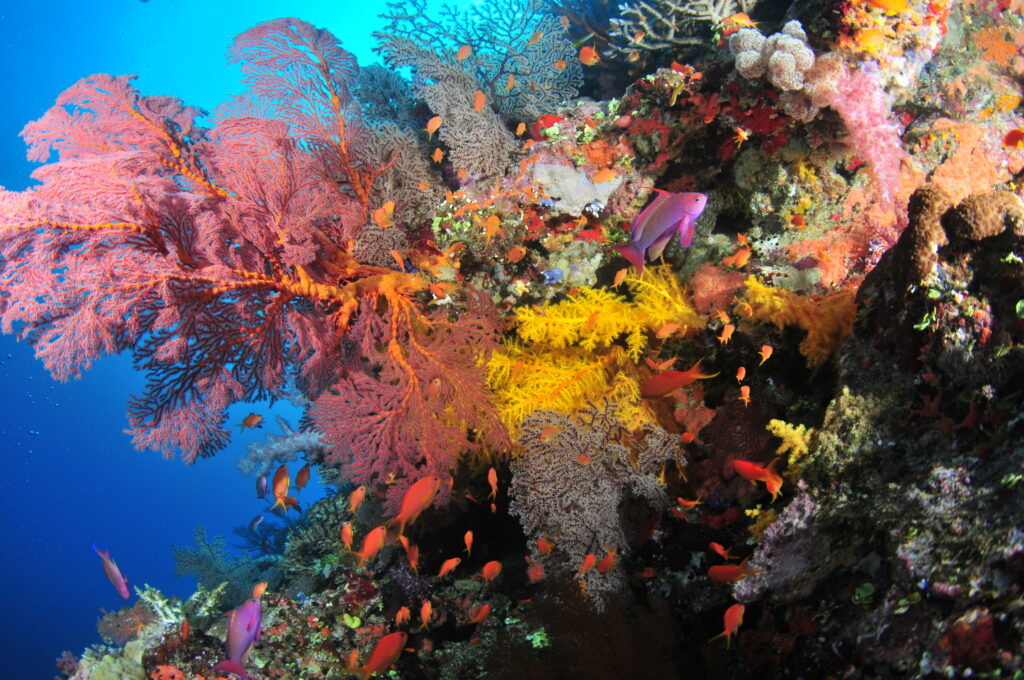
Vatu-i-Ra: Where Diving and Conservation Meet
One of the particularly special areas within this region is the Vatu-i-Ra Seascape.
The Vatu-i-Ra Conservation Park protects more than 100 square kilometers of reefs, lagoons, terraces and pinnacles. Nearly 80% of the park is designated as a no-take zone, and its management brings together local communities and tourism operators to help protect the ecosystem while supporting the people who depend on it.
It’s a good reminder that the reefs we’re traveling across the world to see don’t exist in isolation. They’re connected to the communities around them—and protecting them is part of keeping Fiji’s extraordinary diving extraordinary.
This is where we experienced some of the diving that feels quintessentially Fiji: coral-covered pinnacles surrounded by clouds of colorful reef fish, healthy hard coral gardens, soft corals opening in the current and plenty of smaller creatures hiding among it all.
You can read more about our time in the Bligh Waters and Beqa Lagoon in our Fiji scuba diving trip report.
It’s Not Just About the Coral
As beautiful as the reefs are, there’s plenty to look for beyond them. Sharks patrol the passages, barracuda school near drop-offs, and the wider Vatu-i-Ra ecosystem supports turtles, dolphins and other larger marine life. And don’t forget to look closely: Fiji has plenty of macro life tucked into those ridiculously colorful reefs too.
Our take: If someone asked us to show them why Fiji earned its reputation for spectacular reef diving, the Bligh Waters would be pretty high on the list.
Scuba Diving Beqa Lagoon: Come for the Sharks, Stay for the Reefs
Go for: Sharks—but definitely not just sharks
Let’s be honest: the sharks are probably what got your attention.
Beqa Lagoon is one of Fiji’s most famous shark-diving destinations, with opportunities to encounter bull sharks, tiger sharks, reef sharks and several other species. But after spending a week diving here, one of our biggest takeaways was just how much Beqa offers beyond its famous shark encounters.
The lagoon is surrounded by an extensive reef system filled with coral-covered pinnacles, walls, swim-throughs and wrecks. Soft corals add plenty of that classic Fiji color, while anemones, reef fish and smaller critters give you a reason to slow down and look closely.
Come for the sharks, absolutely. Just don’t assume they’re the only reason to dive Beqa.

The Cathedral Shark Dive
That said… the shark diving is pretty spectacular.
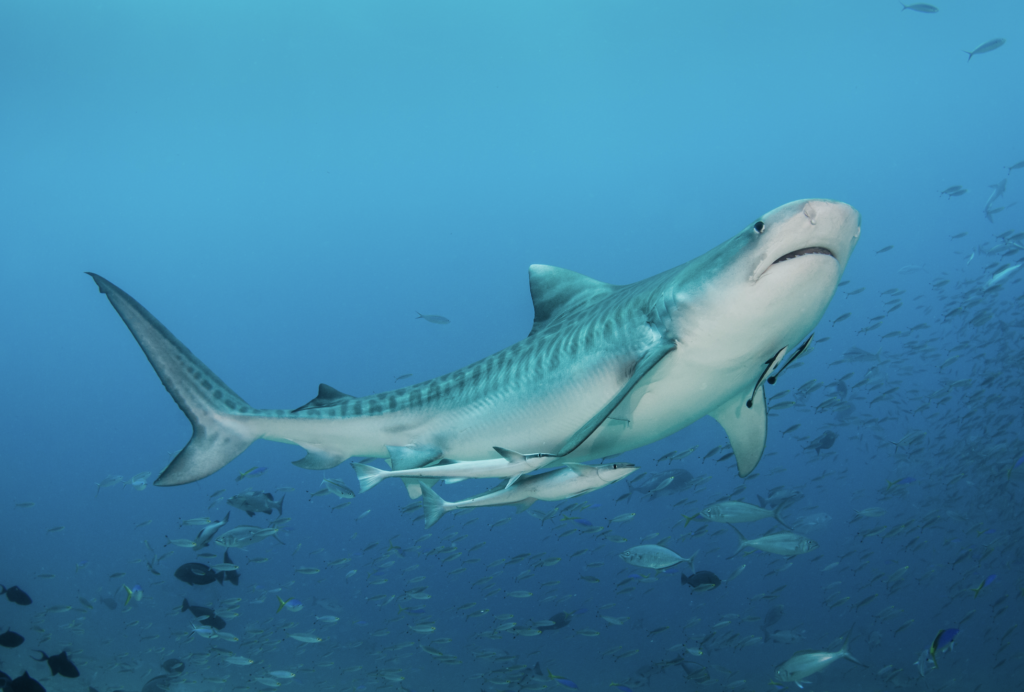
We experienced the Cathedral Shark Dive at Beqa Lagoon Resort, where divers settle into designated viewing areas while sharks move through the site. Bull sharks are among the regular stars of the show, along with several other species—but tiger sharks are the encounters everyone secretly hopes for.
On our dive, four tiger sharks showed up.
Seeing one tiger shark is memorable. Watching multiple tigers cruise through the site alongside other sharks and huge schools of fish was one of those dives where you occasionally have to remind yourself to stop staring through the camera and actually look around.
The experience is highly structured, with detailed briefings and procedures for where divers position themselves and how the dive operates. It’s not a casual reef dive with a surprise shark passing in the distance. You’re there specifically to observe these animals, and being comfortable underwater and able to follow the dive team’s instructions is important.
Which Fiji Dive Region Is Right for You?
The good news? There really isn’t a wrong answer. The better question is what kind of Fiji experience are you looking for?
Choose Taveuni if…
✓ Soft corals are at the top of your wish list
✓ You want to dive Rainbow Reef and the Great White Wall
✓ You’re comfortable with some current
✓ You want plenty to explore above water too
Best for: Iconic Fiji diving + adventure
Choose the Great Sea Reef if…
✓ You love getting away from the more familiar dive destinations
✓ Huge reef systems fascinate you
✓ You’d rather see fewer dive boats
✓ Remote Fiji sounds like your kind of Fiji
Best for: Off-the-beaten-path diving
Choose the Bligh Waters if…
✓ You want spectacular soft coral and colorful reefs
✓ You love pinnacles, schooling fish and wide-angle diving
✓ You’re comfortable diving in current
✓ You want a land-based trip with access to world-class diving
Best for: Classic colorful Fiji reef diving
Choose Beqa Lagoon if…
✓ Sharks are VERY high on your wish list
✓ You still want excellent reef diving between the big-animal encounters
✓ You like a mix of pinnacles, wrecks and coral reefs
✓ You want a destination that can work well for different experience levels
Best for: Sharks + variety
First Time Diving in Fiji?
For a first Fiji dive trip, we’d recommend Beqa Lagoon, the Bligh Waters—or, even better, a combination of both.
Both regions are accessible from Viti Levu, Fiji’s main island, which makes combining them relatively easy compared with building an itinerary that requires additional island flights or transfers.
More importantly, they complement each other beautifully.
Beqa Lagoon gives you Fiji’s famous shark encounters alongside reefs, pinnacles and wrecks. Head north to the Bligh Waters, and the emphasis shifts toward spectacular soft corals, colorful pinnacles and current-fed reefs packed with marine life.
Together, you get a little bit of everything that makes Fiji such an incredible dive destination: sharks, soft corals, hard corals, colorful reefs, macro life and plenty of classic South Pacific scenery.
That’s exactly why we combined the two on our most recent Fiji adventure—and why we’d recommend the same combination to someone experiencing Fiji diving for the first time.
Then, when Fiji inevitably convinces you to come back, you can start exploring farther afield.
When Is the Best Time to Dive Fiji?
Here’s the good news: you can dive Fiji year-round.
The better question is what conditions you’re hoping for. Fiji has two broad seasons—a cooler, drier season and a warmer, wetter season—and both have advantages for divers.
May–October: Cooler, Drier & Often Clearer
Fiji’s dry season generally runs from May through October. Water temperatures are cooler, rainfall is lower and visibility can be excellent.
This is often considered the classic “best time” to dive Fiji, particularly if visibility is one of your biggest priorities. The trade-off is cooler water, especially later in the season. If you’re doing multiple dives a day, a little extra exposure protection can make a big difference.
November–April: Warmer, Wetter & Still Very Diveable
The wetter season brings warmer water, higher humidity and a greater chance of rain—but that doesn’t mean you should automatically rule it out.
We visited Beqa Lagoon and the Bligh Waters in February, right in the middle of Fiji’s wet season, and had fantastic diving. Conditions varied from day to day, but the reefs were beautiful, the water was warm and we had some incredible underwater encounters.
There is, however, one important consideration: Fiji is prone to tropical cyclones.
Fiji’s tropical cyclone season generally runs from November through April, with the greatest risk typically occurring during the heart of the wet season. Cyclones can bring strong winds, heavy rainfall, rough seas, flooding and significant travel disruptions—and occasionally cause serious damage to islands and resorts.
That doesn’t mean you shouldn’t travel to Fiji during these months. We did, and we’d do it again. But it does mean we’d travel with good travel insurance and some flexibility, particularly when booking a trip during the peak cyclone months.
Weather is never guaranteed in the tropics, and Fiji is one destination where cyclone season deserves to be taken seriously when choosing your dates.
So, When Would We Go?
If you want the traditional combination of drier weather and excellent visibility, we’d lean toward the May–October period.
If you prefer warmer water, don’t dismiss the wetter months. Our February experience proved to us that Fiji can deliver some seriously good diving outside the traditional peak season.
And if your entire reason for visiting is a specific experience—like diving the Great White Wall when the soft corals are open—remember that local tides and conditions can matter just as much as the month on the calendar.
Our advice: Choose your Fiji region first, then look at the best seasonal window for that particular area rather than trying to find one perfect month for the entire country.
What Are Diving Conditions Like in Fiji?
Fiji can be surprisingly accessible for newer divers, but it can also deliver current, deeper walls and more challenging dives for experienced divers. The conditions depend heavily on where you’re diving and which sites you choose.
That’s another reason choosing the right region—and a good local dive operator—matters.
Water Temperature & Exposure Protection
Water temperatures generally range from around 75–86°F (24–30°C) throughout the year, with the warmest water typically occurring during Fiji’s summer months and cooler temperatures during the dry season.
A 3mm wetsuit will work well for many divers, particularly during the warmer months. But if you get cold easily or plan to make three or four dives a day, don’t underestimate how chilly repetitive diving can feel. During the cooler months, we’d seriously consider a 5mm.
Visibility
Visibility in Fiji can be excellent, often ranging from roughly 50–130 feet (15–40 meters).
But bigger isn’t always better.
The nutrients moving through Fiji’s channels help support the spectacular coral and marine life you’re traveling to see. Sometimes slightly reduced visibility comes with a reef that is absolutely bursting with activity.
We’ll take that trade.
What Certification Level Do You Need?
You do not need to be an advanced diver to enjoy Fiji.
There are plenty of sites suitable for Open Water divers, particularly when you’re staying with an operation that has access to a variety of reefs.
However, Advanced Open Water is something we’d recommend if you want more flexibility. Some of Fiji’s walls, current-swept sites and deeper dives are better suited to divers with additional experience.
We also recommend Nitrox when it’s available, especially if you’re planning several days of repetitive diving.
More important than the certification card itself is your comfort underwater. Good buoyancy, awareness of your surroundings and some experience with current will give you access to more of what Fiji has to offer.
Our take: Fiji doesn’t have to be difficult—but becoming a more confident diver before your trip will give you more options once you’re there.
Let’s Talk About Current
Current is part of diving Fiji.
In areas like the Somosomo Strait and Bligh Waters, moving water delivers the nutrients that allow those famous soft corals to flourish. When the current picks up, soft corals open to feed, fish become more active and the reef can completely transform.
Of course, that doesn’t mean you need to spend your entire vacation flying horizontally across Fiji.
Conditions vary enormously between sites, and experienced local dive operators can choose dives appropriate for the group and the conditions that day. Some dives can be wonderfully relaxed; others require good buoyancy, situational awareness and comfort in moving water.
What Marine Life Can You See in Fiji?
Fiji may be famous for soft corals and sharks, but some of the best diving here comes from simply looking at the reef as a whole.
Healthy coral provides habitat for an enormous variety of marine life, and depending on where you’re diving, one dive can have you watching sharks in the blue while the next has you staring into the reef looking for something tiny.
Sharks
If sharks are high on your wish list, Fiji delivers.
Beqa Lagoon is the obvious standout, with opportunities to see bull sharks, tiger sharks, reef sharks and several other species. Our Cathedral Shark Dive—with four tiger sharks making an appearance—is certainly one we’ll remember.
But Beqa isn’t the only place to look for sharks. Reef sharks can be encountered throughout Fiji, and you never know when something larger might cruise past a wall or pinnacle.
Turtles, Rays & Reef Life
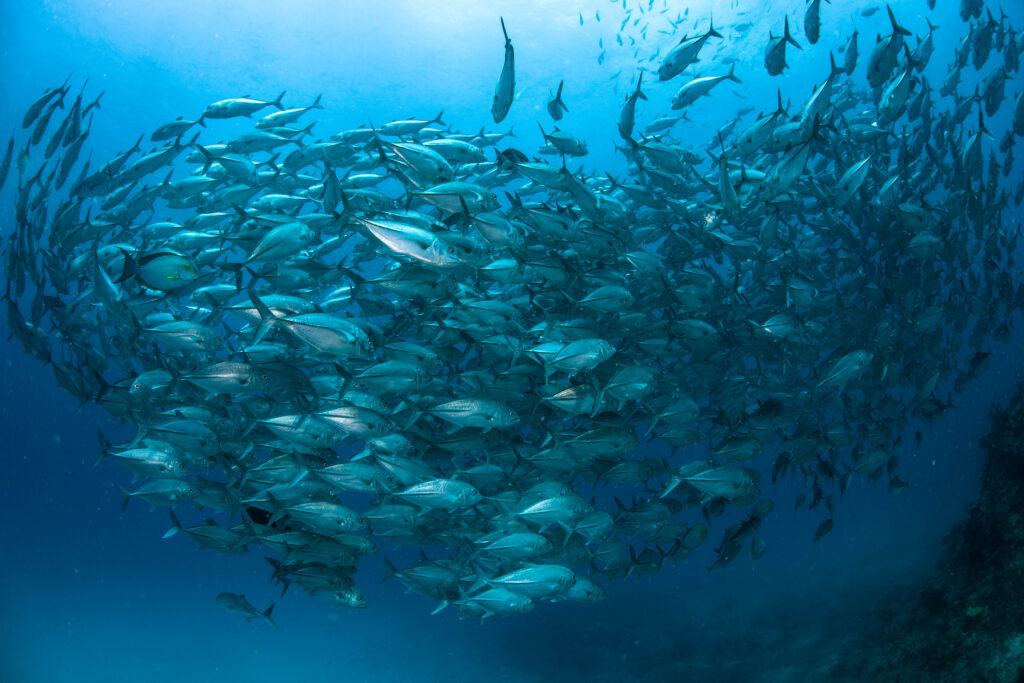
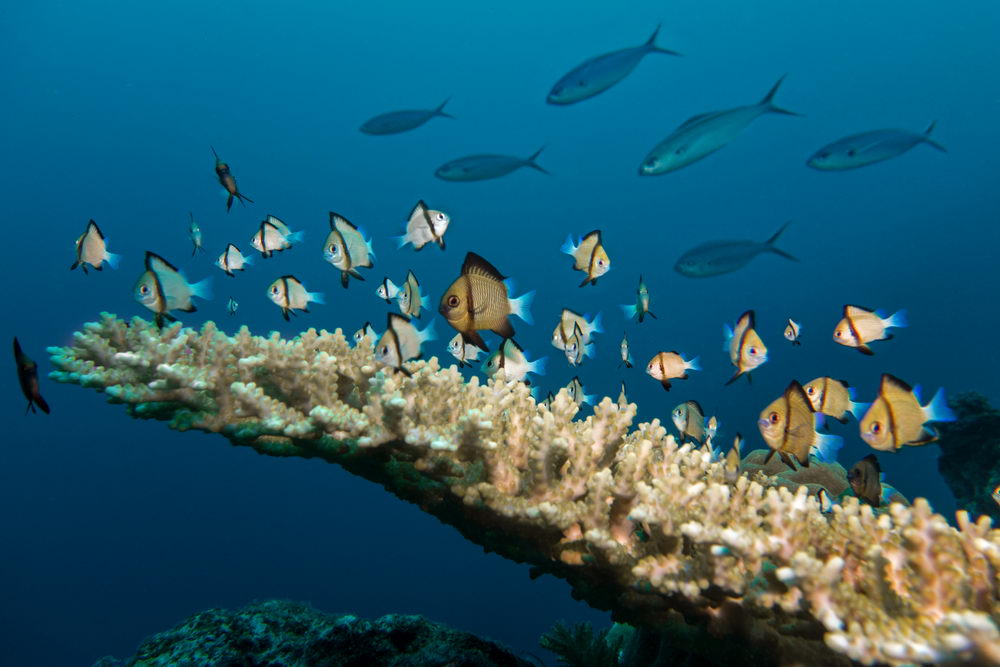
Green and hawksbill turtles can be found around Fiji’s reefs, along with rays, moray eels, barracuda, trevally and large schools of tropical fish.
And sometimes the sheer number of fish is more impressive than any individual animal.
Anthias hovering above soft coral, butterflyfish weaving through the reef and schools gathering around current-swept pinnacles create exactly the kind of underwater scene many divers imagine when they think of Fiji.
Don’t Forget the Little Stuff
It’s very easy to spend your entire Fiji trip staring at the scenery.
Don’t.
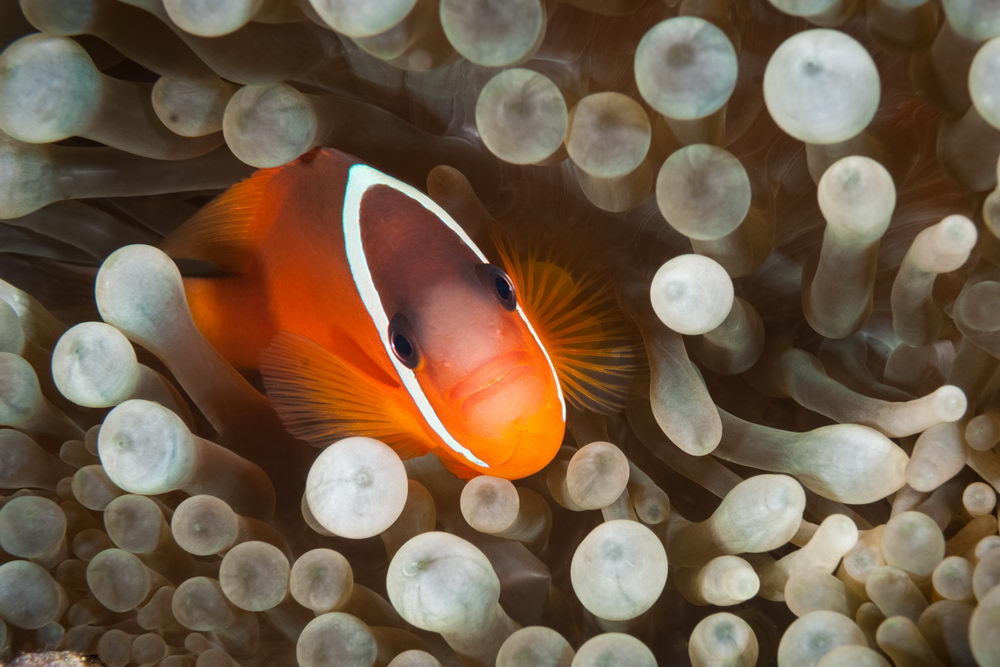
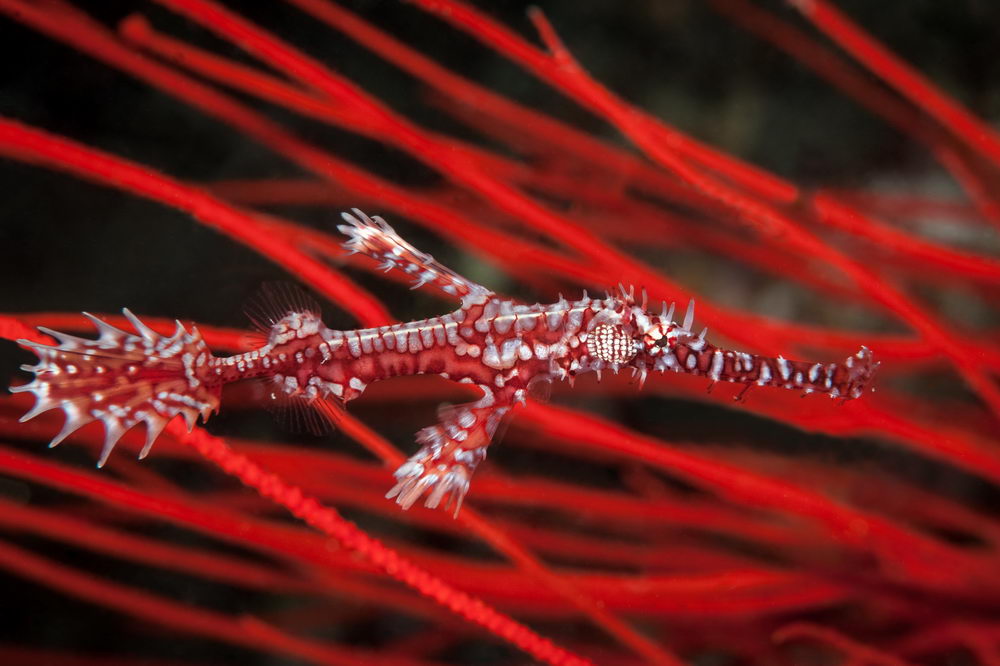
Look closer and you’ll find nudibranchs, shrimp, crabs, anemonefish and plenty of other small reef creatures tucked into all that coral. We found some surprisingly fun macro life during our Fiji dives—even when everyone else was busy looking into the blue.
And Yes, There Can Be Bigger Surprises
Depending on the region and season, Fiji’s waters can also produce encounters with larger pelagic animals. But we wouldn’t choose Fiji because you’re hoping for one particular rare visitor.
That’s not really where Fiji shines.
Fiji’s strength is the complete reef ecosystem: healthy coral, clouds of fish, sharks, turtles, macro life and the occasional surprise passing through.
Some destinations are about the animal.
Fiji is about everything happening around you at once.
Fiji Beyond the Diving: The People, Culture & Island Life
As much as we love the diving, Fiji wouldn’t keep pulling us back if the experience ended when we climbed out of the water.
Ask Corey why he fell in love with Fiji years ago, and the reefs are only part of the answer.
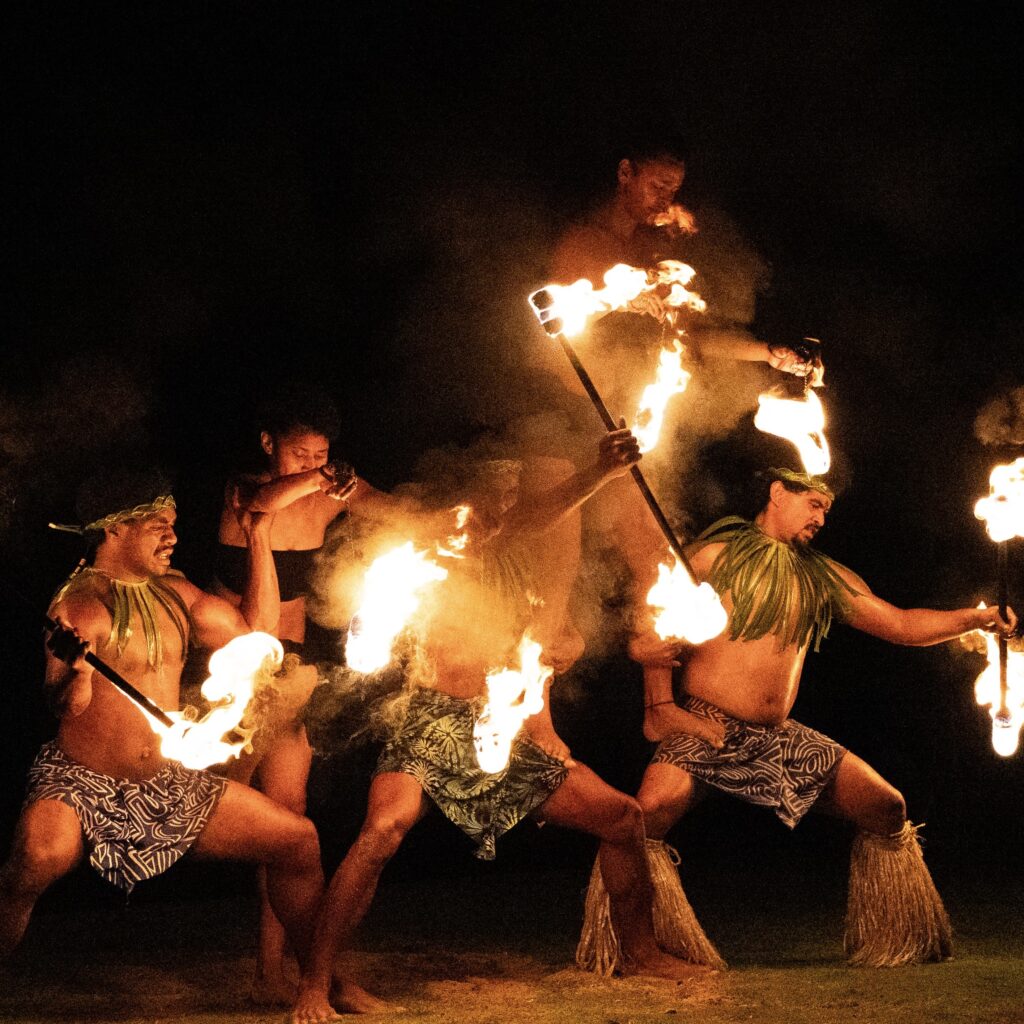
It’s the people. The culture. The lush islands and ridiculously beautiful stretches of coastline. It’s sitting around after a day of diving with nowhere you particularly need to be. Fiji has a way of convincing you to slow down—and that’s not something we’re always particularly good at.
The People Are Part of the Experience
You’ll hear “Bula!” approximately 4,000 times while you’re in Fiji.
And somehow, it never gets old.
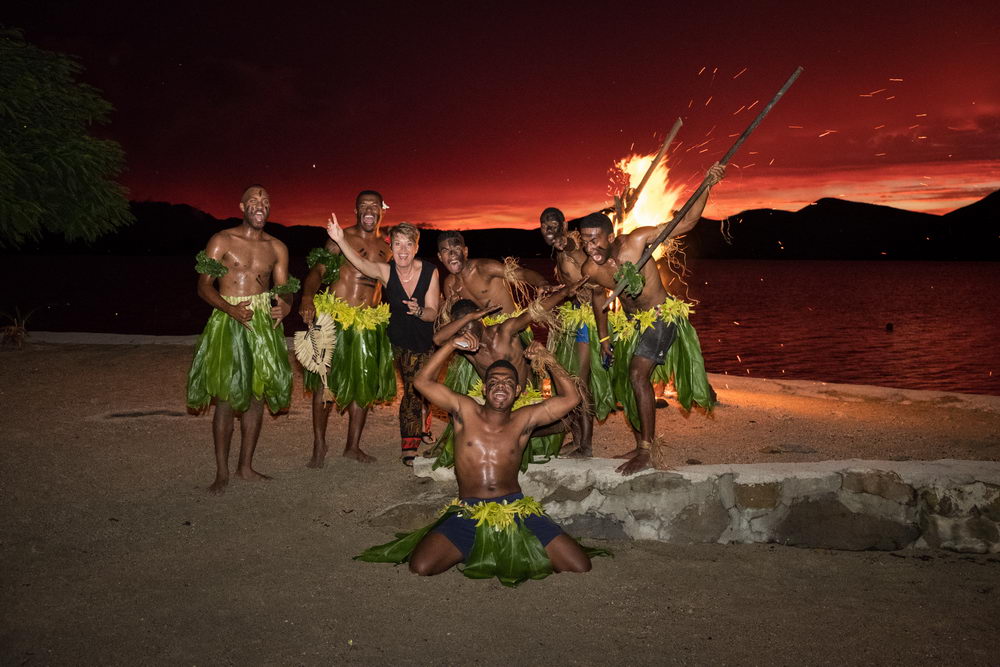
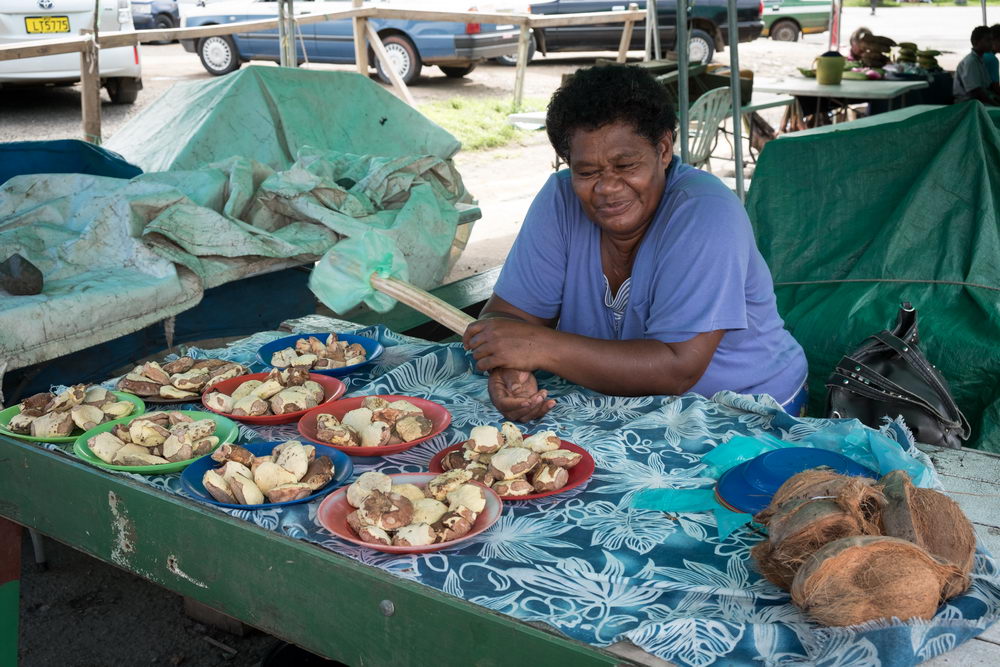
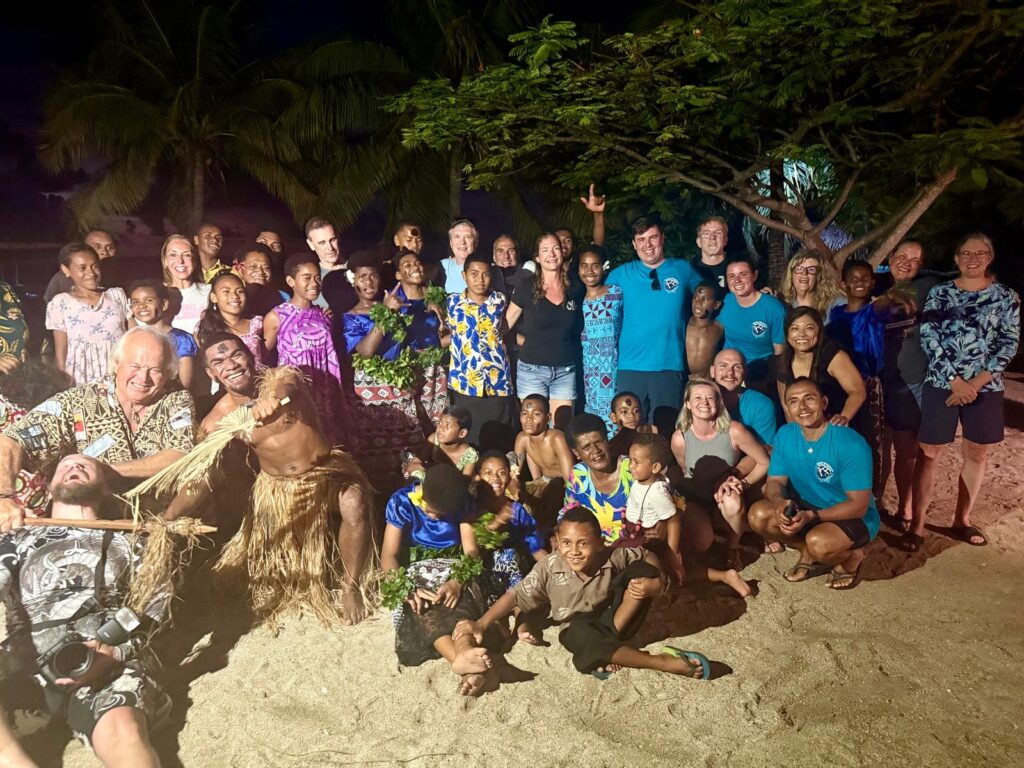
“Bula” is the greeting you’ll hear everywhere, but the warmth behind it is what you’ll remember. Some of our favorite moments in Fiji have come from conversations with dive crews, resort staff and people we’ve met along the way.
That hospitality was one of the things Corey remembered most from his first trips to Fiji—and after traveling there together, I understood exactly what he meant.
Don’t Skip the Kava
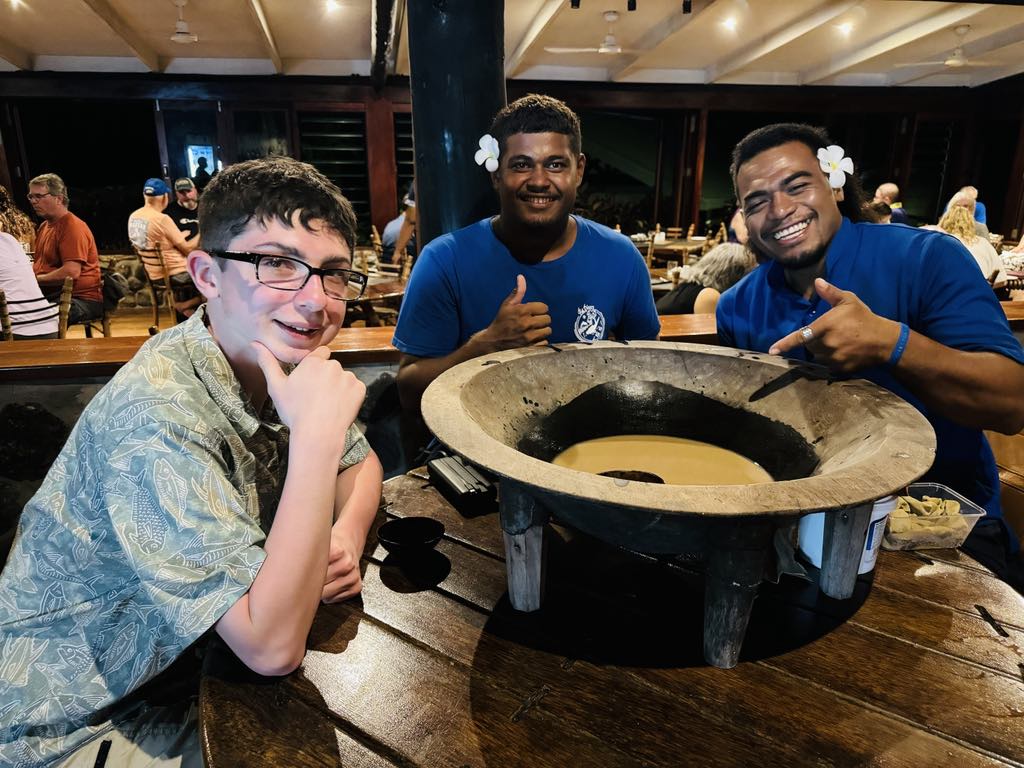
If you’re invited to participate in a kava ceremony, we’d encourage you to experience it.
Kava is made from the root of the yaqona plant and has an important place in Fijian social and ceremonial life. Depending on where you’re staying, you may encounter it during a village visit, cultural experience or simply while spending time with the people you’re diving with.
Yes, it looks a little like muddy water.
No, that’s not exactly a glowing culinary endorsement.
But the point isn’t really the flavor. It’s the experience of sitting together, sharing something and participating respectfully in a tradition that’s an important part of Fijian culture.
Give Yourself Some Time on Land
What you do between dives depends heavily on where you stay.
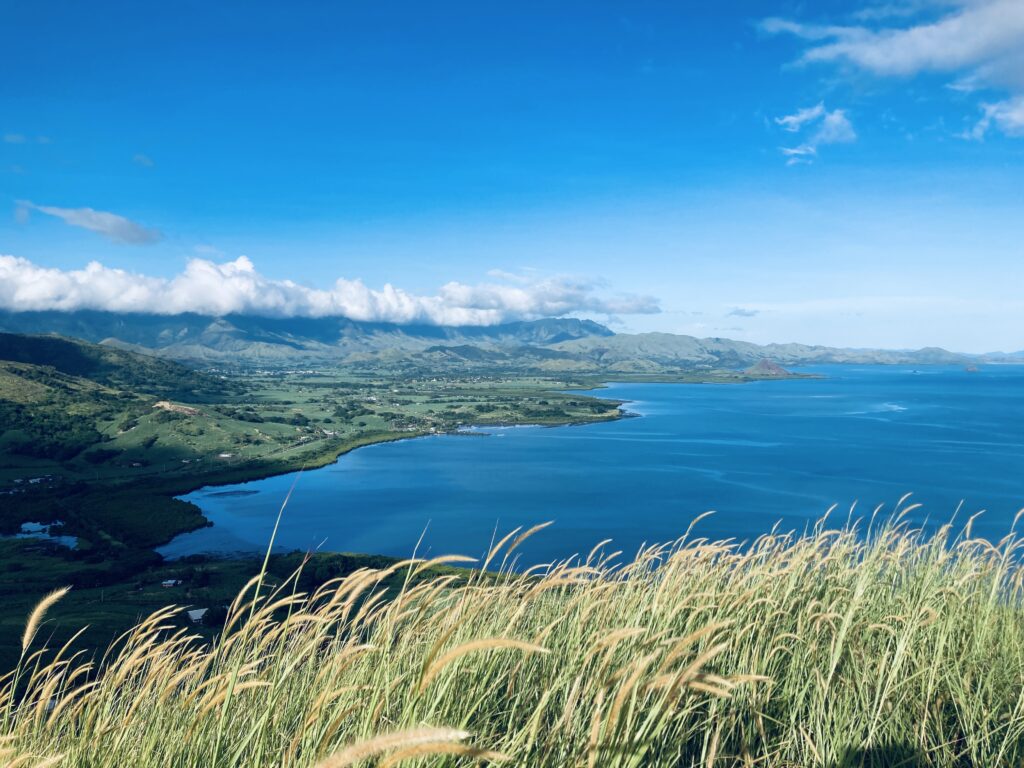
Taveuni offers waterfalls, rainforest and hiking. Other regions lend themselves to village visits, snorkeling, kayaking or simply finding a beach and doing absolutely nothing for a while.
And honestly?
Doing absolutely nothing for a while is highly underrated in Fiji.
Why Corey Kept Coming Back
Long before GAS’D brought a group to Fiji, Corey had already returned to these islands multiple times.
At first, I understood the obvious reasons. The diving is spectacular. The reefs are beautiful. There are sharks.
But after experiencing more of Fiji together, I realized that wasn’t the whole story.
There’s a feeling to Fiji that’s harder to put on a dive itinerary. It’s the people you meet, the conversations after diving, the laughter, the landscapes and the pace of life between all those incredible underwater moments.
The diving might be what gets you to Fiji. The rest of Fiji is what makes you want to come back.
Getting to Fiji & Getting Around
Getting to Fiji is relatively straightforward. Getting to the particular reef you want to dive can be a little more interesting.
Most international travelers arrive at Nadi International Airport (NAN) on Viti Levu, Fiji’s largest island. There are nonstop flights from several major cities around the Pacific, including connections from the United States, Australia and New Zealand.
Once you’re in Fiji, your next move depends entirely on where you’re diving.
Staying on Viti Levu: The Easiest First Trip
This is another reason we like the Beqa Lagoon + Bligh Waters combination for a first Fiji trip: both can be accessed from Viti Levu.
For Beqa, you’ll generally travel south from Nadi toward the Pacific Harbour area before continuing to your resort or boat transfer, depending on where you’re staying.
For the Bligh Waters, you’ll head north toward the Suncoast/Rakiraki area, where resorts such as Volivoli provide access to the reefs offshore.
That means you can experience two dramatically different Fiji dive regions without adding another domestic flight.
There is a catch: Viti Levu is bigger than it looks.
Transfers between regions can take several hours, so don’t plan an itinerary assuming you’ll casually bounce from one side of the island to another every afternoon. Combining regions works beautifully—you just need to allow enough time to actually get between them.
Heading to Taveuni
Taveuni requires a little more logistics, but it’s very doable.
Domestic flights connect Viti Levu with Taveuni, and once you’re there, you’ll find yourself much closer to the Somosomo Strait and Rainbow Reef.
If the Great White Wall is high on your list, we’d recommend spending several days on Taveuni. Don’t fly all that way expecting to arrive, dive it once and leave. Tides and currents determine when the site is at its best, so giving yourself a wider window improves your chances of experiencing it properly.
Reaching Fiji’s More Remote Reefs
The farther you move from Viti Levu, the more important your logistics become.
Regions such as the Great Sea Reef may involve domestic flights, longer road transfers, boat transfers—or some combination of the three. That’s part of the appeal of these areas, but it’s also why we probably wouldn’t send a first-time Fiji visitor straight to the most remote reef they can find.
Build in Some Breathing Room
One final piece of advice: don’t make your Fiji itinerary too tight.
Island travel, boats and tropical weather don’t always care about the beautifully organized itinerary sitting in your inbox.
Leave some breathing room around important international connections, particularly if you’re arriving from or departing to another island.
Fiji is a wonderful place to slow down anyway.
You might as well start with the itinerary.
Land-Based vs. Liveaboard Diving in Fiji
Do you need a liveaboard to experience Fiji’s best diving? Absolutely not.
In fact, Fiji is one of our favorite destinations for land-based dive travel. Many excellent dive regions can be accessed directly from resorts, giving you world-class diving during the day and plenty of space to relax, explore or enjoy the island once you’re back on land.
Why We Love Land-Based Diving in Fiji
Our Fiji trips have shown us just how well the resort-and-diving combination works here.
In places like Beqa Lagoon, the Bligh Waters and Taveuni, you can spend the day diving spectacular reefs and still come back to a resort in the afternoon. That makes Fiji particularly appealing if you enjoy diving but don’t necessarily want every minute of your vacation organized around it.
It’s also a great option for couples or groups that include non-divers or more casual divers. While you’re underwater, they can relax at the resort, snorkel, explore the island or simply enjoy being in Fiji.
What About Liveaboards?
There is currently one Liveaboard who operates in Fiji and can provide access to multiple regions and more remote dive sites. They’re a good option if your priority is maximizing your number of dives or reaching areas that are harder to access from shore.
But unlike destinations such as Socorro or Cocos, a liveaboard isn’t the key that unlocks Fiji’s best diving.
You can have an exceptional Fiji dive trip without ever sleeping on a boat.
For many travelers—especially on a first visit—we actually prefer it that way.
Our take: If you want incredible diving and a vacation that still feels like a tropical island getaway, Fiji is very hard to beat.
Is Fiji Good for Non-Divers?
Very. In fact, Fiji is one of the dive destinations we’d be especially comfortable recommending for a trip where not everyone wants to dive.
Many dive resorts are also simply beautiful tropical resorts. Non-divers can spend their days snorkeling, kayaking, visiting waterfalls and villages, enjoying spa treatments, exploring the island—or doing absolutely nothing beside the water. What is available will depend on which island and resort you choose, so this is worth considering when deciding where to stay.
Fiji also works well for casual divers who don’t want to dive every possible tank. You can join the morning dives, take an afternoon off and still feel like you’re experiencing the destination rather than missing the main event.
If you’re traveling with a non-diver, we’d pay particular attention to the resort itself and what there is to do nearby. A fantastic dive operation doesn’t automatically mean the property is the right fit for someone who will spend most of the week above water.
That’s one of the things we love about Fiji: the diving can be the reason for the trip without needing to become everyone’s entire trip.
Why We Keep Coming Back
Years ago, Corey told me there was something about Fiji that kept pulling him back.
At the time, I understood the obvious part. Fiji has spectacular diving. Who wouldn’t want to come back for reefs covered in soft coral and sharks cruising through the blue?
But after experiencing more of Fiji together, I get it.
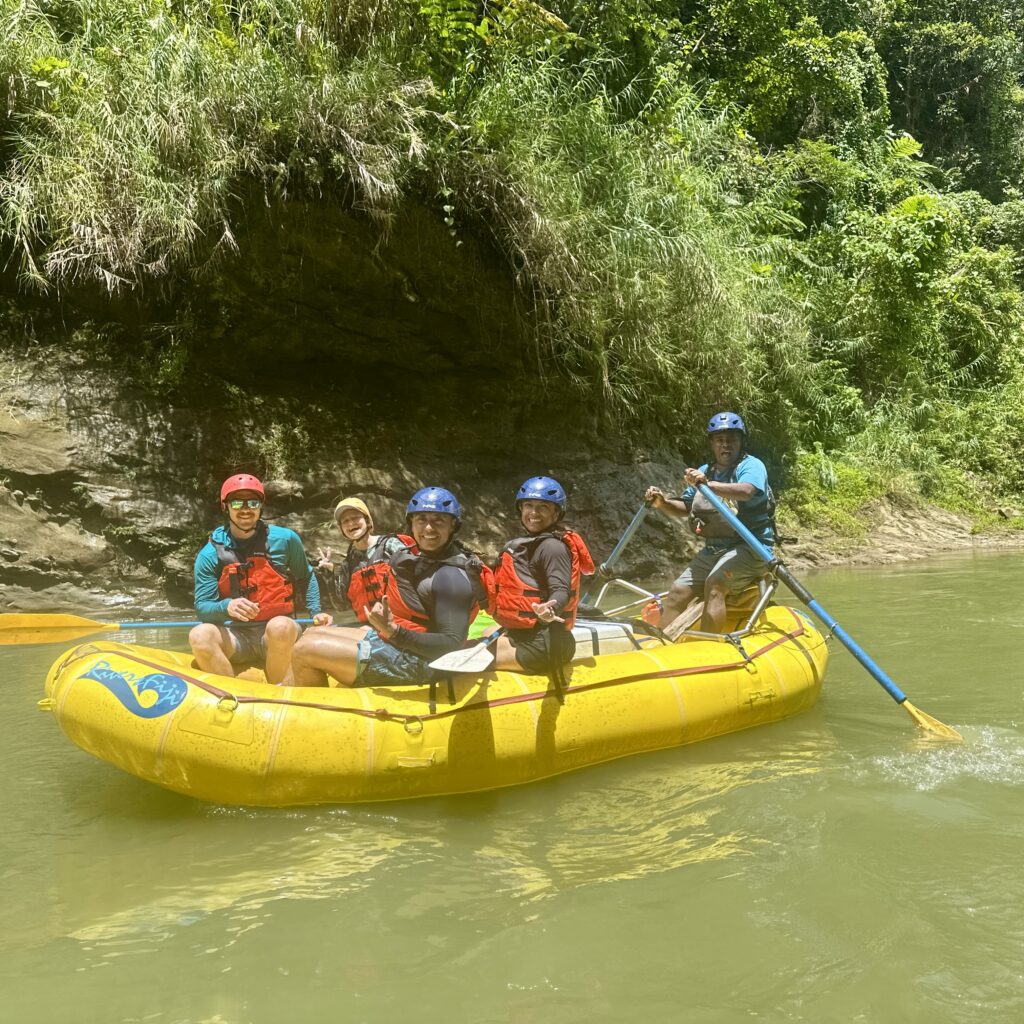
Some of our favorite memories have happened underwater, but just as many come from everything surrounding the diving—the people we’ve met, evenings after a day on the water, exploring different islands and simply slowing down for a little while.
And despite having now dived Taveuni, the Great Sea Reef, Beqa Lagoon and the Bligh Waters, there are still parts of Fiji we haven’t explored.
Maybe that’s the real problem with Fiji.
Every time you go, you leave with another reason to come back.
Is Scuba Diving in Fiji Worth It?
After diving several very different parts of Fiji, our answer is pretty simple:
Absolutely.
But what makes Fiji special isn’t one famous dive site or one animal encounter. It’s the variety.
You can spend one trip surrounded by the soft corals of the Bligh Waters, another exploring Rainbow Reef around Taveuni, head north to the Great Sea Reef, or watch sharks cruise past you in Beqa Lagoon—and still feel like you’ve barely scratched the surface.
Fiji Might Be for You If…
✓ You love colorful, healthy reef diving
✓ Soft corals are high on your bucket list
✓ You want sharks without making the entire trip about sharks
✓ You enjoy a mix of relaxed dives and more adventurous current-fed sites
✓ You want world-class diving without needing a liveaboard
✓ You’re traveling with a non-diver or someone who doesn’t want to dive every day
✓ You want culture, nature and relaxation to be part of the trip too
Ready to Dive Fiji?
Not sure which part of Fiji is right for you? We can help you plan it.
While we don’t currently have a GAS’D group trip to Fiji on the calendar, we can arrange custom Fiji dive trips for individuals, couples, families or your own group of dive buddies.
We work with dive resorts in several of our favorite Fiji regions, including Beqa Lagoon, the Bligh Waters and Taveuni, and can help you choose the destination—or combination of destinations—that fits the kind of diving and vacation you’re looking for.
Want sharks and beautiful reef diving? Let’s talk Beqa. Dreaming about Fiji’s famous soft corals? The Bligh Waters or Taveuni might be calling. Want a little bit of everything? We can build a multi-region itinerary.
We’ll help take care of the details so you can focus on the important question:
Which part of Fiji are you diving first?
START PLANNING YOUR FIJI ADVENTURE