

When you’re planning a dive vacation, choosing where to go is only part of the decision. There’s another question that can completely change the experience: Do you stay on land or live on a boat?
We’ve done — and love — both.
A liveaboard might have you waking up miles from the nearest town, jumping in for a dive before breakfast, and moving toward tomorrow’s dive sites while you sleep. A land-based trip might mean three dives during the day followed by a spa treatment, dinner in town, a waterfall hike, or a cocktail by the pool.
And when it comes to liveaboard vs. land-based diving, we’ve learned that neither one is inherently better. Neither one is inherently better.
In fact, one of the biggest things we’ve learned traveling and diving around the world is that the destination often helps make the decision for you. Some of the world’s best dive sites are easiest — or only practical — to reach by liveaboard. In other places, staying on a boat could mean missing a huge part of what makes the destination worth visiting.
So when it comes to liveaboard vs. land-based diving, the real question isn’t “Which is better?”
It’s which is better for this particular adventure — and for you?
QUICK ANSWER
Liveaboards are fantastic for accessing remote dive sites, staying close to the action, and maximizing dive time. Land-based diving usually offers more flexibility and more opportunities to experience a destination above water — while dedicated dive resorts can still offer three or more dives a day.
Our rule: choose the destination first, then decide how best to experience it.
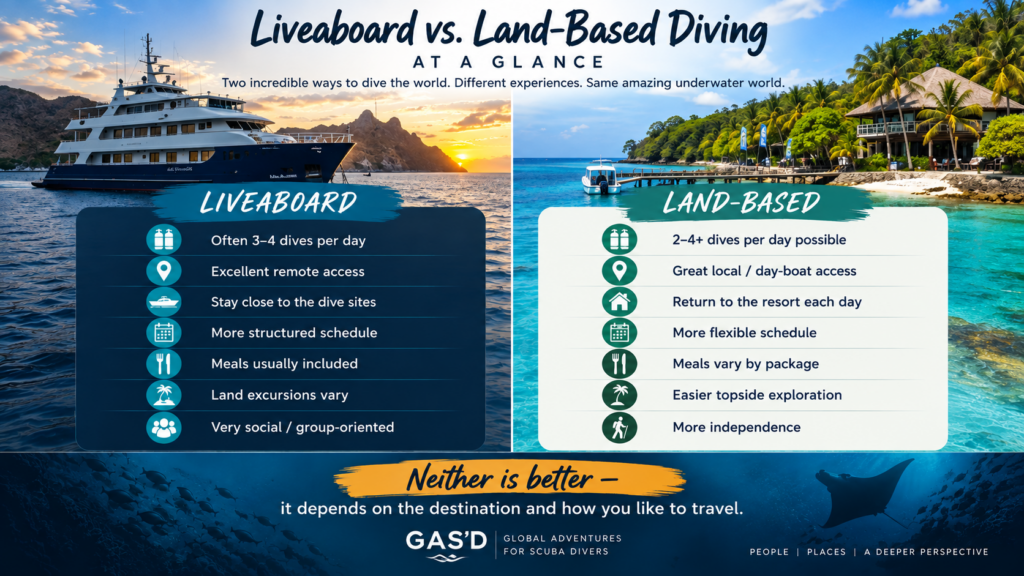
Liveaboard vs. Land-Based Diving at a Glance
What Is Liveaboard Diving?
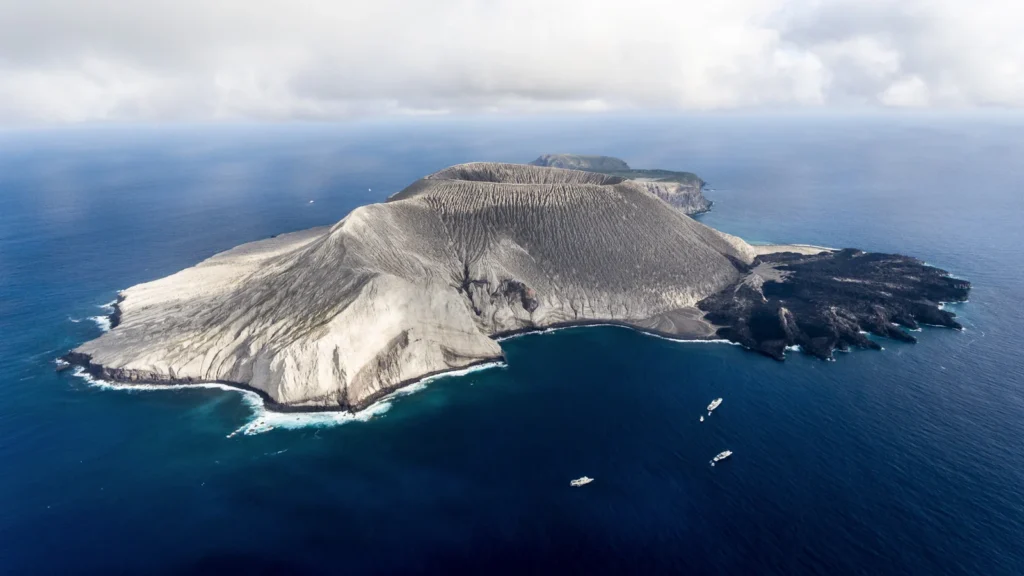
Wide shot of a liveaboard in an impressive destination. Komodo would work beautifully here, especially if you have a shot that establishes the remoteness.
A liveaboard is essentially a floating dive resort. You sleep onboard, eat onboard, gear up onboard, and travel between dive areas aboard the vessel.
Depending on the itinerary, you might do three or four dives per day, including sunrise and night dives. Your schedule can start looking something like:
Wake up. Dive. Eat. Dive. Eat. Dive. Snack. Dive. Eat. Sleep.
For some of us, that sounds suspiciously close to paradise.
But the biggest advantage of a liveaboard isn’t necessarily the number of dives.
It’s where the boat can take you — and where it can stay.
The Pros of Liveaboard Diving
Reach Remote Dive Sites
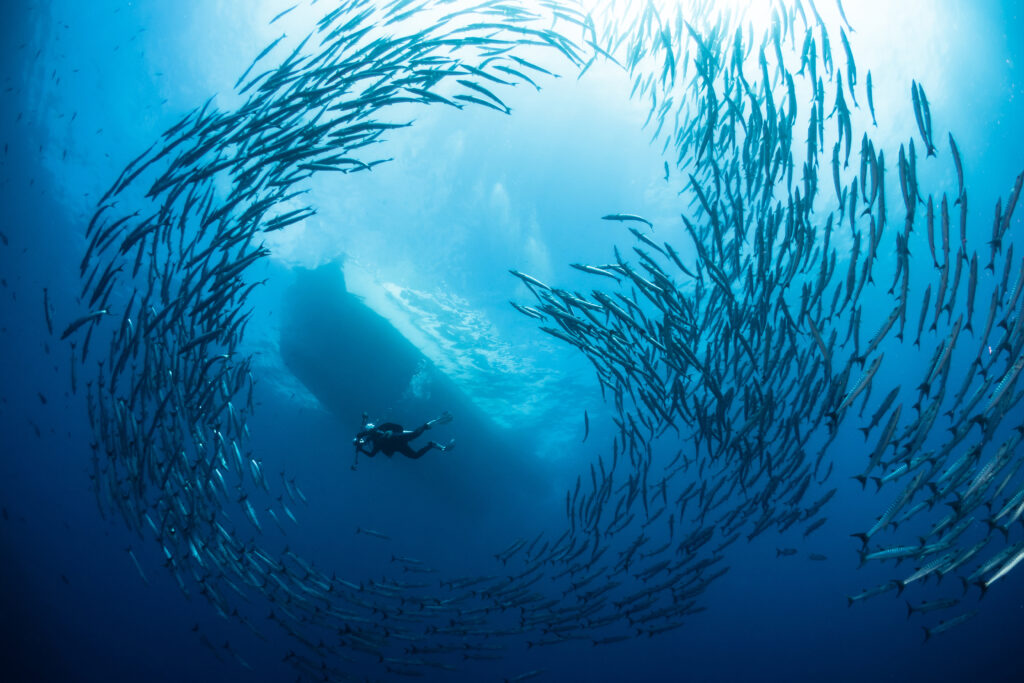
Some of the world’s most exciting diving is far from major population centers. A liveaboard allows you to travel into those areas and stay there rather than returning to the same land base every night.
In some destinations, that dramatically expands the amount of territory you can explore. In others, a liveaboard isn’t really an accommodation choice at all — it’s simply how you get there.
Socorro is a great example. The Revillagigedo Islands sit far offshore, requiring a substantial open-ocean crossing. Once you’re there, however, you’re surrounded by some of the world’s most exciting big-animal diving.
Wake Up Close to the Action
This is one of the biggest advantages of liveaboard diving — and one that’s easy to overlook.
While day boats may have an hour or more of travel before reaching a site, a liveaboard can move into the area ahead of time. You may wake up already near your first dive.
That can mean earlier dives, fewer boats in the water, and much shorter tender rides.
When Being There Matters: Komodo
Being on a liveaboard doesn’t guarantee perfect conditions, empty dive sites, or an unchanged itinerary. Weather affects liveaboards, too. But sometimes already being there makes all the difference.
During our recent liveaboard adventure through Komodo National Park, we saw exactly why being based aboard the boat can matter.
Bad weather made a crossing too rough for the day boats coming from land. Our liveaboard, however, was already in the area. The larger vessel could shelter from the wind and waves, and when it was time to dive, we had only about a five-minute choppy tender ride to the site.
The day boats would have faced an hour-plus crossing — and that day, they couldn’t make it.
Dive — A Lot
If your goal is to spend as much time underwater as possible, it’s hard to beat a liveaboard.
Many itineraries offer three or four dives per day, sometimes including sunrise and night dives. Because you’re already living at the dive destination, there’s less time lost returning to a resort between dives.
It’s very easy for an entire day to revolve around diving.
Which is either a major selling point or your cue to keep reading about land-based trips.
Spend Less Time Commuting
You’re still traveling — you’re just doing much of it while you’re eating, relaxing, or sleeping.
Instead of repeatedly making long day-boat trips to distant sites, the liveaboard moves with you. That can mean more time diving and less time bouncing across the water in a small boat.
Find Your Dive Community
Liveaboards are social. You’re eating, diving, relaxing, and traveling with the same group of people for days at a time.
There are usually plenty of stories around the dinner table by the end of day one.
For group dive travel, this can be one of the best parts.
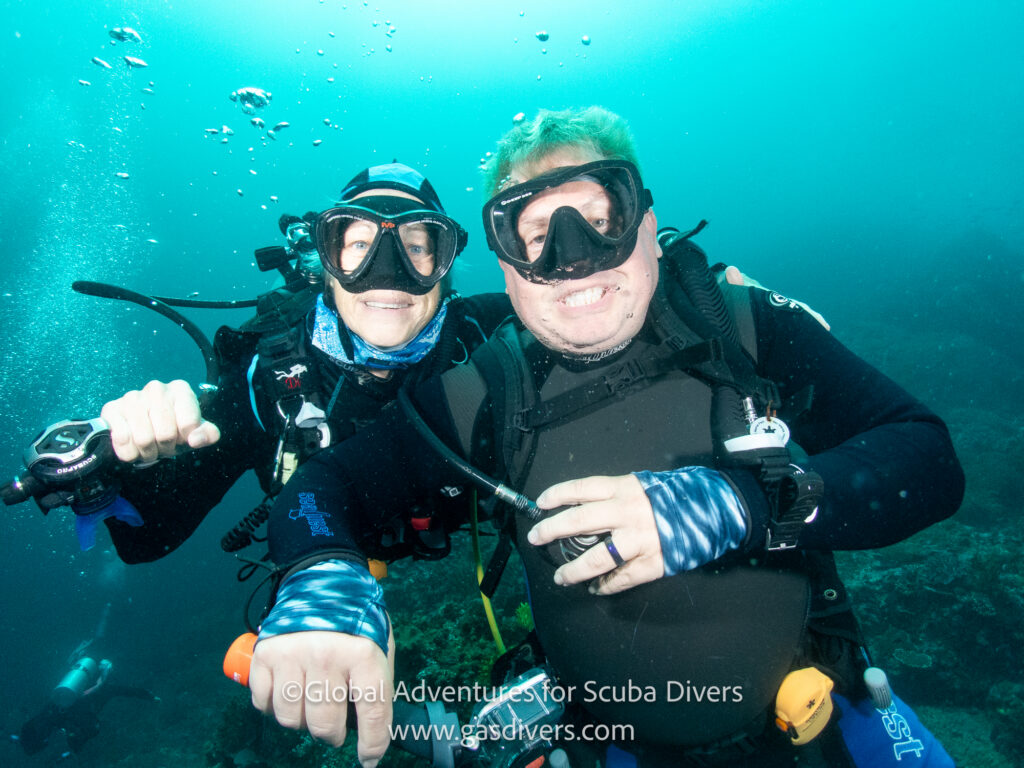
Things to Consider Before Choosing a Liveaboard
You’re on a Boat. A Lot.
This one sounds obvious, but it’s worth thinking about.
If you need a lot of personal space, like wandering off on your own, or aren’t particularly excited about spending a week surrounded by water, a liveaboard may feel restrictive.
Some vessels are extremely comfortable — even luxurious — but you’re still living on a boat.
The Schedule Is More Structured
The boat has an itinerary to follow.
You can always choose to skip a dive, but you generally can’t wake up and decide you’d rather rent a car, spend the afternoon exploring town, and meet everyone later for dinner.
Land-based travel gives you considerably more independence.
Seasickness Happens
Conditions vary tremendously by destination.
Some liveaboard itineraries spend most of their time in protected waters. Others involve substantial open-ocean crossings.
If you’re prone to seasickness, look beyond the boat itself and research the actual itinerary. A beautiful vessel doesn’t make a rough 24-hour crossing any shorter.
Can You Get Off a Liveaboard?
Sometimes!
Being on a liveaboard does not necessarily mean spending the entire trip aboard.
Whether you can go ashore depends heavily on the destination, local regulations, accessibility, and the itinerary itself.
In Komodo, liveaboard itineraries can include several opportunities to explore on land, including the chance to see Komodo dragons. In the Galápagos, certain itineraries incorporate land excursions and opportunities to experience the islands’ famous wildlife, including giant tortoises.


Other destinations are completely different. At Socorro, recreational visitors aren’t simply heading ashore to explore the protected islands between dives. And in destinations such as the Mergui Archipelago, access to land in Myanmar is be restricted, so the experience may remain almost entirely boat-based.
If exploring above water matters to you, don’t assume every liveaboard offers land excursions — or that none of them do.
What Is Land-Based Diving?
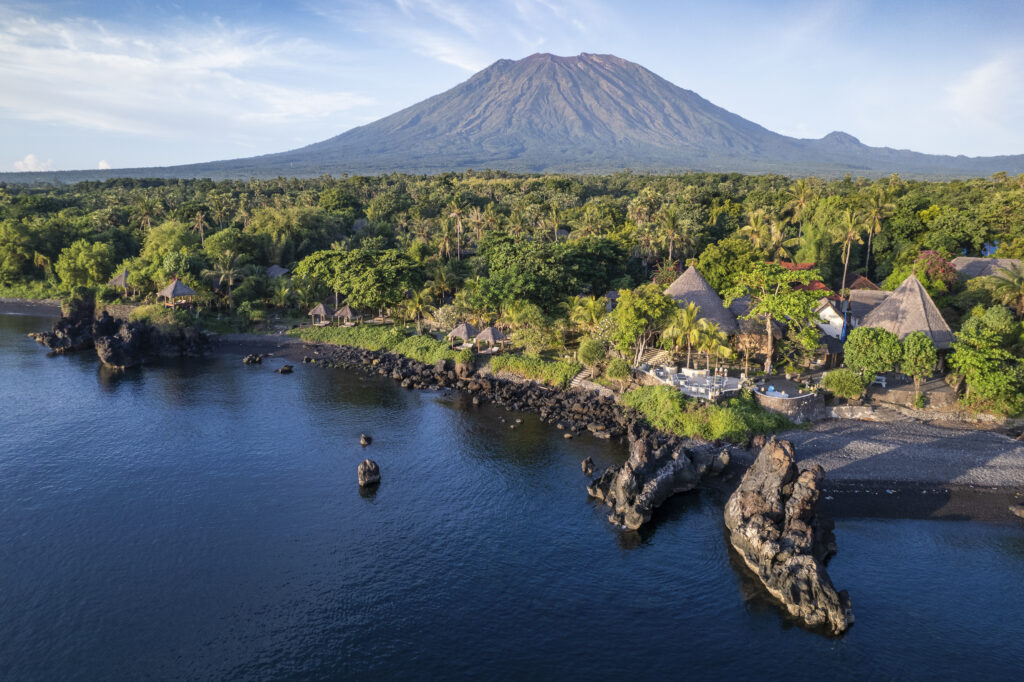
Beautiful dive resort image. Bali would be ideal because it immediately contrasts visually with the liveaboard section.
Land-based diving means staying at a resort, hotel, villa, or other accommodation and heading out for your dives each day.
That might mean walking directly into the ocean from a house reef, hopping aboard a small boat for two morning dives, doing three or four dives throughout the day, taking a longer day trip to a special site, or some combination of all of them.
And land-based does not mean less serious diving — or even necessarily less diving.
Some dive resorts are designed almost entirely around divers. In places like Bali and the Philippines, we’ve stayed at land-based dive resorts where it’s entirely possible to dive three or more times a day. Add a great house reef into the mix, and you may have even more opportunities to get underwater.
The difference is that when you’re finished diving, you come back to land.
And sometimes that’s exactly what we want.
The Pros of Land-Based Diving
You Have More Flexibility
Don’t feel like doing the afternoon dive?
Don’t.
Go to the spa. Take a nap. Explore town. Sit by the pool. Go hiking. Find a beach. Have a cocktail.
Land-based trips generally give you more control over how much diving you want to do and how you spend the rest of your day.
You Can Experience More of the Destination Above Water
This is one of the biggest reasons we love land-based trips.
In Bali, for example, the diving is fantastic — but Bali itself is a huge part of the experience. Temples, rice terraces, waterfalls, food, culture and spa days deserve some vacation time, too.
The same is true of many destinations we visit.
We love diving.
We also traveled halfway around the world, and occasionally we would like to see the world above sea level.

There’s Usually More Space and Privacy
A full resort or hotel room can feel pretty wonderful after a long day underwater.
Land-based accommodations also make it easier to step away from the group for a while, which can be harder when everyone is living together aboard a boat.
You Can Choose How Dive-Focused You Want the Trip to Be
Not everyone wants four dives a day.
Some divers absolutely do.
Others want two great dives, lunch, a nap and perhaps a margarita.
Both are perfectly respectable vacation strategies.
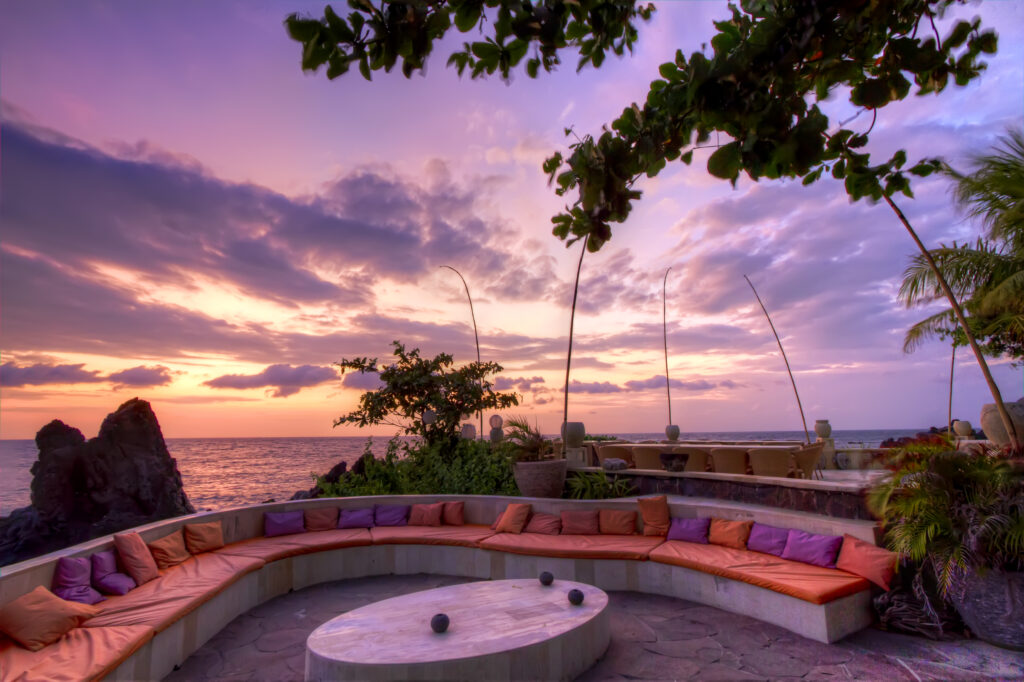
LAND-BASED ≠ LESS DIVING
At dedicated dive resorts, you may still have 3+ dives per day, plus night dives and house-reef access.
We’ve experienced this in Bali and the Philippines, where you can spend a LOT of time underwater — and still come home to a full-size resort room at night.
Some land-based dive resorts are built specifically for people who came to dive. Multiple boat dives, afternoon dives, night dives, and house reefs can create a schedule that looks surprisingly similar to a liveaboard.
For divers who want a lot of underwater time but aren’t sure they want to spend a week living on a boat, this can be a fantastic middle ground.
Experience More of the Destination
This is one of the biggest reasons we love land-based trips.
Bali is a perfect example. The diving is fantastic, but Bali itself is a huge part of the experience. Temples, rice terraces, waterfalls, food, culture, and spa days deserve some vacation time, too.
Panama gives us another version of land-based travel. We can access incredible diving around Coiba while returning to solid ground each day, giving the trip a completely different rhythm when we’re not underwater.
And then there’s French Polynesia, where we’d argue that staying on land is part of experiencing the destination. The diving in Rangiroa and Fakarava is extraordinary, but the islands and atolls aren’t interchangeable stops. Traveling between them allows us to combine diving with whale experiences, scenery, beaches, hiking, and time experiencing the islands themselves.
Sometimes the diving is the entire reason for the journey.
Sometimes it’s one extraordinary part of a much bigger adventure.
Things to Consider Before Choosing Land-Based Diving
Land-based diving gives you more flexibility, but that flexibility comes with a few tradeoffs.
Daily Boat Rides
Depending on the destination, the best sites may be an hour or more from the resort. Unlike a liveaboard that can stay near the diving, you’ll make the trip out — and back — each day.
Dive-Site Range
Day boats can only travel so far. In large or remote destinations, staying on land may limit how much of the region you can realistically explore.
Included Dives
Some land-based packages include only two dives per day, with extras costing more. But this varies enormously — dedicated dive resorts in places like Bali and the Philippines can offer 3+ dives a day, night dives, and house-reef access.
More Logistics
Accommodation, diving, meals, transfers, and activities may all be separate. That gives you flexibility, but it can also mean more planning and additional costs — unless you’re staying at an all-inclusive dive resort.
Seasickness
Land-based doesn’t mean seasickness-free. You may still have long rides on smaller dive boats, although you generally get to return to solid ground at the end of the day.
Too Many Temptations?
You planned on the afternoon dive…but then someone mentioned a waterfall. Or a massage. Or a really good restaurant. Having more options is one of the best — and occasionally most distracting — parts of staying on land.
What About Inclusive Dive Resorts?
Land-based diving comes in many forms. Sometimes you’re booking your hotel, diving, meals, and activities separately. Other times, you’re staying at a dedicated dive resort where much of the experience is bundled together.
We actually really like this model for group dive travel.
Having accommodations, meals, and diving included makes budgeting easier, keeps meals organized around the dive schedule, and means nobody has to figure out where a large group of hungry divers is going to eat every night.
There are tradeoffs, though. Food is part of experiencing a destination, and having every meal included can make it easier to stay inside the resort bubble. You may have fewer opportunities — or simply less incentive — to head into town and try local restaurants.
That’s why we look at the destination first. In remote areas, having meals included can be incredibly practical. In places where food and local restaurants are a major part of the experience, we may want more freedom.
For us, an inclusive dive resort can offer a nice middle ground: some of the convenience of a liveaboard, with the space and flexibility of staying on land.
The Pros and Cons of All-Inclusive
THE TRADEOFFS
– Less incentive to eat locally
– Food quality and variety vary
– Can create a “resort bubble”
– You’re paying for meals even if you eat elsewhere
WHY WE LIKE IT
✓ Easier budgeting
✓ Meals scheduled around diving
✓ Convenient for groups
✓ Can offer excellent value
✓ Particularly practical in remote locations
✓ Less daily decision-making
For a group dive trip, the convenience can be significant. Nobody has to find a restaurant that can seat a large group after a full day underwater. You’re not constantly pulling out your wallet, meals are generally designed around the dive schedule, and you have a much better idea of what the vacation will cost before you arrive.
At remote dive resorts, having meals included can make even more sense. If there aren’t many restaurants or businesses nearby, eating at the resort isn’t necessarily keeping you from experiencing a local food scene. Sometimes it’s simply the most practical option.
But food is part of travel.
If every meal is already included, there’s less incentive to head into town, find a family-owned restaurant, or try something completely unexpected. There’s also a risk of arriving, diving for a week, and leaving without experiencing much of the destination beyond the resort and reef.
That’s something we try to avoid.
Even when we’re staying somewhere that includes all of our meals, we like incorporating local culture, wildlife, landscapes, and other topside experiences when the destination allows it.
For us, an inclusive dive resort is another tool in the toolbox — not the definition of land-based diving. It can offer some of the convenience of a liveaboard while still giving us the space and flexibility of staying on land.
What Does This Look Like on a GAS’D Trip?
Past Adventure: Fiji
Our Fiji adventure was a great example of the convenience of an inclusive land-based dive trip. We stayed in two different dive regions — Beqa Lagoon and the Bligh Waters — with our accommodations, meals, and diving bundled into the experience.
That meant our group could focus on the fun parts: tiger sharks, Fiji’s famous reefs and soft corals, and relaxing at the resorts between dives. We still had the flexibility and space of staying on land without having to think about where 20+ hungry divers were going to eat every night.

Upcoming Adventure: Blissful Bali
Our upcoming Blissful Bali trip follows a similar idea, but shows just how flexible an inclusive dive resort can be.
Meals and accommodations are included, and guests can dive 3+ times a day if that’s what they want. But the trip isn’t locked into a liveaboard-style dive schedule. Guests can also trade some underwater time for a spa treatment, a land tour, or simply an afternoon relaxing at the resort.
It’s a great example of why we like this style of land-based travel: a lot of the convenience of an all-inclusive experience, plenty of diving, and the freedom to decide what kind of vacation you want each day.
Liveaboard vs. Land-Based: Which Costs More?
Here’s the frustrating answer:
It depends.
A liveaboard may look more expensive at first, but the rate often includes your accommodations, meals, multiple dives per day, tanks and weights, and transportation between dive areas. Depending on the boat, Nitrox and other extras may be included, too.
Land-based trips can work very differently. Your resort, diving, meals, transfers, and activities might all be separate — or you might stay at an inclusive dive resort where many of those costs are already bundled together.
There’s also an important difference for non-divers. On many land-based trips, non-divers pay less because they aren’t paying for a dive package they won’t use. Liveaboards don’t always make that distinction. Because you’re paying for your space aboard the vessel as much as the diving itself, a non-diver may pay the same — or close to the same — rate as a diver.
That’s why comparing the advertised price alone doesn’t tell you very much.
DON’T JUST COMPARE THE STICKER PRICE. Compare what’s actually included.
Before comparing prices, look at the whole package:
✓ Accommodation
✓ Number of included dives
✓ Meals and drinks
✓ Nitrox
✓ Marine park/port fees
✓ Transfers
✓ Domestic transportation
✓ Additional excursions
✓ Equipment rental
✓ Tips/expected onboard or resort expenses
A lower-priced trip isn’t necessarily cheaper once everything is added — and a higher-priced package isn’t necessarily more expensive if most of your vacation is already covered.
Compare the whole trip, not just the price tag.
What About Non-Divers?
Traveling with someone who doesn’t dive? This can be one of the biggest differences between liveaboard and land-based trips.
Land-based trips generally offer non-divers more independence. They may have access to beaches, pools, spas, excursions, restaurants, hiking, snorkeling, or simply the freedom to explore while the divers are underwater. And as we mentioned above, non-divers can often receive a lower trip price because they aren’t paying for a dive package.
A liveaboard can still be a great experience for a non-diver — but it really depends on the itinerary. Some offer excellent snorkeling, wildlife watching, beaches, hikes, or land excursions. Others are almost entirely built around diving, which can mean spending quite a lot of time aboard while everyone else is underwater.
And because liveaboard pricing often reflects your space aboard the vessel rather than simply the number of dives you make, non-divers don’t necessarily receive the same price break they might on a land-based trip.
Our advice: Don’t just ask whether non-divers are allowed. Ask what they’ll actually be able to do.

Do You Need to Be an Advanced Diver for a Liveaboard?
Not necessarily.
The experience level you need should be determined by the diving conditions and itinerary, not simply by whether you’re sleeping on a boat. There are liveaboards suitable for newer divers, just as there are land-based destinations with deep water, strong currents, challenging entries, or other conditions better suited to experienced divers.
That said, we generally recommend earning your Advanced Open Water certification before a more dive-intensive trip. It allows you to dive deeper within recreational limits, builds experience and confidence in different diving conditions, and can help you get more out of dive sites where some of the action may be below Open Water certification depths.
We also strongly recommend Nitrox for many liveaboard trips. When you’re doing three or four dives a day for several days in a row, enriched air can help reduce your nitrogen exposure compared with making the same dives on air and may allow for longer no-decompression limits, depending on the dive profile.
Neither certification magically makes someone ready for challenging diving. Experience with things like currents, buoyancy, entries and exits, DSMBs, and the actual conditions you’ll encounter still matters.
Choose the trip based on the diving conditions — not whether your bed floats.
Sometimes the Destination Makes the Decision
After comparing dive schedules, budgets, topside activities, and everything else, sometimes the decision is surprisingly simple: the destination makes it for you.
Some places are best explored by boat. Others are destinations where we’d argue that what happens above water is just as important as what happens below it. And in some places, both styles work — they simply create very different trips.
Here are a few examples from destinations we’ve explored or have coming up:
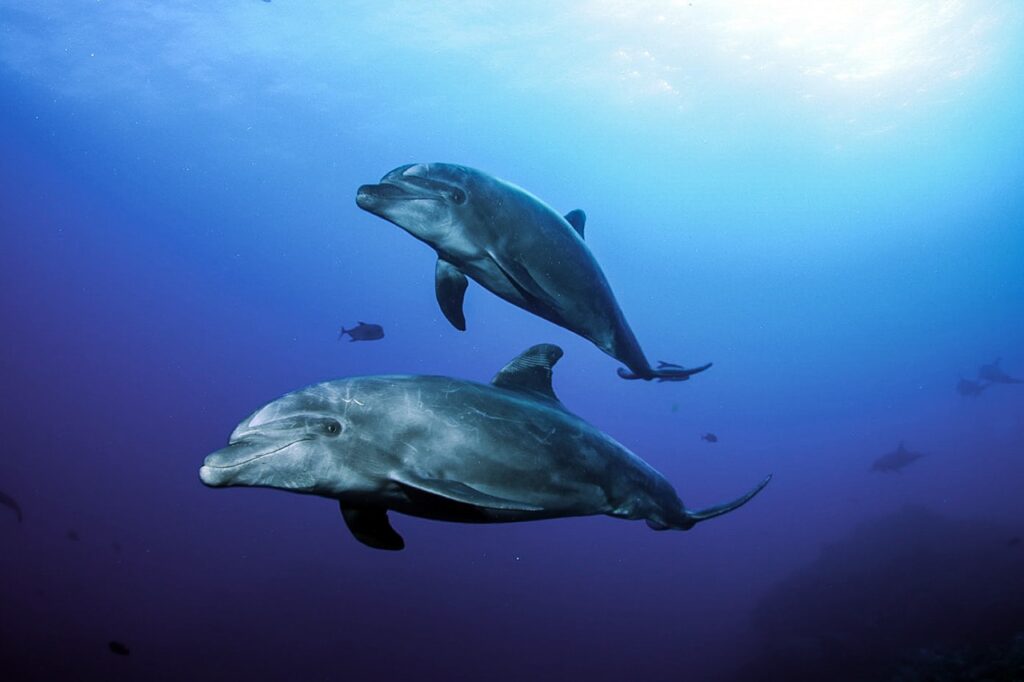
Socorro, Mexico | LIVEABOARD
Socorro sits hundreds of miles offshore, making this one of the easiest decisions: the liveaboard isn’t simply where you sleep — it’s how you get there. Once you’re there, the boat becomes your base for exploring the islands and their famous mantas, sharks, dolphins, and other big animals.

Panama | LAND-BASED
Panama shows why incredible big-animal diving doesn’t always require living on a boat. From a land-based base, we can head out to dive around Coiba and return to solid ground at the end of the day, combining serious diving with more flexibility above water.
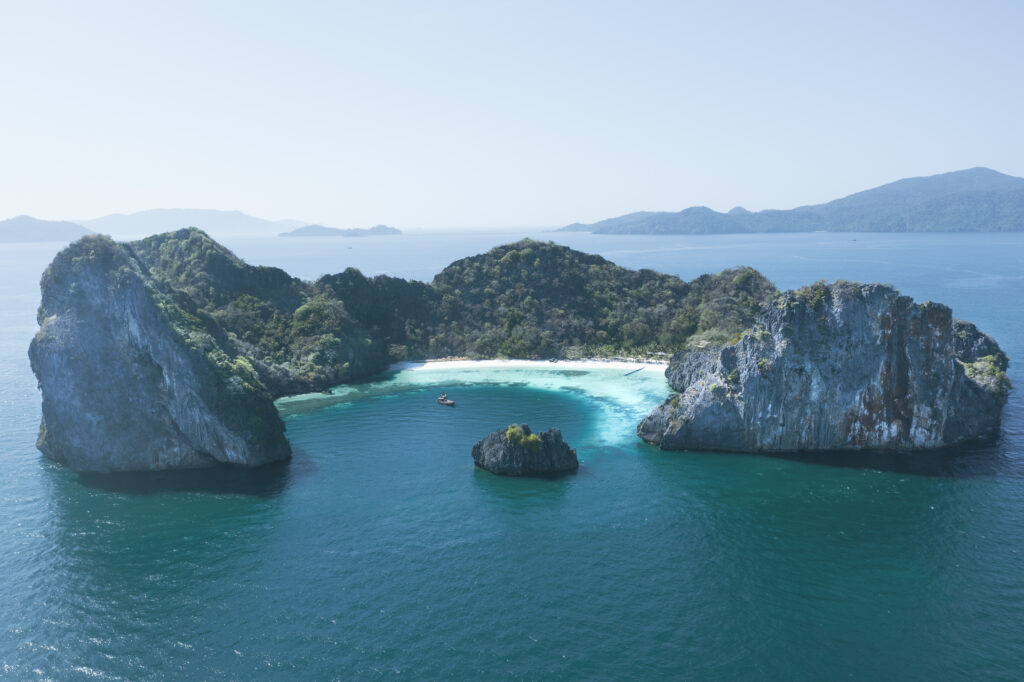
Mergui Archipelago, Myanmar | LIVEABOARD
The Mergui Archipelago is vast, remote, and made up of hundreds of islands, making a liveaboard a natural way to explore it. Instead of commuting back to the same resort each day, the boat moves through the archipelago with you, opening access to far-flung dive sites along the way.
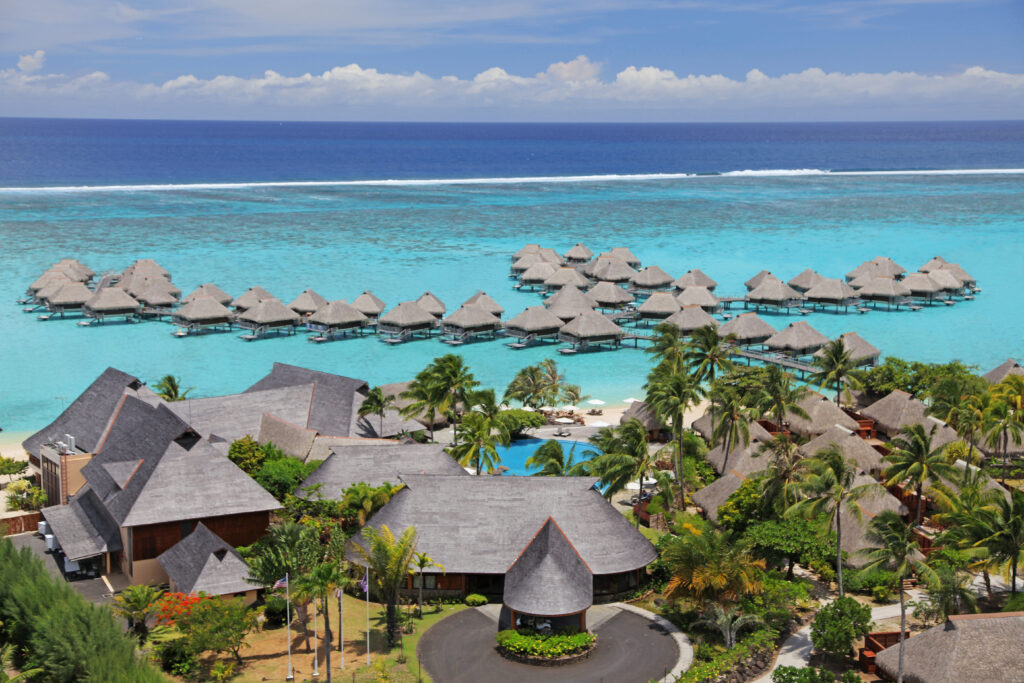
French Polynesia | LAND-BASED
In French Polynesia, what’s above water is too important to miss. Traveling between islands and atolls allows us to combine diving in places like Rangiroa and Fakarava with whale experiences, beaches, hiking, incredible scenery, and time experiencing the islands themselves.

Philippines | LAND-BASED
The Philippines proves that choosing land doesn’t mean choosing less diving. Dedicated dive resorts can offer multiple dives a day, night dives, and easy access to incredible sites — while still giving you a resort room, topside activities, and the freedom to take a break when you want one.
So, Which Does GAS’D Prefer?
Both. Really.
We don’t start planning an adventure by deciding we want a liveaboard or a resort. We start with the destination. Where is the best diving? How do we get there? What should we experience above water? Does traveling by liveaboard give us access to places we otherwise couldn’t reach? Or would staying aboard mean missing a huge part of what makes the destination worth visiting?
Sometimes the answer is waking up miles from the nearest coastline and jumping into the ocean before breakfast. Sometimes it’s diving in the morning, exploring waterfalls or temples in the afternoon, and finding somewhere fantastic for dinner. And sometimes it’s an inclusive dive resort where the diving is fantastic, the meals are taken care of, and your biggest afternoon decision is whether you’re doing another dive or getting a massage.
We’re pretty happy with all three.
Because the question isn’t whether liveaboard or land-based diving is better. It’s which one is better for this particular adventure — and for you.

Ready to Find Your Next Adventure?
Not sure which kind of dive trip is right for you? Tell us what you love seeing underwater, how much you want to dive, what you want to experience above water — and, importantly, how you feel about sleeping on a boat. We can help you find an adventure that fits the way you like to travel.
Explore Upcoming Adventures | Ask Us About a Trip
View Our Trips