
Booking your first scuba diving trip is exciting — but with an entire world of incredible dive destinations to choose from, figuring out where to go can feel a little overwhelming.
Do you start somewhere close to home or travel halfway around the world? Choose a relaxing dive resort or jump straight into your first liveaboard? Chase manta rays and sharks, explore colorful coral reefs, or discover just how much fun it can be to search the sand for tiny, wonderfully weird creatures?
The truth is, there isn’t one perfect first scuba diving trip. The right adventure depends on your experience, what you want to see, how you like to travel, how far you’re willing to go and what you want the trip to feel like.
The goal isn’t to choose the biggest or most impressive adventure on your first try. It’s to find the trip that makes you excited to get underwater — and leaves you wondering where you’re going next.
Before Your First Scuba Diving Trip, Start With the Diver You Are Right Now
It’s easy to choose a destination based on what you want to see. Hammerheads? Sign me up. Manta rays? Absolutely. Whale sharks? When do we leave?
But before choosing a trip around an animal or destination, take an honest look at the kind of diving you’re comfortable doing right now.
Your certification level is a good starting point, but it doesn’t tell the whole story. An Open Water diver with 40 dives in different environments may be more comfortable in certain conditions than an Advanced Open Water diver who hasn’t been underwater in two years. Recent experience, buoyancy, comfort in current, boat diving and overall confidence all matter.
Think about the diving you’ve already done. Are you comfortable descending without holding onto a line? Have you experienced current or drift diving? How do you feel about deeper dives, entries from a boat or being in blue water without the bottom immediately beneath you?
There aren’t right or wrong answers. The point is to choose an adventure where you can actually enjoy the diving instead of spending the entire trip feeling like you’re trying to keep up.
And if your dream destination requires a little more experience? That doesn’t mean no. It might just mean not yet. There will always be another incredible place waiting as your skills and confidence grow.
What Do You Actually Want to See?
Now for the fun part: what made you want to book a scuba diving trip in the first place?
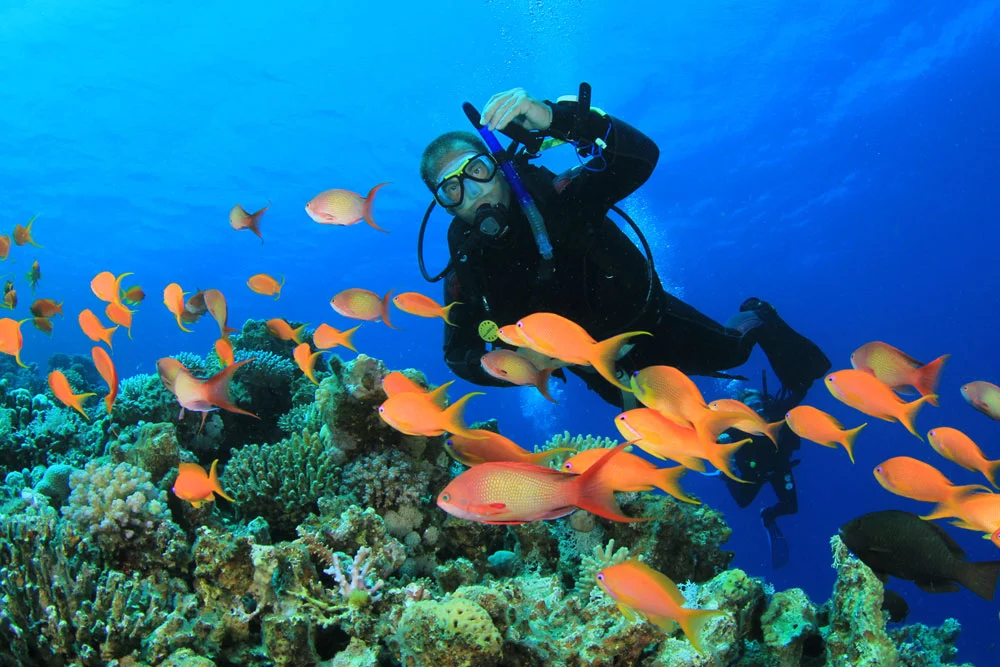
Maybe you want to float over colorful coral reefs packed with fish. Maybe you’ve been dreaming about sharks and manta rays since you first learned to dive. Or maybe you’ve discovered the wonderfully weird world of nudibranchs, frogfish and tiny creatures hiding in places you would have completely ignored before becoming a diver.
What you want to see can help narrow down where you should go — because not every dive destination offers the same experience.
Love healthy reefs and lots of marine life? Look for destinations known for coral gardens, abundant reef fish and a variety of dive sites.
Dreaming about big animals? Sharks, manta rays, whale sharks and other large marine life may lead you toward destinations with stronger currents, deeper water or more challenging conditions. Seasonality can matter, too. If big animals are what brought you here, check out our guide to responsible big-animal encounters before you start planning your next wildlife adventure.
Obsessed with the weird little stuff? Macro and muck diving can introduce you to frogfish, seahorses, nudibranchs, octopuses and creatures you probably didn’t know existed. And if staring at a seemingly empty patch of sand until something bizarre appears sounds strangely appealing, our guide to muck diving explains why some of the ocean’s weirdest creatures love it there.
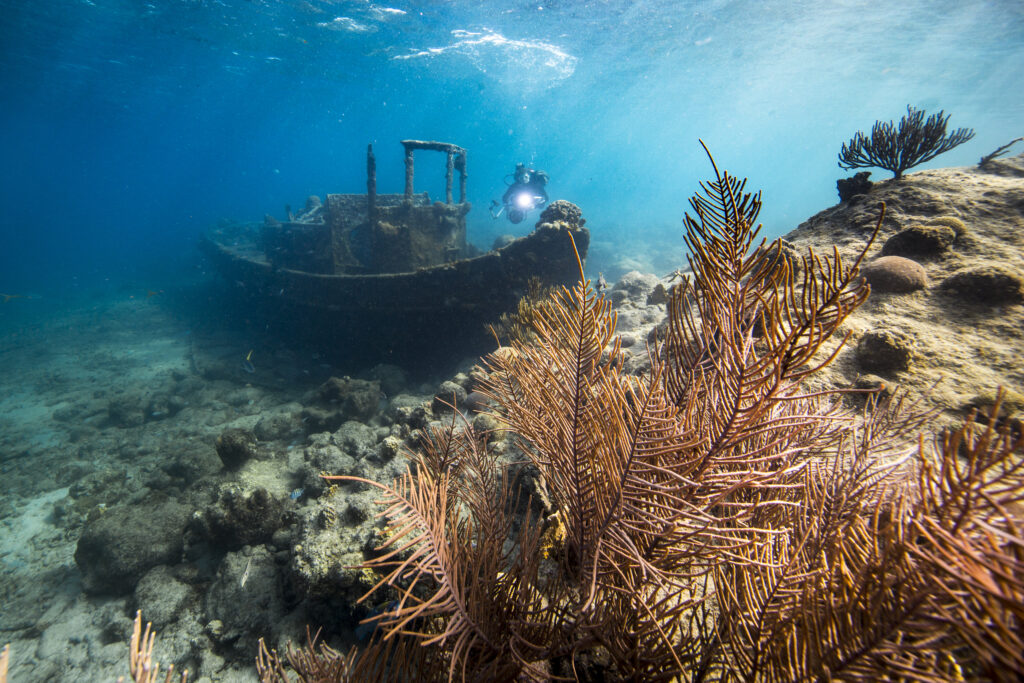
Interested in wrecks, walls or dramatic underwater landscapes? Pay attention to depth and experience requirements. Some are perfectly accessible to newer divers, while others are better saved until you’ve gained more experience.
And you don’t necessarily have to choose just one. Some destinations offer a little bit of everything — which can be especially fun on your first dive trip because you may discover that the type of diving you love most is something you never expected.


Liveaboard or Land-Based Dive Trip?
Once you have an idea of what you want to see, the next question is how you want to experience it.
A land-based dive resort gives you more flexibility. You’ll typically head out for scheduled dives and return to the resort afterward, leaving time to relax, explore, eat somewhere different or enjoy other activities. If you’re traveling with a non-diver — or you simply don’t want your entire vacation to revolve around scuba — this can be a great option.
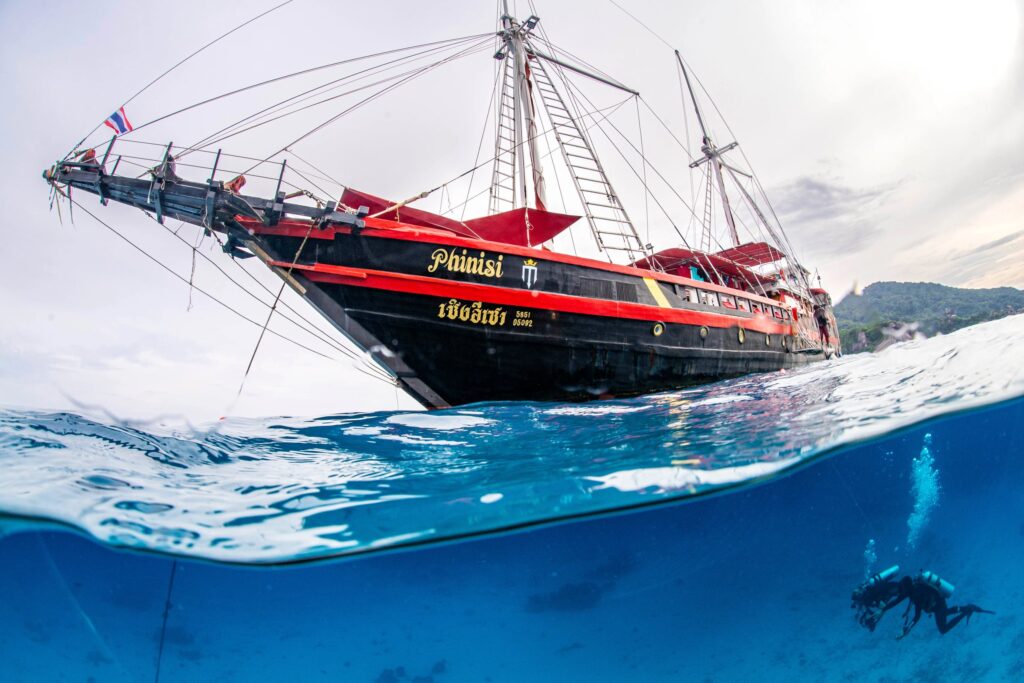
A liveaboard is much more dive-focused. You sleep on the boat, eat on the boat and dive from the boat, often completing three or four dives a day. Because the boat travels with you, liveaboards can also reach remote dive sites that would be difficult or impossible to access from land.
And yes, a liveaboard can absolutely be your first scuba diving trip. The important thing is choosing the right one. Some itineraries offer relatively easy conditions and are very welcoming to newer divers, while others involve strong currents, deep dives, negative entries or experience requirements.
There are also a few practical things to consider. If you’re prone to seasickness, how do you feel about spending a week on a boat? Are you comfortable sharing a smaller space with a group? Would you enjoy waking up and having your entire day revolve around diving, or would you rather have the freedom to skip an afternoon dive and go explore?
Neither style is better. We love both for completely different reasons. The best choice is the one that matches how you actually like to travel.

How Much Diving Do You Really Want to Do?
When you’re planning your first scuba diving trip, four dives a day can sound amazing.
And sometimes it absolutely is.
But dive travel can also be surprisingly tiring. Early mornings, multiple dives, sun exposure, boat rides and staying up way too late talking with your new dive buddies can add up quickly — especially over a full week.
Think about what you want your vacation to feel like. Would you happily wake up, dive, eat, dive, eat, dive, night dive, sleep and do it all again tomorrow? A liveaboard or dive-focused resort might be exactly what you’re looking for.
Or maybe two morning dives followed by an afternoon at the beach, exploring a town, hiking, visiting a waterfall or relaxing by the pool sounds more like your kind of trip. In that case, a destination with flexible diving and plenty to experience above water may be a much better fit.
You also don’t have to do every dive simply because it’s available. Sometimes skipping a dive, sleeping in or taking an afternoon off means you enjoy the rest of the trip that much more.
There’s no prize for logging the most dives on vacation. Choose a trip with a pace you’ll actually enjoy.
Don’t Ignore the Diving Conditions
Beautiful photos don’t always tell you what it took to get the shot.
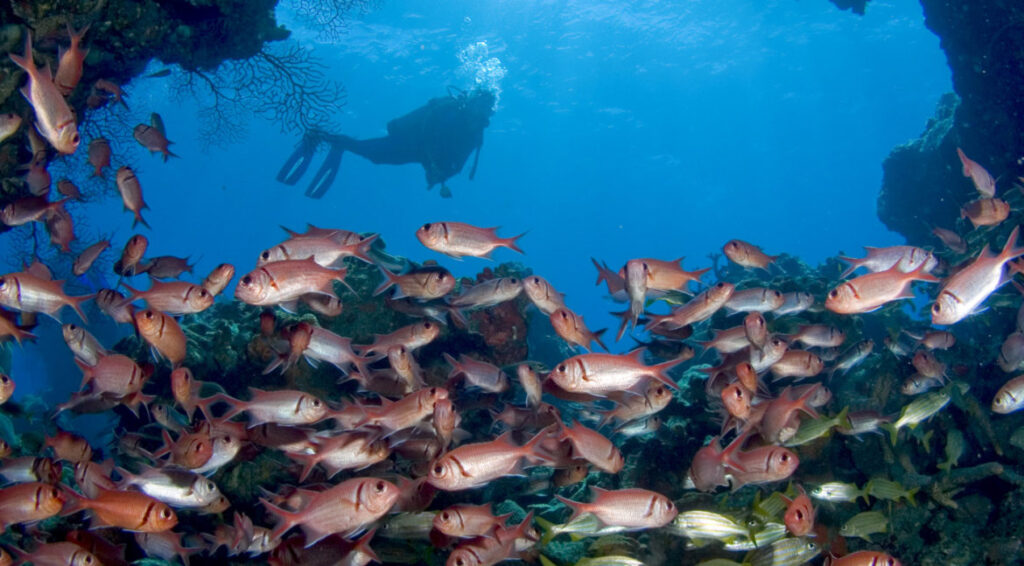
A destination might have incredible reefs, huge schools of fish and the big animals you’ve been dreaming about — but it could also come with strong currents, cooler water, limited visibility, rough surface conditions or more challenging entries and exits.
Before booking, look at what the diving is actually like, not just what lives there.
Current is one of the biggest things to consider. Some of the world’s most exciting dive destinations are known for drift diving and stronger currents. Those currents bring nutrients into the ecosystem, which is part of the reason these areas can support so much marine life. They can make for spectacular diving, but they may also require additional experience and confidence.
Water temperature matters, too — especially when you’re doing multiple dives a day. Even in relatively warm tropical water, repeated dives can leave you feeling colder as the day goes on. That 27°C/80°F water that felt amazing on your first morning dive may feel very different by dive three or four. If you tend to get cold, choosing the right exposure protection can make a huge difference in how much you enjoy a dive-heavy trip.
And conditions can vary by season — or even from one dive site to the next. The same destination may offer relatively easy diving in one area and considerably more challenging conditions somewhere else.
This doesn’t mean you should avoid destinations with current, cooler water or adventurous diving. It just means you should know what you’re signing up for.
The best dive trip isn’t necessarily the one with the easiest conditions. It’s the one with conditions you’re prepared to handle and still enjoy.
Thinking About Bringing a Camera?
We get it. You’re heading somewhere incredible, and of course you want photos and videos to remember it.
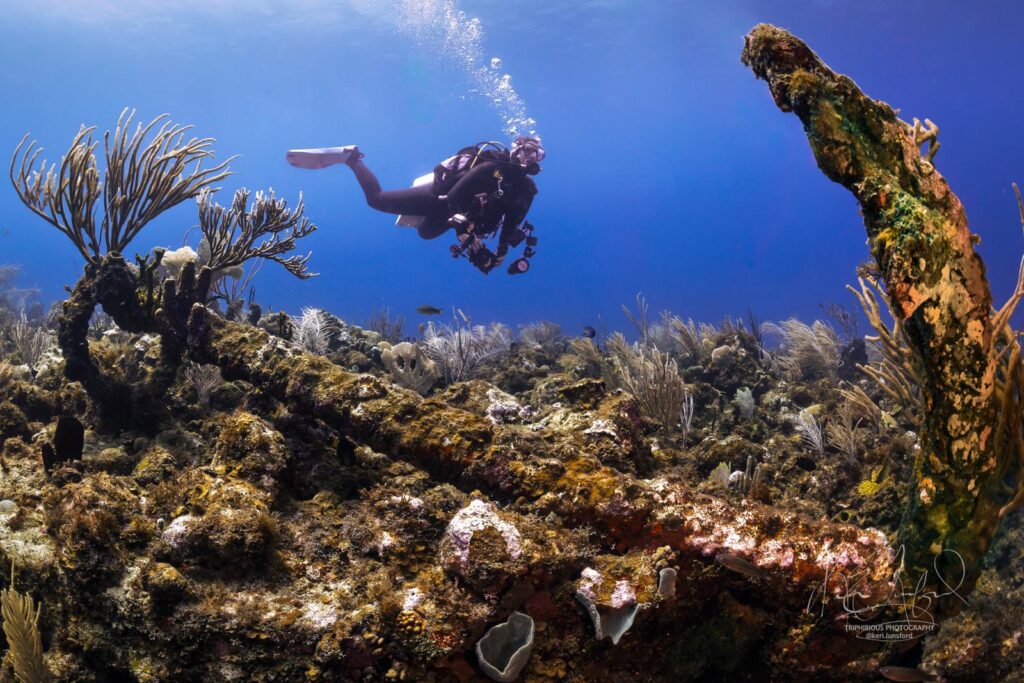
But if you’re still building your dive skills, buoyancy and control come before the camera. Every time.
Even a small GoPro adds another task underwater. Suddenly you’re thinking about framing the shot, turning the camera on, changing settings and following whatever just swam past — all while you still need to monitor your depth, air, buddy, surroundings and buoyancy.
Before adding a camera, you should be able to comfortably maintain neutral buoyancy, control your position in the water and make adjustments without grabbing the reef, kicking the bottom or accidentally changing depth. You should also be able to put the camera down — figuratively and literally — when something else needs your attention.
This matters for your safety, but it also matters for the environment. No photo or video is worth damaging a reef or disturbing an animal. Chasing wildlife for a shot rarely creates a better encounter anyway. Give animals space, stay in control and let the experience unfold.
And here’s the funny part: better buoyancy usually leads to better photos and videos. When you can hold your position calmly instead of constantly kicking, sinking or floating upward, you’ll have much more control over the shot.
So bring the GoPro when you’re ready. Take the photos. Shoot way too much video. Have fun with it.
Just remember: being a diver comes before being an underwater photographer.
How Far Do You Want to Go?
It’s easy to fall in love with a destination while scrolling through photos. Getting there is another story.
There’s a big difference between taking a relatively short flight to Mexico or the Caribbean and traveling halfway around the world to Indonesia or the Philippines. Those farther destinations can absolutely be worth the journey, but they may involve multiple flights, major time-zone changes, domestic connections, long transfers and more than a full day of travel before you reach the diving.
That makes the amount of vacation time you have especially important. If you only have a week, spending several days of it getting to and from a faraway destination may not make much sense. With two weeks, suddenly traveling to Southeast Asia becomes much more appealing — and gives you time to recover from jet lag and actually enjoy being there.
You’ll also want to think about what happens after the international flight lands. Some dive destinations require another domestic flight, a long drive, a ferry or even an overnight hotel before continuing onward. Remote liveaboards may require additional travel just to reach the departure port.
And don’t forget to plan for the trip home. Flying after diving increases decompression stress, so you need to leave enough time between your final dive and your flight.
Divers Alert Network (DAN) recommends waiting at least 12 hours after a single no-decompression dive and at least 18 hours after multiple dives in a day or multiple days of diving before flying. After dives requiring mandatory decompression stops, an even longer interval is recommended.
On a typical weeklong dive vacation with repetitive diving, that means your last day may need to be a non-diving day — which isn’t necessarily a bad thing. It can be the perfect opportunity to explore above water, relax at the resort or enjoy one last day of vacation before heading home.
None of this means your first dive adventure needs to be close to home. If Indonesia is the destination you’ve been dreaming about, go to Indonesia! Just understand that you’re choosing a bigger travel adventure along with the diving.
Sometimes a closer destination is exactly what you need. Sometimes traveling halfway around the world is part of the adventure.
Look at the Whole Trip — Not Just the Price Tag
Dive trip pricing can be a little deceptive.
Two trips might have very different price tags at first glance, but once you look at what’s actually included, the more expensive option may turn out to be the better value.
Start with the obvious: what does the package include? Accommodations and diving are usually easy to spot, but what about meals, Nitrox, marine park fees, tanks and weights, airport transfers, domestic transportation or excursions? On a liveaboard, many of these may be bundled into the price. At a resort, some may be additional expenses.
Then there’s everything it takes to get there. International airfare, domestic flights, extra hotel nights, baggage fees and transfers can add significantly to the total cost — particularly when you’re traveling somewhere remote.
You’ll also want to budget for the extras that come with dive travel: gear rental if you don’t own everything yet, gratuities, additional dives, optional activities and any personal expenses along the way.
This is also where value becomes more important than simply finding the lowest price. A package that includes meals, Nitrox, transfers and plenty of diving may cost more upfront but ultimately offer better value — and fewer surprise expenses — than a cheaper trip where everything is added separately.
Before comparing two dive adventures, try to estimate what each trip will actually cost from the time you leave home until the time you return.
And leave a little room in the budget for the unexpected. Dive travelers have a funny way of coming home with an extra piece of gear — or already thinking about where they’re going next.
Don’t forget to budget for gratuities. Tipping is customary in many parts of the dive industry and can be an expense first-time dive travelers don’t think about until the end of the trip. Your dive guide or divemaster may be the person you interact with most, but they’re often only one part of the team making your diving possible. Depending on the operation, gratuities may also be shared with boat captains, crew, instructors and other staff working behind the scenes.
Every destination and dive operation handles tipping a little differently, so ask about the customary practice before your trip. Some operations pool gratuities among the entire dive team, while others allow you to tip individual crew members. Either way, it’s worth including gratuities in your budget from the beginning rather than treating them as an unexpected expense at the end.
Do You Need Advanced Open Water or Nitrox?
You don’t need a wallet full of certification cards before taking your first scuba diving trip. But if you plan to make dive travel a regular part of your life, there are two certifications we recommend considering early: Advanced Open Water and Enriched Air Nitrox.
Advanced Open Water can open the door to dive sites that aren’t available to Open Water divers, particularly when the best diving is deeper than your current certification limit. It also gives you an opportunity to gain experience with different types of diving while working with an instructor.
That doesn’t mean an Advanced certification automatically makes someone an advanced diver. There’s no substitute for actually spending time underwater. But having the training — combined with real-world dive experience — gives you considerably more flexibility when choosing future destinations.
Nitrox is another certification we frequently recommend for dive travel, especially on trips where you’ll be making multiple dives a day. We’ve written more about why we recommend Nitrox for dive travel, but the short version is that it can be incredibly useful when repetitive diving is part of the itinerary.
In fact, most divers who travel with Global Adventures for Scuba Divers (GAS’D) are Advanced Open Water and Nitrox certified. It’s a combination that works particularly well for dive travelers because it gives them more flexibility when we visit destinations with deeper sites or when we’re making multiple dives over several days.
That doesn’t mean you need both before joining your first dive trip. We visit plenty of destinations with fantastic diving for Open Water divers, and some trips can even be an opportunity to continue your training.
But if you know dive travel is something you want to do more of, Advanced Open Water and Nitrox are two certifications you’re unlikely to regret having.
Don’t Forget About Insurance
Insurance may not be the most exciting part of planning a scuba diving adventure, but it’s an important one — especially when your trip takes you somewhere remote.
Dive accident insurance and travel insurance are not the same thing. Dive accident insurance is designed specifically for diving-related injuries and emergencies, while travel insurance may cover things like trip cancellation or interruption, travel delays, lost baggage and certain medical expenses, depending on the policy you choose.
At Global Adventures for Scuba Divers (GAS’D), we require our divers to carry dive accident insurance and strongly recommend travel insurance as well.
This becomes even more important when you start traveling to remote dive destinations. A medical emergency may involve evacuation by boat or aircraft before you ever reach appropriate medical care, and those costs can become significant very quickly.
Before traveling, make sure you understand what your policies actually cover, including any exclusions, coverage limits and requirements related to scuba diving.
It’s one of those things you hope you’ll never need — but you’ll be very glad you have it if you do.
Sometimes the Destination Makes the Decision
You can compare flight times, count your logged dives, calculate your budget and make all the checklists you want.
And then sometimes you see a destination and think, “Yep. That’s where I want to go.”
We get it.
The question is whether that destination makes sense for the diver you are today — or whether it becomes the adventure you start working toward.
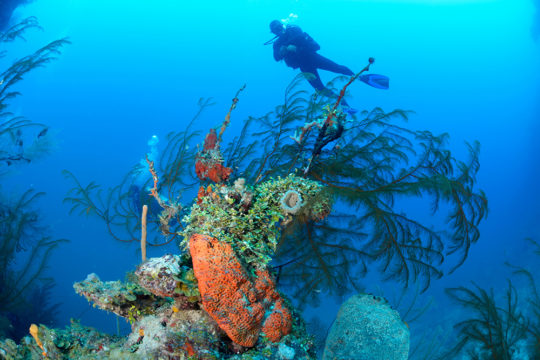
The Caribbean — An Approachable Place to Start
For many North American divers, the Caribbean is a natural choice for a first dive vacation.
The Caribbean also gives you plenty of choices. You can explore everything from the reefs and dramatic volcanic landscapes of Dominica to relaxed diving beneath the Pitons in St. Lucia — without committing to a journey halfway around the world.
Great for: Divers looking for an accessible first international dive trip with plenty of options.
Not sure which island fits your travel style? Our guide to scuba diving in the Caribbean explores what makes the region so diverse — and why choosing the right island can make such a difference in your experience.

Baja & Mexico — Add a Little Adventure
Mexico offers an enormous range of diving, and Baja introduces you to a very different underwater environment from the tropical Caribbean.
Depending on where and when you go, you might encounter sea lions, rays, huge schools of fish, sharks and other pelagic life. Conditions and water temperatures vary considerably by region and season, so choosing the right itinerary matters.
It can also be a great step for someone who wants a more adventurous experience without traveling halfway around the world.
Great for: Divers who want relatively accessible travel with the opportunity for bigger animals and more adventurous diving.
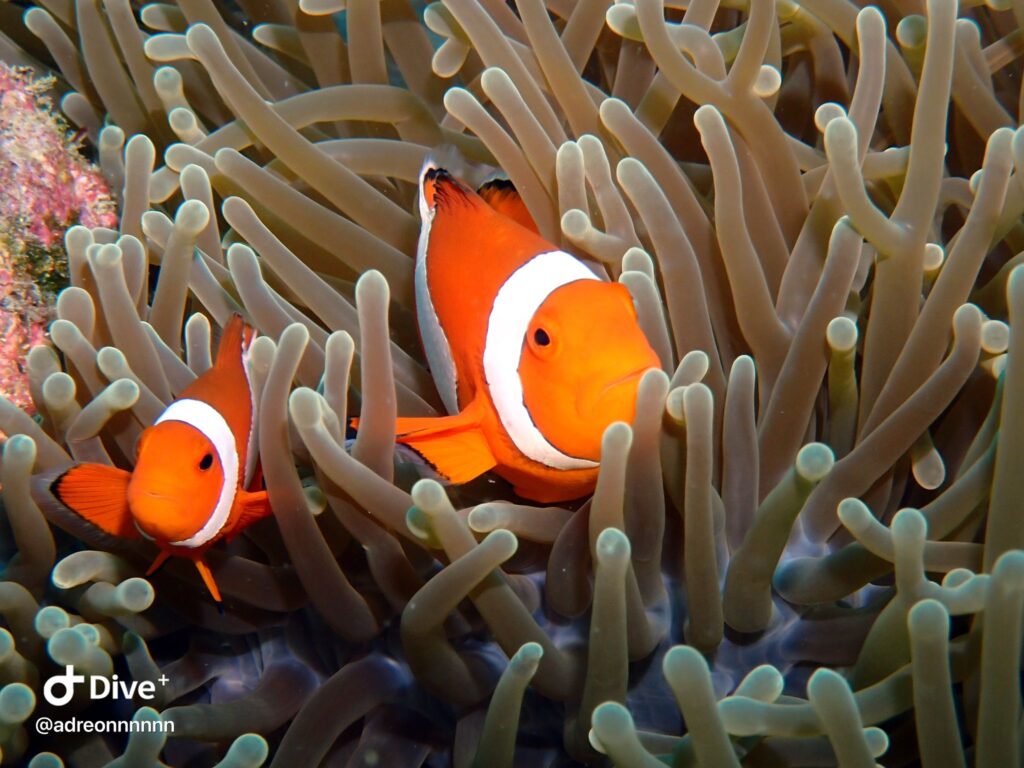
The Philippines — Go Farther for Incredible Variety
Ready to travel a little farther? The Philippines offers an incredible amount of variety.
Depending on where you go, you can find beautiful reefs, walls, turtles, enormous schools of fish, macro life and some wonderfully weird critters. There are also plenty of land-based dive resorts, which gives you flexibility in how much you dive each day.
The biggest consideration is getting there. From the U.S., the Philippines is a major journey, and reaching your final dive destination may require additional flights or ground transfers.
If you have the time, though, it can be an incredible introduction to diving in Southeast Asia.
Great for: Divers ready for a longer international adventure who want lots of variety.
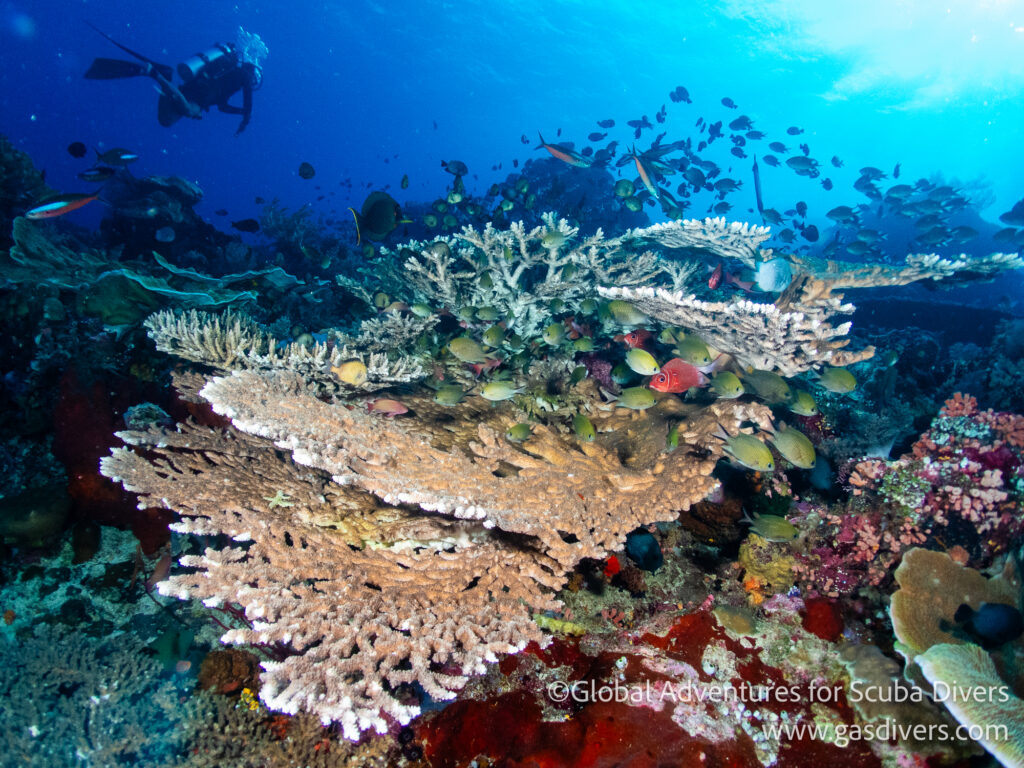
Indonesia — Choose Your Own Adventure
Indonesia is one of those destinations where saying you want to “go diving” barely narrows things down. You can explore wrecks and hunt for tiny critters in Bali, drift through current with manta rays in Komodo, experience the extraordinary biodiversity of Raja Ampat — and that’s only scratching the surface.
That variety also means choosing the right region matters. Some areas offer approachable land-based diving, while others are better suited to experienced divers comfortable with current and remote liveaboards. And from North America, Indonesia is a long journey, so giving yourself enough time to explore can make the trip much more worthwhile.
Great for: Divers willing to travel farther for incredible marine diversity, with options ranging from relaxed land-based diving to remote, adventurous liveaboards.
Want to dig a little deeper? Our guide to diving in Indonesia and the Coral Triangle explores why this part of the world is so extraordinary and what makes its different dive regions worth experiencing.
Galápagos — Experience Nature at Its Wildest
Galápagos is more than a dive destination. It’s one of those rare places that reminds you just how extraordinary the natural world can be.
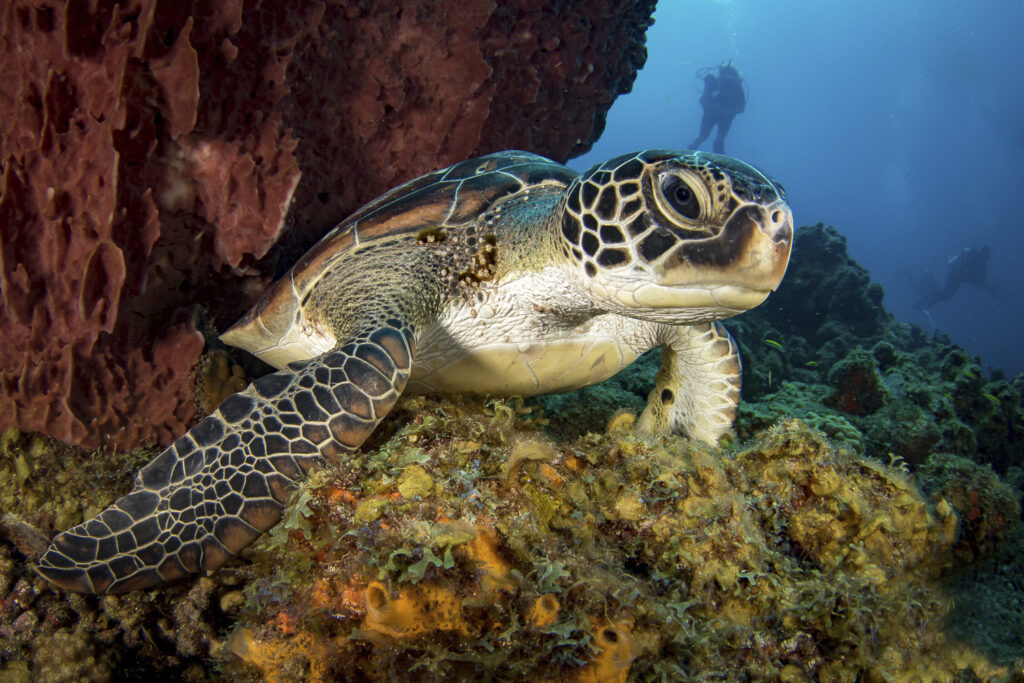
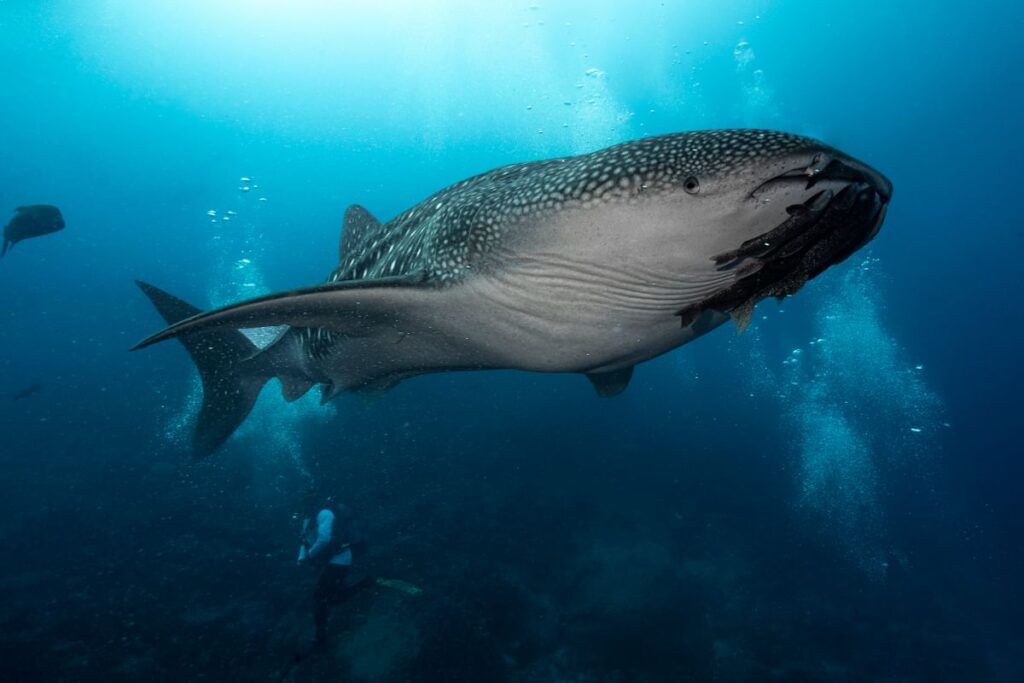
Underwater, you might find yourself surrounded by schooling hammerheads, watching sea lions twist through the water, or sharing the blue with rays, turtles, enormous schools of fish and seasonal whale sharks. Above water, the wildlife and volcanic landscapes are every bit as remarkable.
The diving can be demanding — particularly around Wolf and Darwin — with current, cooler water, deeper dives and remote liveaboard conditions. It’s a destination where having experience and confidence underwater allows you to stop worrying about the diving and simply take in what is happening around you.
Great for: Experienced divers ready for a truly epic wildlife adventure.
The Best First Dive Trip Is the One That’s Right for You
There isn’t one destination that every diver should visit first.
Your perfect first adventure might be a relaxed week of Caribbean reef diving. It might mean traveling halfway around the world to explore the Philippines or Indonesia. Or maybe you’ve already fallen in love with the idea of Galápagos — and now you have a destination motivating you to keep diving, training and building your confidence.
That’s part of what we love about dive travel. You don’t have to do everything at once.
Every trip teaches you something. You figure out whether you love liveaboards or prefer land-based resorts. You discover whether you’re the person signing up for every night dive or happily ordering a drink while everyone else puts their wetsuits back on. And you may arrive convinced you’re obsessed with sharks only to leave talking about one tiny nudibranch for the rest of the year.
Eventually, the question changes from “Where should I take my first scuba diving trip?” to a much more dangerous one:
“Where are we going next?”
Feeling a Little Overwhelmed? That’s Where We Come In.
If you made it all the way to the end of this article and are now thinking, “Wait… I have to figure out ALL of that?” — we have good news.
You don’t have to.
At Global Adventures for Scuba Divers (GAS’D), we’re a small team of PADI dive professionals who specialize in building dive adventures so you don’t have to worry about many of the logistics. We research the diving, accommodations, transportation and all those little details that can turn planning an incredible trip into hours of tabs open on your computer.

And we don’t just plan the trip and send you on your way. We go with you.
Our trips are personally hosted by members of our team, which means you have someone there who knows the trip, knows the diving and is there to support the group throughout the adventure.
Safety always comes first. We carefully choose the destinations and dive operators we work with, set experience requirements when a trip calls for them, and want every traveler to feel prepared for the diving they’re signing up for.
Right behind safety is support and confidence in the water. You don’t need to be the most experienced diver in the group. We want our travelers to keep learning, build their skills and become more confident divers along the way. And if a particular adventure isn’t the right fit for you yet, we’ll tell you — and help you find one that is.
Then there’s one of our favorite parts: the community.
Our trips bring together fun, like-minded people who love the ocean, want to explore the world and genuinely enjoy sharing the experience with the people around them. Plenty of our travelers join us solo, while others come with a buddy or partner. Either way, you’re not just booking a dive package — you’re joining the adventure with us.
So tell us what you want to see, what kind of diving you’ve done and what your dream trip looks like.
We’ll handle much of the planning. We’ll be there when you arrive. And together, we’ll go diving somewhere pretty incredible.