

There’s something pretty magical about waking up on a boat, looking out at nothing but ocean, and knowing that your biggest decisions for the day are which swimsuit to wear, what’s for breakfast, and whether you’re doing the night dive.
For us, liveaboard diving is one of the best ways to experience a dive destination. You unpack once, set up your gear, and spend the next several days falling into a wonderfully simple rhythm: dive, eat, nap, repeat.
But if you’ve never been on a liveaboard before, the idea can also feel a little intimidating. How many dives are you actually doing? What are the cabins like? Do you need to be an advanced diver? What should you pack? What happens if you get seasick? And are you really stuck on a boat with the same people for a week?
Yes to that last one — so choose cool people.
The truth is, no two liveaboard trips are exactly alike. Some offer relatively relaxed diving and plenty of downtime, while others take you to remote destinations with strong currents, long crossings, and packed dive schedules. The boat matters, but so do the destination, itinerary, conditions, and your own experience level.
Choosing the right liveaboard can open the door to some of the most spectacular diving in the world.
So, whether you’re getting ready for your first liveaboard or still deciding if one is right for you, here’s what to expect, how to prepare — and a few things we’ve learned from living aboard dive boats ourselves.
What Is Liveaboard Diving?
A liveaboard is essentially your hotel, restaurant, dive shop, and transportation all rolled into one boat.
Instead of staying at a resort and heading out on a dive boat each day, you sleep onboard and travel with the vessel. That means the boat can move between dive sites while you’re eating, relaxing, or sleeping — allowing you to explore remote areas that can be difficult, or sometimes impossible, to reach on a typical day trip.
It also means a lot of diving.
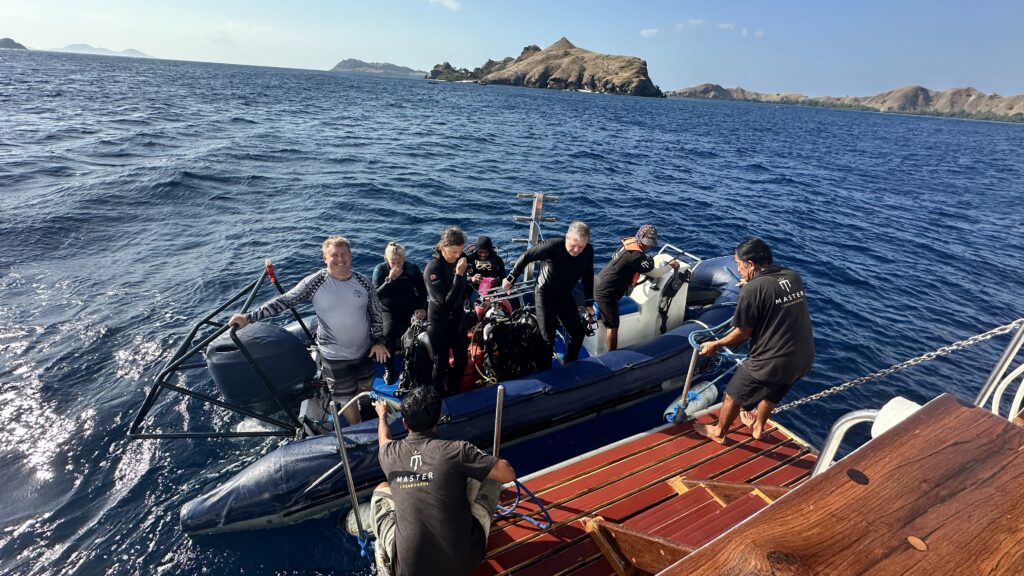
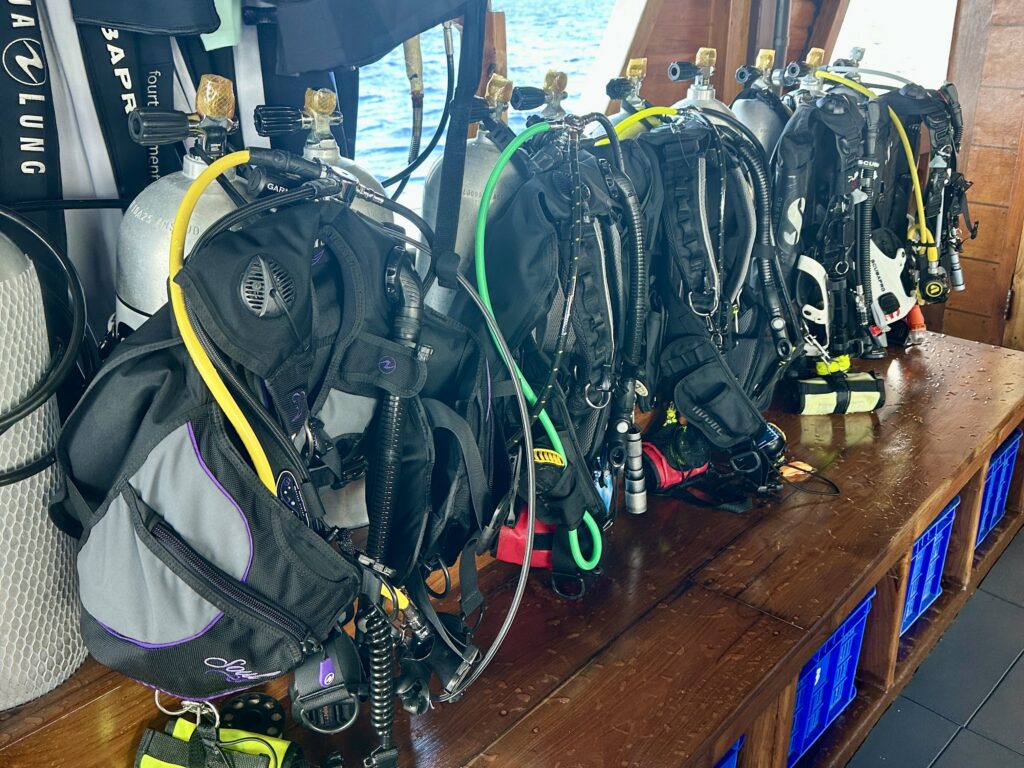
Depending on the itinerary, you may have three or four dives a day, sometimes with a night dive thrown in. Your gear generally stays set up between dives, meals appear when you get out of the water, and your commute to the next dive site might be about 20 feet across the dive deck.
For a few days, life becomes wonderfully simple. Dive. Eat. Sleep. Repeat.
Why We Love Liveaboard Diving
There’s an obvious reason divers love liveaboards: you get to dive. A lot.
But for us, it’s about more than simply squeezing another dive into the day.
Liveaboards can take you to places that are difficult to reach from shore, putting you closer to remote reefs, offshore islands, and dive sites you might otherwise never experience. You wake up where you’re going to dive, spend the day exploring, and while you’re eating dinner or sleeping, the boat can already be moving toward tomorrow’s adventure.
There’s also something we love about the rhythm of life onboard. Your world gets very simple for a while. You dive, eat, nap, look through photos, talk about what everyone saw, and eventually hear that it’s time to get ready and do it all over again.
And then there are the people.
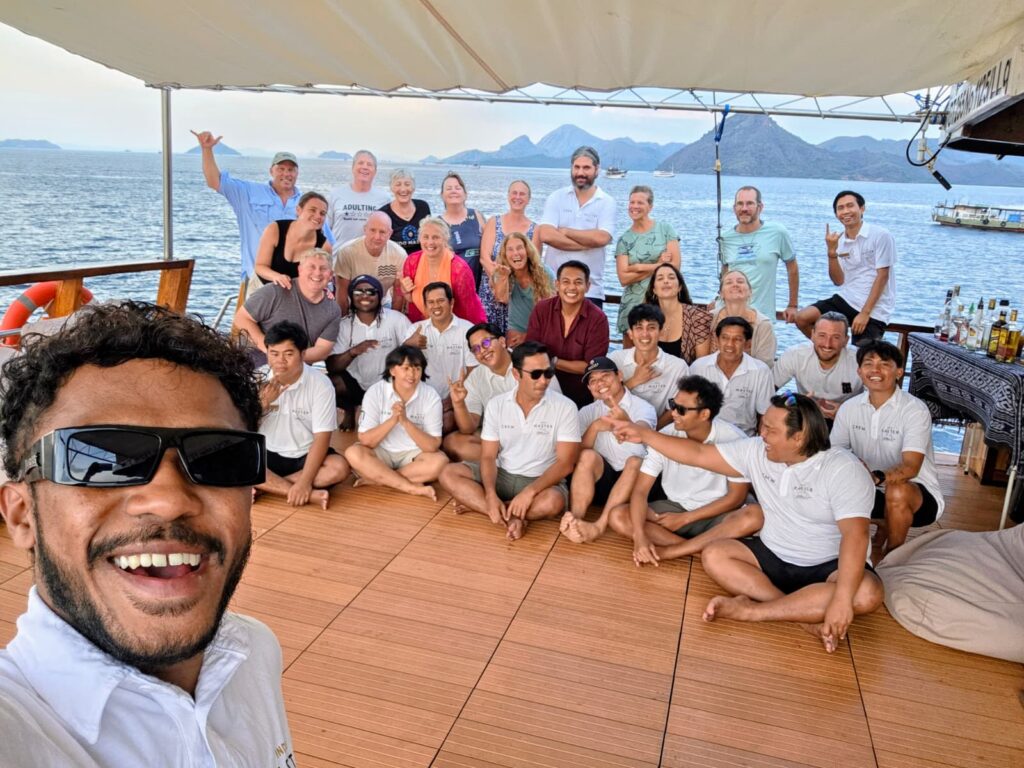
You spend a lot of time together on a liveaboard. You’re diving together, eating together, comparing underwater photos, hanging out during surface intervals, and eventually wandering around the boat in sweatshirts and pajamas together.
By the end of a great trip, the boat starts to feel like its own little floating community.
We’ve made some wonderful friends on liveaboards — and for us, the people we share an adventure with can become just as memorable as the diving itself.
What Does a Typical Day on a Liveaboard Look Like?
If you’re imagining leisurely mornings sipping coffee for two hours before deciding what to do with your day… a liveaboard may have other plans for you.
One of the best parts is how easy the routine becomes. Your gear usually stays assembled on the dive deck, the crew handles tanks and fills, and somewhere between eating and diving, the boat moves on to the next site.
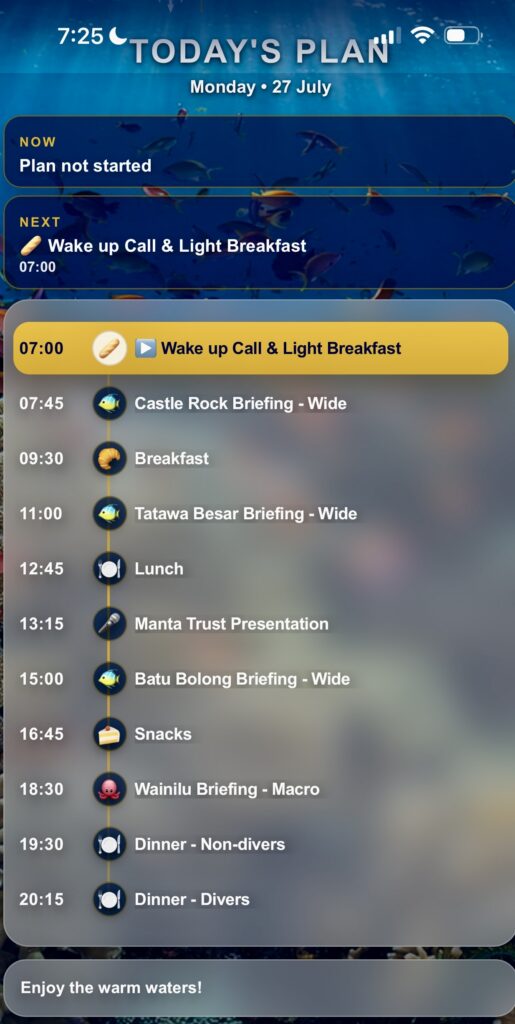
Most liveaboards also keep the day’s schedule posted somewhere onboard — often on a whiteboard in a central area — so you always know when the next briefing, dive, meal, or activity is happening.
On one of our trips, the schedule was digital, which we absolutely loved. Instead of having to wander back to the whiteboard every time we forgot whether the next briefing was at 2:30 or 3:00 (it happens), we could pull up the day’s plan whenever we needed it.
It’s a small thing, but when your entire week revolves around dive times, briefings, meals, and surface intervals, having the schedule easily accessible is surprisingly useful.
You Don’t Have to Do Every Dive
Seriously.
When you’ve traveled halfway around the world to go diving, it can be tempting to feel like you need to jump in every single time the dive bell rings. But three or four dives a day over several consecutive days adds up.
If you’re tired, cold, not feeling your best, or simply want to sit on deck with a cup of coffee while everyone else jumps in, skip the dive.
We’ve done it.
Sometimes sitting one out means you’re rested, warm, and much more excited about the next one. The goal isn’t to rack up the highest possible number of dives. It’s to enjoy the trip.
Do You Need to Be an Advanced Diver for a Liveaboard?
Not necessarily.
The important thing to remember is that “liveaboard” describes how you’re traveling — not how difficult the diving will be.
Some liveaboards offer relatively relaxed diving that can be a great fit for newer divers. Others take you to destinations where the diving itself can be legitimately challenging.
Socorro, Komodo, and the Galápagos are good examples. Depending on the site and conditions, you may encounter strong or changing currents, deeper dives, negative entries, blue-water ascents, surge, cooler water, challenging surface conditions, or diving far from shore. These are incredible destinations, but they’re not necessarily where we’d recommend testing your skills for the first time.
The question isn’t simply: Am I ready for a liveaboard?
It’s: Am I ready for this particular liveaboard itinerary?
Before booking, look at the recommended certification level, minimum number of logged dives, typical depths, currents, water temperatures, entry methods, and any required safety equipment. And be realistic about your own comfort level — the number on your certification card only tells part of the story.
We frequently recommend Advanced Open Water and Nitrox for dive travel, even when they aren’t strictly required. Advanced Open Water can better prepare you for the depths and conditions found on many itineraries, while Nitrox can be particularly useful when you’re doing multiple dives a day over several consecutive days.
It’s also important to be comfortable with the safety equipment you’ll be expected to use. DSMBs and reels are required on many liveaboards, particularly in destinations with currents or drift diving. We prefer bringing our own — and, more importantly, knowing how to deploy them before the trip.
A good liveaboard should challenge you in ways you’re prepared for.
It shouldn’t leave you dreading the next dive briefing.
How to Choose the Right Liveaboard
Once you’ve decided you want to try a liveaboard, choosing the right one involves a lot more than finding the prettiest boat.
For us, the itinerary and safety come first.
We want to know where the boat is going, what the diving will be like, and whether the itinerary matches the experience level of the divers traveling with us. But we’re also looking closely at the operation itself.
A beautiful boat and an incredible itinerary don’t mean much if we aren’t confident in the people running it.
We look for experienced crews, clear safety procedures, well-maintained dive operations, thorough briefings, appropriate emergency equipment, and operators that take the realities of traveling and diving in remote areas seriously.
Then we start looking at the details.
Look at the Safety & Operation
When you’re traveling to remote dive sites, you want to know that the operator takes safety seriously.
Before we choose a liveaboard, we look at the experience of the operator and crew, the way the dive operation is run, what emergency equipment is carried onboard, and how clearly expectations and procedures are communicated.
We also pay attention once we’re onboard. Detailed dive briefings, organized dive procedures, crew safety drills, and clear emergency protocols are all things we appreciate seeing.
Hopefully, you’ll never need any of those emergency procedures.
But when you’re hundreds of miles from the nearest shore, you want to know they’re there.
Look at the Destination and Route
One of the biggest advantages of liveaboard diving is how much territory you can cover. Instead of returning to the same resort every night, the boat can move while you’re eating, relaxing, or sleeping — sometimes putting you in an entirely different part of the destination by morning.
This is especially valuable in places where the best dive sites are spread across a large area or difficult to reach from shore.
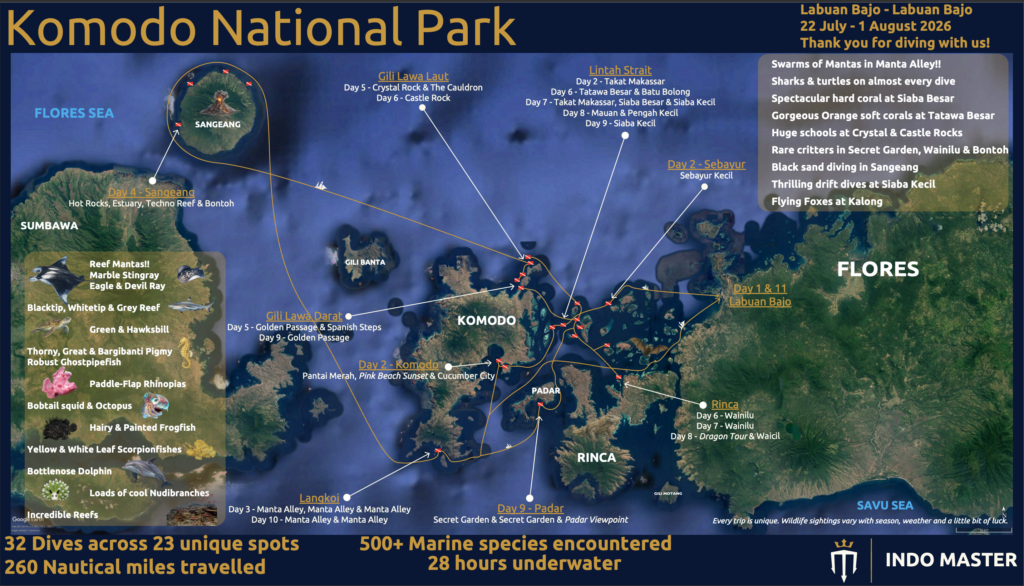
Our Komodo route is a perfect example. Over the course of the trip, we traveled throughout the national park, moving between very different areas, dive sites, conditions, and underwater environments. Seeing the route on a map really puts into perspective just how much ground a liveaboard can cover.
Look at the Diving
Don’t choose an itinerary based solely on the animals you hope to see.
Look at the typical currents, depths, water temperatures, visibility, entry and exit methods, and number of dives offered each day. Check the recommended certification and experience level, too.
And remember that conditions can change with the season. The same destination may offer a very different diving experience at different times of year.
Look at the Boat
You’re going to be living there, so the boat matters.
Look beyond the cabin photos and consider the dive deck, gear storage, shaded outdoor areas, lounges, tenders, and overall amount of space.
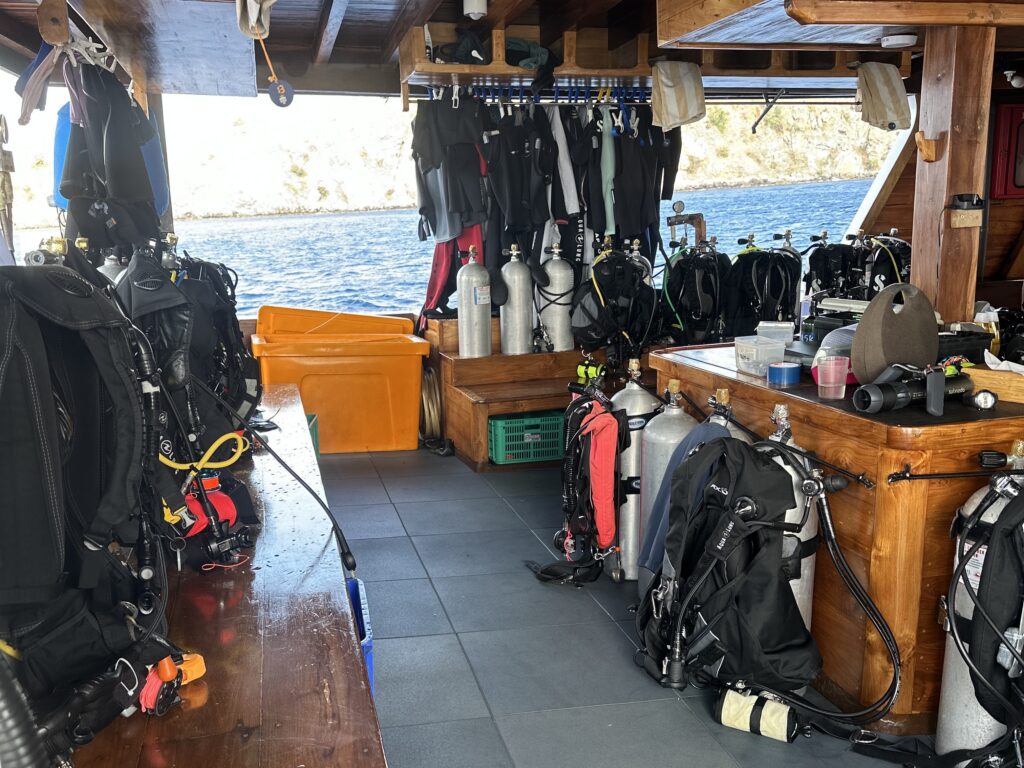
If you’re an underwater photographer, liveaboards can be particularly convenient. Many dive-focused boats are set up with photographers in mind, with dedicated camera tables, charging stations, rinse tanks, and work areas where you can assemble and maintain your equipment between dives.
That said, camera facilities vary considerably from boat to boat. If you’re traveling with a large housing, strobes, video lights, or a serious camera setup, check the available workspace and charging options before booking. A “camera table” gets crowded very quickly when half the boat shows up with housings.
And even if you’re not a photographer, pay attention to the dive deck layout. When 15 or 20 divers are all trying to gear up at the same time, a well-designed dive deck makes a huge difference.
Cabins can vary enormously as well. Some have ensuite bathrooms and plenty of storage; others are decidedly more… efficient. That’s boat life.
Look at What’s Included
Liveaboard pricing isn’t always apples to apples. Check whether things like Nitrox, equipment rental, marine park fees, port fees, fuel surcharges, transfers, alcoholic beverages, gratuities, and land excursions are included or charged separately.
Those extras can add up quickly.
Look at How You Get There
Don’t forget about the journey to the boat itself.
Where does it depart? Do you need a domestic flight or long ground transfer? Should you arrive a day early? How long is the crossing before the diving begins?
Understand the Crossings
Don’t forget to look at how the liveaboard actually gets to the diving.
Some itineraries travel through relatively protected waters, moving between islands and dive sites with very little time spent in open ocean. Others require long crossings — sometimes many hours or even a full day at sea — before you reach the destination.
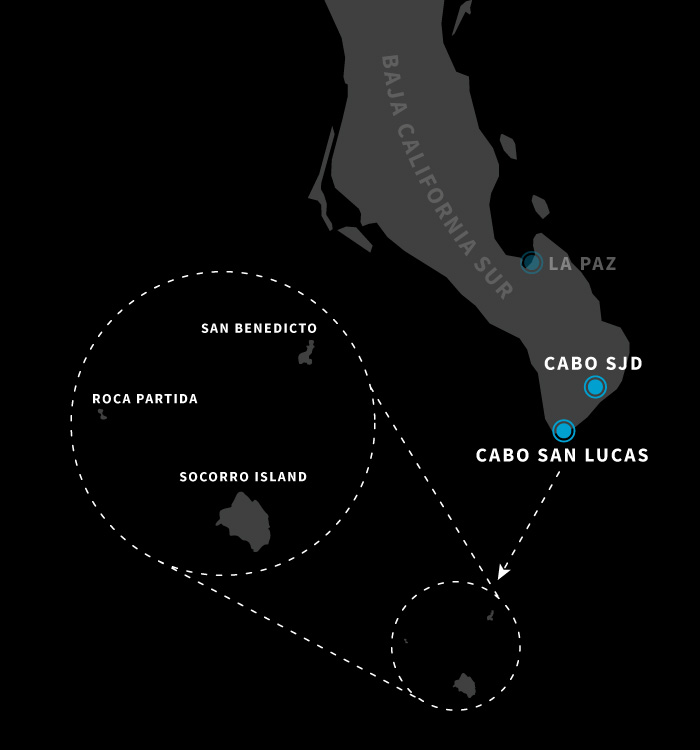
Socorro is a great example. Reaching the Revillagigedo Archipelago requires a long open-ocean crossing from mainland Mexico. You’re not simply waking up the first morning and jumping straight into the water — getting out to those remote islands is part of the expedition.
Crossings can affect more than seasickness, too. They can influence how many actual diving days you have, when diving begins and ends, how much time you spend underway, and even how you should plan your flights before and after the trip.
Before booking, look at:
- How long is the crossing?
- Is it through protected or open water?
- Are there full travel days with no diving?
- How much of the itinerary is spent moving between locations?
- What happens if weather or sea conditions affect the route?
A long crossing isn’t necessarily a negative. In many cases, it’s exactly why the diving is so remote.
But it’s something you should know about before you get onboard.
Some itineraries travel through relatively protected waters, moving between islands and dive sites with very little time spent in open ocean. Others require long crossings — sometimes many hours or even a full day at sea — before you reach the destination.
Socorro is a great example. Reaching the Revillagigedo Archipelago requires a long open-ocean crossing from mainland Mexico. You’re not simply waking up the first morning and jumping straight into the water — getting out to those remote islands is part of the expedition.
What’s Life Onboard a Liveaboard Actually Like?
Your world gets very small on a liveaboard — usually in a good way.
Most of what you need is only a few steps away. Your dive gear develops a permanent home on the dive deck, swimsuits appear on every available drying rail, someone is always looking through underwater photos, and conversations regularly revolve around trying to identify something weird you saw on the last dive.
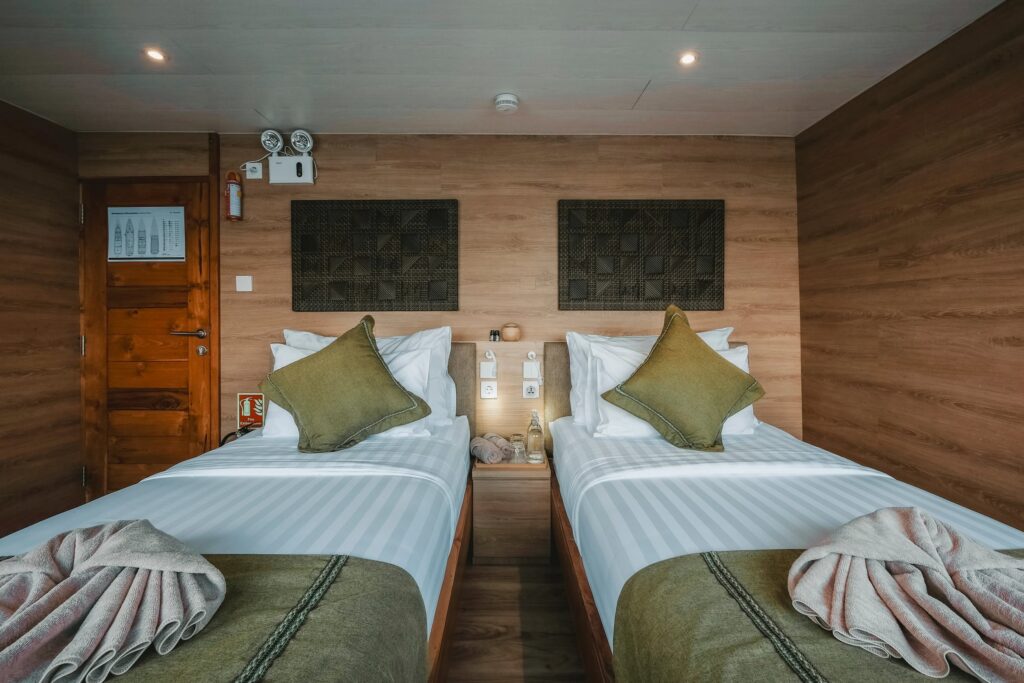
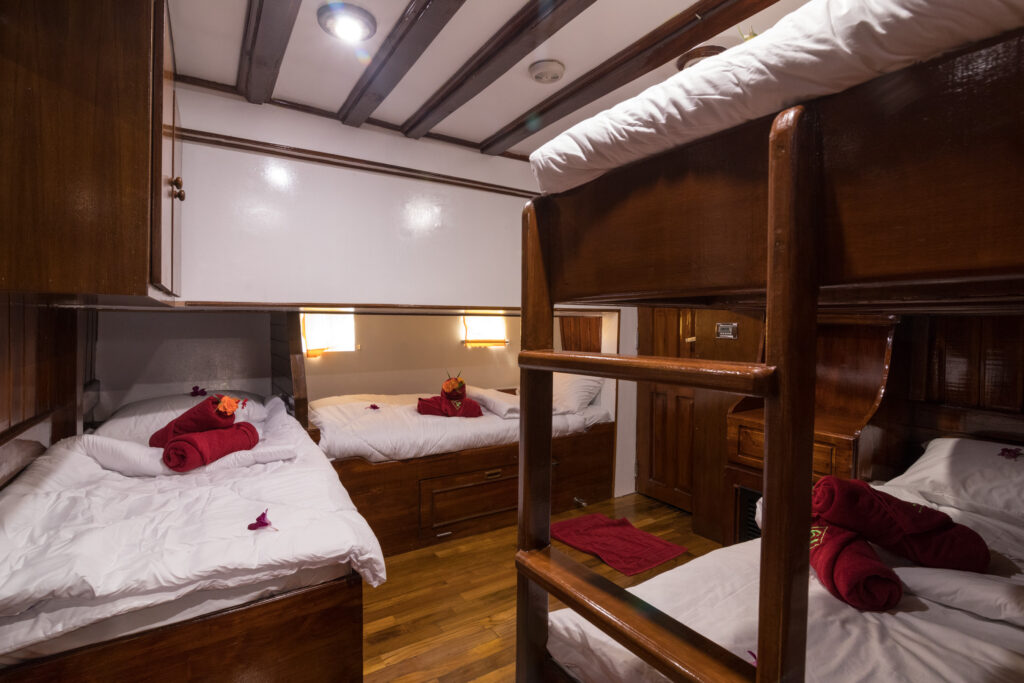
Cabins vary enormously from boat to boat. Some are compact and designed primarily as a comfortable place to sleep between dives, while others have ensuite bathrooms, larger beds, plenty of storage, and more space to spread out.
Many liveaboards have also been refitted or updated with more modern conveniences, and some vessels offer different cabin categories — including larger suites for travelers who want a little more room and comfort.
Of course, you’re still on a boat, so even a very nice cabin may be more compact than a typical hotel room. Take a good look at cabin layouts, storage, bathrooms, and deck location before booking — especially if those things matter to you.
And if you’re prone to seasickness, remember that the fanciest cabin isn’t automatically the best one. A lower-deck cabin closer to the middle of the vessel may offer a more comfortable ride.
Internet access can also be limited — or nonexistent — depending on where you’re traveling. That can feel strange at first, but disappearing from emails and notifications for a few days can be one of the unexpected perks of heading somewhere remote.
You Will Be Fed. A Lot.
Liveaboard crews have figured out something very important:
Divers are always hungry.
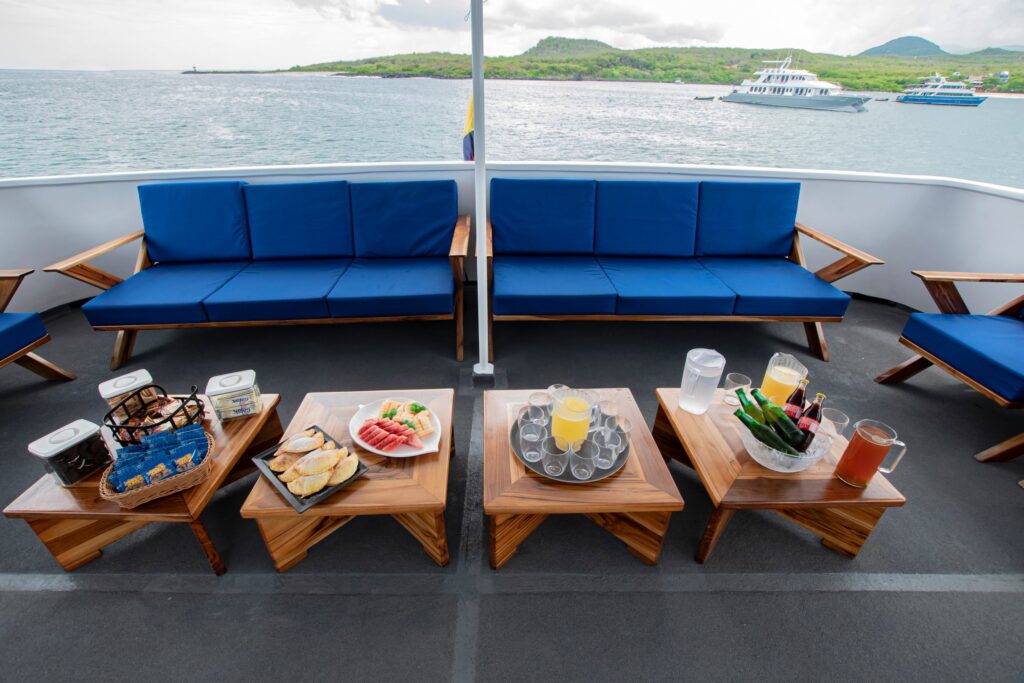
Meals vary by boat, but many liveaboards provide three full meals a day plus snacks between dives. Depending on the vessel and destination, meals might be served buffet-style, family-style, or individually plated.
If you have food allergies, dietary restrictions, or strong dietary preferences, tell the operator well before departure. Once the boat is offshore, the crew can’t exactly pop over to the grocery store because they discovered on day two that you don’t eat something.
Personal Space Is… Relative
You’re sharing a boat.
That means you’ll see the same people at breakfast, on the dive deck, underwater, at lunch, during surface intervals, at dinner, and probably wandering around in pajamas.
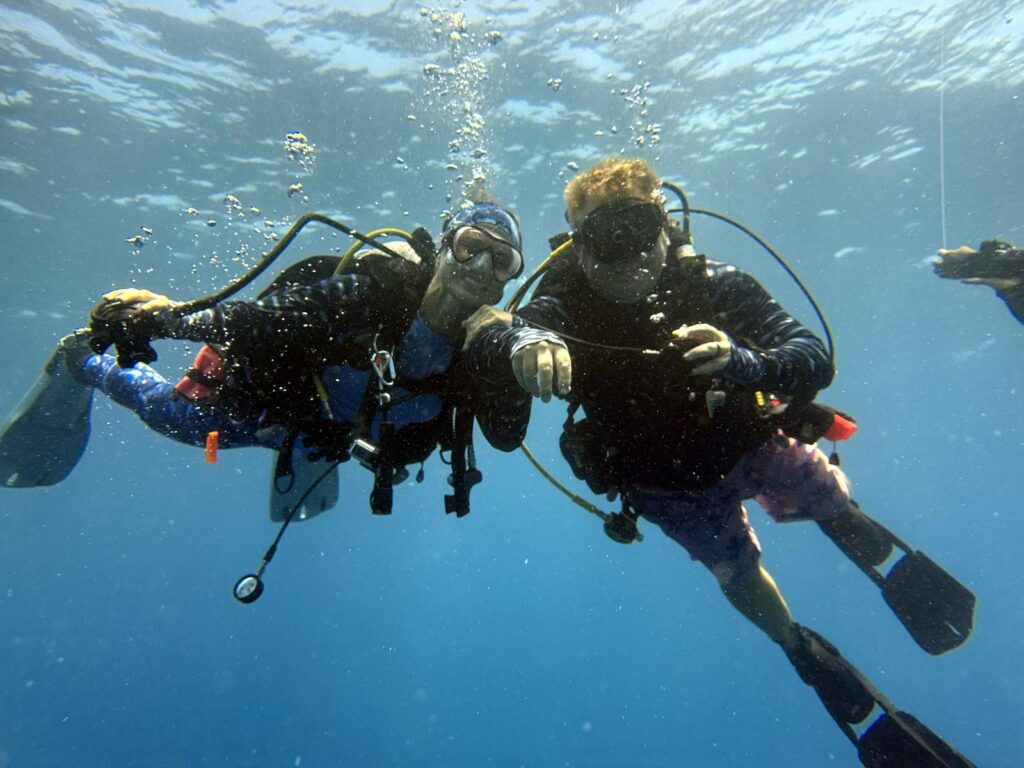
For us, that’s actually one of the best parts of liveaboard travel. You get to know people very quickly, and a great group can turn into its own little floating family by the end of the trip.
But if you need a little quiet time, find your spot. Maybe it’s the sun deck, your cabin, a shaded corner with a book, or somewhere you can watch the ocean go by.
Everyone needs a surface interval from the surface interval occasionally.
Our Liveaboard Must-Haves
After enough time living on dive boats, you figure out pretty quickly which little things make life onboard significantly better.
Some of our must-haves are practical. Others are absolutely not essential — but we’re bringing them anyway.
Adreon’s Liveaboard Must-Haves
Multiple swimsuits. Putting on a cold, wet swimsuit first thing in the morning is a terrible way to start the day. Bring more than you think you need.
Dive socks. When you’re doing three or four dives a day, even a tiny rub from a fin or boot can become very annoying, very quickly.
Leave-in conditioner. Days of saltwater, sun, and repeated diving are not particularly kind to long hair. Adreon’s favorite is Stream2Sea Leave-In Conditioner, and it comes on pretty much every dive trip. It makes the post-dive hair situation significantly more manageable — especially when you’re jumping back in a few hours later.
Something cozy. A sweatshirt, cardigan, or comfy pants for evenings. After spending most of the day wet, putting on warm, dry clothes feels ridiculously good.
Games. Cards and small travel games are perfect for surface intervals and evenings. We’ve even had boat crews join in.
A completely untouched departure-day outfit. Put it aside. Do not wear it. Do not let it get wet. And do not convince yourself on day five that you’ll “just wear the shirt to dinner.”
Future you will be grateful.
Corey’s Liveaboard Must-Haves
His own dive gear. When you’re doing multiple dives a day, there’s something to be said for using equipment you already know, trust, and have dialed in exactly the way you like it.
A good save-a-dive kit. You’re potentially a long way from the nearest dive shop. A spare O-ring, strap, mouthpiece, or small replacement part can be the difference between missing a dive and getting straight back into the water.
A sweatshirt. Tropical destination or not, after enough time underwater, Corey is putting on a sweatshirt.
A good place to nap. Cabin, lounge, sun deck — wherever. When you’ve got 90 minutes until the next dive, that’s practically an invitation.
Things We Both Agree On
Coffee. Non-negotiable.
Early-morning dives are significantly more civilized when coffee happens first. Fortunately, liveaboards tend to understand that divers and coffee have a very important relationship.
Snacks. Dive. Eat. Dive. Eat again. Somehow you can finish an entire meal and be hungry again after the next dive.
What Should You Pack for a Liveaboard?
Packing for a liveaboard is a bit of a balancing act.
Cabin space can be limited, so you don’t want to bring everything you own. At the same time, liveaboards can take you far from the nearest dive shop — which means a little redundancy can be a very good thing.
A DSMB and reel are required on many liveaboard itineraries, particularly in destinations with currents and drift diving. Even when they’re available onboard, we prefer bringing our own and using equipment we’re already comfortable with.
We also recommend thinking about backups for small but important pieces of gear. An extra mask (or two!), backup dive light, spare batteries, and a well-stocked save-a-dive kit don’t take up much room compared with the dives they could potentially save.
You don’t necessarily need to own a complete set of dive gear, either. Many liveaboards have rental equipment available, which can be especially helpful if you’re newer to diving or trying to manage airline baggage limits.
Just don’t assume it will be waiting for you.
If you need rental gear, reserve it in advance and confirm exactly what’s included. A boat in the middle of nowhere isn’t the ideal place to discover that the BCD size you need isn’t onboard.
And remember that packing isn’t just about dive gear. You’ll also need appropriate exposure protection, sun protection, medications, toiletries, charging equipment, and enough comfortable clothing to survive several days of dive-eat-nap-repeat.
We’re putting together a complete GAS’D dive travel packing list with everything we bring — including liveaboard gear, backups, clothing, electronics, toiletries, and the things we’ve learned not to leave home without.
What About Seasickness?
Being on a liveaboard doesn’t automatically mean rough seas, but you are living on a boat — and some itineraries involve considerably more open-ocean travel than others.
We’ve been on liveaboards where you barely notice the boat moving. We’ve also traveled to destinations like Socorro, where reaching the islands requires a long open-ocean crossing and the journey itself is very much part of the adventure.
If you’re prone to motion sickness, don’t automatically rule out liveaboards. Instead, research the specific itinerary. Look at the length of crossings, how exposed the route is, typical seasonal conditions, and how much time the boat spends underway versus sheltered around islands or reefs.
Most importantly, have a plan before you leave the dock.
If you use motion-sickness medication or other remedies, talk with an appropriate medical professional about options that are safe for you while diving. It’s also a good idea to know how anything you plan to take affects you before you’re several hours offshore.
And remember: not all liveaboards are created equal when it comes to motion.
A relatively protected itinerary and a 24-hour open-ocean crossing are two very different boat experiences.
Choose Your Cabin With Motion in Mind
If you’re prone to seasickness and have a choice of cabins, a cabin on a lower deck can be a better option. Lower levels of the boat generally experience less noticeable side-to-side motion than higher decks.
Where your cabin sits from front to back can matter, too. Cabins closer to the middle of the boat generally experience less pitching than those toward the bow or stern.
Of course, every vessel is designed differently, so if motion sickness is a concern, ask the liveaboard operator which cabins tend to experience the least movement before choosing yours.
You may sacrifice the panoramic upper-deck window — but at 2:00 a.m. in rolling seas, you probably won’t care.
Liveaboard Safety & Etiquette
A liveaboard is part hotel, part dive shop, part restaurant, and part working vessel — all squeezed into a relatively small space.
A little awareness goes a long way.
Safety Starts Before the First Dive
One of the first things you’ll usually do onboard is a boat and safety orientation — and on a well-run liveaboard, it can be quite detailed.
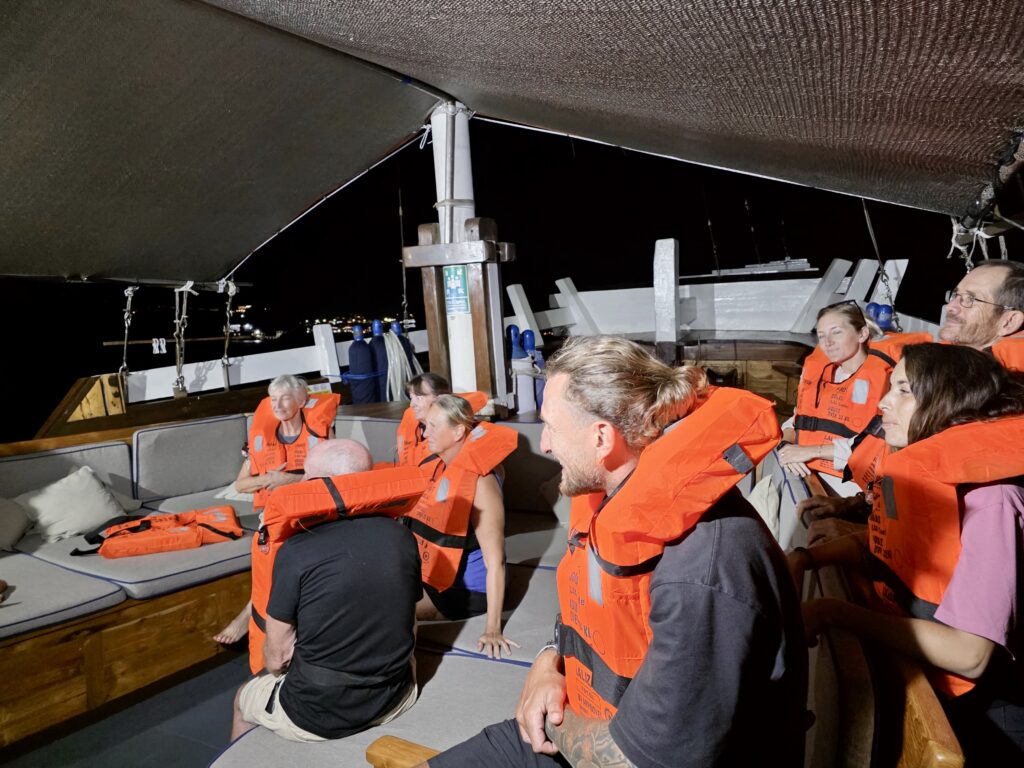
The crew will walk you through how things work onboard, including emergency exits, life jackets, alarms, muster locations, emergency procedures, and other important safety information. This is also when you’ll typically participate in a muster drill so everyone knows where to go and what to do in an emergency.
Pay attention, even if you’re tired from traveling and much more interested in setting up your dive gear. You’re going to be living on this boat for several days — sometimes hundreds of miles from shore — and it’s important to understand how it operates.
Muster drills are a normal part of liveaboard life. They’re often incorporated into the initial boat and safety orientation and give everyone onboard a chance to practice where to go and what to do in an emergency.
That usually means locating your muster station, putting on a life jacket, and making sure everyone is accounted for.
It may not be the most exciting part of your first day onboard, but when you’re heading somewhere remote, it’s one part of the orientation you definitely want to pay attention to.
Listen to the Crew
Every liveaboard operates differently, so pay attention during the initial boat and safety briefing.
One of the things we really appreciate about well-run liveaboards is how detailed the dive briefings can be. You’re often diving remote sites with changing conditions, so the crew may walk you through the site layout, currents, depths, entry and exit procedures, marine life to look for, tender pickups, safety procedures, and what to expect once you’re underwater.
Even when we’re familiar with a destination or type of diving, we listen.
Conditions can change from one site — or even one dive — to the next, and the crew knows those waters better than we do.
A detailed briefing isn’t something to rush through before getting in the water.
It’s part of what makes great liveaboard diving feel so well organized.
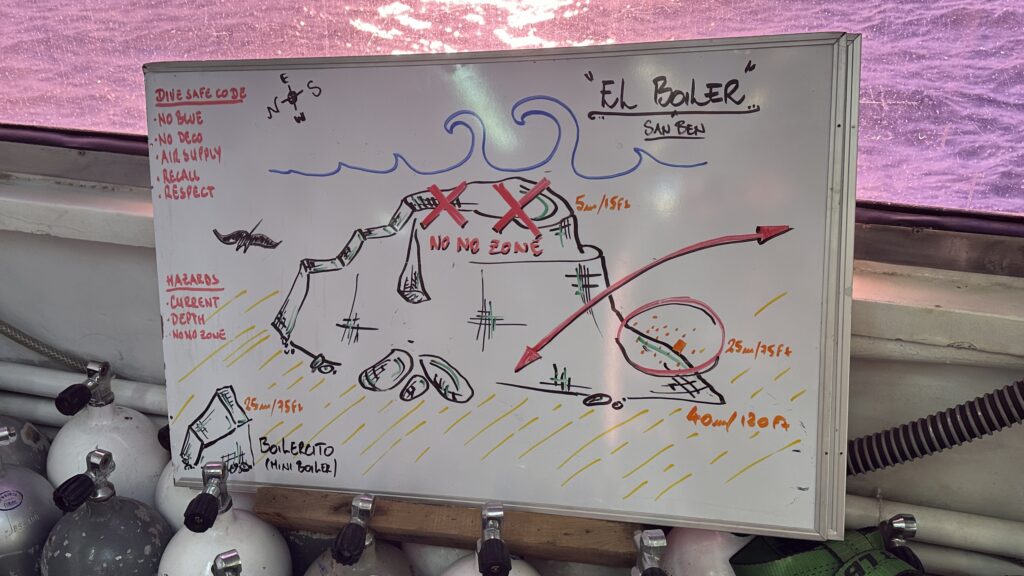
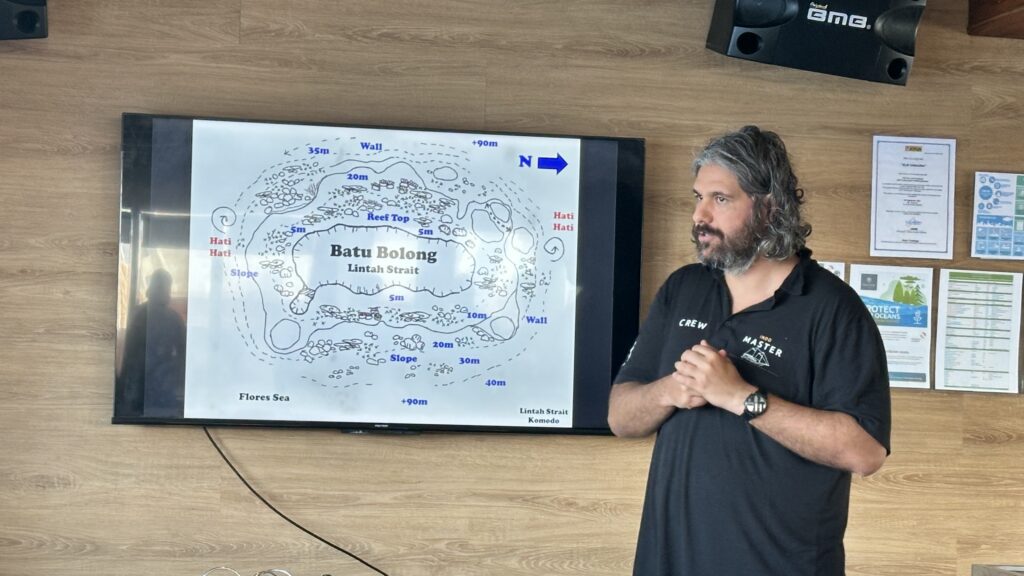
Hopefully, none of those procedures will ever need to be used. But when you’re traveling and diving in remote parts of the world, it’s reassuring to see a crew that doesn’t simply have an emergency plan tucked away somewhere. They practice it.
Keep the Dive Deck Organized
When an entire boat of divers starts gearing up at the same time, things can get chaotic surprisingly quickly.
Most liveaboards will assign you a dive station where your BCD, regulator, fins, and other equipment stay throughout the trip. Keep your gear in its designated space, secure anything that could roll or fall while the boat is moving, and keep walkways clear.
And be ready when it’s time to dive. You don’t need to be the first person in the water every time, but 20 other divers shouldn’t be waiting while you search your cabin for your other fin.
Respect the Camera Areas
Many liveaboards are extremely well set up for underwater photographers, with dedicated camera tables, workspaces, and rinse tanks.
If a rinse tank says CAMERAS ONLY, take it seriously.
Underwater camera systems can represent thousands — or even tens of thousands — of dollars of equipment. Masks, wetsuits, and other dive gear can introduce residue, sand, debris, and contaminants into the water. Those can find their way around housing seals and O-rings, where even a tiny problem can result in a flooded camera.
So please don’t put your mask, computer, wetsuit, or other dive gear into the camera rinse tank.
The photographers onboard will appreciate it.
Their cameras will appreciate it even more.
Remember That You’re Sharing a Boat
Cabins and common spaces are relatively small, so be considerate of the people around you. Respect quiet hours, keep shared spaces reasonably tidy, conserve fresh water when requested, and don’t spread your belongings across every available surface.
Also remember that the crew is working incredibly hard behind the scenes. While you’re diving, they’re filling tanks, moving the boat, preparing meals, cleaning cabins, maintaining equipment, driving tenders, and getting everything ready for you to do it all over again.
Treat them well. A great crew is a huge part of what makes a great liveaboard trip.
A Very Important Note About Charging
Between phones, cameras, strobes, dive lights, computers, battery packs, and everything else we travel with these days, liveaboard divers bring a lot of rechargeable equipment onboard.
And charging safety on a boat is serious.
Many liveaboards have designated charging stations or specific rules about where and when batteries and electronics can be charged. Some prohibit charging in cabins entirely. Follow those rules.
Fire is one of the most serious emergencies that can happen at sea, and lithium-ion batteries and charging equipment require particular care. Don’t leave batteries charging unattended, don’t charge damaged or swollen batteries, and don’t overload outlets or start building your own creative network of adapters, power strips, and extension cords.
If you’re an underwater photographer traveling with multiple batteries, strobes, video lights, and other equipment, check the boat’s charging setup before your trip. You may have a lot to recharge between dives, but that doesn’t mean every outlet onboard is fair game.
And if the crew tells you to unplug something, move it to a designated charging area, or stop charging at a certain time, listen to them.
Convenience isn’t worth creating a fire risk at sea.
Liveaboard vs. Land-Based Diving: Which Is Better?
Neither — they’re simply different kinds of dive trips.
A liveaboard is hard to beat when diving is the main event. You can reach remote sites, cover a much larger area, do multiple dives a day, and spend very little time worrying about anything other than where you’re diving next.
A land-based dive trip gives you more flexibility. You can explore restaurants, culture, beaches, and other topside activities, take a day off from diving more easily, and create a trip that works well for people who don’t necessarily want to spend every day underwater.
This can be especially important if you’re traveling with a non-diver or someone who enjoys diving but doesn’t want it to be the entire vacation. A week on a dive-focused liveaboard can be paradise for one person — and a very long week on a boat for the other.
Of course, there are exceptions. Some liveaboard itineraries include land excursions, wildlife experiences, beaches, or other activities along the way. And some non-divers genuinely love boat life.
We’ve done — and love — both styles of dive travel. The better question isn’t Which one is better?
It’s which one fits this particular destination, trip, and group of travelers?
If you’re still figuring out which style of dive trip fits you best, our guide to choosing your first scuba diving adventure walks through experience level, destination, accommodations, dive style, and the other factors worth considering before you book.

Is a Liveaboard Right for You?
If your idea of a great vacation is waking up, diving, eating, napping, and doing it all over again, we’re off to a pretty good start.
You might love a liveaboard if you:
- Want diving to be the main event of your trip.
- Love the idea of reaching remote dive sites and covering a lot of territory.
- Don’t mind doing three or four dives a day — even if you occasionally sit one out.
- Enjoy being around other divers and becoming part of a little floating community.
- Are comfortable with smaller cabins and limited personal space.
- Don’t mind occasionally disappearing from Wi-Fi for a few days.
- Are perfectly happy wearing the same sweatshirt to dinner several nights in a row.
A liveaboard may be less appealing if you want lots of independent time, restaurants and nightlife, frequent topside excursions, or the ability to completely change your plans from day to day.
There’s also one very important consideration:
You need to actually enjoy being on a boat.
You’re not taking a boat to your vacation. The boat is your vacation.
For the right person, that’s part of what makes liveaboard diving so special. You get to temporarily trade normal life for a very simple routine centered around the ocean.
And if reading all of this has you thinking, Dive. Eat. Nap. Repeat. Where do I sign up? You might be a liveaboard person.
Where Can Liveaboard Diving Take You?
Some of the world’s most famous dive destinations are best explored by liveaboard.
But what really gets us excited are the itineraries that make us pull up a map and say, Wait… where exactly is that?
Liveaboards can reach remote islands, offshore reefs, and entire chains of dive sites that would be difficult — or sometimes impossible — to explore from a single land base. Sometimes you’re visiting a legendary dive destination. Other times, getting there is half the adventure.
Here are a few that have caught our attention.
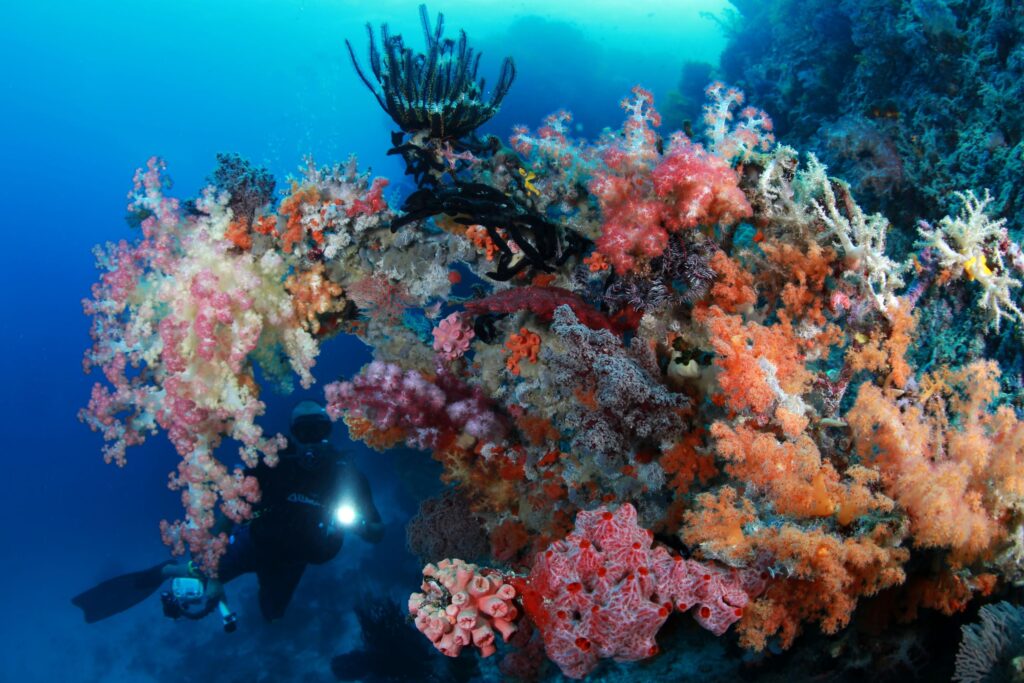
Raja Ampat, Indonesia
Raja Ampat is hardly a secret in the diving world, but there’s a reason it remains one of the great liveaboard destinations.
The region is enormous, with islands and dive sites scattered across a huge area. Traveling by boat allows you to wake up somewhere new, dive several sites, and continue deeper into the archipelago while you sleep.
And then there’s the diving: spectacular reefs, manta rays, sharks, schooling fish, tiny critters, and the extraordinary biodiversity of the Coral Triangle.
Raja Ampat is the kind of place where a liveaboard doesn’t just give you somewhere to sleep.
It becomes part of how you explore the destination.
Galápagos Islands, Ecuador
The Galápagos offer a completely different reason to get on a liveaboard.
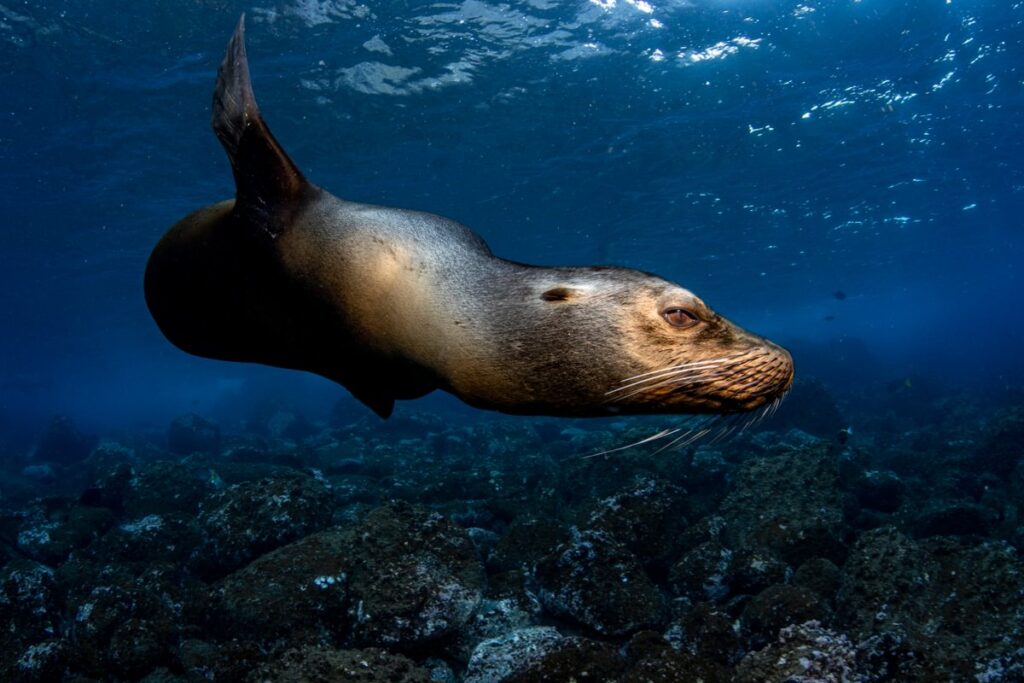
Some of the archipelago’s most famous diving lies around the remote Wolf and Darwin Islands, far from the main inhabited islands. Reaching them means heading offshore — and that’s where the liveaboard experience really comes into its own.
Schooling hammerheads, whale sharks, rays, sea lions, turtles, and other pelagic life make this one of the world’s great big-animal diving destinations.
The diving can also be demanding, with currents, surge, cooler water, and remote conditions.
This is adventure diving in every sense of the word.
Borneo, Indonesia
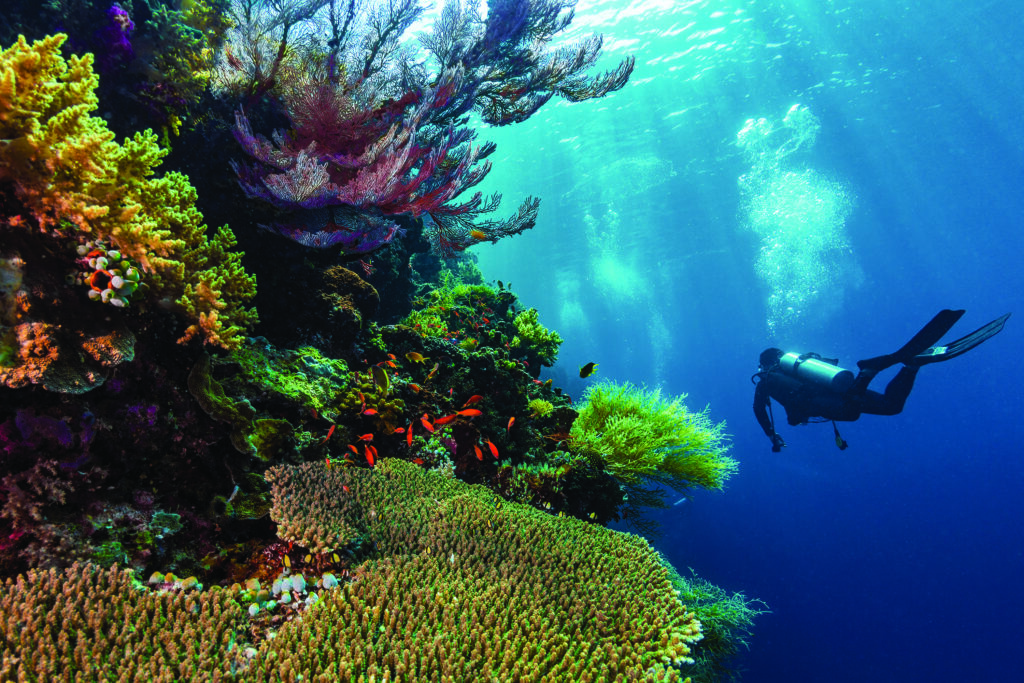
Around Derawan, Maratua, Kakaban, and Sangalaki, a liveaboard can connect a collection of islands offering very different underwater experiences.
There are reefs, walls, turtles, schooling fish, manta rays, and one particularly unusual stop: Kakaban’s famous landlocked marine lake with stingless jellyfish.
Instead of choosing one island as your base, a liveaboard lets the route itself become part of the experience.
And that’s exactly what caught our attention when we started planning [our own Borneo adventure.
The Mergui Archipelago, Myanmar
Then there are destinations that still feel a little mysterious.
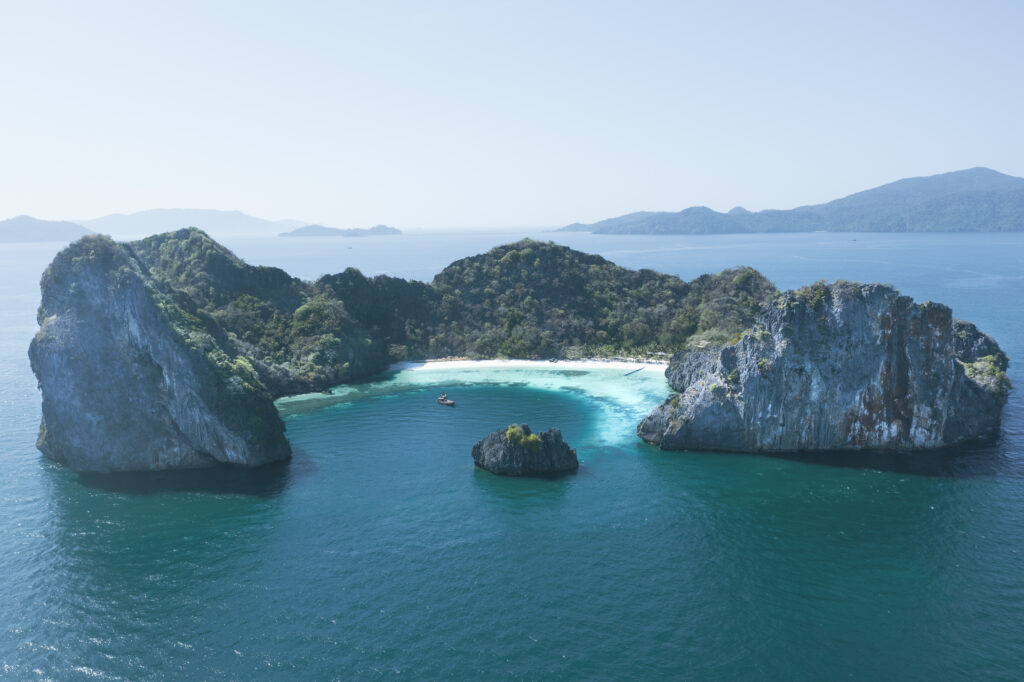
The Mergui Archipelago stretches across the Andaman Sea with hundreds of islands, remote reefs, rocky pinnacles, and dive sites visited by relatively few divers.
Some itineraries also offer opportunities to learn about the Moken, an Indigenous maritime people with deep cultural connections to the region.
It’s the kind of destination where the attraction isn’t one famous dive site.
It’s exploring somewhere that still feels genuinely off the usual dive map.
Sometimes, the Boat Is What Makes the Adventure Possible
That’s one of the reasons we love liveaboards so much.
Yes, they let us dive more.
But they also change what’s possible.
They can take you to famous sites far offshore, connect islands that would be difficult to visit independently, and open up corners of the world most travelers — and even many divers — will never see.
And those where exactly are we going? itineraries?
Those tend to be some of our favorites.
Ready to Try Liveaboard Diving?
Liveaboards aren’t the right choice for every dive trip — and that’s exactly why choosing the right one matters.
The right itinerary can take you somewhere you couldn’t easily reach from land, give you access to incredible diving, and let you settle into that wonderfully simple rhythm we’ve talked about throughout this guide: Dive. Eat. Nap. Repeat.
But for us, the best liveaboard trips are about more than the number of dives you log.
They’re about waking up somewhere completely new. Watching the sun disappear over an island you couldn’t find on a map a few months ago. Comparing photos after a dive. Making friends over dinner. And occasionally realizing you haven’t checked your email in three days.
At Global Adventures for Scuba Divers (GAS’D), we spend a lot of time researching not just where we want to dive, but how we want to experience a destination. Sometimes that means a resort. Sometimes it means combining diving with incredible topside adventures.
And sometimes, the best answer is getting on a boat and heading somewhere wonderfully remote.
If you’ve been thinking about trying a liveaboard but aren’t sure which destination or itinerary fits your experience level, explore our upcoming dive adventures or reach out to us. We’re always happy to talk diving, destinations, and whether living on a boat for a week sounds like your kind of adventure.
Just remember to pack more than one swimsuit.