


There’s something different about seeing a truly big animal underwater.
Maybe it’s a giant oceanic manta gliding directly overhead, a wall of hammerhead sharks appearing out of the blue, or the unmistakable shape of a whale shark slowly materializing in the distance. The best dive destinations for big animals can deliver encounters like these — and sometimes, the most unforgettable experiences aren’t on scuba at all. They happen floating at the surface alongside a whale, snorkeling with a sea lion, or watching hundreds of mobula rays move through the water below you.
We love tiny critters, colorful reefs and all the weird little things you can find underwater. But there’s a reason encounters with the ocean’s giants end up on so many bucket lists.
When we first published this list, we chose five of our favorite destinations for big-animal diving. Since then, we’ve traveled to more of them ourselves, led Global Adventures for Scuba Divers (GAS’D) groups through some of the world’s great marine-life hotspots, and had a few encounters we’re still talking about.
So, it was definitely time for an update.
These destinations aren’t ranked from best to worst. Wildlife encounters are inherently unpredictable, and every place on this list offers something different. But if your travel wish list includes mantas, whales, whale sharks, hammerheads or other seriously impressive marine life, these are some of the destinations we think deserve a place on your radar.
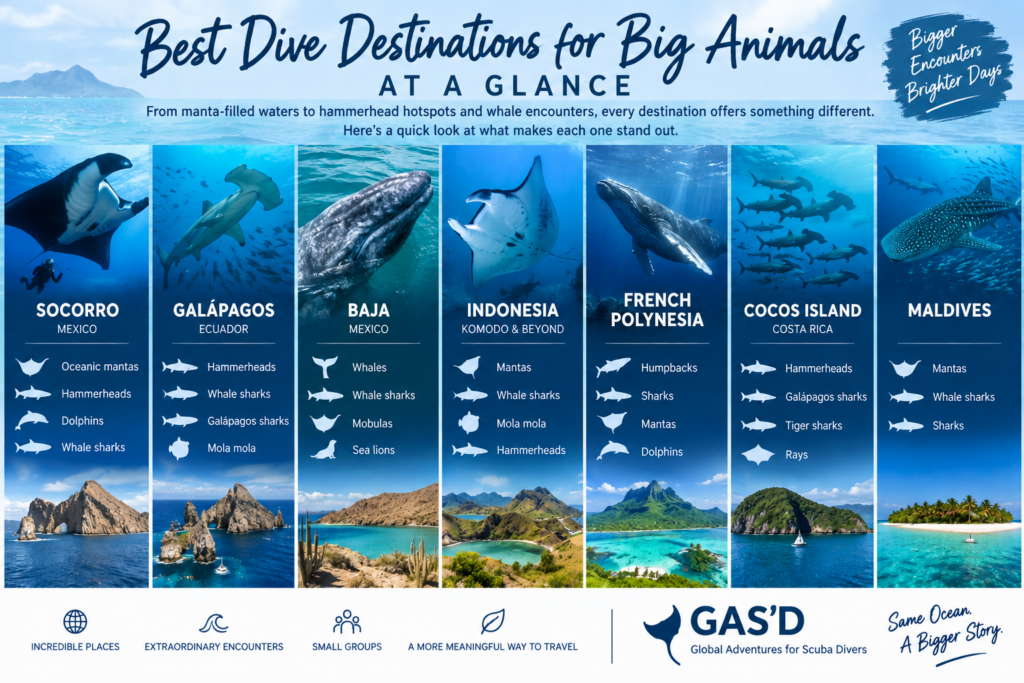
Best Dive Destinations for Big Animals at a Glance
From manta-filled waters to hammerhead hotspots and whale encounters, every destination offers something different. Here’s a quick look at some of the best dive destinations for big animals and what makes each one stand out.
Socorro, Mexico: When Everything Seems to Be Big
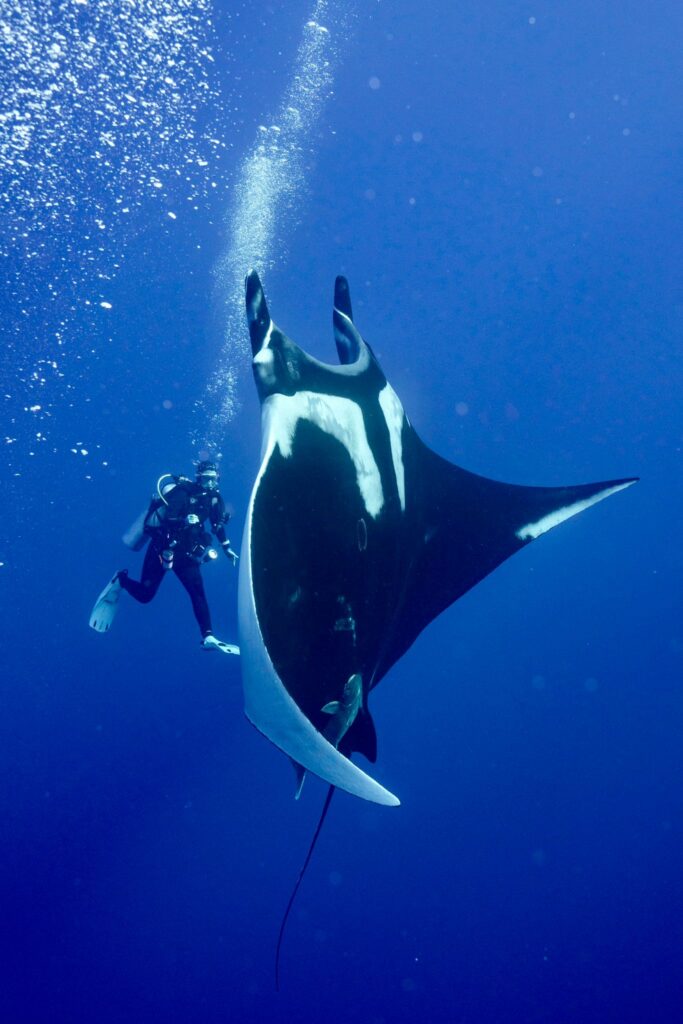
If we had to choose a destination that captures what we mean by big-animal diving, Socorro would be very hard to beat.
The Revillagigedo Archipelago sits far off Mexico’s Pacific coast, surrounded by deep open ocean. Its isolated volcanic islands act as gathering points for pelagic marine life, and the list of animals you can potentially encounter is almost ridiculous: giant oceanic mantas, schooling hammerheads, dolphins, whale sharks, tiger sharks, Galápagos sharks, silky sharks, silvertips and seasonal humpback whales.
But Socorro isn’t special simply because of the species list. It’s the quality of the encounters.
Giant oceanic mantas are one of the destination’s biggest stars, and they can be remarkably curious around divers. Instead of catching a brief glimpse as a manta disappears into the blue, you may spend a substantial part of a dive watching them circle the site, pass overhead and seemingly choose to interact with the divers below.
We experienced that firsthand on our 2026 GAS’D trip to Socorro. We had oceanic mantas, dolphins, schooling hammerheads, silvertips, silkies and a tiger shark — and then, because apparently the trip hadn’t delivered enough big animals already, a whale shark appeared during a safety stop.
That’s Socorro.
Who Is Socorro Best For?
Socorro is best suited to experienced divers who are comfortable with open ocean, currents, blue-water diving and liveaboard life. The islands are remote, and reaching them requires a substantial crossing from Cabo San Lucas, but that isolation is also a huge part of why the diving can be so extraordinary.
Big-animal stars: Giant oceanic mantas, hammerheads, dolphins, whale sharks and sharks
Best experience: Scuba diving
Dive experience: Advanced Open Water recommended; we recommend 50+ logged dives and comfort with currents and blue-water conditions
Good to know: Liveaboard only, remote diving, and Nitrox is highly recommended
Want to know what the diving is actually like? Our Ultimate Guide to Diving Socorro covers the crossing, conditions, marine life, experience level and what to expect from a Socorro liveaboard.
Galápagos, Ecuador: Big Animals in a Wild Ocean
Few destinations have a wildlife reputation quite like the Galápagos.
Above water, the islands are famous for animals found nowhere else on Earth. Underwater, things get even wilder.
The waters around the archipelago sit at the intersection of several major ocean currents, bringing nutrients into the region and supporting an enormous amount of marine life. For divers, that can mean encounters with schooling scalloped hammerheads, Galápagos sharks, whale sharks, rays, sea lions, turtles, dolphins and mola mola.
And then there are Wolf and Darwin Islands.
These remote northern islands are legendary among experienced divers for huge concentrations of pelagic life. Schools of hammerheads can fill the blue, while whale sharks seasonally pass through the area and other sharks patrol the reefs.
Galápagos isn’t necessarily easy diving. Currents, surge, cooler water and open-ocean conditions are all part of the experience. But for divers who want to see what a highly productive ocean can look like when large marine animals are everywhere, few destinations compare.
Galápagos is also part of the larger Eastern Tropical Pacific, an interconnected region that includes Cocos and Coiba and supports some of the planet’s most impressive shark and pelagic populations.
Big-animal stars: Schooling hammerheads, whale sharks, Galápagos sharks, mola mola and sea lions
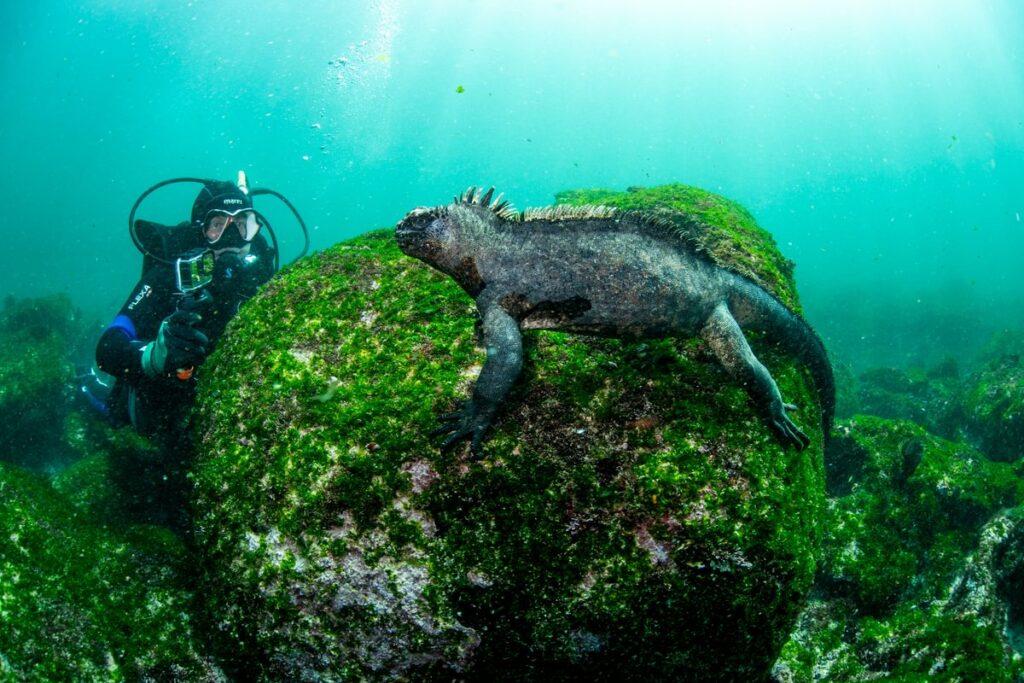
Only-in-Galápagos favorites: Marine iguanas, Galápagos penguins and giant tortoises
Dive experience: Advanced Open Water strongly recommended. For Wolf and Darwin, GAS’D recommends 60+ logged dives and solid experience with currents, blue-water diving, thermoclines and rapidly changing conditions. This is advanced diving and is not a destination we recommend for newer or inexperienced divers.
Baja California & the Sea of Cortez: The Big-Animal Playground
Baja is difficult to summarize because there isn’t just one Baja big-animal experience.
There are many of them, and they change throughout the year.
Depending on where and when you travel, you might snorkel with whale sharks, watch enormous schools of mobula rays, play with curious California sea lions, search for blue and humpback whales, or travel to the Pacific lagoons where gray whales and their calves sometimes choose to approach small boats.
If whales are the animals that really capture your imagination, we take a much deeper look at their migrations, behaviors and some of the best places to encounter them in our guide to the Wonderful World of Whales.
There are dolphins, sharks and huge schools of fish, too — and even the possibility of encountering orcas. They’re wild animals, so there are certainly no guarantees, but their presence adds yet another possibility to an already extraordinary region.
That’s what makes Baja different from many destinations on this list. You aren’t necessarily traveling there for one animal. You’re exploring an entire marine ecosystem where different giants arrive at different times.
And some of Baja’s most memorable experiences happen without a scuba tank.
“Big-animal diving” is often used as a catch-all phrase, but responsible encounters with whales, whale sharks and other marine life may involve snorkeling or observing from a boat rather than scuba diving. The animal, location and local regulations determine the experience.
We’ve returned to Baja more than once, and there’s a reason it continues to be one of our favorite places for marine wildlife. For GAS’D, it’s exactly the kind of destination we love: wild, unpredictable and capable of delivering completely different experiences depending on where — and when — you explore.
Big-animal stars: Whales, whale sharks, mobulas, sea lions and dolphins
Best experience: Snorkeling, wildlife watching and scuba diving
Experience / Comfort Level: Varies by activity. For snorkeling encounters, you should be a comfortable swimmer in open water and prepared to keep up with moving wildlife. Dive conditions vary by site.


Good to know: Baja is highly seasonal, and many of its best wildlife encounters happen while snorkeling or from the surface.
- Gray whales: January–April
- Blue & humpback whales: December–April
- Mobula rays: Spring/early summer
- Magdalena Bay sardine run: November–December
- Whale sharks: Fall through spring
- Sea lions: Year-round, with particularly playful juveniles later in the year
Indonesia: The Little Things… and Some Very Big Ones
Indonesia is famous for the little things.
Nudibranchs, frogfish, pygmy seahorses and all kinds of bizarre critters are part of what makes diving in the Coral Triangle so addictive. But with more than 17,000 islands surrounded by incredibly productive seas, Indonesia has plenty to offer big-animal lovers, too.
Manta rays are probably the biggest draw, particularly in Komodo and Raja Ampat, but depending on where you travel, Indonesia can also bring mola mola, whale sharks, hammerheads, dolphins, whales, sharks and other pelagic surprises.
Komodo
Powerful currents move through Komodo National Park, bringing nutrient-rich water that supports everything from tiny reef creatures to large aggregations of manta rays. Sites such as Manta Alley and Karang Makassar can offer opportunities to watch mantas feeding, visiting cleaning stations and moving through the current.
We experienced just how special Komodo can be during our 2026 GAS’D expedition with the Manta Trust. Across our dives, our group estimated approximately 124 manta sightings, and identification photographs from the trip were contributed to ongoing manta research.
And while the mantas were certainly stars of the trip, they weren’t the only big things we encountered. Reef sharks, eagle rays, turtles, dolphins and even a dugong made appearances alongside the incredible smaller marine life Indonesia is famous for.
Raja Ampat
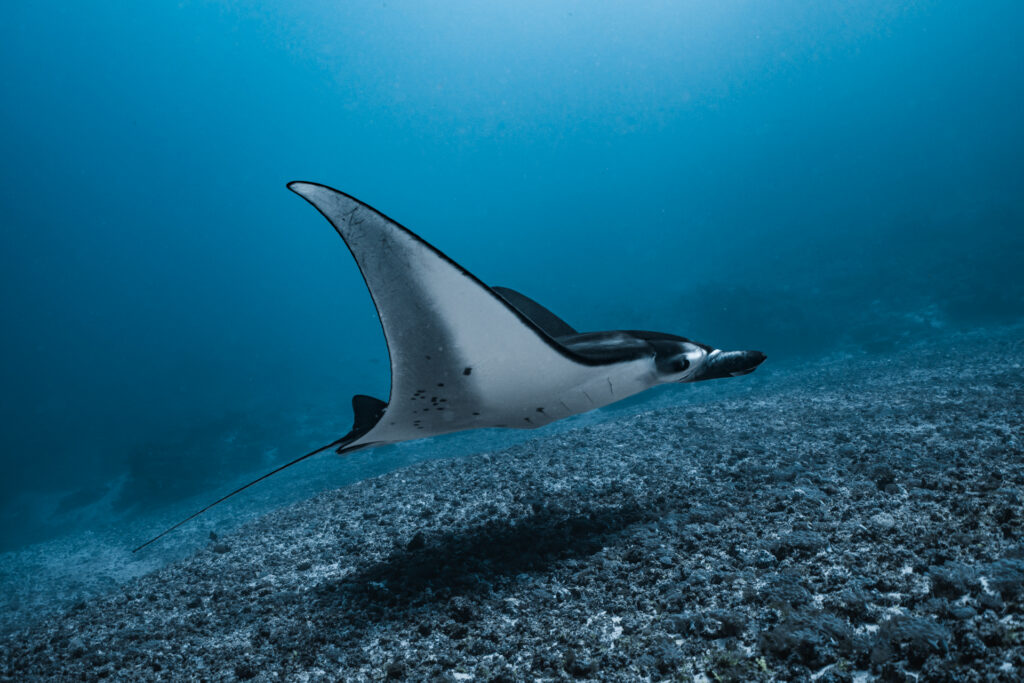
Farther north, Raja Ampat offers another side of Indonesia’s manta story.
The region is famous for its staggering marine biodiversity, but it is also important habitat for manta rays. Both reef mantas and oceanic mantas can be encountered in Raja Ampat, with cleaning stations providing opportunities to settle in and watch as mantas circle overhead.
That’s part of what makes Raja so appealing. You might spend a dive watching mantas and then move onto a reef absolutely packed with fish, sharks, turtles and an incredible variety of smaller marine life.
Komodo and Raja Ampat aren’t destinations we’d choose solely because of big animals. That’s actually their advantage. The mantas may be the headliners, but they’re surrounded by some of the richest marine ecosystems on the planet.
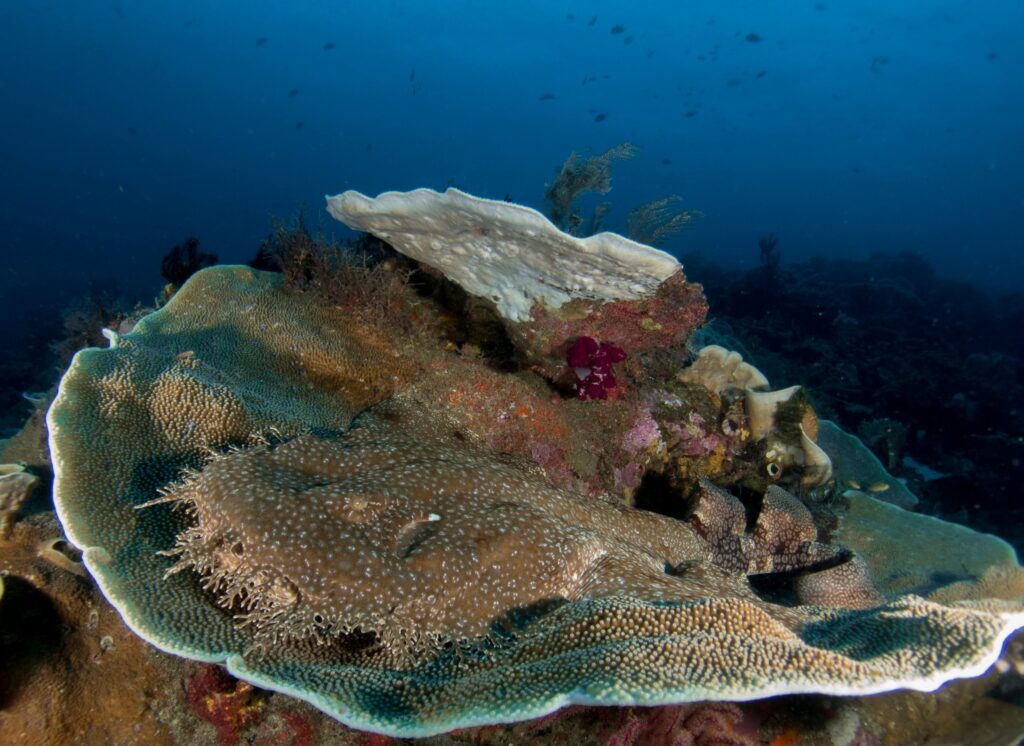
And That’s Only Part of Indonesia
Komodo and Raja Ampat may be two of Indonesia’s best-known destinations for mantas, but they’re hardly the end of the big-animal story.
Around Bali and Nusa Penida, divers can encounter manta rays and seasonally search for mola mola. Triton Bay is known for whale shark encounters, while the Banda Sea can bring seasonal schooling hammerheads. Remote regions such as Alor add whales, dolphins, sharks and other pelagic possibilities to the mix.
Indonesia may be famous for biodiversity and the little things, but don’t spend the entire dive staring at the reef.
Sometimes the big animals come out to play, too.
Big-animal stars: Manta rays, whale sharks, mola mola, hammerheads and other pelagics
Best experience: Scuba diving, with some snorkeling opportunities
Experience / Comfort Level: Highly destination-dependent. Raja Ampat can offer diving for a range of experience levels, while Komodo is generally more demanding due to its currents. Some iconic Komodo manta sites, including Manta Alley, can also be cooler with reduced visibility.
Good to know: Indonesia offers excellent land-based diving in many regions, including Bali, North Sulawesi and parts of Raja Ampat and Komodo. However, some of the country’s best-known dive areas cover huge distances or include remote sites that are difficult to reach from shore. In places like Komodo and Raja Ampat, a liveaboard can provide much greater range and access to more remote areas. The best option depends on where you want to dive, what you hope to see and how much territory you want to cover.
French Polynesia: Whales Above, Sharks Below
French Polynesia offers a completely different kind of big-animal adventure.
During humpback whale season, whales migrate into the warm waters around the islands to breed, give birth and care for their calves. Under appropriate conditions and regulations, travelers may have opportunities to enter the water with them — an experience that happens at the surface rather than on scuba.
Then you put your tank on.
The atolls of Fakarava and Rangiroa are famous for shark diving, with gray reef sharks gathering in impressive numbers around the passes. Manta rays, dolphins and other pelagic animals add even more variety depending on the island and season.
That combination is what earns French Polynesia a place on this list. One trip can potentially include snorkeling with one of the largest animals in the ocean and then diving among dozens — sometimes far more — sharks.
Not a bad vacation.
Big-animal stars: Humpback whales, sharks, manta rays and dolphins
Best experience: Snorkeling and scuba diving
Experience / Comfort Level: Varies by island and activity. For humpback whale snorkeling, you should be a comfortable swimmer in open water and prepared to swim when needed. For scuba diving, currents can be strong in Rangiroa and Fakarava, so divers should be comfortable diving in current.
Good to know: French Polynesia can easily be explored land-based, making it possible to combine diving, snorkeling and topside experiences across several islands.
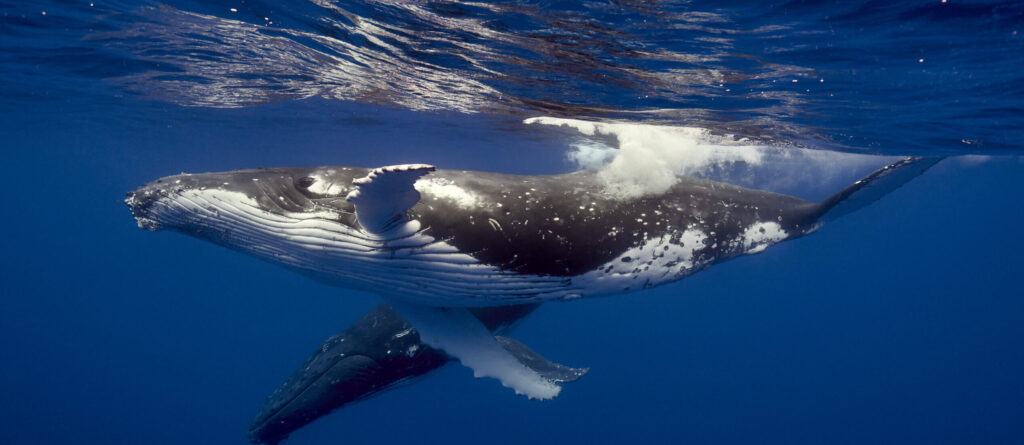
French Polynesia is much more than one type of encounter. If you’re curious about how the islands, atolls, whale experiences and diving all fit together, our French Polynesia Diving & Travel Guide breaks it down.
Cocos Island, Costa Rica: The Hammerhead Dream
Far off Costa Rica’s Pacific coast sits one of the world’s legendary shark-diving destinations.
Cocos Island is remote, rugged and surrounded by deep water. Nutrient-rich currents help support enormous concentrations of marine life, and schooling scalloped hammerheads are the encounter many divers dream about before making the long journey offshore.
Hammerheads aren’t the only reason to go. Divers may also encounter Galápagos sharks, whitetip reef sharks, rays, huge schools of fish and, depending on conditions and luck, other pelagic visitors.
Cocos also has an interesting connection to Galápagos and Coiba. All three sit within the Eastern Tropical Pacific, where highly migratory species move through vast stretches of open ocean between important feeding, cleaning and aggregation areas.
For experienced divers fascinated by sharks, remote environments and truly wild diving, Cocos belongs very high on the list.
Big-animal star:Schooling hammerhead sharks
Dive experience: Advanced Open Water recommended; we recommend 50+ logged dives and comfort with currents and blue-water diving
Good to know: Cocos is accessible by liveaboard, involves remote diving, and Nitrox is highly recommended.

Maldives: Mantas and Whale Sharks
The Maldives has earned its reputation as one of the world’s classic destinations for marine megafauna.
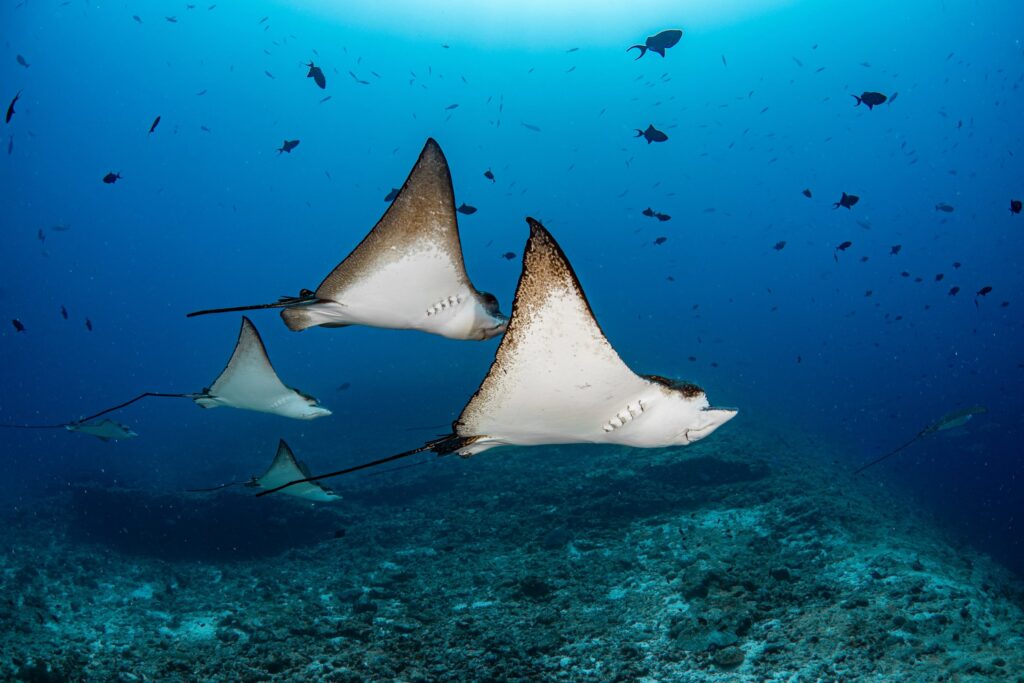
Manta rays and whale sharks are the obvious headliners, but sharks, eagle rays, turtles and large schools of fish help make the islands attractive to divers looking for more than beautiful coral reefs.
One of the things that makes the Maldives particularly interesting is the influence of the monsoons. Seasonal changes in currents and plankton affect where manta rays and whale sharks are likely to congregate, meaning where you go and when you go matters.
Sites associated with manta cleaning stations can offer extraordinary opportunities to watch mantas circle overhead, while areas such as South Ari Atoll are particularly well known for whale shark encounters.
We’ve traveled and dived in the Maldives ourselves, and it’s one of those destinations where the combination of reefs, channels and pelagic life makes every dive feel like it could produce something unexpected.
Big-animal stars: Manta rays, whale sharks, sharks, eagle rays
Best experience: Scuba diving
Experience / Comfort Level: Highly itinerary-dependent. Some areas can be relatively relaxed, while channel dives and more advanced itineraries can involve strong currents and blue-water conditions.
Good to know: The Maldives can be explored land-based, but liveaboards offer greater range and the ability to move between atolls. Mantas and whale sharks are often feeding where plankton is concentrated — which is great for the animals, but can mean reduced visibility. The seasonal Deep South itineraries, generally offered from January through March, can provide a very different experience with more emphasis on sharks and pelagic action.
There’s a Reason So Many of These Places Are Protected
You may have noticed that several destinations on this list overlap with some of the world’s most significant protected marine areas — including UNESCO World Heritage Sites such as the Revillagigedo Archipelago, Galápagos Islands, Cocos Island and Komodo National Park.
That’s not necessarily why the big animals are there. Ocean currents, nutrient availability, migration routes, cleaning stations, breeding areas and food all play a much bigger role in determining where marine life gathers.
But protecting these extraordinary ecosystems matters. Highly migratory animals don’t recognize park boundaries, and many travel enormous distances through open ocean. Protecting important feeding, cleaning, breeding and aggregation areas can help safeguard pieces of much larger marine ecosystems.
For us at GAS’D, that’s another part of what makes traveling to these places so special. We’re not simply looking for a big-animal encounter — we’re getting a glimpse into some of the most remarkable marine ecosystems on the planet.
A Few More Big-Animal Destinations Worth Knowing
Seven destinations can’t cover an entire planet, and there are plenty of other places where big animals can steal the show.
Fiji remains one of our favorites, particularly for shark diving. Our time in Beqa Lagoon included incredible shark encounters — including tiger sharks — while the reefs elsewhere in Fiji reminded us that the country offers far more than its famous sharks.
The Azores, Portugal offer a very different kind of adventure in the middle of the Atlantic. Whales and dolphins are a major part of the experience, while divers may also seek out blue sharks and mobula rays depending on the season and location. Open-ocean encounters are inherently unpredictable, but that’s also part of what makes the Azores so intriguing. This is one destination we’d love to explore with a GAS Divers group someday.
Mozambique belongs on a marine megafauna wish list, too. Its Indian Ocean coastline is known for manta rays and whale sharks, with dolphins, sharks, turtles and seasonal humpback whales adding to the possibilities. For travelers who dream about getting in the water with big marine life, Mozambique has a lot going for it — and it’s definitely on our own list.
Malapascua, Philippines deserves a special mention for one very distinctive big-animal encounter: thresher sharks. The island has become famous for opportunities to see these unmistakable sharks, with their extraordinarily long tails, during early-morning dives. It may not offer the sheer variety of big animals found in Socorro, Galápagos or Baja, but if seeing a thresher shark is on your bucket list, Malapascua is one of the destinations to know.
Palau combines sharks, manta rays and schooling pelagic life with some seriously iconic dive sites, while Ningaloo Reef in Western Australia is internationally known for whale sharks and seasonal encounters with other marine megafauna.
The more of the world you explore, the longer the list seems to get.

When Is the Best Time to See Big Animals?
Here’s the frustrating answer: it depends on the animal.
Big marine animals move. They follow food, currents, water temperatures, breeding cycles and migration routes. A destination that is phenomenal for one species in March may offer a completely different experience in September.
That’s why we don’t recommend choosing a big-animal trip based solely on the destination. Think about the animal or type of encounter you’re hoping for first, and then look at the seasonal window.
Even during the “perfect” season, however, nothing is guaranteed.
These are wild animals in a wild ocean.
And that’s exactly what makes seeing one so special.
Getting Close Without Chasing the Encounter
Big-animal encounters come with responsibility.
The goal shouldn’t be to get as close as possible. Give wildlife space, follow local regulations and listen to experienced guides. Don’t chase, touch, block or surround an animal for the sake of a photo.
And sometimes, despite doing everything right, the animal decides to come to you.
We’ve had manta rays pass directly overhead, sea lions investigate our cameras and whales choose to approach. There’s an important difference between getting close to wildlife and allowing wildlife to get close to you.
The best encounters happen on the animal’s terms.
There’s a lot more to a great wildlife encounter than simply getting close. We’ve put together a full guide to responsible big-animal encounters — including how to approach mantas, whales, sharks and other marine wildlife while allowing the animal to remain in control of the encounter.
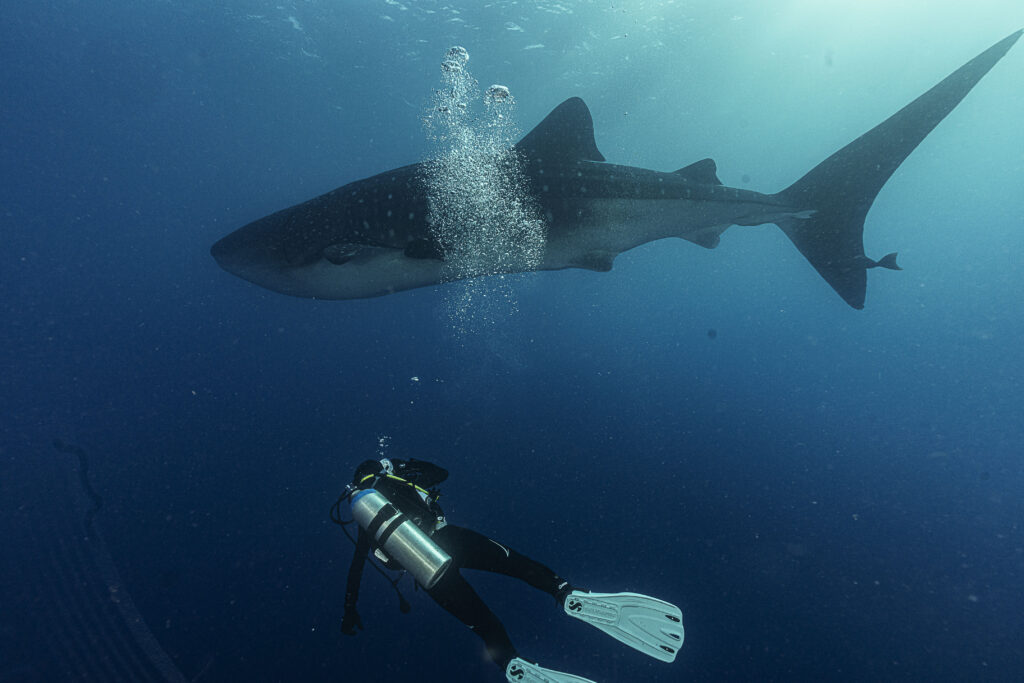
So, Where Will You Go?
Maybe your dream is floating beneath a giant oceanic manta in Socorro. Maybe it’s watching hundreds of hammerheads disappear into the blue in Galápagos or Cocos. Maybe you’d rather spend a week in Baja wondering whether the next splash belongs to a mobula, whale shark, sea lion or whale.
Or maybe it’s an animal you haven’t even put on your bucket list yet.
That’s one of our favorite things about traveling for marine life: you can plan the destination and choose the right season, but you never really know what the ocean is going to give you.
And sometimes the encounter you never expected becomes the one you never forget.
Ready for Your Own Big-Animal Adventure?
At Global Adventures for Scuba Divers (GAS’D), we build small-group adventures around incredible diving, wildlife encounters and the places we can’t stop thinking about after we come home.
Several of our upcoming adventures put you right in the middle of some of the destinations and encounters we’ve talked about here — from humpback whales and sharks in French Polynesia, to manta rays in Raja Ampat, hammerheads and other pelagics in Galápagos, and a whale-focused adventure through Baja California and the Sea of Cortez.
As always, wildlife is wild and no encounter is guaranteed. We choose destinations and seasons that give us the best opportunities we can — and then we let the ocean decide what happens.
Baja Ultimate Whales → March 2027
French Polynesia → Aug 2027
Raja Ampat → Nov 2027
Galápagos → 2028
Explore our upcoming adventures and find your next big-animal encounter.